Kitchen robots can indeed cook dinner for you by combining sensors, AI, and robotic arms to handle chopping, stirring, and cooking tasks with precision. They come in various types, from simple helpers to fully programmable appliances, offering faster, more consistent results. While they reduce prep time and effort, there are challenges like high costs and maintenance. If you keep exploring, you’ll discover how these innovative chefs are shaping the future of home cooking.
Key Takeaways
- Kitchen robots combine sensors, AI, and robotic arms to perform various cooking tasks efficiently.
- Different types include cooking assistants, automated cookers, and multi-function robots for diverse meal prep.
- They offer benefits like faster cooking, consistent results, and energy optimization, though initial costs can be high.
- Robots can personalize meals, cater to dietary needs, and assist individuals with mobility limitations.
- Future advancements aim to make cooking more automated, standardized, and accessible, transforming traditional culinary practices.
How Do Kitchen Robots Operate?

Kitchen robots operate by combining advanced sensors, artificial intelligence, and precise robotic arms to perform cooking tasks. These sensors gather real-time data, allowing the robot to adjust movements and ingredient handling accurately. The user interface makes controlling and programming the robot straightforward; you can select recipes, set timers, or customize your meal with simple commands. Regular robot maintenance ensures peak performance, preventing malfunctions and extending device longevity. The interface often includes touchscreens or voice controls, making it easy for you to interact with the robot even if you’re not tech-savvy. Behind the scenes, AI processes your inputs, coordinates robotic arms, and manages safety protocols, so you can trust that your kitchen robot is working efficiently and safely to prepare your dinner. Proper maintenance and upkeep are essential to keep your device operating smoothly and to prevent costly repairs. Additionally, understanding navigation and mapping helps optimize the robot’s efficiency in your kitchen environment, which relies on advanced sensors to navigate obstacles and adapt to different layouts. These sensors continuously feed data to the AI, enabling precise adjustments during cooking processes.
Types of Robots Available for Home Cooking

There are several types of home cooking robots designed to make your kitchen tasks easier, each with unique features tailored to different needs. These robots vary in complexity and purpose, so choosing the right one depends on your cooking style. Here are four main types:
- Cooking Assistants – These robots handle chopping, stirring, and basic cooking, often coming from popular kitchen robot brands.
- Automated Cookers – Fully programmable devices that prepare entire meals with minimal input.
- Multi-Function Robots – Combine multiple kitchen tasks like blending, kneading, and steaming in one device.
- Robot Maintenance & Support – Consider brands with reliable customer service and easy robot maintenance to keep your device running smoothly.
Knowing your options helps you select a robot suited to your needs and ensures long-term performance. Additionally, understanding connected cooking technology can enhance your experience by enabling remote control and updates for your device.
Advantages and Challenges of Using Kitchen Robots
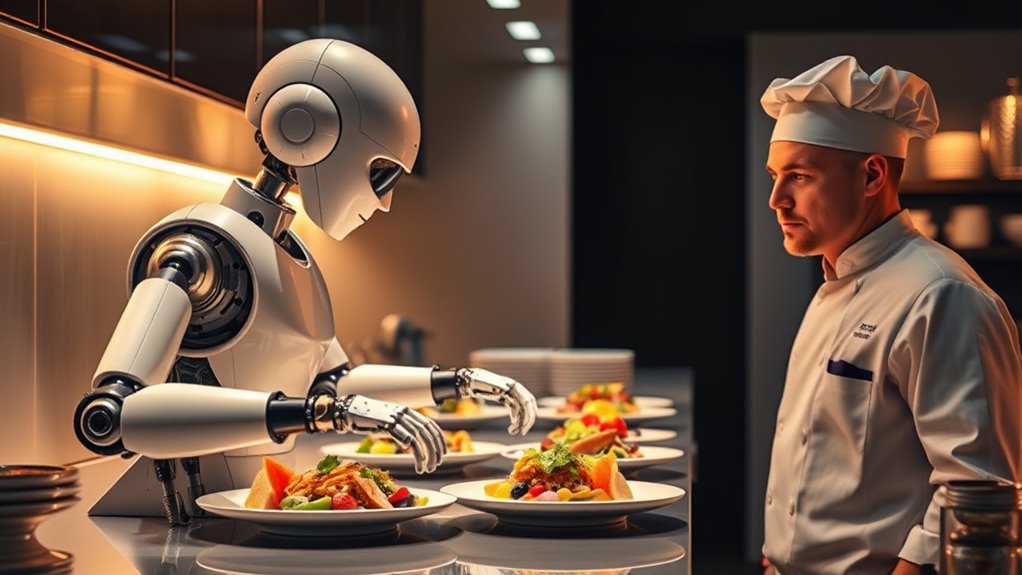
Using kitchen robots can substantially streamline your cooking process, offering convenience and consistency that traditional methods might lack. They reduce prep time and ensure uniform results, making meal preparation easier. Additionally, the integration of smart technology allows for free floating adaptability in various cooking tasks, enhancing versatility in the kitchen. Some models also feature advanced sensors that can monitor cooking progress and adjust settings automatically, further improving precision. These sensors often rely on temperature regulation to maintain optimal cooking conditions, which is crucial for achieving desired results. Furthermore, proper device maintenance is essential to prevent malfunctions and extend the lifespan of your kitchen robots, requiring a dedicated effort to keep them in good working order. Regular software updates can improve functionality and security, ensuring your device operates efficiently over time. The cost implications are significant—initial investments can be high, and repairs or upgrades add to expenses. Despite these challenges, many users find the benefits outweigh the drawbacks, especially for busy households or those seeking precision. Still, it’s important to weigh the advantages of automation against the ongoing effort needed for maintenance and the financial commitment involved. Careful consideration helps you decide if kitchen robots fit your lifestyle and budget.
Real-Life Examples of Robot-Cooked Meals

Many households are now enjoying meals prepared entirely by robots, demonstrating their practical capabilities. These robots showcase impressive real-life examples, such as:
- Customized pasta dishes with robot recipe customization tailored to dietary needs.
- Speedy stir-fries prepared in minutes through cooking speed optimization.
- Precision-controlled baking of bread and pastries for consistent quality.
- Automated smoothie stations blending ingredients perfectly every time.
These examples prove robots can adapt recipes to personal tastes while maintaining efficiency. By adjusting robot recipe customization settings, you get meals exactly how you like them. Meanwhile, cooking speed optimization ensures that meals are ready faster without sacrificing quality. Additionally, smart kitchen appliances enable seamless integration and more precise control over cooking processes. The development of robotic cooking technology continues to improve, making these innovations more accessible for everyday use. As a result, these robots bring convenience and consistency to everyday dining, making meal prep easier and more personalized. Smart kitchen integration is also advancing, allowing for even more streamlined and intuitive cooking experiences. Furthermore, ongoing research into robot adaptability is helping these machines better understand and respond to various cooking scenarios, enhancing their versatility in the kitchen.
The Future of Automated Cooking in Our Homes
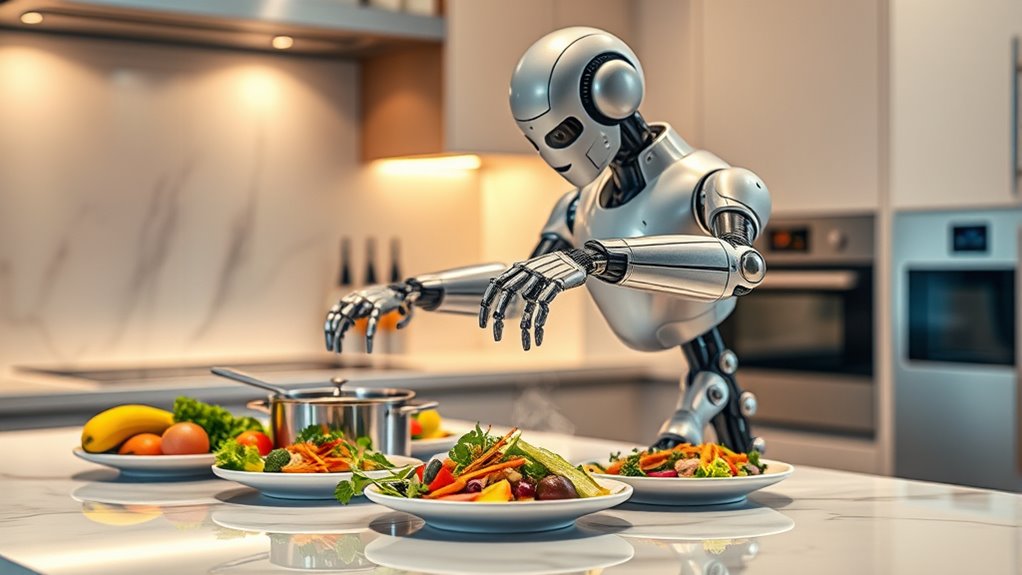
As robot-powered kitchens become more advanced and widespread, their role in everyday home cooking is set to expand substantially. You’ll likely see these devices shaping your daily routines, making meal prep faster and more consistent. The cultural impact is significant—traditional cooking methods may evolve as robots introduce new culinary styles and share global recipes effortlessly. Additionally, the integration of smart appliances can help optimize energy use and reduce waste in your kitchen. These innovations may also transform cooking habits by enabling hands-free, automated meal preparation. The development of automated cooking techniques has the potential to standardize quality and reduce the skill barrier for home cooks. This shift could also promote food safety by minimizing contamination risks associated with manual handling. Furthermore, advances in robotic automation are expected to increase the precision and efficiency of kitchen tasks, making home cooking more accessible to everyone. However, ethical considerations arise, such as data privacy and job displacement. Here’s a glimpse of what the future might hold:
| Aspect | Benefits | Concerns |
|---|---|---|
| Cultural Impact | Global cuisine at your fingertips | Loss of traditional skills |
| Ethical Issues | Convenience and efficiency | Privacy and employment concerns |
| Technological Progress | Smarter, more intuitive devices | Dependence on automation |
| Personalization | Customized meals for everyone | Reduced human interaction |
| Accessibility | Cooking for all, regardless of ability | Over-reliance on tech |
Frequently Asked Questions
How Safe Are Kitchen Robots Around Children and Pets?
Kitchen robots are generally safe around children and pets when properly designed and maintained. They often feature child safety and pet safety measures, such as sensors to avoid collisions and automatic shut-offs. However, you should always supervise their use, keep small parts away from kids, and guarantee pets don’t interfere. Regularly check for malfunctions or safety updates to keep everyone secure and prevent accidents.
Can Kitchen Robots Customize Recipes to Dietary Restrictions?
Yes, kitchen robots can customize recipes to meet your dietary restrictions. They utilize advanced recipe customization features, allowing you to adjust ingredients for gluten-free, vegan, or allergy-friendly meal options. With their focus on dietary flexibility, these robots can adapt dishes quickly, ensuring you get personalized meals that suit your health needs and preferences. This makes meal prep more convenient, safe, and tailored to your lifestyle.
What Is the Cost Range for Home-Use Kitchen Robots?
Think of kitchen robots as the Swiss Army knives of cooking; their price varies widely. You’ll find options ranging from around $300 to over $3,000. The cost comparison shows significant price variability based on features like smart connectivity, cooking capacity, and brand reputation. If you want a basic model, expect to pay less, but for advanced features, be prepared to invest more—it’s like choosing between a pocket knife and a professional toolkit.
How Easy Is It to Clean and Maintain These Robots?
Cleaning ease varies depending on the robot model, but generally, you’ll find them straightforward to maintain. Most have removable parts for easy washing, and some feature self-cleaning functions. To keep your robot in top shape, follow maintenance tips like regularly checking for debris, updating software, and replacing worn components. With proper care, your kitchen robot stays efficient, making cooking less messy and more enjoyable for you.
Do Kitchen Robots Learn and Improve Their Cooking Skills Over Time?
Absolutely, your kitchen robot can become a culinary genius! Thanks to advanced machine learning, it constantly hones its skills, analyzing every dish you make. Imagine your robot evolving from a novice to a master chef right before your eyes, tweaking techniques and perfecting flavors with each meal. With ongoing skill development, it adapts to your preferences, making every dinner better than the last, turning your kitchen into a futuristic culinary playground.
Conclusion
As you consider bringing a kitchen robot into your home, remember you’re revealing a culinary revolution that makes even the best chefs seem like amateurs. These robots are transforming dinner prep from a chore into a thrilling adventure—faster than you can say “bon appétit.” Embrace this technology, and you’ll soon find yourself with more time and perfectly cooked meals that could make royalty jealous. The future of cooking is here—are you ready to welcome your new robotic sous-chef?