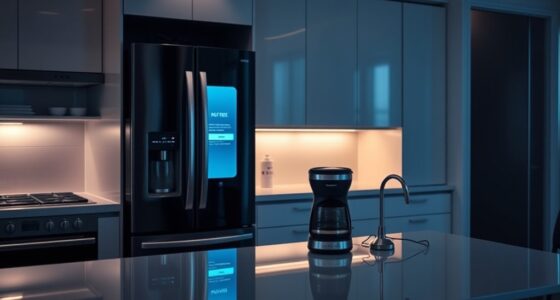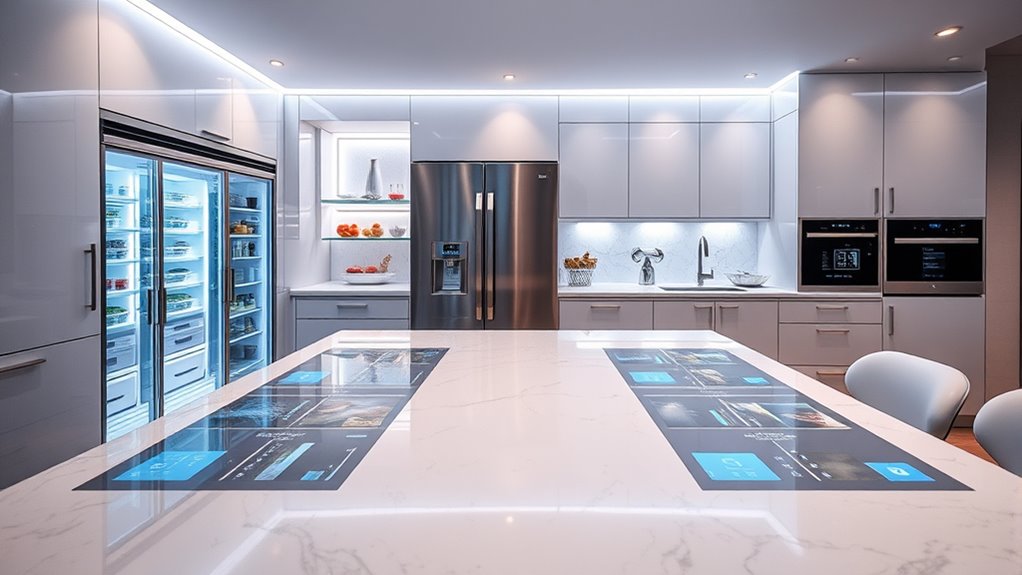

By 2025, your kitchen will be smarter with AI-driven appliances that customize recipes and optimize performance. Voice assistants will make cooking and cleaning effortless, while smart refrigerators will track inventory and suggest shopping lists. Automated cooking systems and sustainable technologies will enhance convenience and eco-friendliness. Augmented reality will help visualize recipes and designs, and personalized nutrition tools will support your health goals. To discover all these exciting trends, keep exploring how technology will transform your kitchen experience.
Key Takeaways
- Increased integration of AI-driven automation for personalized cooking, cleaning, and maintenance routines.
- Enhanced connectivity and interoperability among smart appliances across brands and platforms.
- Growing adoption of AR applications for virtual recipe guidance and immersive kitchen design visualization.
- Implementation of advanced security features, including biometric controls and encryption, to protect user data.
- Emphasis on sustainability with eco-friendly appliances, renewable energy use, and water-saving technologies.
Integration of Artificial Intelligence in Cooking Devices

As artificial intelligence continues to advance, it’s becoming a key feature in modern cooking devices. You’ll notice smarter appliances offering AI-driven recipe customization, which adapts dishes based on your preferences, dietary needs, and available ingredients. This personalization makes cooking more efficient and enjoyable. Additionally, predictive maintenance systems monitor your devices constantly, alerting you to potential issues before they cause breakdowns. These systems help keep your kitchen running smoothly, reducing downtime and costly repairs. With AI integration, your appliances learn from your habits, optimize cooking times, and improve performance over time. This ongoing learning capability not only enhances user experience but also aligns with the trend toward energy-efficient and sustainable kitchen solutions. These AI-powered features are also contributing to smart home integration, making your kitchen more connected and responsive. This transformation turns your kitchen into a more intuitive space, allowing you to focus on creating delicious meals without worrying about technical hiccups or manual adjustments.
Voice-Activated Kitchen Assistants
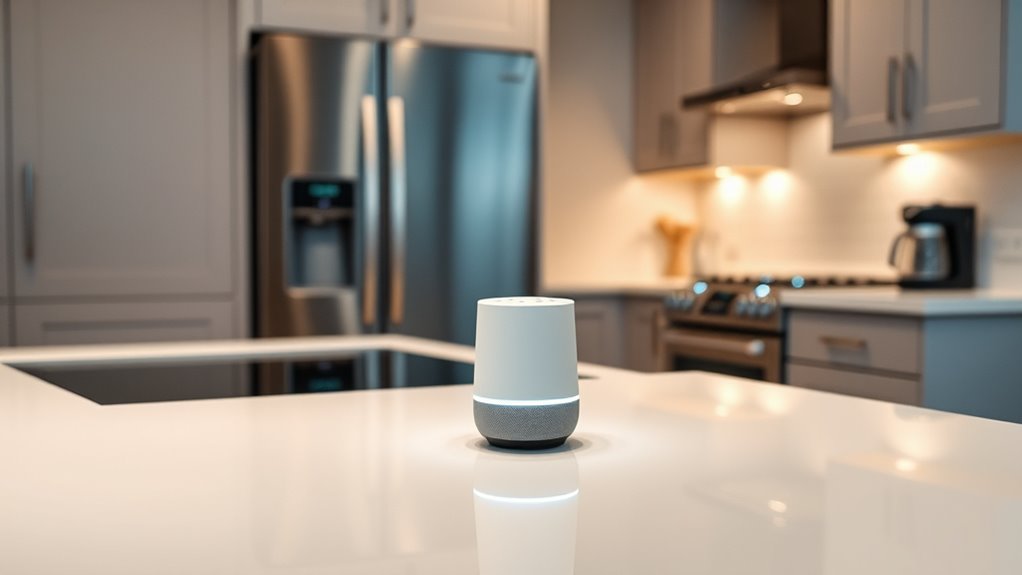
Voice-activated kitchen assistants are enhancing how you interact with your appliances, making cooking more seamless and intuitive. With voice command customization, you can tailor commands to suit your preferences, creating a more personalized experience. Adjust sound feedback settings to control how the assistant responds, whether through voice prompts or silent notifications. These features allow you to:
Enhance your cooking with customizable voice commands and adjustable sound feedback for a personalized kitchen experience.
- Quickly execute commands without manual input
- Customize responses for clearer communication
- Reduce kitchen noise disruptions
- Streamline multitasking during meal prep
Additionally, integrating local automation enables your kitchen devices to work together more efficiently without relying solely on cloud services. Implementing voice recognition technology further enhances the accuracy and responsiveness of your voice commands, making your smart kitchen even smarter. Incorporating real-time processing can also improve the speed and reliability of your voice interactions, ensuring a smoother cooking experience. A solid understanding of home automation systems can help optimize the overall functionality of your smart kitchen setup.
Smart Refrigerators With Advanced Inventory Management
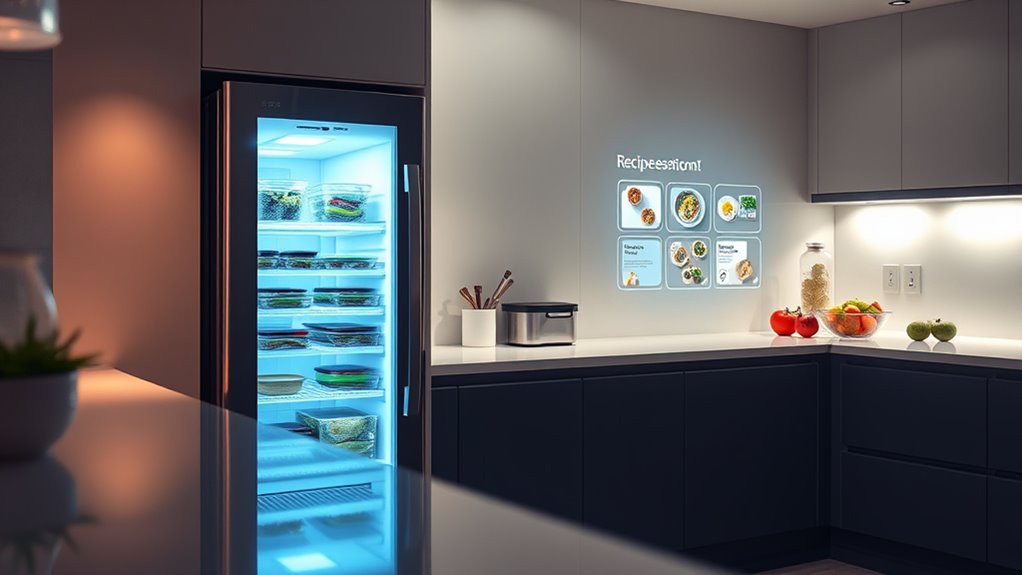
Smart refrigerators with advanced inventory management are transforming how you keep track of your groceries. With intelligent inventory tracking, your fridge automatically monitors what’s inside, letting you know when items run low or expire. This reduces waste and ensures you always have what you need. The fridge organization features help you see everything at a glance, often through digital displays or connected apps, making it easier to plan meals and shop efficiently. You can categorize items, set reminders for restocking, and even receive alerts about expired products. These smart fridges eliminate the hassle of manual inventory checks, saving you time and effort. Incorporating sensor technology can further enhance the accuracy of inventory detection and management. Additionally, some models are capable of self-diagnosing issues, which helps in maintaining optimal performance and reduces the need for repairs. Understanding reliable inventory management systems is key to maximizing their benefits and ensuring your kitchen runs smoothly. Using real-time data analysis can help optimize inventory levels and reduce waste even further.
Automated Cooking and Meal Preparation Systems
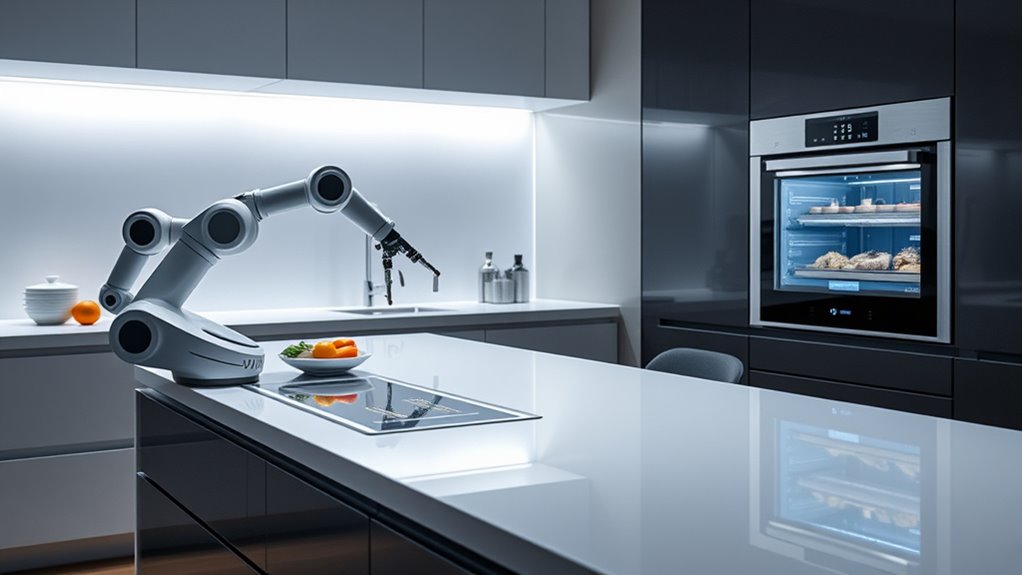
With advanced inventory management making grocery planning effortless, your focus can shift to streamlining meal preparation. Automated cooking systems are transforming kitchens with features like robotic sous vide and modular cooking stations. These innovations enable you to:
- Prepare complex recipes effortlessly with minimal supervision.
- Customize meal stations for different cuisines or dietary needs.
- Use robotic sous vide for precise temperature control, ensuring perfect results.
- Switch between cooking modules quickly, saving time and space.
These systems work seamlessly, integrating with smart devices to monitor progress and adjust settings automatically. You can start a meal in one station and finish it in another, all while maintaining consistency. Automated cooking systems make home cooking faster, more efficient, and more enjoyable.
Sustainable and Eco-Friendly Kitchen Technologies

As awareness of environmental impact grows, more kitchens are adopting sustainable and eco-friendly technologies to reduce waste and conserve resources. You’ll see solar-powered appliances becoming common, harnessing sunlight to power your fridge, oven, or lighting, cutting electricity use and lowering your carbon footprint. Additionally, biodegradable packaging is replacing traditional plastics, helping you minimize plastic waste and support eco-conscious practices. These innovations make your kitchen more efficient and environmentally friendly without sacrificing convenience. By choosing solar-powered appliances, you benefit from renewable energy, while biodegradable packaging ensures waste decomposes naturally, reducing landfill accumulation. Incorporating air purification systems that utilize eco-friendly filters further enhances indoor air quality without harming the environment. Implementing water-saving fixtures can significantly reduce water consumption, contributing to overall sustainability efforts. Embracing renewable energy sources like solar power not only lowers energy costs but also supports broader environmental goals. Incorporating smart technology can optimize energy use and streamline your kitchen operations, making your space more sustainable and modern. Embracing these technologies allows you to contribute to sustainability efforts, making your kitchen smarter and greener in 2025.
Connected Appliances for Seamless Meal Planning
Connected appliances are transforming meal planning by working together seamlessly to streamline your cooking experience. They enable effortless recipe sharing between devices, ensuring everyone stays on the same page. Plus, these appliances monitor their own maintenance needs, alerting you when filters or parts require attention. To make the most of this technology, consider these key benefits:
Connected appliances streamline meal planning with seamless sharing, automated updates, and maintenance alerts for a smarter kitchen experience.
- Simplified recipe sharing, so you can transfer favorite dishes instantly
- Automated appliance updates, reducing manual maintenance efforts
- Integrated grocery lists based on your meal plans and appliance inventories
- Enhanced efficiency through coordinated cooking schedules and notifications
Additionally, some devices incorporate advanced at-home diagnostics and troubleshooting features, reducing the need for professional repairs and helping you maintain optimal performance. These diagnostic tools contribute to smarter maintenance routines, saving you time and money. Smart integration also enables appliances to adapt to your habits, further optimizing your kitchen workflow. Incorporating automated systems can help streamline your entire kitchen environment, making daily routines more efficient and less burdensome.
Moreover, adaptive technology allows appliances to learn from your usage patterns, enhancing personalization and efficiency over time.
Augmented Reality for Recipes and Kitchen Design

Augmented reality (AR) is revolutionizing how you cook and design your kitchen by overlaying digital information onto the real world. With virtual recipe overlays, you can see step-by-step instructions directly on your countertop, making cooking more intuitive. AR also enhances immersive kitchen design, allowing you to visualize layouts and appliances before committing to changes. This technology helps you make smarter decisions, whether choosing color schemes or appliance placements. Here’s a breakdown of AR’s benefits:
| Feature | Benefit | Example |
|---|---|---|
| Virtual recipe overlays | Precise, guided cooking experience | Follow recipes directly on your workspace |
| Immersive kitchen design | Visualize without physical changes | Preview new layouts before renovation |
| Real-time adjustments | Instant modifications | Change color schemes on the fly |
Personalized Nutrition and Dietary Tracking Tools

You can now customize meal plans that fit your unique dietary needs with ease. Real-time nutrient monitoring keeps you informed as you prepare your food, helping you stay on track. Plus, integrating wearable devices makes tracking your health data seamless and more accurate. Many restaurants now incorporate live music into their dining experience to enhance ambiance and attract diverse crowds. Additionally, choosing the right kitchen appliances can improve efficiency and support your personalized nutrition goals. Incorporating green chemistry principles can also inspire mindful eating habits, promoting overall well-being.
Custom Meal Planning
As technology advances, personalized nutrition and dietary tracking tools are becoming essential components of modern kitchens. They enable you to tailor meal customization to fit your dietary preferences effortlessly. These tools analyze your health data and suggest meal plans that meet your specific needs. To make the most of this trend, consider:
- Using apps that sync with your fitness trackers for accurate nutrient tracking
- Customizing recipes based on your dietary restrictions and goals
- Automating grocery lists aligned with your meal plans
- Integrating with smart appliances to prepare meals precisely as recommended
This approach guarantees you stay aligned with your health objectives while enjoying varied, nutritious meals adapted to your lifestyle. Custom meal planning becomes a seamless part of your daily routine, making wellness more accessible.
Real-Time Nutrient Monitoring
Real-time nutrient monitoring is transforming how you manage your diet by providing instant insights into your nutritional intake. Advanced sensors in your smart kitchen devices continuously analyze your food, ensuring data accuracy through proper sensor calibration. This process is vital for maintaining nutrient accuracy, so you get reliable feedback on your diet. With these tools, you can quickly identify deficiencies or excesses, allowing you to make immediate adjustments. As sensors improve, they become more precise, helping you track everything from vitamins to macronutrients effortlessly. This real-time feedback empowers you to stick to personalized nutrition plans, optimize your health, and avoid guesswork. By integrating accurate sensors and calibration techniques, your kitchen becomes a proactive partner in your wellness journey.
Integrating Wearable Devices
Integrating wearable devices into your kitchen ecosystem enhances personalized nutrition and simplifies dietary tracking. Wearable sensors track your fitness data, providing real-time insights that inform your dietary choices. Here’s how they help:
- Sync with smart kitchen appliances for tailored meal prep.
- Monitor nutrient intake based on your activity levels.
- Detect deficiencies or excesses to optimize health.
- Seamlessly share data with nutrition apps for better meal planning.
Wireless Charging Surfaces and Power Sources
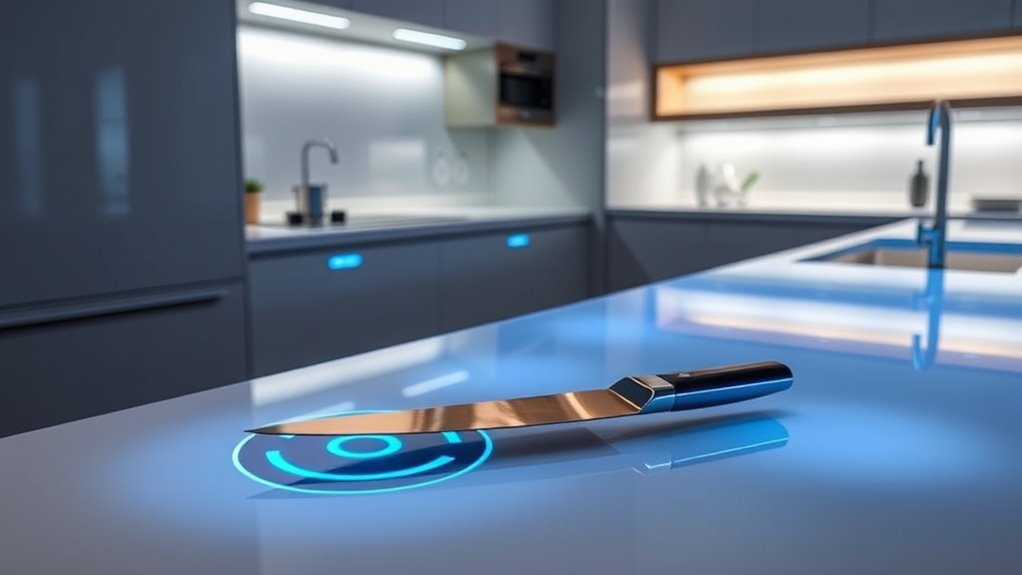
Wireless charging surfaces are becoming a staple in modern kitchens, eliminating the clutter of cords and making powering devices more seamless. With wireless charging surfaces, you can place your gadgets directly on designated areas to recharge without plugging in. These surfaces act as wireless power sources, ensuring your smartphones, tablets, and even small kitchen gadgets stay charged while you cook. They integrate smoothly into countertops, reducing clutter and enhancing functionality. As technology advances, expect more sophisticated wireless power sources that can charge multiple devices simultaneously. This shift not only improves convenience but also keeps your kitchen tidy and organized. By embracing wireless charging surfaces, you streamline your cooking space and stay connected effortlessly. It’s a smart upgrade for a more efficient, clutter-free kitchen environment.
Enhanced Security and Privacy Features in Smart Kitchens

As smart kitchens become more connected, protecting your data and privacy is essential. You’ll want to rely on strong encryption protocols to keep your information safe from breaches. Biometric access controls add an extra layer of security, ensuring only you can open sensitive features and devices.
Data Encryption Protocols
With smart kitchens becoming more connected, securing data transmission is essential to protect your privacy and prevent unauthorized access. Robust data encryption protocols play a key role by ensuring your information stays safe. Here’s what you should know:
- End to end encryption keeps your data secure during transmission, preventing interception.
- Data anonymization masks personal details, adding an extra layer of privacy.
- Encryption keys should be regularly updated to prevent breaches.
- Secure firmware updates help maintain encryption integrity over time.
Biometric Access Controls
Biometric access controls are transforming smart kitchens by offering a seamless way to enhance security and privacy. With biometric access, you can restrict kitchen areas or appliances to authorized users, reducing the risk of unauthorized access. Fingerprint authentication is a popular method, allowing you to release cabinets or appliances quickly and securely with just a touch. This technology eliminates the need for keys or PIN codes, making access both more convenient and safer. Additionally, biometric data is stored securely, ensuring your privacy isn’t compromised. As smart kitchens become more integrated into daily life, biometric access controls provide peace of mind by safeguarding sensitive areas and personal data. Expect to see more kitchens adopting these advanced security features by 2025.
Frequently Asked Questions
How Will Smart Kitchens Adapt to Different Cultural Cooking Styles?
Smart kitchens will adapt to your cultural customization needs by integrating features that support cooking diversity. You’ll see appliances that recognize different cuisine requirements, offering tailored recipes and tools. Voice commands and AI will learn your preferred styles, making it easy to prepare diverse dishes. This personalization guarantees your smart kitchen celebrates cultural nuances, helping you explore and enjoy a wide range of culinary traditions effortlessly.
What Are the Cost Implications of Adopting Advanced Smart Kitchen Technologies?
When adopting advanced smart kitchen technologies, you should conduct a thorough cost analysis to understand expenses. These systems can be pricey initially, but they often lead to savings through energy efficiency and smarter resource management. Budget planning is essential, so you can prioritize features that deliver the most value. While investment might seem high upfront, long-term benefits like convenience and reduced utility costs can offset initial costs over time.
How Secure Are Personal Data and Privacy in Connected Kitchen Systems?
Like a knight guarding a castle, your connected kitchen’s data is defended. Your personal data and privacy are quite secure, thanks to robust data encryption and user authentication protocols. These measures ensure only authorized users access sensitive information, reducing risks. However, stay vigilant, as no system is entirely invincible. Regularly update your devices and use strong, unique passwords to keep your smart kitchen safe from potential threats.
Will Smart Kitchen Devices Require Frequent Updates or Replacements?
Smart kitchen devices will likely need regular device maintenance through software updates to stay secure and functional. You’ll find that these updates improve features, fix bugs, and enhance security, so you won’t need frequent replacements. While some hardware might eventually wear out, most connected devices are designed for durability, meaning you’ll benefit from ongoing software updates to keep your smart kitchen running smoothly without replacing devices often.
How Accessible Are Smart Kitchen Innovations for People With Disabilities?
Smart kitchen innovations are becoming increasingly accessible for people with disabilities, thanks to features like voice commands and customizable accessibility options. You can control appliances hands-free, making cooking easier and safer. Many devices now include adjustable settings and visual aids to meet diverse needs. As technology advances, you’ll find more inclusive options designed to improve independence and convenience in your kitchen.
Conclusion
As you embrace these 2025 kitchen trends, you’ll find your space more efficient, personalized, and eco-friendly. With AI and augmented reality transforming cooking into an interactive experience, your kitchen becomes a hub of innovation—almost like a modern-day Arcadia. Stay ahead by integrating these smart technologies, and you’ll enjoy convenience, security, and sustainability all in one place. The future of cooking is here, and it’s smarter than any invention from the days of the pharaohs.