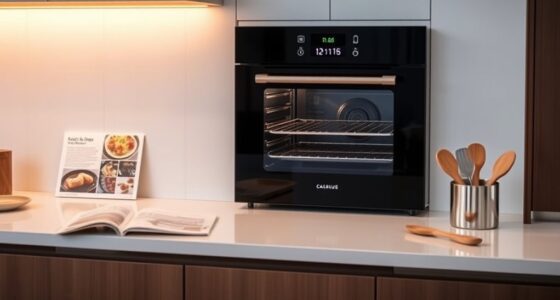
Smart ovens offer great convenience with app controls, real-time updates, and seamless smart home integration, making cooking easier and more precise. They provide consistent results thanks to advanced sensors and even heat distribution. However, you may face higher costs, potential software glitches, and reduced manual skills as automation takes over. Over time, technical issues could impact reliability, but if you’re curious about balancing pros and cons, exploring further can help you decide if a smart oven suits your needs.
Key Takeaways
- Offers remote control, real-time updates, and seamless integration with smart home devices for enhanced convenience.
- Ensures precise cooking with advanced sensors, accurate temperature control, and even heat distribution.
- Higher initial cost but potential savings through energy efficiency and reduced food waste over time.
- May face technical issues like connectivity problems, hardware wear, and software glitches requiring maintenance.
- Increased automation can diminish manual cooking skills and reduce opportunities for culinary experimentation.
Convenience and Connectivity Features
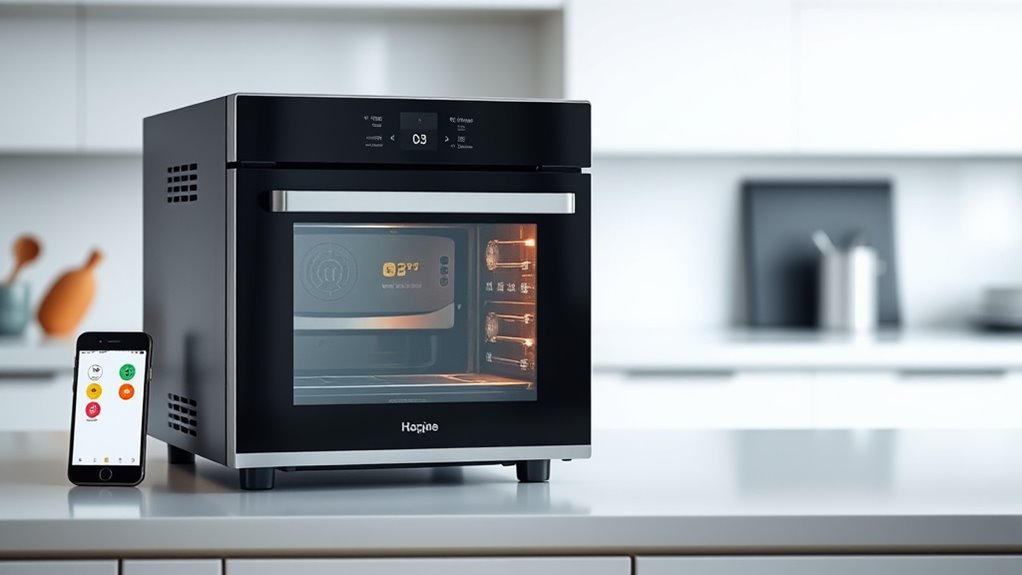
Convenience and connectivity features make smart ovens an appealing choice for modern kitchens. With remote control capabilities, you can start, stop, or adjust cooking settings from anywhere using your smartphone or tablet. This means you don’t have to be physically present to check on your meal or make last-minute changes. App integration simplifies the process further, offering intuitive controls and real-time updates on cooking progress. You can receive alerts when your food is ready or if the oven detects an issue. These features save time and provide peace of mind, especially during busy schedules. Additionally, local automation options enable your oven to work seamlessly with other smart devices in your home for a more integrated experience. Incorporating smart home technology can enhance overall convenience and security within your connected lifestyle. Overall, the ability to manage your oven remotely and through seamless app integration enhances kitchen convenience and fits perfectly into your connected lifestyle. For optimal performance, understanding home appliance connectivity can further improve your smart oven experience.
Precision and Cooking Performance
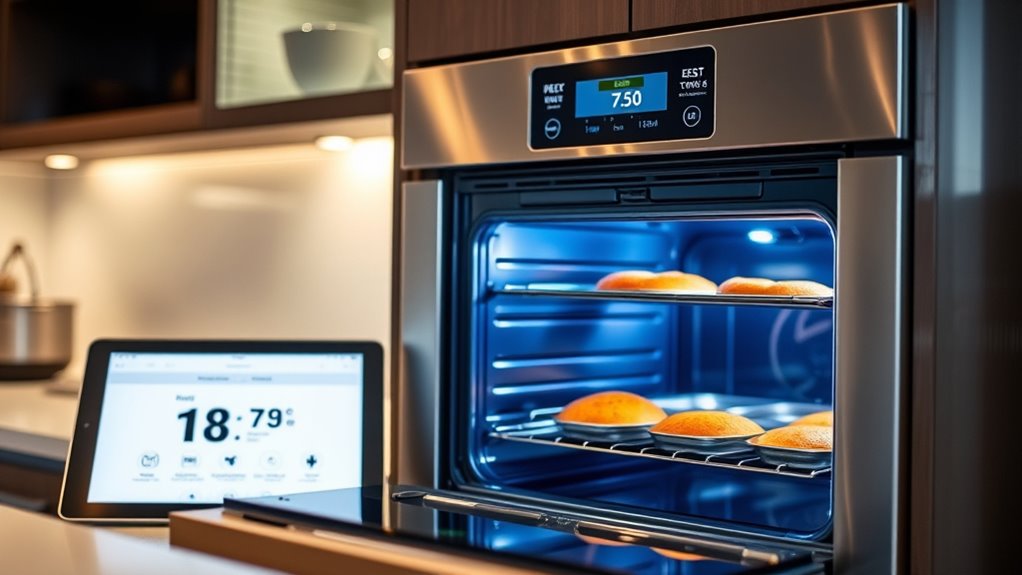
Smart ovens excel in delivering precise and consistent cooking results, thanks to advanced sensors and accurate temperature controls. This means you can trust that your dishes will turn out just right, every time. With high temperature accuracy, you avoid undercooking or overcooking, ensuring perfect results. The consistent heat distribution improves cooking consistency, reducing guesswork and the need for constant monitoring. You’ll notice benefits like:
- Even browning on baked goods and roasted meats
- Precise cooking times that match recipes perfectly
- Reduced risk of burnt or undercooked food
These features help you achieve restaurant-quality results at home, making your culinary efforts more reliable and enjoyable. Overall, precision and cooking performance are major advantages of smart ovens, helping you cook smarter, not harder. Connected cooking technology further enhances these benefits by enabling real-time adjustments and monitoring for optimal results, emphasizing the importance of advanced engineering in achieving consistent outcomes. Additionally, sensor technology plays a crucial role in maintaining these high standards by constantly adjusting oven functions to suit your specific cooking needs, and incorporating feedback systems that improve performance over time. Moreover, integrating smart connectivity can allow your oven to learn from your cooking habits, further refining its performance.
Cost and Investment Considerations
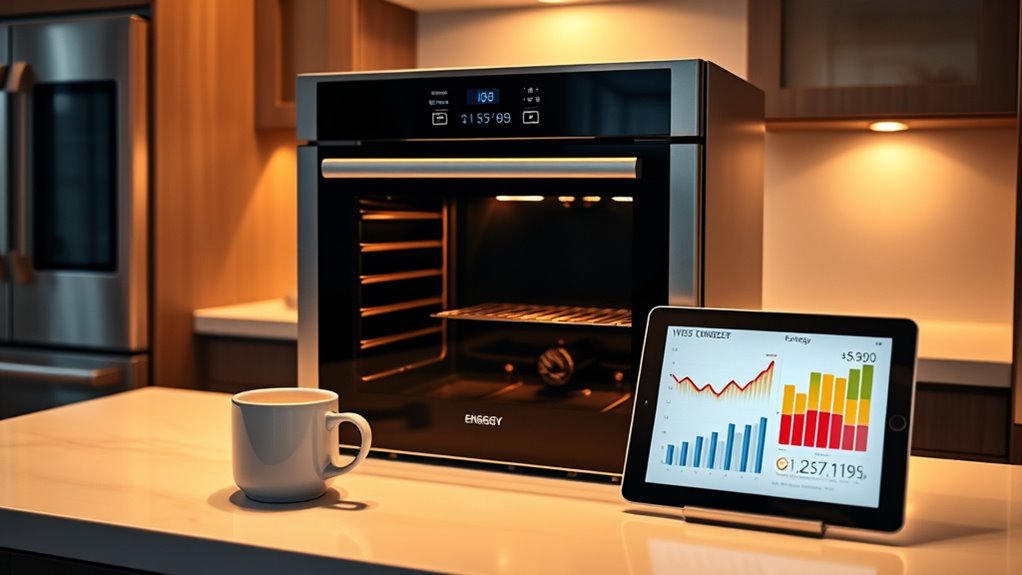
While the advanced features of smart ovens enhance cooking precision, they often come with a higher price tag. The initial investment can be considerably more than traditional ovens, which might seem intimidating upfront. However, consider the potential long term savings. Smart ovens can reduce energy consumption through efficient cooking cycles and help prevent food waste with precise temperature controls. Additionally, their connectivity features may streamline your cooking process, saving you time and effort. Investing in a smart oven could lead to lower utility bills over time and extend the appliance’s lifespan with better maintenance alerts. Furthermore, Free Floating design elements can make integration with outdoor kitchen spaces more seamless, adding to overall convenience. Leveraging European cloud innovation can also improve the appliance’s data security and connectivity reliability, ensuring your smart oven functions optimally. To maximize these benefits, choosing a model with reliable power management features is essential. Incorporating Internet of Things technology can significantly enhance the overall user experience by enabling remote control and diagnostics. Moreover, an understanding of smart appliance integration can help you optimize your kitchen setup for maximum efficiency. While the upfront cost is higher, weighing these long term benefits can make a smart oven a worthwhile investment, especially if you value efficiency and technological convenience in your kitchen.
Technical Challenges and Reliability
Although smart ovens offer advanced features, they can sometimes face technical issues that disrupt your cooking experience. Software updates may cause temporary glitches or compatibility problems, while hardware durability can be a concern over time. You might encounter connectivity issues or software bugs that require troubleshooting, especially if updates aren’t seamless. Additionally, hardware components may wear out faster or be less resilient than traditional ovens. Device maintenance is essential to prolong their lifespan and ensure consistent performance. Building your outdoor kitchen and setup can be complex, and relying on technology adds another layer of potential problems. Be prepared for: – Interruptions due to software update failures or bugs – Hardware fragility, leading to potential malfunctions – Dependence on stable internet connections for ideal performance. Device reliability can be affected by environmental factors such as heat and humidity, which are common in kitchen settings. These challenges mean you need to stay vigilant about updates and maintenance to keep your smart oven reliable. Proper care can mitigate some issues, but technical reliability remains a key consideration.
Impact on Traditional Cooking Skills

Using a smart oven can sometimes lead to a decline in traditional cooking skills, as users increasingly rely on automatic settings and app controls. This reliance may limit your ability to experiment with recipe innovation or troubleshoot issues manually. Over time, your skill development could stagnate, making you less confident in improvising or adjusting recipes without digital help. To illustrate, consider the table below:
| Traditional Skills | Modern Convenience | Impact on Cooking |
|---|---|---|
| Manual temperature control | Automated presets | Less skill needed |
| Adjusting cook time | App-based timing | Reduced skill development |
| Flavor balancing | Pre-programmed settings | Less recipe innovation |
This shift might streamline cooking but can hinder your ability to adapt and innovate in the kitchen.
Frequently Asked Questions
How Energy-Efficient Are Smart Ovens Compared to Traditional Models?
Smart ovens are generally more energy-efficient than traditional models because they optimize energy consumption and adjust power based on cooking needs. You’ll find that their advanced sensors and precise temperature controls reduce unnecessary power use, making them more power-efficient overall. By monitoring and managing energy consumption actively, smart ovens help you save on electricity bills while still delivering consistent cooking results. This makes them a smarter choice for energy-conscious households.
Can Smart Ovens Be Integrated With Existing Smart Home Systems?
Yes, you can seamlessly weave your smart oven into your home’s digital symphony. With Wi-Fi compatibility, it dances effortlessly with your existing smart systems, syncing like a well-rehearsed orchestra. Voice control integration allows you to command with a whisper or a shout, turning your kitchen into a tech-savvy haven. This harmony makes managing your oven smoother, smarter, and more intuitive than ever before.
What Are the Safety Concerns Associated With Connected Kitchen Appliances?
You should be aware that connected kitchen appliances pose safety concerns, mainly cybersecurity vulnerabilities and user privacy concerns. Hackers could potentially access your devices, leading to data breaches or even controlling appliances remotely. To protect yourself, confirm your Wi-Fi network is secure, update device firmware regularly, and use strong, unique passwords. Staying vigilant helps prevent unauthorized access and keeps your smart kitchen safe and private.
Are There Health Risks Related to Wi-Fi-Enabled Cooking Devices?
Think of Wi-Fi-enabled cooking devices as your kitchen’s new dance partner, but beware—they emit wireless radiation, like an invisible hum in the background. While current research suggests these devices pose minimal health implications, prolonged exposure to wireless radiation might raise concerns for some. You should stay informed and use devices responsibly, ensuring your culinary innovations don’t turn into a health risk. Balance tech convenience with mindful usage for peace of mind.
How Easy Is It to Repair or Replace Parts in a Smart Oven?
Repairing or replacing parts in a smart oven can be challenging due to repairability challenges and limited replacement parts availability. You might find it tricky to access specific components, especially if the oven is still under warranty or if the manufacturer doesn’t offer many spare parts. It’s wise to check the manufacturer’s support and parts options beforehand, so you’re prepared for potential repairs or replacements down the line.
Conclusion
While smart ovens offer incredible convenience and precise cooking, they may come with higher costs and potential technical issues. If you’re like most home chefs, you’ll appreciate that 65% of users say smart appliances make meal prep faster and easier. However, relying too much on technology might impact your traditional cooking skills. Weigh the benefits against the drawbacks to see if a smart oven fits your lifestyle and culinary goals.