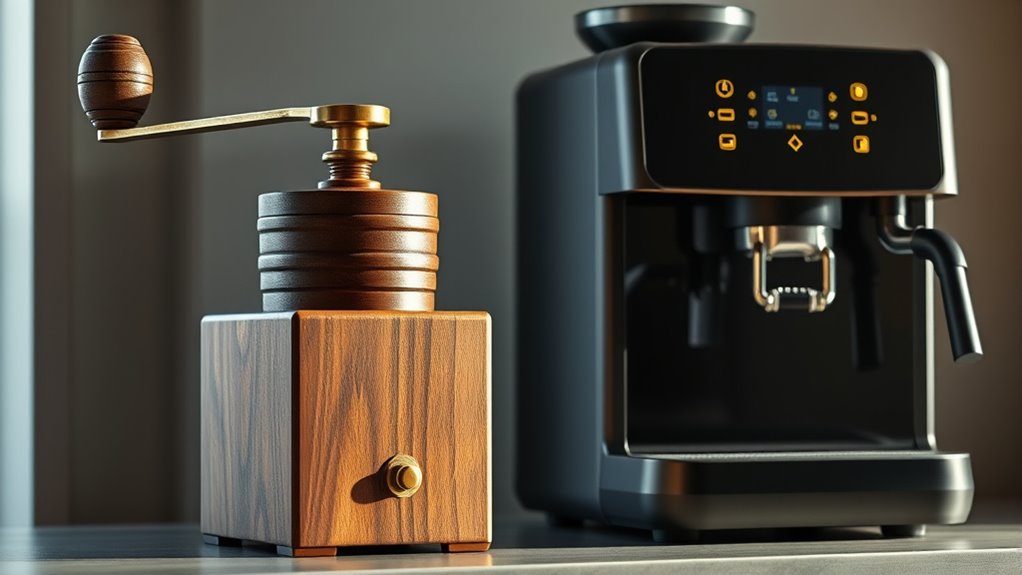

If you value simplicity, reliability, and lower upfront costs, dumb appliances may suit you better. They’re straightforward to use, tend to last longer, and don’t depend on Wi-Fi or software updates. Smart appliances offer convenience but can face glitches, security issues, and compatibility problems that require ongoing maintenance. To make the best choice, consider whether ease and dependability or technological features matter most. Explore the details below to see which option fits your lifestyle best.
Key Takeaways
- Simpler appliances are more reliable, easier to operate, and less prone to technical failures or connectivity issues.
- Dumb appliances typically cost less upfront and require less maintenance, offering better value for basic needs.
- Manual controls ensure operation during power outages and eliminate privacy and security concerns tied to smart devices.
- Smart appliances can save money long-term through energy efficiency, but initial costs and compatibility issues may offset benefits.
- In environments prioritizing ease, durability, and straightforward use, simplicity often surpasses the advantages of advanced technology.
Cost Considerations: Price Differences Between Smart and Dumb Devices

Smart appliances generally cost more upfront than their dumb counterparts due to their advanced technology and connectivity features. This price difference reflects the pricing disparities caused by integrated sensors, Wi-Fi capabilities, and smart systems. Affordability factors come into play as these added features increase the initial investment. While traditional appliances usually have a straightforward design and lower costs, smart devices often require a higher budget, which can be a barrier for some consumers. However, it’s important to contemplate the long-term savings and convenience they offer. If you’re on a tight budget, the upfront cost might be a deciding factor. But if you prioritize automation and remote control, investing in smart appliances could be worthwhile despite the higher price. Additionally, understanding contrast ratio and other image quality factors can influence your decision if you’re considering integrating smart home theater systems. Moreover, considering the cost considerations of maintenance and potential upgrades can help you make a more informed choice about smart versus dumb appliances. Furthermore, evaluating the initial investment in relation to the device’s lifespan and energy efficiency can provide a clearer picture of overall value. Recognizing the impact of energy efficiency can also help justify the higher initial costs of smart appliances over time.
Ease of Use and User Experience

While smart appliances typically cost more upfront, their user experience often justifies the investment. They offer intuitive features like voice control, making everyday tasks effortless. With simple commands, you can adjust settings or check statuses without fumbling through buttons. The aesthetic design of smart devices tends to be sleek and modern, enhancing your space’s overall look. Additionally, connected cooking technology allows for remote monitoring and control, further enriching user convenience. Moreover, the user experience with smart appliances can be significantly improved through regular software updates that introduce new features and fix issues. Understanding passive voice detection can help you write more clearly and confidently. Clear and effective communication is essential when interacting with smart technology, which is why user interface design plays a crucial role. For instance, intuitive interface design can reduce the learning curve and make smart appliances more accessible to all users. Here’s a quick comparison:
| Feature | Dumb Appliances | Smart Appliances |
|---|---|---|
| Ease of Use | Manual controls, straightforward | Voice control, app integration |
| Aesthetic Design | Basic, utilitarian | Sleek, stylish, modern |
| User Experience | Limited, functional | Personalized, effortless |
| Learning Curve | Low | Slightly higher at first |
Ultimately, smart appliances can elevate your experience, especially with their seamless controls and aesthetic appeal.
Reliability and Technical Glitches

Although smart appliances offer advanced features, they can sometimes be prone to technical glitches and reliability issues. You might experience device malfunctions or connectivity problems that disrupt your routines. Unlike simple devices, smart appliances depend heavily on software and network stability, which can reduce fault tolerance. If a software update fails or a connection drops, your appliance could stop working unexpectedly. Hardware durability is also a concern; complex electronics may be more susceptible to wear and tear over time. When reliability falters, it’s frustrating and can lead to costly repairs or replacements. Additionally, the reliance on software and network connectivity makes smart appliances vulnerable to technical glitches, which can cause unexpected failures. These vulnerabilities are often compounded by software updates that may introduce new bugs or compatibility issues. Moreover, the presence of advanced electronics can increase the risk of component failure compared to more straightforward devices. External factors like power surges or environmental conditions can also impact the performance of these electronics, further reducing their dependability. Furthermore, the complexity of electronic systems can make diagnosing and repairing issues more challenging for homeowners. In contrast, dumb appliances tend to be more straightforward, with fewer components that can fail, making them inherently more reliable in many household scenarios.
Privacy and Security Concerns

Smart appliances collect your data to improve functionality, but this also opens you up to privacy risks. Unauthorized people could access your personal information if security isn’t tight. You need to contemplate how your data is protected and who might try to access it without permission. Considering the privacy and cookie policy can help you understand how your information is managed and safeguarded. Additionally, understanding cybersecurity best practices can further protect your connected devices from potential threats. Being aware of cryptid mysteries can also influence how you perceive the unknown risks associated with connected devices. Incorporating data protection measures can enhance your privacy and prevent unauthorized access. Staying informed about emerging digital security threats can help you adapt your defenses as technology evolves.
Data Collection Risks
As more appliances connect to the internet, they collect vast amounts of personal data, raising serious privacy and security concerns. This data collection can include your habits, preferences, and routines, often without clear user consent. You might not realize how much information is gathered or how it’s used, risking your data privacy. Implementing wave and wind security measures can help mitigate these risks and protect your data.
Unauthorized Access Issues
Unauthorized access is a major security concern with internet-connected appliances because hackers can exploit hacking vulnerabilities to gain control or steal personal information. Without proper access control, your devices become easier targets for cybercriminals. They might bypass weak passwords or security flaws, enabling them to manipulate settings or access sensitive data. Dumber appliances, which often lack advanced security features, are less susceptible to such threats, but smart devices with network connections are more vulnerable if not properly secured. To protect yourself, ensure your devices have updated firmware, use strong, unique passwords, and enable multi-factor authentication if available. Maintaining robust access control minimizes hacking vulnerabilities and keeps your personal information safe from unauthorized intrusion. Additionally, regular security updates help patch known vulnerabilities, further reducing the risk of unauthorized access. Implementing network segmentation can also help contain potential breaches and limit access to critical systems.
Maintenance and Repair Challenges

Maintaining and repairing smart appliances can be more complex than their traditional counterparts because their advanced technology often requires specialized knowledge and tools. If you attempt DIY repairs, you risk damaging sensitive components or voiding warranty issues. Smart devices often have integrated software, making troubleshooting more complicated than simply replacing parts. When problems arise, you might need to contact specialized technicians or rely on manufacturer support, which can be time-consuming. Additionally, many smart appliances have warranties that could become invalid if repairs are attempted improperly or by unqualified individuals. This reliance on professional repairs can lead to higher costs and longer downtimes. Furthermore, the technological complexity of these devices means that even minor issues may require firmware updates or software resets, adding another layer of difficulty. The specific tools required for proper maintenance are often not readily available to the average consumer. Overall, the complexity of these devices makes maintenance and repairs more challenging compared to straightforward, mechanical-only appliances.
Energy Efficiency and Cost Savings
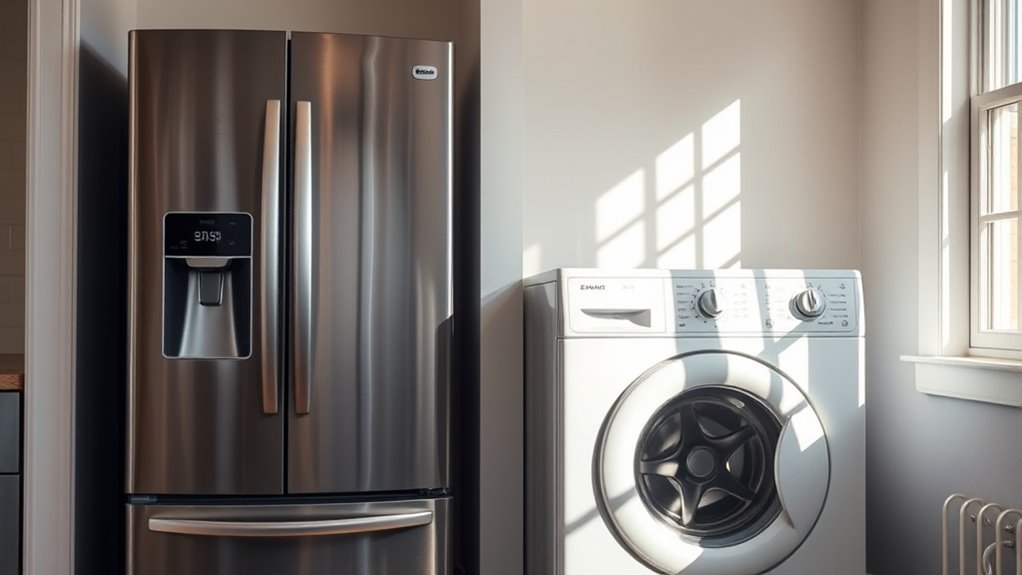
Smart appliances use less energy, helping you cut down on your utility bills. They adapt to your habits, making your home more efficient and saving you money over time. By choosing smart options, you can reduce operating costs without sacrificing performance.
Lower Energy Consumption
Smart appliances often use less energy than traditional ones, helping you save money over time. They optimize energy conservation through advanced power management features, reducing unnecessary consumption. By adjusting their operation based on usage patterns, these devices cut down on wasted energy. This efficiency not only lowers your utility bills but also benefits the environment. To better understand, consider this comparison:
| Feature | Dumb Appliances | Smart Appliances |
|---|---|---|
| Energy Usage | Fixed, often higher | Adaptive, lower |
| Power Management | Manual control | Automated, optimized |
| Energy Conservation | Limited, depends on user | Integrated, proactive |
Choosing smart appliances ensures lower energy consumption, making your home more eco-friendly and cost-effective.
Reduced Operating Costs
By reducing energy consumption, smart appliances directly lower your monthly operating costs. Features like voice control let you manage devices hands-free, ensuring you only run appliances when needed. Remote access allows you to monitor and adjust settings from anywhere, preventing unnecessary energy use when you’re away. These capabilities optimize appliance performance, avoiding waste and saving you money over time. Smart technology can automatically adjust settings based on your habits, further reducing costs. In contrast, dumb appliances lack these efficiencies, often running longer or inefficiently. Investing in smart appliances, even if they seem more expensive initially, pays off through lower utility bills and increased convenience. Over time, these savings add up, making smart appliances a smarter financial choice.
Compatibility and Integration With Other Devices

While compatibility and seamless integration are often touted as advantages of smart appliances, achieving this harmony can sometimes be challenging. Device compatibility varies widely, and not all gadgets work well together, especially if they come from different brands or ecosystems. Integration challenges can lead to frustration, with devices failing to communicate or respond correctly. You might find yourself juggling multiple apps or dealing with inconsistent performance. Sometimes, smart appliances require specific protocols or hubs, increasing complexity rather than simplifying your life. If seamless integration is a priority, you need to verify your devices are compatible with each other beforehand. Otherwise, you risk ending up with a disconnected system that doesn’t deliver the streamlined experience you expected.
Situations Where Simplicity Outperforms Technology

In many everyday situations, simplicity can outperform complex technology by reducing confusion and minimizing potential issues. Manual operation offers a straightforward way to control appliances without relying on apps or internet connections, making it more reliable during power outages or connectivity problems. Traditional design often means fewer features that can malfunction or require updates, ensuring consistent performance. For example, a simple kettle with a manual switch is easier to operate and maintain than a smart kettle that might fail to connect or misinterpret commands. When safety, ease of use, or quick responsiveness matter most, sticking to traditional designs and manual controls prevents unnecessary complications. In these cases, simplicity not only saves time but also provides peace of mind, proving that less can be more.
Frequently Asked Questions
How Do Smart Appliances Impact Household Energy Consumption Overall?
Smart appliances generally improve your household’s energy efficiency by optimizing usage based on your habits and schedules. They can reduce energy consumption through features like automatic shutoff and remote control. However, their behavioral impact varies; some users might rely too much on automation, while others may forget to adjust settings. Overall, smart appliances help lower energy bills, but their effectiveness depends on how consciously you manage and utilize their smart features.
Are Dumb Appliances Less Prone to Hacking and Cyber Threats?
Did you know that dumb appliances are less vulnerable to cybersecurity risks? Because they lack internet connectivity, they’re not susceptible to hacking or cyber threats, making them more secure for your privacy. Without network access, they don’t pose the same cybersecurity risks or privacy concerns that smart devices can. So, if you’re worried about cyber threats, opting for simpler, dumb appliances can give you peace of mind and better security.
What Is the Typical Lifespan Difference Between Smart and Dumb Devices?
Smart devices tend to have a shorter lifespan than dumb appliances because of faster replacement frequency due to rapid tech updates and potential hardware issues. You’ll notice smart gadgets often require replacement or upgrades sooner, around 3-5 years, whereas dumb devices usually last 10-15 years. This difference impacts device durability, as simpler appliances often endure longer, needing fewer repairs and less frequent replacements, making them a reliable, long-term choice.
Can Dumb Appliances Be Upgraded With Modern Features?
Yes, you can upgrade dumb appliances with modern features through retrofit possibilities. By adding smart plugs, sensor modules, or external controllers, you enhance their upgrading capabilities without replacing the entire device. These modifications allow you to control and monitor your appliances remotely, making them smarter in functionality while keeping the simplicity they offer. Just guarantee compatibility and proper installation to maximize the benefits of these upgrades.
How Do Maintenance Costs Compare Over the Appliance’s Lifetime?
Think of your appliances as reliable old friends or high-maintenance newcomers. Dumb appliances typically have lower maintenance expenses because they’re simpler, with fewer parts that break down. Their repair frequency is usually less, meaning you spend less time and money on repairs over their lifetime. In contrast, smart appliances might cost more in repairs due to complex tech, but they offer convenience that can sometimes justify the extra maintenance expenses.
Conclusion
Sometimes, choosing simplicity over smart technology isn’t just about cost or ease—it’s about avoiding surprises. As you weigh the pros and cons, remember that the right choice depends on what matters most to you. Will a straightforward device serve your needs better, or will the latest features tempt you to take the tech leap? The decision isn’t always clear-cut. But one thing’s certain: sometimes, simplicity wins when you least expect it.