To master sous vide eggs for breakfast perfection, focus on precise temperature control and timing. Use a reliable thermometer to set water between 145°F and 165°F, depending on the texture you want. Adjust cook times carefully—30 seconds can make a difference in yolk consistency. Keep eggs at consistent temperatures and follow best practices for handling and safety. For more tips and advanced tricks, continue exploring to elevate your egg game every morning.
Key Takeaways
- Use a precise, reliable thermometer to set water bath temperature between 145°F-165°F for various egg textures.
- Adjust cooking time in small increments (30 seconds to 1 minute) to achieve desired yolk consistency.
- Preheat water thoroughly and cool eggs in ice water immediately after cooking to stop the process.
- Maintain consistent temperature and avoid overcrowding to ensure evenly cooked, high-quality eggs.
- Fine-tune results by calibrating equipment regularly and experimenting with slight variations in time and temperature.
Understanding Egg Temperature Ranges and Their Effects
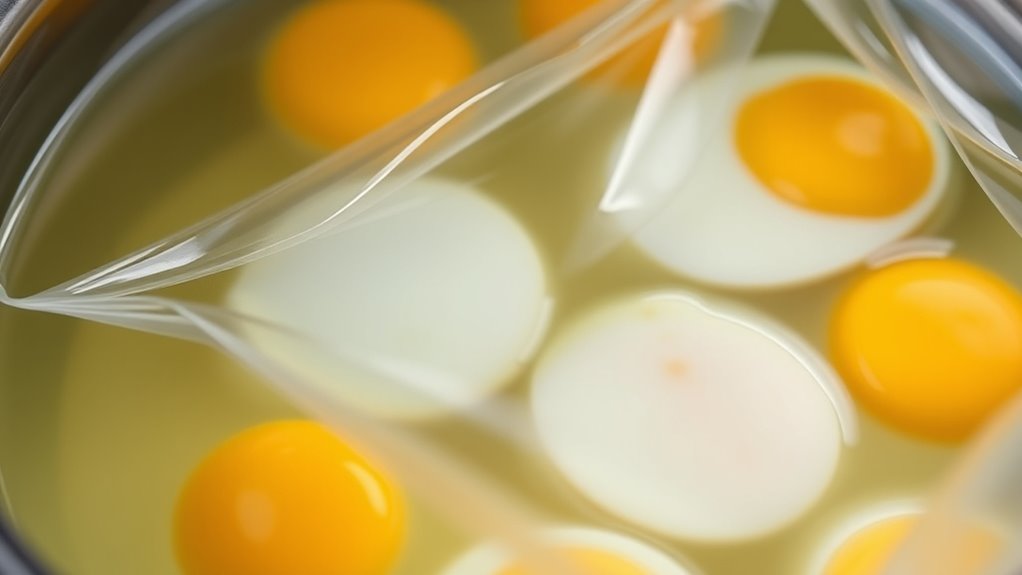
Understanding egg temperature ranges is essential for achieving the perfect texture and safety in sous vide cooking. Different temperatures produce distinct results, from runny yolks to fully set whites. For instance, pasteurization occurs around 130°F (54°C), ensuring safety without fully cooking the egg. Poached eggs typically cook between 140°F-150°F (60°C-66°C), yielding whites that are firm but yolks still runny. Soft-boiled eggs usually range from 145°F-194°F (63°C-90°C), allowing control over yolk consistency. Temperature control is a critical aspect of achieving consistent results with sous vide eggs. Additionally, understanding the specific thermal thresholds helps prevent overcooking or undercooking, ensuring optimal texture and safety. Mastering these precise temperature ranges allows for tailored cooking outcomes based on personal preference or culinary need. For example, cooking times significantly influence the final texture, making precise timing just as important as temperature. Hard-boiled eggs at 165°F (74°C) or higher produce firm whites and yolks, but timing is vital to avoid overcooking. By understanding these temperature ranges, you can tailor your sous vide process for safety and the desired egg texture, whether for breakfast or culinary creativity.
Timing Strategies for Perfect Yolk Consistency

Timing is key to achieving your desired yolk texture, and even small adjustments can make a big difference. You need to balance temperature and duration carefully, as longer cook times result in firmer yolks, while shorter times keep them runny. By understanding how precise time adjustments influence the outcome, you can master a range of yolk consistencies with confidence. Incorporating connected equipment can help you monitor and adjust cooking parameters for perfect results every time.
Precise Time Adjustments
Achieving the perfect yolk consistency with sous vide eggs hinges on making precise timing adjustments, as even a difference of just 30 seconds can alter texture substantially. For example, at 165°F, 13.5 minutes yields a runny yolk, while 14 minutes produces a slightly firmer one. Fine-tuning time helps match your desired doneness precisely. Understanding thermal stability can further improve consistency by ensuring the water bath maintains a steady temperature throughout the cooking process.
Temperature and Duration Balance
Balancing temperature and cooking duration is essential for mastering sous vide eggs, as even small adjustments can substantially impact yolk texture. If you want a runny yolk, aim for around 145°F (63°C) for 45 minutes, but increase or decrease time slightly to refine consistency. For a firmer, jammy yolk, bump the temperature to 150°F (65.6°C) and cook for 40-50 minutes. Shorten or extend cooking times by just 30 seconds to fine-tune your results. Remember, the come-up time adds to your total cooking duration, so plan accordingly.
- Adjust by minutes or seconds for desired yolk firmness
- Keep in mind the come-up time when timing your cook
- Use precise temperature control to avoid over- or under-cooking
Yolk Texture Variations
Ever wonder how a few seconds can transform your sous vide eggs from runny to jammy? Timing is crucial to achieving your desired yolk texture. For a runny yolk, aim for around 13.5 minutes at 165°F (74°C). Slightly longer, say 14 minutes, yields a creamier, slightly more set yolk. For a jammy consistency, cook for about 15 minutes—this gives a firm yet still moist yolk. Extending beyond 15 minutes results in a firmer, more solid yolk, closer to soft-boiled. Remember, these small timing adjustments make a significant difference in texture. Always account for your egg size, initial temperature, and water bath consistency. Precise timing ensures your yolk hits that perfect balance between runny, jammy, and firm—your breakfast game-changer.
Achieving Soft-Boiled and Poached Egg Perfection

To perfect your soft-boiled and poached eggs with sous vide, precise temperature control and timing are essential. Setting your water bath between 145°F and 150°F ensures whites are firm while yolks stay creamy. Timing is critical: 45 minutes at 145°F yields a soft, runny yolk with firm whites, while 60 minutes produces a slightly thicker yolk. For poached eggs, maintain 145°F for 45 minutes for a gooey center or 150°F for 30 minutes for whites that are firm enough to cut. Keep in mind that small timing adjustments—just seconds—can change yolk consistency. To help, consider these tips:
- Use a digital thermometer for precise temperature regulation
- Preheat your water bath to avoid temperature drops
- Cool eggs quickly in an ice bath post-cooking to stop the process
- Understanding whole‑home backup power can be useful if you want to ensure your kitchen can operate during power outages. Additionally, knowing about temperature stability can help you maintain consistent results during your sous vide cooking.
Crafting Ideal Hard-Boiled Eggs and Scrambled Variations

To get perfect hard-boiled eggs and scrambled variations, focus on precise timing and temperature control. Small adjustments in cook time can change the yolk’s firmness, while maintaining consistent temperatures guarantees even texture. Mastering these details helps you achieve the ideal balance of creaminess and firmness every time. Incorporating nanotechnology advances into kitchen appliances can further enhance temperature precision for consistent results. Additionally, understanding style techniques for different egg preparations allows for customization to your preferred texture and presentation. Paying attention to quality assessment ensures you select the freshest eggs, which significantly impacts the final outcome. Moreover, being aware of glycolic acid benefits can aid in maintaining healthy skin, which is essential after long cooking sessions and frequent cleaning in the kitchen environment. Staying informed about temperature control methods can also help you refine your cooking process for better consistency.
Precise Timing Techniques
Achieving perfect hard-boiled eggs and scrambled variations with sous vide relies on precise timing, as small adjustments can dramatically change texture and consistency. To get it just right, you need to pay close attention to the timing of your cook. For example, at 165°F (74°C), 13.5 minutes yields a runny yolk, while 15 minutes results in a firm but creamy yolk. Slightly shorter times keep whites tender, whereas longer ones firm everything up. Timing is everything when it comes to scrambled eggs too—15 minutes at 165°F produces silky, evenly cooked eggs. Remember, even a 30-second difference can alter the final texture considerably, so keep a close eye on your clock.
- Adjust cooking times by seconds for perfect yolk consistency
- Use a timer to avoid overcooking or undercooking
- Record your preferred timing for consistent results
Temperature Control Tips
Mastering temperature control is essential for crafting perfect hard-boiled eggs and scrambled eggs with sous vide. To do this, always start with a precise water bath temperature, ensuring your equipment is calibrated. Use a reliable thermometer to monitor the water and maintain a steady temperature throughout the cooking process. Keep in mind that small variations, like a degree or two, can affect the final texture—so adjust carefully. When making hard-boiled eggs, aim for around 165°F (74°C) for 45 minutes for firm whites and yolks. For soft or scrambled eggs, set the bath between 145°F (63°C) and 165°F (74°C), depending on desired doneness. Consistent temperature control ensures your eggs turn out exactly how you want—creamy, firm, or somewhere in between.
Texture and Consistency
Getting the perfect texture and consistency in sous vide eggs depends largely on precise temperature and timing. To craft ideal hard-boiled eggs, aim for 165°F (74°C) for about 45 minutes for firm whites and creamy yolks. For softer, jammy yolks, reduce the time to around 14 minutes. Scrambled eggs benefit from cooking at 165°F for 15 minutes, resulting in silky, evenly cooked curds without browning. Adjusting the timing by seconds can change yolk firmness—think 13.5 minutes for runny, 15 for more set.
- Use precise timing to match your preferred yolk texture
- Keep an eye on cooking duration to avoid overcooking
- Cool eggs quickly in an ice bath for ideal consistency
Creating Delicious Egg Bites With Sous Vide Precision
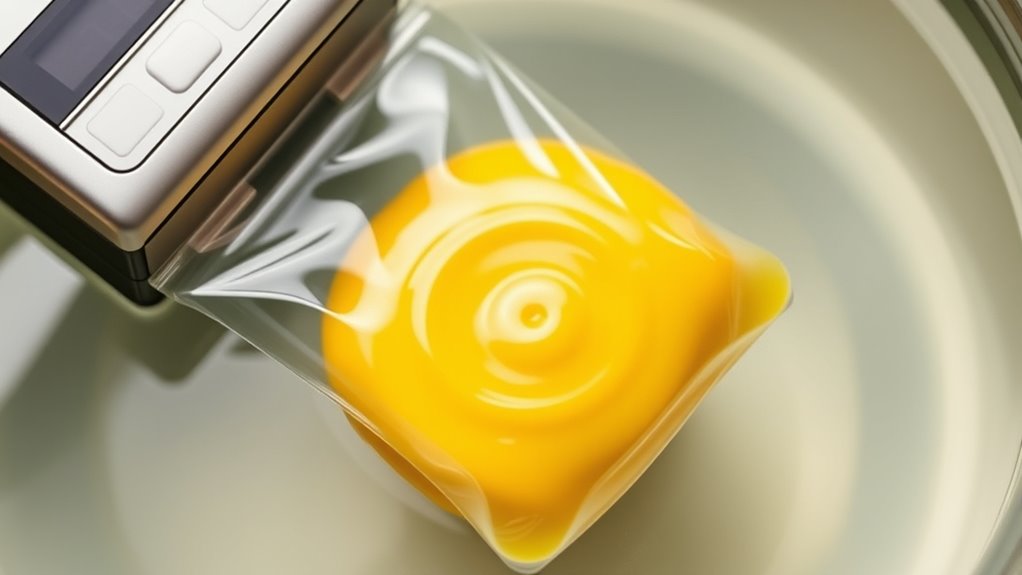
Creating delicious egg bites with sous vide precision starts by selecting the right temperature and cooking time to achieve a consistent, creamy texture similar to those found in high-end cafes. Set your water bath between 172°F and 178°F (78°C to 81°C), which ensures the eggs set properly without overcooking. For a smooth, custard-like consistency, cook the mixture for about 60 minutes. Use a well-blended combination of eggs, cheese, vegetables, and seasonings, then strain the mixture to remove any lumps for an even texture. Pour it into small jars or silicone molds, seal, and cook. Once done, gently remove the bites, optionally broil with cheese for a golden top, and serve immediately. Precision in temp and timing guarantees a perfect, fluffy bite every time.
Ensuring Food Safety and Proper Handling Techniques

To guarantee food safety when preparing eggs sous vide, proper handling and storage are essential. You should always refrigerate raw eggs quickly after purchase and keep them at or below 40°F (4°C). Before cooking, avoid cracks or damage to the shell, which can introduce bacteria. When adding eggs to your water bath, let them come to room temperature or account for a 10-25 minute recovery time to prevent temperature drops. After cooking, immediately transfer eggs to an ice water bath to halt the process and prevent overcooking. Proper hygiene, like washing hands and utensils, helps avoid cross-contamination. Additionally, understanding food safety protocols and the importance of preventing bacterial growth is crucial to minimize health risks associated with raw eggs. Following established food handling guidelines can further reduce the risk of contamination and ensure a safe cooking experience. Being aware of cryptid mysteries and the folklore surrounding elusive creatures can serve as a reminder of the importance of thoroughness and attention to detail in all safety procedures.
Troubleshooting Common Sous Vide Egg Challenges

When preparing eggs sous vide, common challenges often stem from temperature inaccuracies, timing errors, or handling mishaps. If your eggs turn out rubbery or undercooked, check your water bath’s temperature with a reliable thermometer—small deviations can drastically affect results. For soft, runny yolks, ensure you’re timing your cook precisely, as even a minute too long can firm up the center. Overcooking can also happen if eggs are added while the water is still heating; always allow sufficient recovery time after placing cold eggs in the bath. Additionally, avoid overcrowding the water to maintain consistent temperatures. If your eggs are sticking or unevenly cooked, consider gently stirring or rotating them during cooking. Properly monitoring temperature and timing helps prevent these common issues, ensuring perfect eggs every time. Consistent heat distribution is crucial for achieving uniform results in sous vide cooking.
Enhancing Eggs With Finishing Touches and Flavors

Once your sous vide eggs reach the perfect doneness, adding finishing touches and flavors can elevate them from good to exceptional. You can experiment with textures, colors, and seasonings to create a breakfast experience tailored to your taste. For example, a sprinkle of flaky sea salt or freshly cracked black pepper adds simplicity and depth. Drizzle with a flavorful hot sauce or a dollop of herb-infused sour cream for extra richness. Incorporate fresh herbs like chives or dill for brightness, or top with crispy bacon bits for crunch. These small touches enhance the egg’s natural flavor and presentation, turning a basic dish into a gourmet treat. Additionally, natural pools can serve as a stunning backdrop for breakfast-themed outdoor brunches, combining style with functionality. Exploring culinary presentation techniques can inspire creative plating ideas, such as serving eggs in unique, mystical settings to elevate your brunch experience. To ensure your eggs maintain the ideal texture, understanding smart kitchen gadgets can further refine your cooking process and presentation.
Tips for Consistent Results and Advanced Techniques
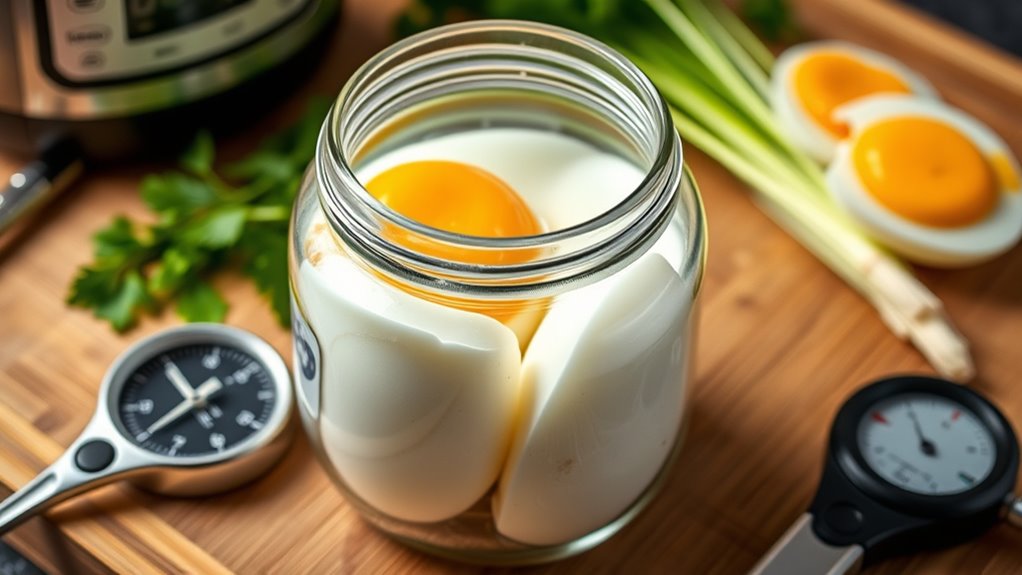
Achieving consistent sous vide egg results requires careful control of temperature and timing, as even small deviations can alter texture and safety. Use a precise, calibrated immersion circulator to maintain your set temperature within ±0.2°F (±0.1°C). Always preheat your water bath before adding eggs, and account for thermal recovery time when adding cold eggs to avoid temperature dips. Record your time and temperature for each recipe to replicate the results reliably. Consider using a sous vide timer app or control system for accuracy. For advanced results, experiment with slight variations—like adjusting cook time by 30 seconds—to fine-tune yolk consistency. Cooling immediately after cooking in an ice bath preserves texture and prevents overcooking, ensuring repeatable, perfect eggs every time. Additionally, understanding thermal stability helps you maintain the precise conditions needed for perfect sous vide eggs. Maintaining water temperature consistency across multiple batches ensures predictable results and optimal food safety. Implementing temperature calibration techniques ensures your device remains accurate over time, further enhancing consistency. Regularly monitoring and adjusting your equipment for device accuracy guarantees ongoing precision in your cooking process.
Frequently Asked Questions
How Can I Tell When My Sous Vide Eggs Are Fully Cooked?
You can tell your sous vide eggs are fully cooked by checking the temperature and timing. Use a precise thermometer to guarantee the water stays at the target temp, like 145°F for soft yolks or 165°F for hard. Count the cooking time carefully—most eggs need at least 45 minutes, including come-up time. When the timer’s up, gently remove the eggs and cool them immediately to stop cooking.
What’s the Best Way to Reheat Sous Vide Eggs Without Overcooking?
Reheating sous vide eggs without overcooking? Easy—just gently warm them in a water bath set to their original cooking temperature, around 145°F for soft-boiled or 165°F for hard-boiled. No rush, no high heat. Keep a close eye, and remove once they reach your desired temp. It’s basically the culinary version of a patience contest—because who wants rubbery eggs? Certainly not you.
How Do I Prevent Eggs From Cracking During Sous Vide Cooking?
To prevent eggs from cracking during sous vide cooking, start by gently placing them in a single layer in the water bath. Use a slotted spoon or a mesh bag to avoid impact. Keep the water temperature stable and avoid rapid temperature changes. Also, consider adding a pinch of salt or vinegar to the water, which can help strengthen the eggshells and reduce the risk of cracking.
Can I Cook Different Egg Styles at the Same Time?
Think of cooking different egg styles at once like orchestrating a symphony—each instrument (or egg style) needs its own tempo. Yes, you can cook various styles simultaneously by adjusting water temperature and timing for each. Start with the longest cook time, then add eggs with shorter durations later. Use a precise temperature control and a well-organized setup to guarantee each egg reaches perfection without overcooking.
How Long Do Sous Vide Eggs Stay Safe After Cooking?
You should consume sous vide eggs within 1 to 2 hours after cooking to guarantee safety. If you need to store them longer, refrigerate immediately at or below 40°F (4°C) and consume within 24 hours. Keep in mind, bacteria can grow if eggs sit out too long, so always refrigerate promptly, and reheat to safe temperatures if you plan to eat them later.
Conclusion
Mastering sous vide eggs transforms your breakfast game into an art form so refined, even the sunrise pauses to admire your culinary mastery. With these tech tricks, you’ll unleash egg perfection that’s smoother than velvet and more precise than a Swiss watch. Say goodbye to ordinary mornings and welcome a world where every bite is a symphony of flavor and texture. Get ready to elevate your breakfast to legendary status—because your eggs deserve nothing less than perfection.