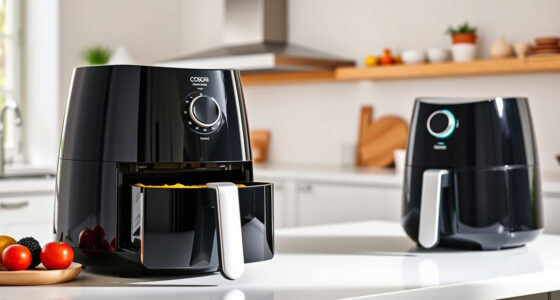
If you’re wondering whether you need both a smart oven and an air fryer, it depends on your cooking habits and space. An air fryer excels at quick, crispy snacks, while a smart oven offers versatility for larger meals and multiple functions. If you have limited space or mostly cook simple dishes, one might suffice. To find out which fits your lifestyle best, explore the differences in features and performance further.

Get kitchen gear delivered free with Prime
- Fast, free delivery on millions of items
- Prime Video, Amazon Music and more included
- Member-only deals all year
Key Takeaways
- Smart ovens offer multifunctionality and larger capacity, replacing multiple appliances, while air fryers excel at quick, crispy snacks.
- Both appliances provide air circulation technology, but smart ovens have versatile cooking modes and more user controls.
- Choose an air fryer for speed and simplicity or a smart oven for larger meals and diverse cooking needs.
- Space considerations: compact air fryers fit small kitchens; smart ovens require more room but offer greater functionality.
- Your decision depends on cooking habits, available kitchen space, and whether you prioritize quick snacks or versatile, large-scale cooking.
smart oven with air frying function
As an affiliate, we earn on qualifying purchases.
As an affiliate, we earn on qualifying purchases.
Comparing Size and Capacity
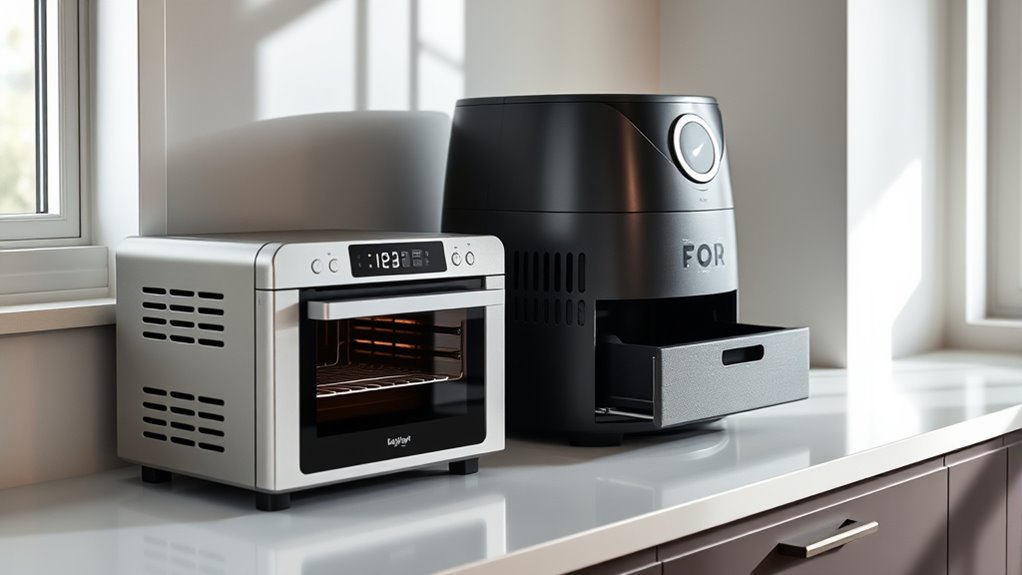
When comparing size and capacity, smart ovens like the Breville Smart Oven Air clearly outpace standard air fryers in both dimensions and cooking volume. The Breville offers about 1 cubic foot of space, nearly doubling the capacity of typical air fryers like the Cuisinart, which usually have a smaller, basket-style design. With multiple racks—up to four—you can cook larger quantities at once, perfect for families or entertaining. In terms of size, smart ovens measure roughly 15-18 inches wide, 12-15 inches deep, and tall, while air fryers are generally more compact at around 12-14 inches wide. For example, the Breville can air fry 22 chicken wings simultaneously, whereas standard air fryers handle only 8-12 wings per batch. Additionally, the tool storage capabilities of smart ovens can help organize accessories and accessories, making them more versatile for various cooking tasks.
compact air fryer for small kitchens
As an affiliate, we earn on qualifying purchases.
As an affiliate, we earn on qualifying purchases.
Performance and Cooking Efficiency
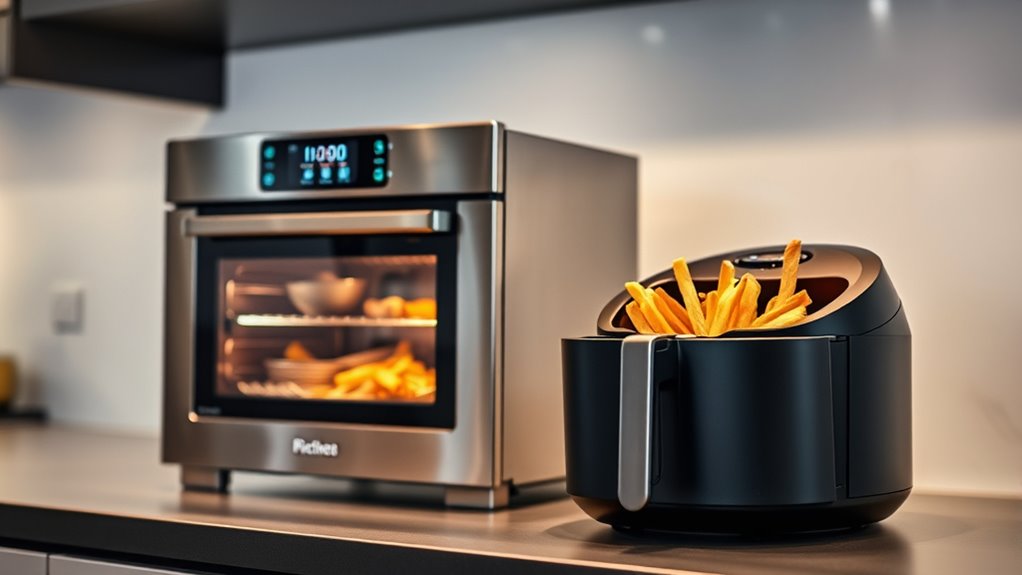
While larger capacity allows smart ovens to handle more food at once, their performance and cooking efficiency vary compared to air fryers. Air fryers excel at crispy textures because they use concentrated high heat and powerful fans, delivering faster results—often in about 10 minutes less. They achieve higher crispiness percentages and produce consistent, evenly cooked foods. Smart ovens, however, typically take longer due to their larger space, but properly optimized fan placement can boost their air frying performance close to that of basket fryers. Additionally, air circulation technology plays a crucial role in achieving optimal crispiness and even cooking in both appliances. While they may not match an air fryer’s speed or crispiness, smart ovens provide versatility for different cooking styles. Overall, air fryers are more efficient for quick, crispy results, but smart ovens offer broader functionality with acceptable performance. Advancements in smart oven technology continue to improve their air frying capabilities, narrowing the gap in performance. Moreover, understanding energy efficiency can help optimize cooking times and reduce power consumption for both appliances. Incorporating innovative heating elements can further enhance their cooking performance and energy use. Additionally, ongoing research and development in appliance design contribute to continuous improvements in cooking speed and quality.
As an affiliate, we earn on qualifying purchases.
Versatility and Additional Functions
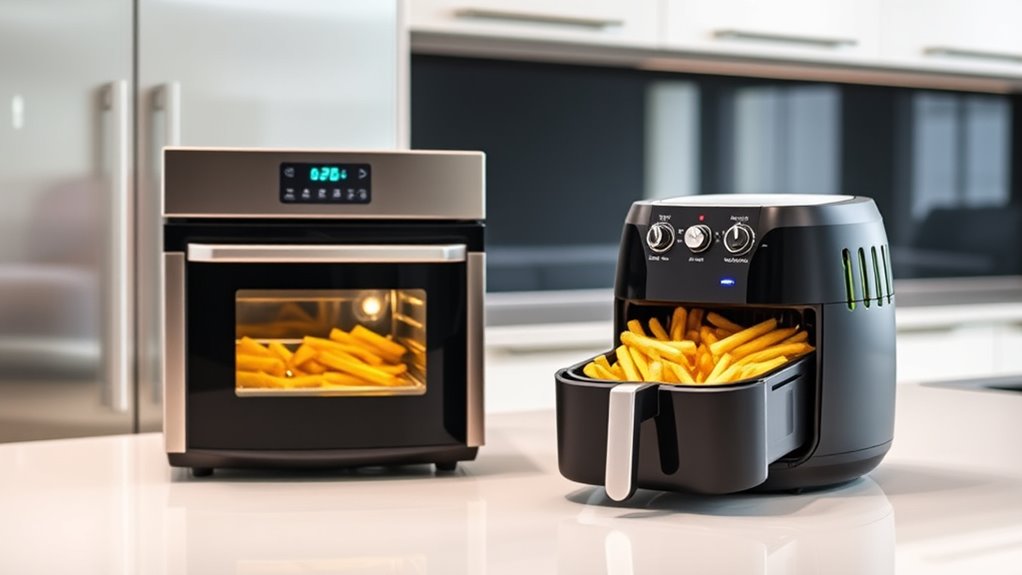
Smart ovens are designed to do much more than just air fry; they offer a wide range of built-in functions that enhance their versatility. You can easily switch from baking bread to dehydrating fruit or proofing dough, all within one appliance. Imagine:
Smart ovens do more than air fry, offering versatile functions like baking, dehydrating, and proofing all in one appliance.
- Using the preset for roasting vegetables while simultaneously toasting bread on different racks.
- Dehydrating slices of fruit or herbs for snacks or seasoning.
- Slow cooking a stew in a Dutch oven, saving counter space and time.
These features let you handle multiple cooking styles without switching devices. Unlike standard air fryers, which mainly focus on crispy results, smart ovens adapt to various culinary needs, making them a true all-in-one solution for your kitchen.
best air fryer for crispy snacks
As an affiliate, we earn on qualifying purchases.
As an affiliate, we earn on qualifying purchases.
Design Features and Air Circulation
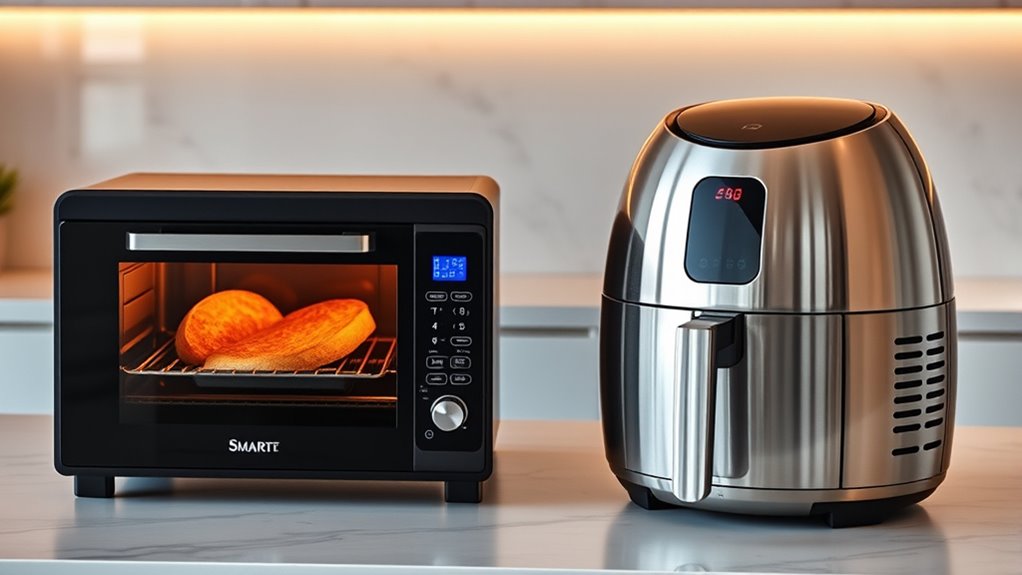
The airflow pathways and heating element placement greatly influence how well your appliance circulates hot air and cooks food evenly. In smart ovens, convection fans are often positioned on the sides, which can create different airflow patterns compared to the top-mounted fans in air fryers. Understanding these design choices helps you determine which appliance will deliver better air circulation for your cooking needs. Additionally, the technique primers used in these appliances can enhance the efficiency of heat transfer and airflow distribution. The contrast ratios in these devices also play a role in how well the heat is visually distributed across the food surface, affecting cooking results. Recognizing the airflow design can help you choose the right appliance for consistent and thorough cooking. Proper airflow management is essential for achieving optimal cooking performance and even results in both types of appliances. Moreover, the air circulation mechanisms directly impact cooking times and energy efficiency, making it an important factor to consider when selecting your appliance.
Airflow Pathways
Airflow pathways play a essential role in how effectively a cooking appliance circulates hot air around your food. In smart ovens, the convection fan is typically positioned on the side, directing air across the interior chamber. This setup creates three key airflow patterns:
- Side-to-side circulation that evenly distributes heat across multiple racks.
- Vertical airflow from the fan to the heating element, promoting uniform cooking.
- Recirculation zones where air is pushed back around food, ensuring consistent crispiness.
In contrast, air fryers use powerful fans positioned directly above the food, creating a concentrated airflow that rapidly crisps surfaces. Understanding these pathways helps you optimize each appliance’s performance for your cooking needs.
Heating Element Placement
Heating element placement considerably influences how heat is distributed within the appliance and impacts air circulation efficiency. In smart ovens, elements are often positioned on the sides or top, which can create uneven heat flow if not optimized. Attention to detail is essential when designing these placements to achieve optimal results. Air fryers, however, typically place high-wattage elements near the top with fans directly circulating hot air around food, ensuring rapid crisping. Proper placement enhances even cooking and crispiness. Here’s a quick comparison:
| Heating Element Placement | Effect on Air Circulation |
|---|---|
| Side or top placement | Can cause uneven heat if poorly positioned |
| Top with fan directly above | Promotes even heat and crispiness |
| Bottom heating elements | May lead to uneven cooking or hot spots |
| Side heaters with side fans | Ensures better air circulation |
| Top heaters with dedicated fan | Optimizes air frying performance |
Correct placement is key for efficient, evenly cooked results. Additionally, understanding air circulation principles helps optimize cooking performance in both appliances.
Best Food Types for Each Appliance
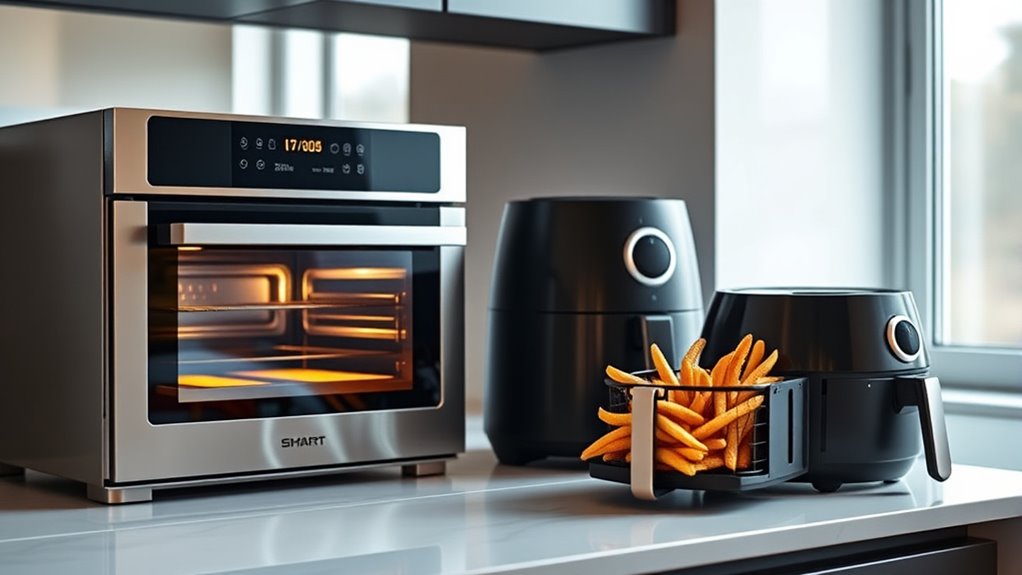
Choosing the right appliance depends heavily on the types of foods you plan to cook. For quick, crispy results, a basket air fryer is ideal. Imagine:
A basket air fryer delivers quick, crispy results perfect for snacks and small meals.
- A batch of golden french fries, perfectly crispy on the outside and tender inside.
- Juicy chicken wings with a crisp skin, cooked evenly in a small space.
- Spring rolls or mozzarella sticks, achieving deep-fried texture without oil splatters.
- Rendering lard as a traditional method to enhance flavor and cooking versatility, especially for fried dishes. Additionally, understanding the principles of heat transfer can help you optimize cooking results with either appliance.
- The temperature control features in smart ovens allow for precise cooking, making them suitable for delicate dishes that require careful heat management.
- A good grasp of energy efficiency can also influence your choice, as some appliances consume less power while delivering excellent results. Knowing about cooking techniques can further improve your results and help you choose the best appliance for your needs.
Smart ovens excel with larger, more diverse meals. Picture:
- Toasted bread for breakfast, evenly browned across multiple slices.
- Roasted vegetables with caramelized edges, cooked on multiple racks.
- Complete casseroles or large roasts, benefiting from even heat distribution and multiple functions.
Cost, Value, and Long-Term Investment
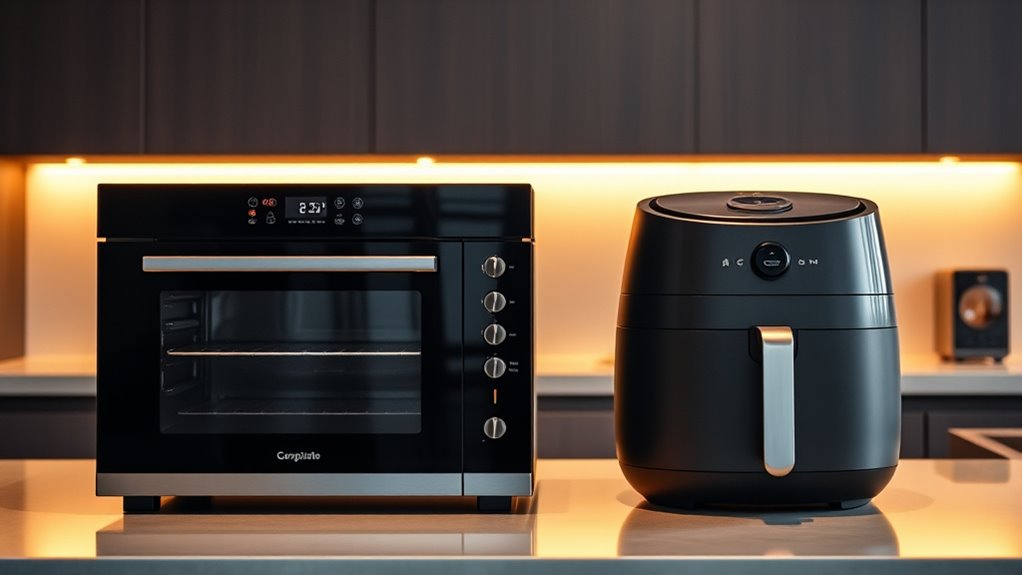
When evaluating cost and value, it’s important to contemplate how often you’ll use your appliance and the range of functions it offers. A smart oven costs 30-50% more but provides versatility—baking, roasting, dehydrating, and air frying—potentially replacing multiple devices. In contrast, an air fryer is more affordable, around $80-$200, and excels at crispy foods quickly. Consider your cooking habits: if you frequently entertain or cook large meals, a smart oven’s larger capacity and multifunctionality justify the investment. Conversely, if you primarily crave crispy snacks and want quick results, an air fryer offers excellent value. Here’s a quick comparison:
| Feature | Smart Oven | Air Fryer | Cost Range |
|---|---|---|---|
| Price | $300-$400 | $80-$200 | Higher |
| Versatility | Multiple functions | Air frying only | Lower |
| Capacity | Larger (up to 4 racks) | Smaller (basket) | Varies |
| Long-term value | For frequent cooks | For quick snacks | Varies |
| Space Efficiency | Combines functions in one | Compact, dedicated | Varies |
Additionally, understanding kitchen appliance efficiency can help you make a more informed decision about which device best suits your needs.
Space Considerations in Your Kitchen
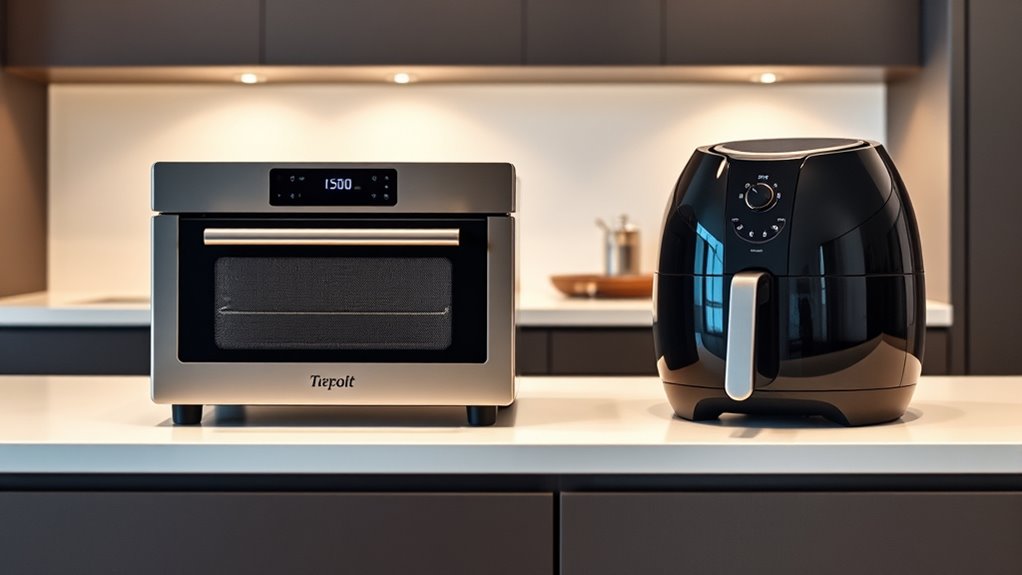
When choosing between a smart oven and an air fryer, consider how much counter space each will take up in your kitchen. A smart oven usually has a larger footprint but offers more storage and accessibility with its multiple functions, while a compact air fryer fits easily into tight spaces. Think about how a multi-function appliance might save space overall versus managing separate devices for different tasks. Additionally, evaluating the ventilation considerations can ensure safe operation, especially for appliances with high heat output. Incorporating the size and placement of your appliances into your planning can help maintain a safe and efficient kitchen environment. Proper ventilation is crucial to prevent overheating and ensure safety, particularly with larger appliances. Also, assessing the seasonal usage can help you decide which appliance suits your cooking habits year-round. Considering the appliance durability can further inform your decision, ensuring your investment lasts through frequent use.
Countertop Footprint Size
Smart ovens tend to have a larger countertop footprint than standard air fryers, which can impact your kitchen’s workspace. When placing one, picture: 1. A wide, 18-inch surface stretching across your counter. 2. A tall, 15-inch height that might block nearby cabinets or windows. 3. A deep, 15-inch profile that reduces available prep space. This size can make it challenging to fit in tight kitchens or small countertops. In contrast, a typical air fryer takes up about 12 inches in width, with a more compact, vertical design. If space is limited, you’ll need to think about whether the larger footprint of a smart oven fits your kitchen layout or if a smaller air fryer suits your available workspace better. Additionally, considering deep-sky imaging principles, optimizing your kitchen layout can improve overall functionality and workflow. For example, arranging appliances to maximize efficiency can make meal prep more streamlined and less cluttered, especially when considering the small appliance size and placement to maintain a clutter-free environment.
Storage and Accessibility
The size and design of your kitchen considerably influence how easily you can incorporate a smart oven or air fryer. Smart ovens are generally larger and heavier, often measuring around 15-18 inches wide, which requires more countertop or storage space. They tend to be bulkier but offer the advantage of being multifunctional, so you might prefer keeping them accessible for daily use. Air fryers are more compact, usually around 12-14 inches wide, making them easier to store in cabinets or drawers when not in use. Their smaller footprint allows for quick retrieval and stowaway, ideal for kitchens with limited space. Consider your available storage options and how frequently you’ll use each appliance to decide whether you want them tucked away or kept on the counter for easy access.
Multi-Function Versus Space
If your kitchen has limited space, choosing between a multi-function smart oven and a compact air fryer becomes a strategic decision. Imagine:
- A sleek countertop with a large smart oven occupying nearly a third of available surface area
- A small air fryer fitting easily into a corner, leaving room for other essentials
- A compact device that combines multiple functions, reducing the need for extra appliances
Smart ovens often measure around 15-18 inches wide and can handle larger meals, but they take up more space. Air fryers are smaller, usually under 14 inches wide, making them ideal for tight kitchens. Consider how much space you have and whether you value multifunctionality or minimal footprint to make the best choice.
User Experience and Ease of Use
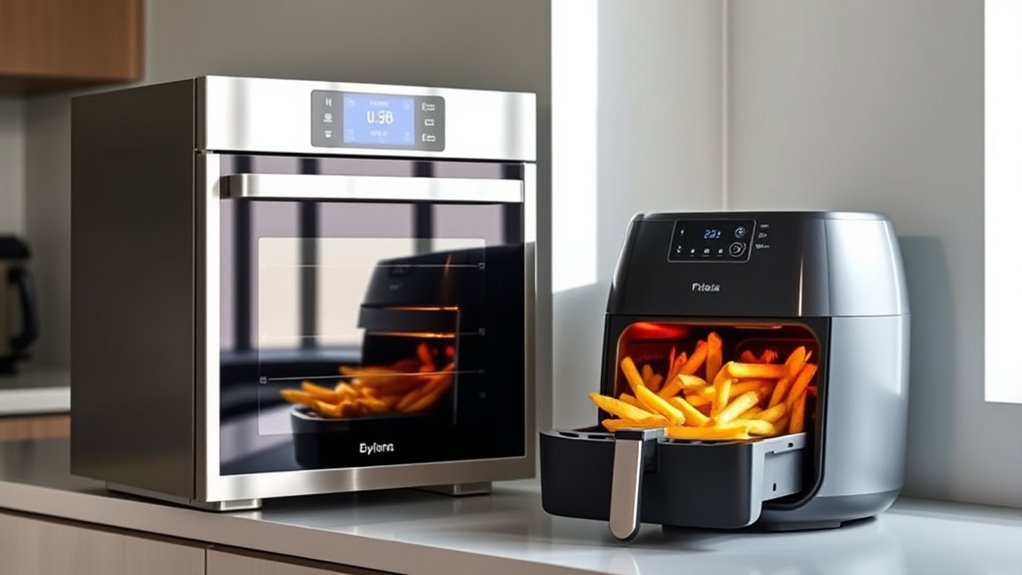
Managing user experience with these appliances depends largely on their design and interface. With a smart oven, you benefit from a touchscreen or control panel that offers preset functions, making it simple to select your desired cooking mode. Its larger display provides clear feedback, but the complexity can be overwhelming if you’re unfamiliar with its features. On the other hand, air fryers often feature straightforward dials or digital buttons, allowing quick adjustments with minimal effort. They’re generally more intuitive, especially for basic tasks like air frying or reheating. Smart ovens may require a learning curve to navigate multiple functions, while air fryers excel in quick, one-touch operation. Overall, if you prefer simplicity, an air fryer offers a more user-friendly experience. If versatility is your priority, smart ovens provide more options but demand more familiarization.
Making the Right Choice for Your Needs
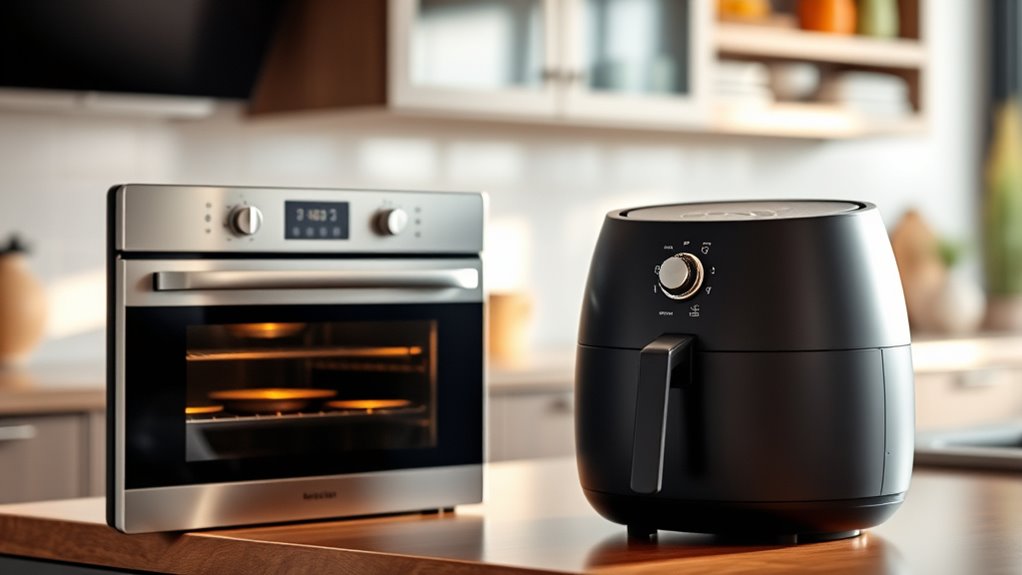
Choosing between a smart oven and an air fryer depends on your cooking habits, household size, and space constraints. To make the right choice, envision this:
- You’re feeding a family of four, needing to cook multiple dishes at once—smart ovens with their larger capacity and multiple racks make this easier.
- You prefer quick, crispy snacks like chicken wings or fries—air fryers excel with faster cooking times and superior crispiness.
- Space is limited in your kitchen—compact air fryers fit easily, while smart ovens offer versatility without needing extra appliances.
Think about what’s most important for your lifestyle: do you need speed and crispiness, or capacity and multifunctionality? Your ideal appliance depends on balancing these priorities.
Frequently Asked Questions
Can a Smart Oven Replace My Traditional Oven Entirely?
Yes, a smart oven can replace your traditional oven, especially if it offers multiple functions like baking, roasting, broiling, and even slow cooking. With its larger capacity and versatile presets, you can handle most cooking tasks. However, if you frequently bake in large quantities or need precise temperature control, a traditional oven might still be necessary. But for everyday cooking and space-saving, a smart oven can often do the trick.
How Energy-Efficient Are Air Fryers Compared to Smart Ovens?
Air fryers are generally more energy-efficient than smart ovens because they heat up faster and cook food quicker due to their concentrated high-wattage heating and powerful fans. You use less energy for small batches, making them ideal for quick snacks or small meals. Smart ovens, with larger capacity and longer cooking times, tend to consume more energy, especially when cooking larger quantities or using multiple functions simultaneously.
Do Smart Ovens Require Special Cookware for Baking or Slow Cooking?
No, smart ovens don’t require special cookware for baking or slow cooking. You can use standard oven-safe dishes like glass, ceramic, or metal pans. Just make certain they fit comfortably inside the oven and are rated for the temperature you’re cooking at. This flexibility allows you to utilize your existing cookware, making it easier and more convenient to prepare a variety of recipes without investing in specialized pots or pans.
Are There Safety Concerns With Larger Capacity Smart Ovens?
Think of a larger smart oven like a modern castle with sturdy walls—you might worry about safety, but it’s built with modern standards. Generally, these ovens are safe if you follow the manufacturer’s instructions, avoid blocking vents, and use proper cookware. Always keep an eye on children around hot surfaces, and regularly check for any signs of malfunction. Proper use guarantees your larger capacity oven remains safe and reliable.
Which Appliance Is Better for Gluten-Free or Specialized Diets?
If you’re on a gluten-free or specialized diet, a smart oven is better because it offers versatile cooking options and precise temperature controls, allowing you to prepare a variety of healthy, customized meals. You can bake, roast, or dehydrate gluten-free breads and snacks without cross-contamination risks. Plus, its multiple presets help you stick to your diet, making it easier to cook specialized dishes consistently and safely.
Conclusion
Imagine your kitchen as a bustling culinary playground, where a smart oven and air fryer each bring their unique magic. Whether you’re crisping up fries or baking a delicate cake, choosing the right appliance transforms cooking into a delightful adventure. Consider your space, needs, and budget to find your perfect pair. With the right tools in hand, you’ll turn everyday meals into flavorful memories, making every bite a reason to celebrate.
Halloween Picks
halloween
As an affiliate, we earn on qualifying purchases.