To avoid common sous vide mistakes, start by guarantee your bags are properly sealed and leak-proof, removing as much air as possible. Keep your water at the correct temperature with reliable equipment, and add hot water during long cooks to prevent evaporation. Prepare ingredients evenly and avoid overpacking to ensure proper circulation. With organization and attention to detail, you’ll achieve perfect results—keep going to learn more tips to master your sous vide cooking.

Get kitchen gear delivered free with Prime
- Fast, free delivery on millions of items
- Prime Video, Amazon Music and more included
- Member-only deals all year
Key Takeaways
- Ensure bags are properly sealed with minimal air to prevent floating and leaks during cooking.
- Use precise, calibrated temperature controls to avoid undercooking or overcooking.
- Maintain water levels and circulation to ensure even heat distribution and prevent water evaporation.
- Prepare ingredients uniformly and avoid overfilling bags for optimal heat transfer.
- Organize foods to prevent overcrowding, allowing proper water flow and consistent results.
As an affiliate, we earn on qualifying purchases.
Ensuring Proper Bag Sealing and Packaging Techniques
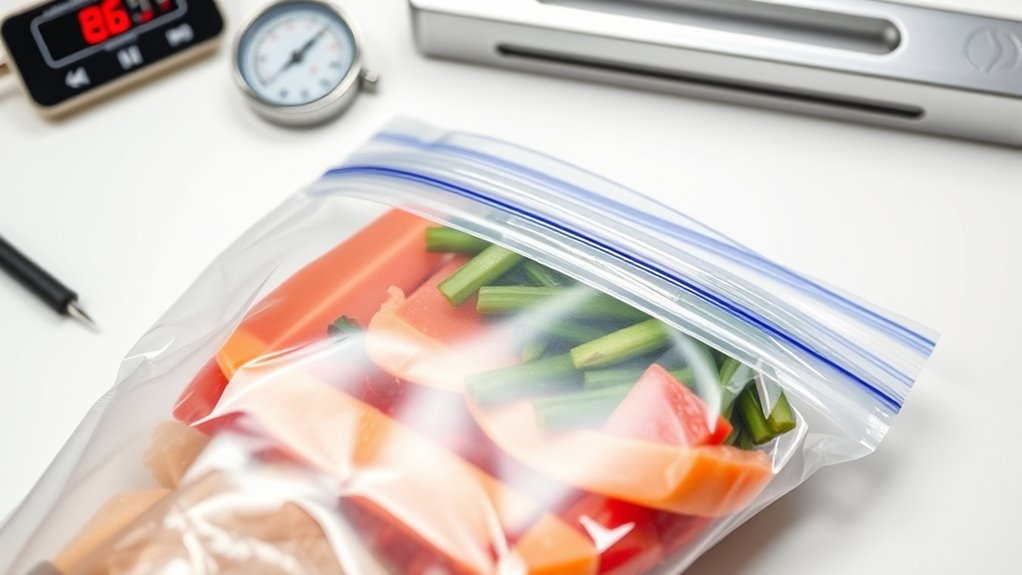
Are you confident your bags are properly sealed before starting your sous vide cook? Inadequate sealing is a common mistake that can ruin your meal. Double-check every bag for leaks or weak spots before submerging. Use high-quality, heat-resistant bags designed for sous vide to prevent leaks and safety hazards. Avoid overfilling; leaving enough space helps you remove excess air effectively. Proper air removal prevents floating bags, ensuring even cooking. Always press out as much air as possible before sealing. If you notice any potential weak points, reseal. Remember, a secure seal keeps water out and preserves the food’s texture and flavor. Ensuring your bags are correctly vacuum-sealed is essential for consistent results. Using proper sealing techniques can significantly improve the quality of your sous vide dishes. Investing in smart sealing tools can help achieve more reliable and airtight seals for better cooking outcomes. Proper attention to air removal methods not only enhances safety but also ensures your food cooks evenly and maintains optimal texture, which is vital for developing your culinary skills and achieving professional results.
As an affiliate, we earn on qualifying purchases.
Mastering Temperature Control for Perfect Results

Achieving perfect sous vide results hinges on mastering precise temperature control, as even small deviations can considerably impact texture and safety. You must set your water bath to the exact temperature specified for your recipe, avoiding guesswork. Use a reliable thermometer or a quality immersion circulator with accurate calibration. Remember, cooking at too low a temperature can risk food safety, while too high can cause overcooking and mushy textures. Always follow trusted reference charts for time and temperature, adjusting for ingredient thickness and desired doneness. Keep a close eye on your equipment’s display and verify settings regularly. Consistent temperature control guarantees your food cooks evenly, achieving the ideal tenderness and safety standards every time. Free Floating techniques can also help maintain steady water circulation for more uniform cooking results. Additionally, understanding the importance of temperature stability is essential for consistent quality in sous vide cooking. Proper calibration and regular checks of your equipment contribute significantly to precision in temperature control, ensuring reliable and repeatable results. Maintaining a consistent temperature environment minimizes fluctuations that can lead to uneven cooking, ultimately improving overall dish quality. Regularly inspecting your equipment and practicing temperature monitoring can further enhance your cooking precision.
As an affiliate, we earn on qualifying purchases.
Managing Water Levels and Circulation Effectively
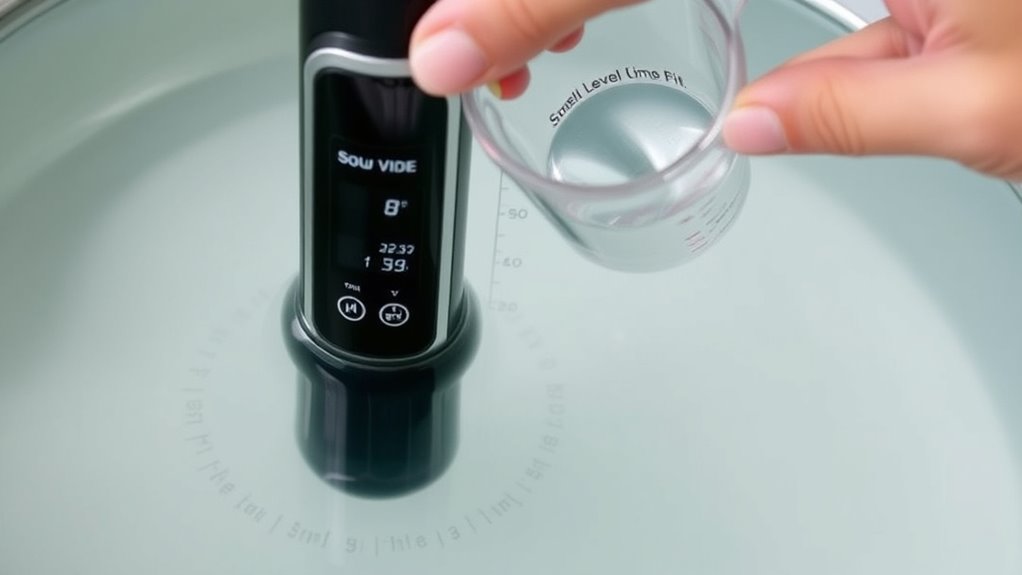
Maintaining proper water levels and circulation is essential for consistent sous vide results. If the water level is too low, your food may cook unevenly or be exposed to air, risking safety and quality. Insufficient circulation causes cold spots and inconsistent textures. To guarantee ideal results, focus on:
Proper water levels and circulation ensure safe, even sous vide cooking with consistent results.
- Checking water levels before starting to prevent food from floating or drying out.
- Adding hot water if evaporation occurs during long cooks to maintain stability.
- Using a lid, plastic wrap, or ping pong balls to minimize evaporation and temperature fluctuations.
- Ensuring your water circulator is functioning correctly for even heat distribution. Proper circulation also helps prevent potential equipment malfunctions and ensures food safety. Additionally, regular maintenance of your circulator can prolong its lifespan and maintain optimal performance, especially in environments with fluctuating ambient temperatures that can impact water consistency. Proper temperature control is crucial for achieving precise cooking results and maintaining food safety standards. Regularly verifying that your circulator’s pump is operating effectively can further enhance cooking accuracy and reliability.
As an affiliate, we earn on qualifying purchases.
Preparing Ingredients Correctly Before Sealing
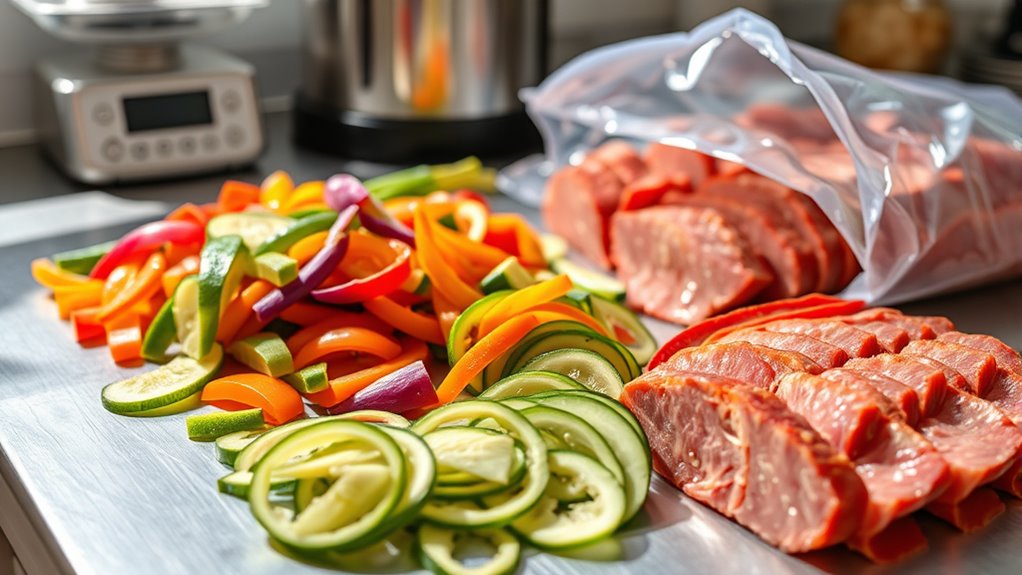
Proper ingredient preparation sets the foundation for successful sous vide cooking. You want evenly sized, clean ingredients to guarantee consistent results. Cut ingredients to uniform sizes for even heat penetration, and avoid overfilling the bag to prevent air pockets. Marinate ingredients properly, but don’t overdo it, as excess seasoning can become overpowering. Use quality, heat-safe bags that won’t leak or break down during cooking. Here’s a visual breakdown:
| Step | Key Action | Result |
|---|---|---|
| Size | Cut ingredients uniformly | Even cooking and texture |
| Bag Filling | Leave space, avoid overstuffing | Proper sealing and circulation |
| Seasoning | Moderate herbs and spices | Balanced flavor penetration |
| Marination | Pre-soak ingredients, then dry | Better flavor and texture |
Additionally, selecting the right temperature control is crucial for optimal results. This guarantees your ingredients cook perfectly every time. Incorporating [proper food safety] practices is essential to prevent contamination and ensure your dishes are safe to eat.
Organizing Food and Finishing With Precision

Organizing your food properly before sealing guarantees even cooking and consistent results. When you arrange ingredients thoughtfully, you ensure heat circulates evenly and flavors meld perfectly. Here’s what to keep in mind:
- Avoid stacking or overpacking—it blocks water flow, leading to uneven doneness.
- Arrange items side by side—maximize contact with water for uniform cooking.
- Group similar temperatures together—prevent undercooked or overcooked sections.
- Leave space between foods—allow water to circulate freely, ensuring every piece is perfectly done.
- Maintain proper food organization—it’s essential for achieving optimal sous vide results.
Frequently Asked Questions
How Can I Tell if My Vacuum Seal Is Truly Airtight?
You can tell if your vacuum seal is truly airtight by gently pressing on the bag; it shouldn’t flex or feel loose. Submerge the bag in water to check for leaks—look for bubbles escaping. Make certain the seal line is clean and fully closed without gaps. When you gently tug on the bag, it shouldn’t open or come apart. A secure, unbroken seal guarantees your food stays safe and properly cooked.
What’s the Safest Temperature Range for Cooking Different Types of Meat?
Imagine you’re a culinary time traveler, and the safest temperature range for cooking meats varies. For poultry, keep it between 140°F and 165°F to eliminate bacteria without drying out. Beef and lamb are best cooked at 129°F to 136°F for tender results, while pork should be between 140°F and 160°F for safety and flavor. Always follow recommended guidelines to guarantee both safety and ideal texture.
How Often Should I Check Water Levels During Long Sous Vide Sessions?
During long sous vide sessions, you should check the water level every hour to guarantee it remains within the recommended range. If it drops below the minimum, add hot water to maintain consistent temperature and prevent food from exposure. Keep an eye on evaporation, especially during extended cook times, and cover the water bath with plastic wrap or a lid to minimize water loss. Regular checks help achieve perfect, safe results.
What Is the Best Way to Marinate Ingredients for Sous Vide?
Think of marinating as painting a flavor canvas before cooking. To do it best, cut ingredients into uniform sizes for even absorption, then submerge them in a well-sealed bag filled with your marinade. Gently massage to distribute flavors, ensuring no air pockets remain. Allow sufficient time—at least an hour or overnight—so flavors penetrate deeply, but avoid overpowering herbs or spices that intensify during sous vide.
How Do I Prevent Food From Floating in the Water Bath?
To prevent food from floating in your water bath, you should remove as much air as possible from the bag before sealing. Use a vacuum sealer or the water displacement method with a resealable bag. Add weights like sous vide weights, ceramic balls, or a heavy towel on top of the bag. Guarantee the bag is properly sealed and the food is fully submerged, adjusting weights as needed to keep everything underwater.
Conclusion
By avoiding these common sous vide mistakes, you’ll open a world of perfect, restaurant-quality meals right in your kitchen. Imagine every dish coming out flawlessly cooked, bursting with flavor, and impressing everyone you serve — truly a game-changer! Don’t let simple errors sabotage your culinary dreams. Take control, perfect your technique, and turn ordinary ingredients into extraordinary masterpieces. With a little attention, you’ll become a sous vide legend — your kitchen will never be the same again!
Columbus Day / Indigenous Peoples' Day Picks
long weekend sales
As an affiliate, we earn on qualifying purchases.