Smart microwaves offer convenient features like voice control, remote monitoring, and scan-to-cook technology, making meal prep easier and more precise. They use sensors for better cooking accuracy and can help save energy. However, they often come with a higher price tag and rely heavily on Wi-Fi, which can cause connectivity issues. Performance might be uneven, and there’s a learning curve too. To discover more about these pros and cons, keep exploring the key details.
Key Takeaways
- Pros: Offers remote control, real-time monitoring, and precise cooking via sensors and smart features for enhanced convenience.
- Cons: Heavily reliant on stable Wi-Fi, with connectivity issues potentially limiting functionality and user experience.
- Pros: Automates cooking with barcode scanning and sensor adjustments, ensuring consistent, professional results.
- Cons: Can have uneven heating and a learning curve for setup, app use, and voice commands, requiring user patience.
- Pros: Promotes hygiene and energy savings through contactless control and eco-friendly modes, benefiting safety and environment.
Enhanced Voice Control and Hands-Free Operation
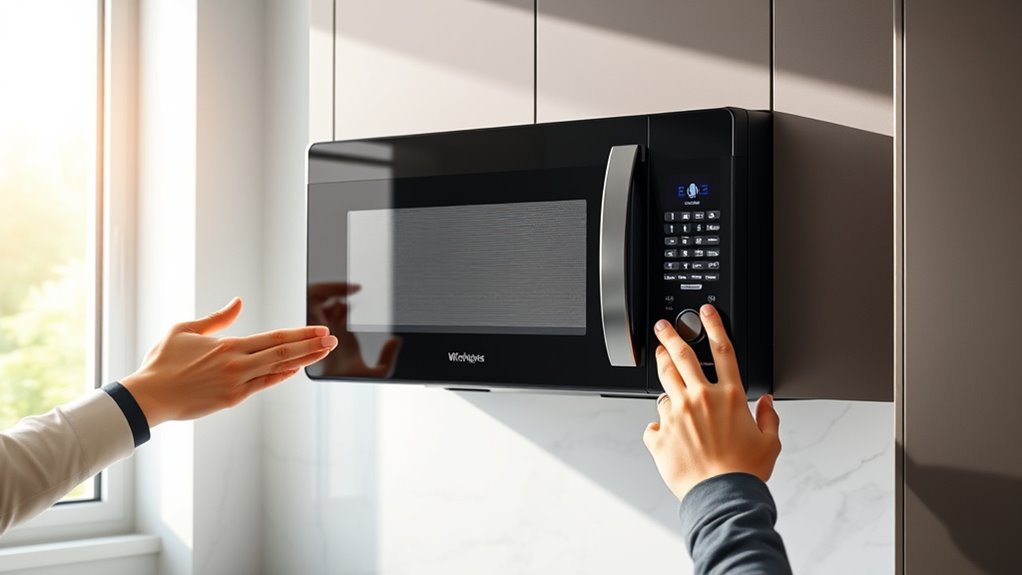
Enhanced voice control and hands-free operation make smart microwaves more convenient than ever. With compatible devices like Amazon Alexa and Google Assistant, you can control your microwave without lifting a finger. You just need to speak commands such as “reheat my coffee” or “defrost chicken,” and it responds instantly. This hands-free feature allows you to multitask in the kitchen or from any room in your house, saving time and effort. Plus, it reduces surface contact, keeping your kitchen cleaner and more hygienic. You can also issue precise commands, like “heat 6 packets of popcorn,” for accurate cooking. Overall, voice control makes operating your microwave effortless, especially during busy mornings or when your hands are full. Smart appliance integration further enhances your kitchen experience by enabling seamless connectivity with other devices. Additionally, voice recognition technology ensures that your commands are accurately understood, improving the overall user experience. Incorporating user-friendly interfaces can also make setup and daily use simpler for all users. Furthermore, technological advancements continue to improve the reliability and responsiveness of voice-controlled kitchen gadgets, making them an even more integral part of modern smart homes.
Automated Cooking With Scan-To-Cook Technology

Scan-to-Cook technology makes food prep effortless—just scan the package, and your microwave automatically sets the right time and power. This eliminates guesswork, ensuring your food cooks accurately every time. With this feature, you save time and enjoy more consistent results without constant adjustments. Additionally, integrating connected equipment can enhance your overall home cooking experience by providing seamless control and personalized settings. Proper ventilation considerations can also help maintain appliance efficiency and safety during operation.
Effortless Food Preparation
Automated cooking technology simplifies meal preparation by eliminating the guesswork involved in setting the right time and power levels. With scan-to-cook, you just scan the food package’s barcode, and the microwave automatically adjusts to the ideal settings. This feature ensures your frozen meals, snacks, or pre-packaged foods are cooked properly without manual input. All you need to do is scan, press “Start,” and let the microwave handle the rest. It saves time and reduces mistakes, especially for busy mornings or quick snacks. No need to guess or manually input settings, which can lead to uneven cooking. This technology makes preparing meals faster, more consistent, and less stressful, giving you more confidence that your food will come out just right every time. Energy-efficient features also help reduce power consumption, making it an environmentally friendly choice. Additionally, smart features can often be integrated with other home devices for a more connected kitchen experience. The integration of automated cooking systems can further streamline your meal prep process.
Accurate Cooking Settings
By automating cooking settings through barcode scanning, your microwave can deliver precise results without the need for manual adjustments. Simply scan the package, and the microwave automatically sets the ideal cooking time and power level based on manufacturer instructions. This eliminates guesswork, ensuring your food is cooked correctly every time. Scan-to-Cook technology is especially helpful for pre-packaged frozen meals, taking the hassle out of guesswork and reducing errors. All you need to do is scan the barcode and press start—your microwave handles the rest. This feature improves consistency, prevents under- or overcooking, and simplifies meal prep. Enhanced accuracy can further improve your cooking results by reducing the chances of errors. Additionally, understanding interior design principles can help you create a kitchen that is both functional and visually appealing. Incorporating ergonomic layouts can make using your appliances more comfortable and efficient. Moreover, choosing a microwave with advanced sensor technology can further optimize cooking performance and energy efficiency.
Time-Saving Convenience
Using scan-to-cook technology considerably speeds up meal prep by eliminating manual input and guesswork. You just scan the package, press “Start,” and the microwave automatically sets the right time and power level. This quick process saves you time and reduces errors, especially with pre-packaged foods. To maximize convenience, consider these advantages:
- Simplifies cooking with minimal effort
- Ensures accurate settings for various foods
- Eliminates the need to manually input times and power levels
- Speeds up meal prep, especially during busy days
- Enhances overall safety by reducing the chance of incorrect settings that could lead to accidents or undercooked food.
- The integration of smart technology can also provide updates and troubleshooting tips, further improving user experience.
- Additionally, energy efficiency features can help reduce electricity consumption during operation.
With this feature, you can prepare meals faster and more efficiently, giving you extra time for other tasks. It’s perfect for busy households or anyone seeking quick, reliable results without fuss.
Remote Monitoring and Control Capabilities
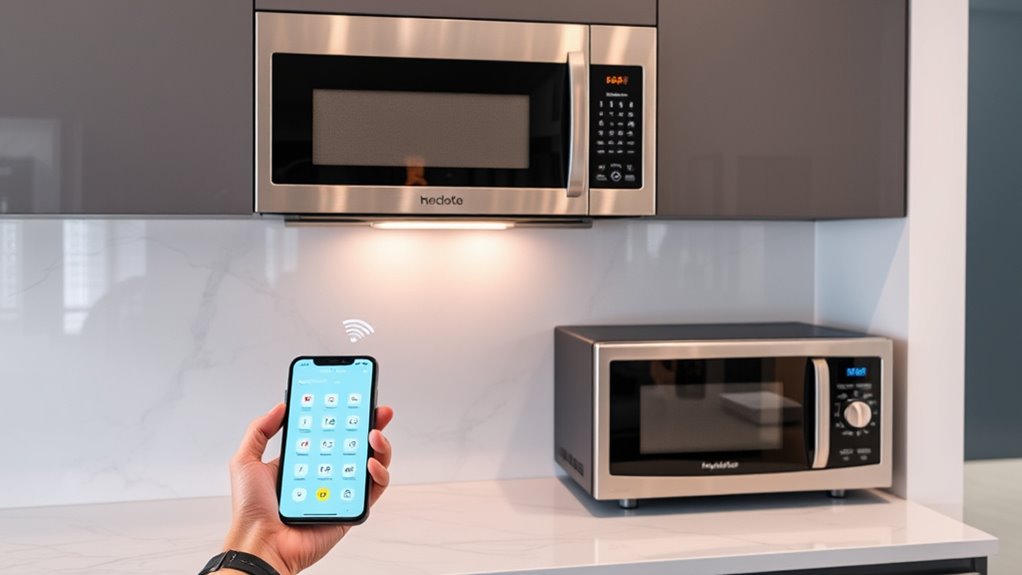
With remote monitoring and control, you can manage your microwave from anywhere using your smartphone, giving you added convenience. You’ll receive real-time updates on your food’s cooking progress and notifications when it’s ready, helping you avoid overcooking. This feature lets you preheat or check on your meal without stepping into the kitchen. Additionally, smart home integration allows your microwave to work seamlessly with other connected devices, enhancing your overall kitchen efficiency. Some models also incorporate privacy safeguards to ensure your data remains protected while connected. Incorporating wireless connectivity further streamlines your cooking experience by enabling effortless updates and settings adjustments, which is especially useful for maintaining sleep hygiene by avoiding unnecessary kitchen noise or disruptions during late-night cooking. This connectivity also supports remote troubleshooting, making it easier to resolve issues without needing in-person service.
Convenient Remote Access
Remote monitoring and control capabilities give you the convenience of managing your microwave from anywhere outside the kitchen. With a Wi-Fi connection, you can start, stop, or adjust cooking settings remotely, saving time and effort. You’ll also receive notifications when your food is ready, preventing overcooking or reheating mishaps. This feature is especially useful if you’re multitasking or away from home. Here are some key benefits:
- Control your microwave from your smartphone or tablet.
- Preheat or set cooking modes before arriving home.
- Receive real-time updates on cooking progress.
- Adjust settings or cancel cooking remotely if needed. Remote appliance control enhances overall kitchen convenience and efficiency. Additionally, smart home integration allows seamless synchronization with other connected devices for a more unified household experience. This technology also relies on secure Wi-Fi connections to ensure your data and device privacy are maintained.
This flexibility guarantees your meals are prepared exactly how you want, even when you’re not physically present.
Real-Time Cooking Updates
Real-time cooking updates enhance the convenience of remote monitoring by providing instant, accurate information about your microwave’s progress. With Wi-Fi connectivity, you can check your food’s status from anywhere using your smartphone or virtual assistant. This feature helps prevent overcooking by sending notifications when your meal is ready, saving you time and effort. You can also monitor cooking without opening the door, maintaining food temperature and safety. Additionally, remote control allows you to start preheating or adjust settings before you arrive home, ensuring your meal is ready when you want it. These updates make cooking more efficient, giving you peace of mind and better control over your food’s preparation, even when you’re away from the kitchen.
Improved Cooking Precision via Sensors

Sensors in smart microwaves substantially enhance cooking accuracy by automatically adjusting times and power levels based on food conditions. This technology ensures your food is cooked evenly and thoroughly without constant monitoring. The sensors detect moisture and temperature changes, making real-time adjustments for ideal results. Here are four key benefits:
Sensors in smart microwaves automatically adjust cooking for perfect, even results without constant monitoring.
- Prevents Overcooking by stopping once food reaches the ideal temperature.
- Maintains Food Texture and Flavor by avoiding excessive heat exposure.
- Reduces Guesswork by automatically calculating correct cooking times.
- Supports Different Food Types with adaptable sensor settings for various dishes.
This technology simplifies your cooking process while delivering consistent, professional-quality results. You no longer have to guess or rely on preset times, making meal preparation more precise and hassle-free.
Energy Efficiency and Cost Savings Potential

Smart microwaves help you save energy and reduce utility bills by optimizing their operation. They feature ECO modes that cut power consumption during idle times or standby, saving electricity over traditional models. Their smart sensors automatically adjust cooking times and power levels to prevent overuse, ensuring you’re not running the microwave longer than necessary. Additionally, remote monitoring and control allow you to start or stop cooking from anywhere, so you avoid wasting energy on forgotten or unattended meals. Some models track and manage energy use through companion apps, helping you identify patterns and improve efficiency. These features combine to lower your overall energy consumption, making your household more eco-friendly while saving you money on monthly utility costs.
Compatibility With Smart Home Ecosystems

Smart microwaves that seamlessly integrate with your home ecosystem let you control and monitor your appliance effortlessly. Compatibility with voice assistants like Alexa and Google Assistant means you can operate it hands-free, even from other rooms. Additionally, app control gives you remote access, making managing your microwave more flexible and convenient.
Seamless Ecosystem Integration
Seamless ecosystem integration enhances your kitchen’s functionality by allowing your microwave to work effortlessly with other smart devices. When your microwave connects smoothly to your existing smart home system, it simplifies daily routines and saves time. You can control or monitor your microwave from a central hub or app, making cooking more efficient. Additionally, it enables automation, like scheduling cooking cycles to start when you arrive home or syncing with other appliances for coordinated tasks.
Consider these points:
- Compatibility with your smart home platforms ensures smooth operation
- Centralized control improves convenience and reduces app clutter
- Automation features enhance daily routines
- Consistent connectivity minimizes interruptions during use
This integration creates a more unified, intelligent kitchen experience tailored to your needs.
Voice Assistant Compatibility
Voice assistant compatibility allows you to operate your microwave hands-free by integrating it with popular smart home ecosystems like Amazon Alexa and Google Assistant. You can control cooking functions, set timers, and start or stop the microwave with simple voice commands from any room. This eliminates the need to physically touch the microwave, which is especially helpful when your hands are full or dirty. Many models support over 70 voice commands for tasks like reheating, defrosting, or specific food instructions, making meal prep more convenient. Additionally, voice control enables you to monitor your microwave’s status remotely, ensuring you never forget to stop or adjust cooking. However, voice recognition can sometimes be inconsistent, and precise wording is often necessary for commands to work correctly.
App Control Accessibility
Have you considered how app control enhances your microwave experience? With app control, you can manage your microwave effortlessly from anywhere. It integrates seamlessly with your smart home ecosystem, giving you more flexibility. Here are some key benefits:
- Remote operation allows you to start, stop, or monitor cooking from your phone.
- Custom settings enable you to save preferred cooking profiles.
- Notifications alert you when your food is ready, reducing guesswork.
- Compatibility with smart home hubs ensures your microwave works alongside other devices.
This connectivity simplifies meal prep, saves time, and adds convenience. However, it relies on a stable Wi-Fi connection, and app updates or glitches can occasionally disrupt control. Overall, app integration makes your microwave smarter and more accessible.
Higher Initial Investment and Cost Considerations

While smart microwaves offer many advanced features, they also come with a higher upfront cost compared to traditional models. You’ll need to pay a premium for the latest technology, such as voice control, scan-to-cook, and remote monitoring. These features often increase the purchase price by several hundred dollars. If you’re on a tight budget, this initial investment might make a standard microwave a more practical choice. Additionally, installation and setup costs could add to the expense, especially if you need professional help to connect Wi-Fi or integrate with smart home systems. Keep in mind that the higher cost doesn’t always guarantee better cooking results. Weigh the benefits of smart features against the extra expense to decide if it fits your financial and kitchen priorities.
Connectivity and Wi-Fi Dependence
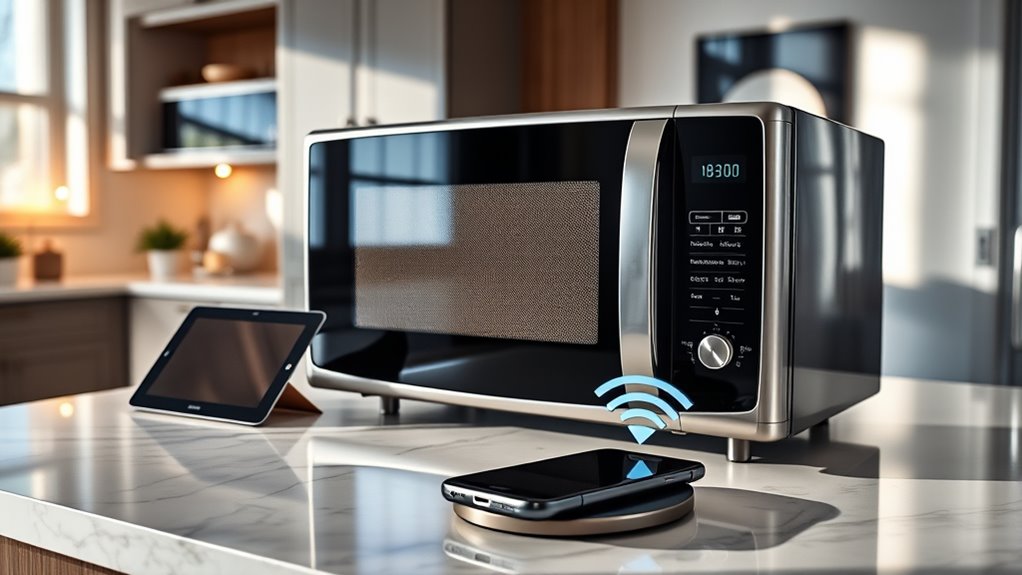
Smart microwaves rely heavily on a stable Wi-Fi connection to deliver their full range of features. Without reliable internet, many functionalities become limited or unusable. You might experience delays, disconnections, or inability to control the microwave remotely. To maximize benefits, verify your Wi-Fi signal is strong throughout your kitchen. Keep in mind:
- A weak connection causes interruptions in remote control and updates.
- Connectivity issues can prevent scan-to-cook or voice commands from working properly.
- Firmware updates require internet access, or features may become outdated.
- Wi-Fi outages mean you lose access to remote monitoring and notifications.
Being dependent on Wi-Fi means your smart microwave’s performance hinges on your internet stability. If your Wi-Fi drops, some features become unusable, reducing convenience.
Limitations in Cooking Performance and Evenness
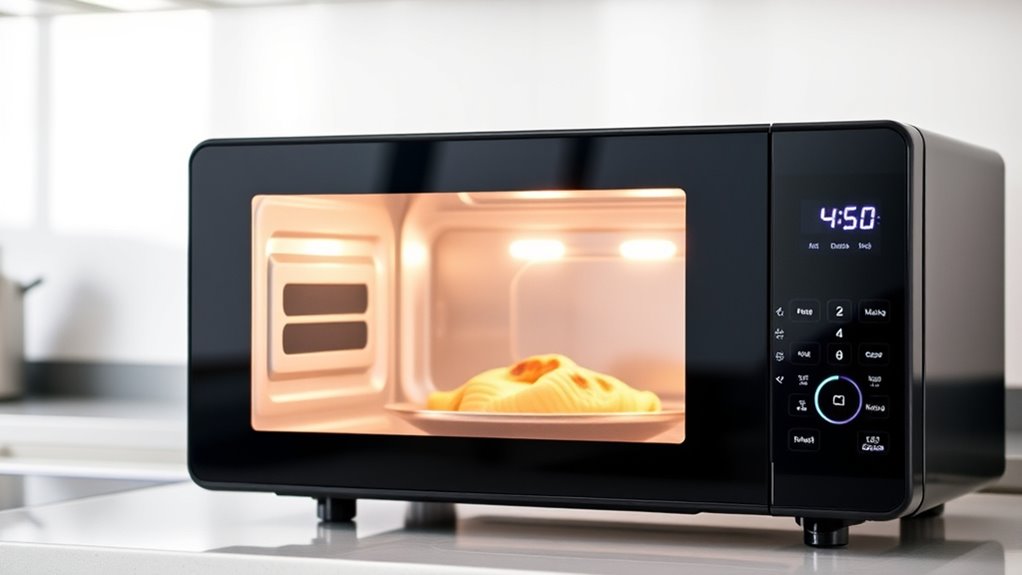
Despite their advanced features, some smart microwaves struggle with cooking performance and evenness. You might notice uneven heating, where parts of your food remain cold while others are overcooked. This inconsistency can be frustrating, especially when precise results matter. Variations in design, sensor calibration, and power distribution contribute to uneven cooking. To illustrate, consider the following:
| Issue | Cause | Impact |
|---|---|---|
| Hot spots | Uneven microwave energy | Food heats unevenly |
| Cold patches | Sensor misreading | Food remains undercooked |
| Inconsistent timing | Calibration differences | Over or undercooked food |
These limitations mean you need to monitor your food closely and may not achieve the same results as traditional microwaves.
User Experience and Learning Curve

Exploring the features of a smart microwave can initially feel overwhelming, especially if you’re accustomed to traditional models. The variety of commands and settings might seem confusing at first. To ease the shift, consider these points:
- Learning new voice commands takes time, and some phrases may require repetition for recognition.
- Navigating the app and remote controls can be complex until you familiarize yourself with their layout.
- Understanding barcode scanning and sensor-based cooking may involve a learning curve for accurate use.
- Adjusting to the smart assistant integration means adapting to voice control and potential miscommunications.
While the initial experience may involve some trial and error, most users find that once familiar, the smart features streamline cooking and add convenience. Patience and practice help open the full potential of your smart microwave.
Frequently Asked Questions
How Secure Is the Wi-Fi Connection for Smart Microwave Control?
Your Wi-Fi connection for controlling your smart microwave is generally secure, especially if you use a strong, unique password and keep your firmware updated. Many manufacturers implement encryption protocols to protect data. However, like any connected device, it’s vulnerable if your network isn’t secure. To stay safe, avoid using public Wi-Fi, enable network security settings, and regularly update your device’s software to patch potential vulnerabilities.
Can Voice Commands Be Customized for Specific Cooking Preferences?
You can’t typically fully customize voice commands on a smart microwave, but you can create specific routines or preferences through compatible apps or smart home setups. For example, you might set a routine for reheating a particular food at a certain power level. However, most devices rely on predefined commands, so you may need to stick to the supported phrases or use app controls for more personalized cooking settings.
What Happens if the Wi-Fi Connection Drops During Operation?
If your Wi-Fi drops during operation, your smart microwave acts like a stranded sailor losing its GPS. It may revert to manual controls, forcing you to operate it with physical buttons instead of voice commands or app control. Some models might pause or cancel the cooking process altogether, so it’s wise to make certain of a stable connection or have a backup plan. Without Wi-Fi, your microwave’s smart features become temporarily inaccessible.
Are There Privacy Concerns With Voice Data and Remote Monitoring?
Yes, you might have privacy concerns with voice data and remote monitoring. When you use voice commands or remote features, your data could be stored or transmitted to the manufacturer’s servers, potentially exposing personal information. While manufacturers often implement security measures, there’s still a risk of data breaches or unauthorized access. It’s wise to review privacy policies and manage your settings to control what data gets collected and shared.
How Durable Are the Sensors and Smart Features Over Time?
The sensors and smart features in your microwave are generally durable, designed to last several years with proper use. You should expect consistent performance, but over time, sensors may degrade or become less accurate if exposed to dust, moisture, or impact. Regular cleaning and updates help maintain their longevity. Keep in mind that high-quality models tend to have more durable components, ensuring your smart microwave stays reliable longer.
Conclusion
Imagine waking up to a microwave that starts cooking your breakfast as soon as you say “Good morning.” While smart microwaves offer convenience and advanced features, they come with higher costs and some connectivity issues. If you’re tech-savvy and want hands-free control, they’re worth considering. However, if you prefer simple appliances, a traditional microwave might suit you better. Think about your needs and budget before jumping into the smart kitchen trend.