Gas cooktops use flames to generate heat instantly, giving you immediate control over cooking, but they can be less energy-efficient and pose safety risks like leaks. Electric models heat via coils or radiant surfaces, offering moderate control but slower response times. Induction cooktops heat cookware directly with electromagnetic fields, providing quick, precise control and higher efficiency, though they require compatible cookware. Keep exploring how each technology fits your needs and kitchen setup for the best choice.
Key Takeaways
- Induction cooktops heat cookware via electromagnetic fields, offering faster, more precise control compared to gas and electric methods.
- Gas cooktops use open flames for immediate heat adjustment, but are less energy-efficient and pose safety risks like leaks and burns.
- Electric cooktops rely on heating elements or radiant surfaces, with slower response times and moderate temperature stability.
- Induction is highly energy-efficient, consuming less power than electric and gas, leading to lower operating costs over time.
- Installation requirements vary: gas needs ventilation and a gas line, electric needs a dedicated outlet, while induction requires a power circuit but no ventilation.

Traeger Grills Pro 575 Wood Pellet Grill & Smoker with Wifi, App-Enabled, Bronze
WiFIRE Technology for Remote Control: Monitor and control your electric smoker and grill from anywhere using the Traeger...
As an affiliate, we earn on qualifying purchases.
How Each Cooktop Uses Heat Generation Technology
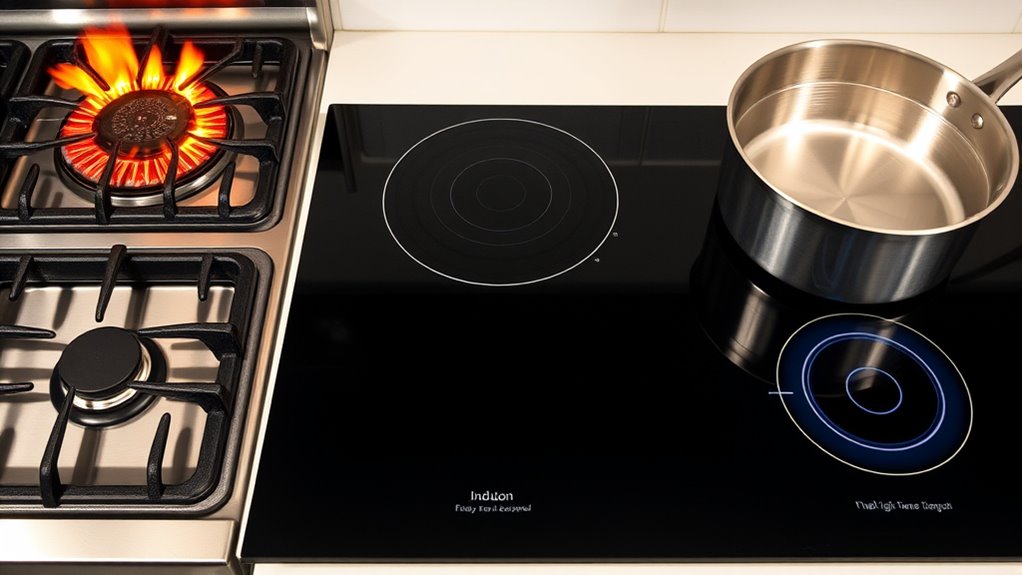
Each cooktop type uses a distinct method to generate heat, directly impacting how quickly and efficiently your food cooks. Gas cooktops produce heat through open flames from burners fueled by LPG or PNG. These flames transfer heat directly to cookware from the bottom and sides, allowing quick response and control. Electric cooktops use either exposed coils or radiant heating elements beneath a ceramic-glass surface. Coils heat up slowly and transfer warmth through contact, while radiant elements heat the glass surface, then the cookware. Induction cooktops use electromagnetic fields beneath a smooth glass surface to directly heat compatible cookware. This technology turns the cookware itself into the heat source, resulting in faster heating and precise control. Additionally, induction technology offers energy efficiency benefits that can reduce overall power consumption. Each method influences cooking speed, response time, and energy transfer efficiency. Understanding these differences can help you choose the best cooktop for your outdoor or indoor cooking needs.

Traeger Grills Pro 22 Wood Pellet Grill & Smoker, Electric Pellet Smoker Grill Combo, 6-in-1 BBQ Versatility, 572 sq. in. Grilling Capacity, Meat Probe, 450 Degree Max Temperature, 18LB Hopper, Bronze
6-in-1 Versatility: The Traeger Pro 22 is the original wood pellet smoker and grill combo trusted by. Grill,...
As an affiliate, we earn on qualifying purchases.
Comparing Energy Efficiency and Operating Costs

When comparing energy efficiency and operating costs, you’ll notice that induction cooktops use less energy than electric and gas options. This efficiency can translate into significant savings on your monthly bills, especially with continued use. Understanding these differences helps you choose a cooktop that saves money while performing well. Additionally, energy efficiency plays a crucial role in reducing environmental impact and overall household expenses. Choosing an induction cooktop can also offer faster cooking times and better temperature control, further enhancing its cost-effectiveness. Moreover, the contrast ratio of a cooktop impacts how precisely you can control cooking temperatures, which influences energy consumption and overall efficiency. Being aware of technology differences enables consumers to make more informed decisions aligned with their budget and sustainability goals. Recognizing these distinctions can also help in long-term planning for appliance upgrades and energy savings.
Energy Consumption Differences
Induction cooktops stand out for their superior energy efficiency, using electromagnetic fields to directly heat compatible cookware and minimize wasted energy. This targeted heating means more of the energy consumed goes straight into cooking, reducing overall power use. Compared to electric coil or radiant models, induction uses about 10% less energy, and it’s roughly three times more efficient than gas. Gas cooktops lose much heat around the sides of pots and flames, wasting energy and increasing operating costs. Electric models also lose some heat through the glass surface, lowering efficiency further. As a result, induction cooktops typically cost less to operate over time, thanks to their faster heat transfer and reduced energy waste, making them a smart choice for saving on energy bills. Energy transfer efficiency plays a key role in their lower operating costs. Additionally, the cost savings from using induction can be significant over the lifespan of the appliance, especially for frequent cooks.
Cost Savings Potential
Because of their high energy efficiency and precise heat transfer, induction cooktops offer significant cost savings over time. They use less energy and operate more cheaply than gas or electric models. Consider these key benefits:
- Up to 10% more energy-efficient than traditional electric cooktops, reducing electricity bills.
- About three times more efficient than gas, cutting costs on fuel expenses.
- Over 15% savings on monthly gas cylinder costs with induction cooking.
- Cheaper to operate long-term due to direct heat transfer, minimizing wasted energy.
- Understanding plant properties can help optimize herbal remedies for health benefits, much like understanding the energy transfer efficiency of different cooktop types enhances culinary results. Additionally, energy efficiency plays a crucial role in reducing environmental impact and supporting sustainable living. For example, the environmental benefits of choosing more efficient appliances are increasingly recognized as vital for a greener future. Moreover, selecting appliances with high energy efficiency ratings can further maximize savings and minimize ecological footprint.
These advantages result in lower utility bills and faster return on investment. Although induction units may have higher upfront costs, the operational savings make them a smart choice for budget-conscious households seeking efficiency.

CHEFMAN Indoor Pizza Oven - Makes 12 Inch Pizzas in Minutes, Heats up to 800°F - Countertop Electric Pizza Maker with 5 Touchscreen Presets, Pizza Stone and Peel Included - Stainless Steel
RAPID COOKING: Our electric indoor outdoor pizza oven is perfect for countertop use, quickly cooking up restaurant-quality pizza...
As an affiliate, we earn on qualifying purchases.
Performance and Responsiveness in Cooking
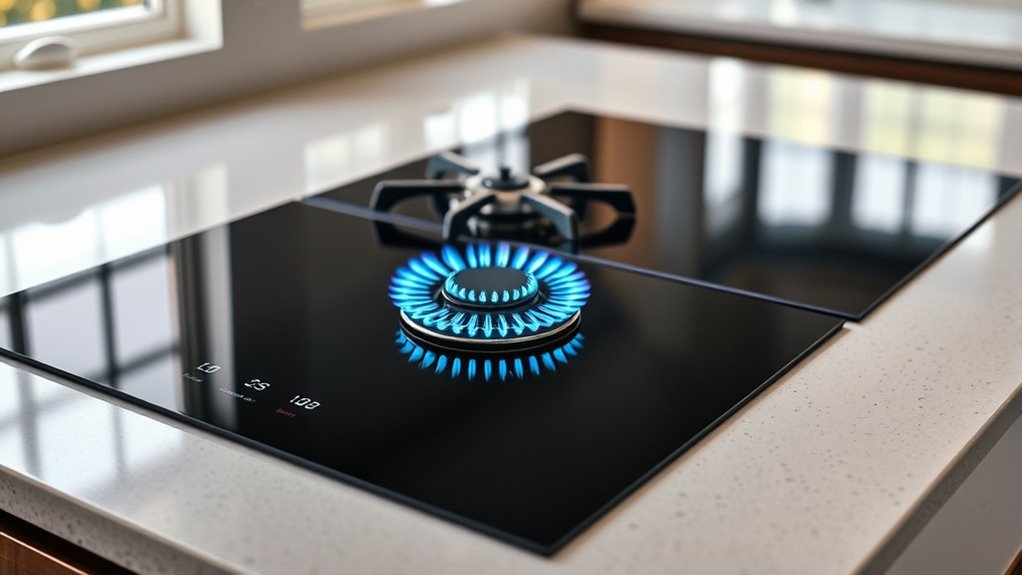
When it comes to cooking performance, you’ll notice that induction cooktops heat up faster and respond instantly to temperature adjustments. Gas cooktops offer immediate flame control, giving you a visual cue for heat changes, but electric models lag behind with slower response times. Understanding these differences helps you choose a cooktop that matches your need for speed and precision in the kitchen. Additionally, some modern cooktops integrate smart-home features, allowing remote control and customization for even more responsive cooking experiences. These technological advancements can further enhance your cooking efficiency and convenience, especially when integrated with connected home systems that enable seamless device management. Incorporating auditory feedback therapy principles, such as real-time responses and personalized adjustments, can significantly improve the user experience in smart kitchen devices. Moreover, advancements in sensor technology enable more accurate temperature regulation, contributing to better cooking outcomes.
Heating Speed Differences
Heating speed is a key factor that affects how quickly you can start cooking and adjust temperatures during your meal prep. With induction cooktops, you’ll notice almost instant heat as electromagnetic fields directly energize your cookware. Gas cooktops heat from the flame, providing rapid response but with some lag when adjusting heat levels. Electric cooktops, especially radiant types, heat more slowly due to the thermal transfer through coils or glass. Here’s how they compare:
- Induction: Boils water in seconds, with immediate temperature changes. Electromagnetic heating enables this rapid response by generating heat directly in the cookware.
- Gas: Quick flame adjustments, but some delay in heat transfer.
- Electric radiant: Slower to heat and respond, often taking minutes to reach desired temps.
- Electric coil: The slowest, requiring time to warm up and cool down. Additionally, induction technology utilizes electromagnetic fields to generate heat directly in the cookware, making it the fastest heating method among these options.
Temperature Control Precision
Induction cooktops excel in providing precise and immediate temperature control, allowing you to make quick adjustments during cooking. You can turn the heat up or down instantly, ensuring perfect results every time. Unlike electric cooktops, which have a slight lag, induction responds immediately to your changes, giving you better control. Gas cooktops also offer quick adjustments, but their flame can be less precise. Here’s a comparison:
| Feature | Induction | Electric | Gas |
|---|---|---|---|
| Response Time | Instant | Slight delay | Immediate but less precise |
| Temperature Stability | Very stable | Moderate | Less stable |
| Adjustment Accuracy | Very high | Moderate | Good but variable |
This means induction provides the most reliable control, helping you cook with confidence. Additionally, induction cooktops are known for their energy efficiency, making them a popular choice for modern kitchens.
Response Time Variations
Response time plays a crucial role in how quickly you can adjust your cooking temperature and achieve desired results. With faster response times, you can simmer, boil, or sear precisely when needed. Here’s how the different cooktops compare:
- Induction cooktops heat almost instantly, providing immediate temperature changes and rapid boiling.
- Electric radiant models respond slower because heat transfers through glass, causing delays in adjusting temperature.
- Gas cooktops offer quick visual control via flame adjustments, but there’s a slight lag before heat changes.
- Traditional electric coil units have the slowest response, as coils take time to cool down or heat up when setting is changed.
Choosing the right cooktop depends on how important quick response is to your cooking style.

Traeger Grills TFB30KLF Tailgater 20 Portable Electric Wood Pellet Grill and Smoker – Foldable Legs, 6-in-1 Versatility, 300 sq. in. Cooking Space for Tailgating, Camping, and Outdoor BBQ
Ultimate Wood-Fired Flavor, No Gas or Charcoal – The Traeger Tailgater 20 is a portable wood pellet grill...
As an affiliate, we earn on qualifying purchases.
Safety Features and Potential Risks
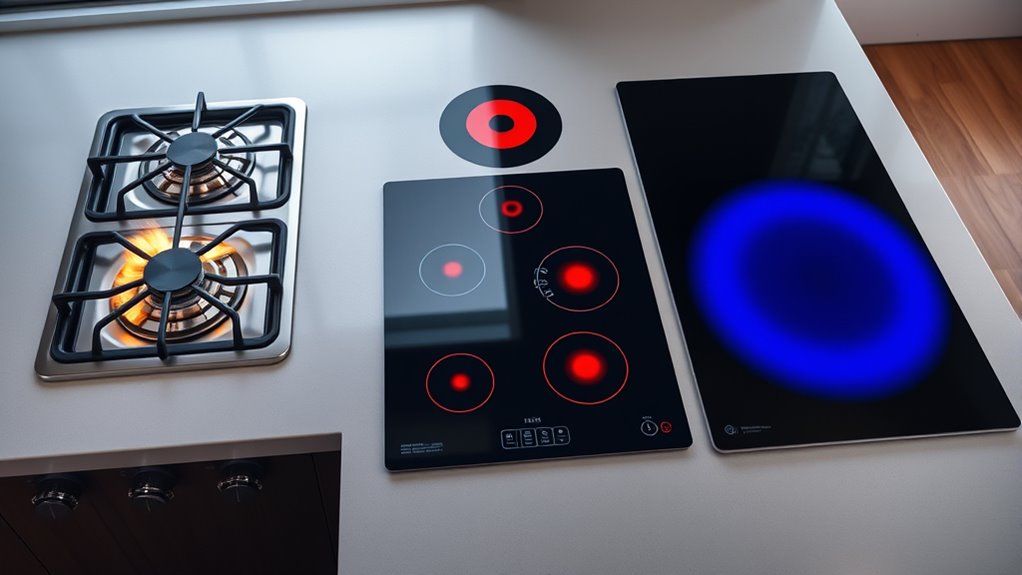
Safety features vary considerably among cooktop types, with induction cooktops offering notable advantages. They stay cool to the touch, reducing burn risks, and automatically shut off if no cookware is detected. Gas cooktops, however, pose fire and gas leak risks, especially if flames aren’t monitored. Electric cooktops can become hot, risking burns if touched accidentally. Understanding the safety mechanisms of each system can help prevent accidents and ensure safe cooking practices. Safety features are summarized below:
| Feature | Induction | Gas | Electric |
|---|---|---|---|
| Surface temperature | Usually cool, heats only with cookware | Hot surface, burn risk | Hot surface, burn risk |
| Automatic shut-off | Yes | No | No |
| Flame detection | No | Yes | No |
| Gas leak detection | No | Yes | No |
| Child lock | Many models include it | Rare | Some models include it |
Your safety depends on understanding each system’s risks and features. Additionally, proper ventilation is crucial when using gas cooktops to reduce the risk of harmful gas buildup. Being aware of gas leak detection features can further enhance safety and prevent dangerous leaks during use. Incorporating regular maintenance can also help ensure all safety features function properly over time.
Compatibility With Different Cookware Types
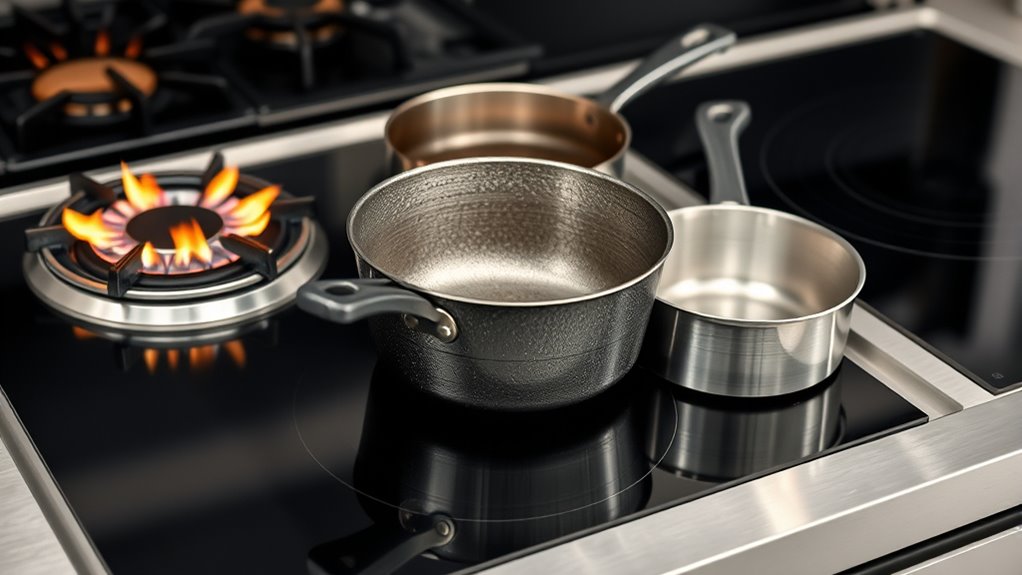
Compatibility with different cookware types varies considerably across cooktop technologies. You’ll find that each system has specific requirements. For induction cooktops:
- You need magnetic cookware like cast iron or magnetic stainless steel for it to work.
- Non-magnetic materials such as aluminum, copper, glass, and ceramic won’t heat unless they have a magnetic layer.
- Flat-bottomed pots perform best, as curved or wavy bottoms can reduce contact and heating efficiency.
- Woks and specialty cookware with rounded or uneven bases often aren’t compatible or require special adapters.
Gas cooktops are versatile, working with nearly all cookware, while electric models are more forgiving but perform best with flat-bottomed vessels.
Installation, Maintenance, and Practical Considerations
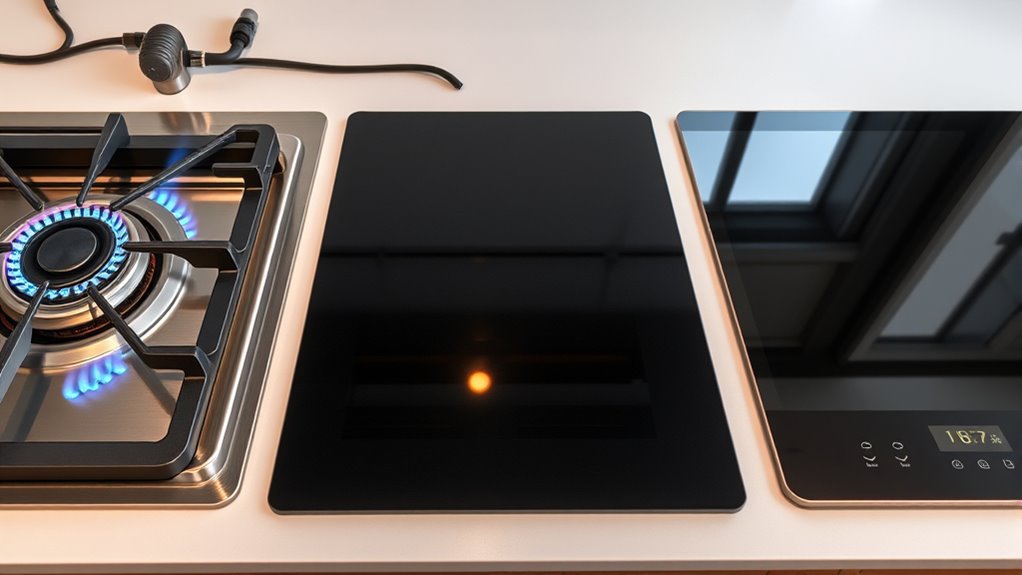
Installing a cooktop properly is essential for safe and efficient operation, and the requirements vary considerably among the different types. Gas units need a gas line connection and proper ventilation to handle combustion byproducts. Electric models, both coil and radiant, require a dedicated 240V outlet and are easier to install but need regular cleaning of burners or glass surfaces. Induction cooktops need a dedicated electrical circuit but don’t require ventilation, making installation simpler. Maintenance involves regular cleaning: induction surfaces wipe easily, while gas burners need scrubbing. Be mindful of surface scratching on induction units over time and electronics reliability. Here’s a quick comparison:
| Aspect | Gas | Electric | Induction |
|---|---|---|---|
| Installation | Gas line, ventilation | 240V outlet, minimal venting | 240V circuit, no venting |
| Maintenance | Clean burners, grates | Wipe glass, coil cleaning | Wipe surface, avoid scratches |
| Cost of Setup | Moderate | Low to moderate | Moderate |
| Surface Durability | Burners prone to spills | Glass surface, scratches | Scratch risk, electronics risk |
| Practical Tip | Ensure proper ventilation | Use flat cookware on radiant | Use compatible cookware, clean regularly |
Frequently Asked Questions
How Do Induction Cooktops Perform With Non-Magnetic Cookware?
If you use non-magnetic cookware on an induction cooktop, it simply won’t heat up. Induction relies on magnetic fields to generate heat directly in compatible pots and pans. So, if your cookware isn’t magnetic—like aluminum, copper, or glass—it won’t respond, and you’ll need to switch to magnetic materials such as cast iron or certain stainless steel to get proper heating. Make sure your cookware is compatible before cooking.
Are Induction Cooktops More Environmentally Friendly Than Gas or Electric?
Think of induction cooktops as the eco-friendly knights in shining armor. They’re more environmentally friendly than gas or electric because they use up to 10% less energy, reducing your carbon footprint. By heating cookware directly, they waste less heat and cut down on emissions. Plus, their efficiency means less energy consumption over time, making them a smarter, greener choice for your kitchen and the planet.
Can Electric Cooktops Achieve the Same Heating Speed as Induction?
Electric cooktops can’t quite match induction’s heating speed. Induction heats cookware directly through electromagnetic energy, making it respond instantly to temperature changes and boil water faster. Electric models, whether coil or radiant, rely on heating elements that take longer to warm up and cool down, creating delays. If speed is your priority, induction will outperform traditional electric cooktops, offering quicker heat-up times and more precise control.
What Are the Long-Term Durability Differences Among Gas, Electric, and Induction?
You’ll find induction cooktops tend to last longer than gas or electric models, with many lasting over 10 years with proper care. Gas cooktops often face issues with burners and ignition systems, requiring repairs sooner. Electric models, especially coil types, may wear out faster due to exposed elements and wiring. Choosing induction means benefiting from a durable, low-maintenance surface that’s less prone to damage from spills or heat cycles over time.
Do Induction Cooktops Emit Electromagnetic Radiation or Other Safety Concerns?
Induction cooktops emit very low levels of electromagnetic radiation, which are generally considered safe. The electromagnetic fields only activate when compatible cookware is on the surface, and they don’t produce harmful ionizing radiation. Most safety concerns are minimal, but if you have implanted medical devices like pacemakers, you should consult your doctor. Overall, induction cooktops are safe for most users, with built-in safety features to prevent accidental activation.
Conclusion
Choosing between gas, electric, and induction cooktops is like picking a dance partner—each has its rhythm and style. Gas offers fiery flair, electric provides steady warmth, and induction delivers lightning-fast precision. Your choice shapes your kitchen’s heartbeat, so pick the one that best matches your cooking groove. Remember, the right cooktop isn’t just a tool; it’s the stage where your culinary creativity takes center stage, turning everyday meals into a symphony of flavors.