To adapt grandma’s recipes for the Instant Pot, start by reducing your usual cooking time to about one-third, especially for tougher ingredients like meats and root vegetables. Use enough liquid to create steam and brown ingredients using the sauté function for added flavor. Remember to release pressure properly—natural, quick, or combination—to get tender results. If you keep these tips in mind, you’ll find transforming classic recipes easier and more flavorful than ever. Keep exploring to master every step.
Key Takeaways
- Adjust traditional cooking times by dividing them by three to suit pressure cooking, ensuring tender results without overcooking.
- Use sufficient liquid (at least 1 cup for smaller pots) to generate steam and prevent burning or pressure issues.
- Sear and sauté ingredients using the Instant Pot’s functions to replicate flavor-building steps from grandma’s recipes.
- Add delicate ingredients like dairy, herbs, or quick-cooking vegetables after pressure release to preserve flavor and texture.
- Experiment with seasoning and note adjustments, as flavors may concentrate differently under pressure; adapt recipes gradually.
Understanding the Basics of Pressure Cooking and Your Instant Pot

Understanding how your Instant Pot works is essential for successful pressure cooking. You need to know that it uses liquid to create steam, which builds pressure inside the chamber. Typically, at least 1 cup of liquid is needed for 3-6 quart models, and 1.5 cups for larger ones, to generate enough steam. When pressure rises, the heat cooks food faster and intensifies flavors. The Instant Pot offers functions like sauté, which allows you to brown ingredients before pressure cooking, enhancing flavor. Knowing when to use natural release versus quick release is key to maintaining moisture and preventing spills. Additionally, pressure regulation ensures safety and consistent cooking results. Properly understanding pressure buildup helps you avoid common mistakes, such as overfilling or underfilling the cooker. It is also important to familiarize yourself with the safety features of your Instant Pot to operate it securely. Being aware of pressure safety measures can help prevent accidents and ensure reliable operation. Developing an understanding of cooking times for different ingredients can also greatly improve your results. By mastering these basics, you’ll confidently adapt traditional recipes, ensuring they turn out flavorful and perfectly cooked every time.
Choosing Recipes That Adapt Well to Pressure Cooking
When selecting recipes for pressure cooking, focus on dishes that benefit from quick tenderization, like soups, stews, and braises. Avoid recipes with delicate ingredients or those that require minimal liquid, as they may not adapt well. Opt for hearty, ingredient-heavy dishes that can handle the high pressure and shorter cooking times with proper adjustments.
Suitable Dish Types
Certain dish types adapt exceptionally well to pressure cooking, making them ideal candidates for recipes that were traditionally slow or time-consuming. These dishes benefit from reduced cooking times and enhanced flavors. Suitable options include hearty stews, tender braised meats, and comforting soups. They often involve tougher cuts of meat and dense vegetables that become tender quickly under pressure. Recognizing the appropriate dish types can help you maximize the benefits of your Instant Pot or multicooker. Additionally, understanding cooking methods can guide you in adapting other recipes successfully. Being aware of meat cuts suitable for pressure cooking ensures optimal results and flavor development. Exploring pressure cooking techniques can further improve your culinary results and expand your recipe repertoire. Knowing pressure cooker safety tips is also essential for a smooth and safe cooking experience.
Ingredient Compatibility
Choosing the right ingredients can make or break your pressure cooking experience. You want recipes suited for quick, even cooking, like hearty stews, soups, and braises. Tough cuts of meat, such as chuck or brisket, benefit from pressure’s rapid tenderization. Vegetables that overcook easily, like cauliflower or delicate greens, should be added after cooking to prevent mushiness. Incorporate ingredients that develop flavor through browning, but sauté before pressure cooking to lock in taste. Be cautious with dairy and fresh herbs—they’re best added after pressure release to avoid curdling or loss of aroma. Also, choose recipes with enough liquid to meet pressure cooker requirements. Proper ingredient selection guarantees your dishes turn out flavorful, tender, and perfectly textured every time. Understanding plant properties helps in selecting suitable ingredients for optimal results in pressure cooking. Additionally, knowing how different ingredients respond to heat and pressure can help in tailoring recipes for the best outcomes. Recognizing ingredient compatibility is essential for achieving consistently satisfying results with your multicooker. Being aware of piercing and healing processes can also inform ingredient choices that minimize irritation and promote better results when preparing dishes that might include sensitive ingredients.
Adjusting Traditional Cooking Times for the Instant Pot
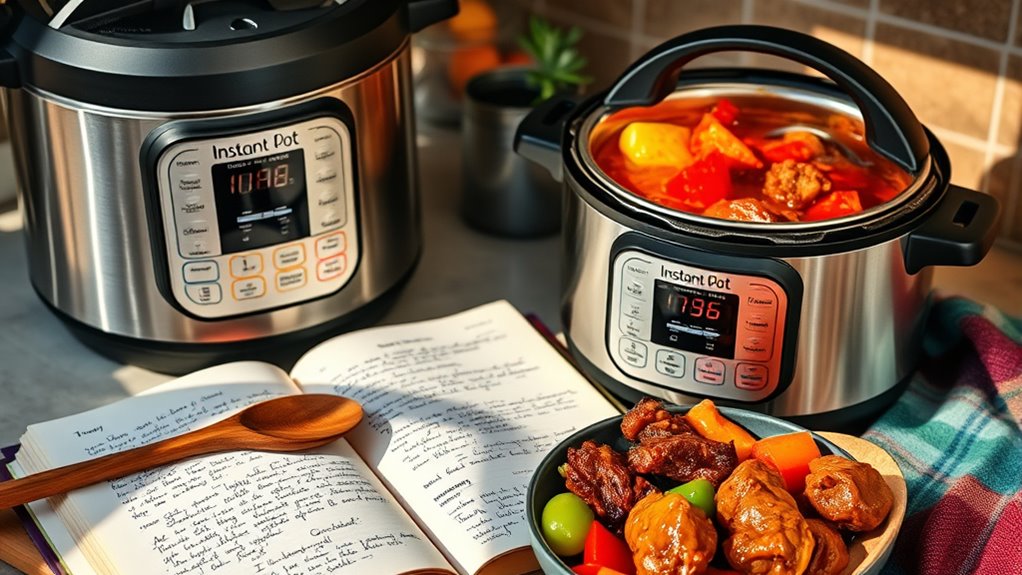
Adjusting traditional cooking times for the Instant Pot is essential because pressure cooking markedly speeds up the process compared to conventional methods. You’ll want to divide the usual cooking time by three to get a good starting point. For example, a 90-minute stovetop stew becomes about 30 minutes under pressure. Tough cuts of meat like chuck or brisket typically need 15-45 minutes, instead of hours. Root vegetables usually only require 5-15 minutes, compared to 30-60 minutes on the stove. Remember, delicate ingredients like greens or dairy are best added after pressure cooking to prevent overcooking. Always consider the recipe’s nature and ingredient density, then modify cooking times accordingly to ensure your dishes turn out tender, flavorful, and perfectly cooked in the Instant Pot. Additionally, understanding the pressure build-up time can help you better plan your cooking schedule and achieve consistent results. Proper timing adjustments are key to adapting traditional recipes successfully.
Managing Liquid Levels for Proper Pressure Build-Up
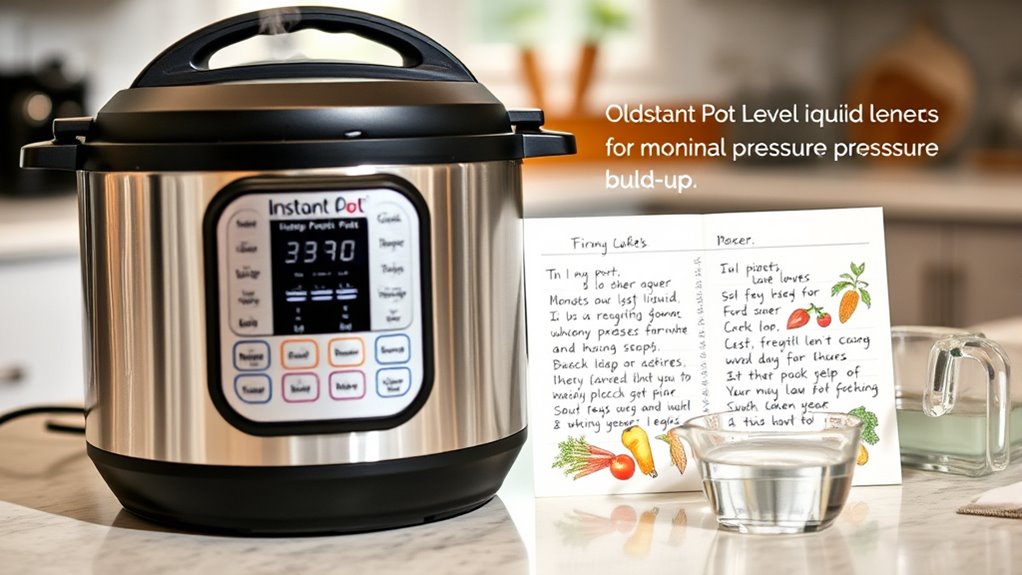
To build proper pressure, you need to guarantee there’s enough liquid in your Instant Pot. Check that the liquid covers ingredients by at least an inch and meets the minimum volume required for your size model. If there’s too much liquid after cooking, you can use the sauté function to reduce it to your desired consistency. Additionally, ensure you use an appropriate cooking medium to facilitate heat transfer and pressure build-up effectively. Proper liquid management ensures optimal pressure and cooking results. Using the right safety precautions during operation helps prevent accidents and extends your multicooker’s lifespan. Maintaining awareness of digital distractions can help you focus on proper operation and safety procedures. Avoid using harsh chemicals that may damage the inner components of your multicooker, and always follow the manufacturer’s maintenance guidelines for safe and efficient operation.
Ensuring Adequate Liquid Volume
Ensuring there’s enough liquid in your pressure cooker is essential for safe and effective cooking. Without sufficient liquid, the cooker can’t build pressure, risking burns or damage. To get it right, keep these points in mind:
- Use at least 1 cup of liquid for 3-6 quart models to generate enough steam
- For 8-quart models, add at least 1.5 cups of liquid
- Make sure the liquid covers ingredients by at least 1 inch for even heat and pressure
- Add thickeners after cooking to prevent scorching
Adding too little liquid can cause safety issues, while excess can be reduced after cooking. Proper liquid management ensures your recipes turn out perfectly and safely every time.
Covering Ingredients Properly
Properly covering your ingredients with liquid is essential for building enough pressure and achieving even cooking. If you don’t add enough, the pressure won’t develop properly, and some parts may overcook or burn. Make sure liquids cover ingredients by at least 1 inch for consistent heat distribution. Use this table to guide your liquid levels:
| Ingredient Type | Minimum Liquid Amount |
|---|---|
| Soups, Stews, Braises | 1.5 cups (8-quart models) |
| Vegetables (delicate) | Cover with liquid, at least 1 inch deep |
| Tough meats (chuck, brisket) | Enough liquid for pressure, about 1-2 cups |
Additionally, selecting the right media for your pressure cooker can influence how evenly heat is distributed and maintained during cooking.
Managing Excess Liquids
When your recipe has too much liquid in the pressure cooker, it can lead to overly soupy dishes or prevent the cooker from reaching proper pressure. To fix this, use the sauté function after cooking to reduce excess liquid. You can also:
- Remove the lid and simmer uncovered to evaporate extra moisture
- Add a thickening agent like cornstarch or flour slurry at the end
- Use a slotted spoon to lift out ingredients if needed
- Adjust the recipe next time by reducing initial liquid amounts
Managing liquid levels guarantees proper pressure build-up and a better final texture. Remember, liquid should cover ingredients by at least 1 inch for even heat distribution and proper pressure. Always monitor and adjust accordingly to prevent sogginess.
Techniques for Browning and Sautéing to Enhance Flavor
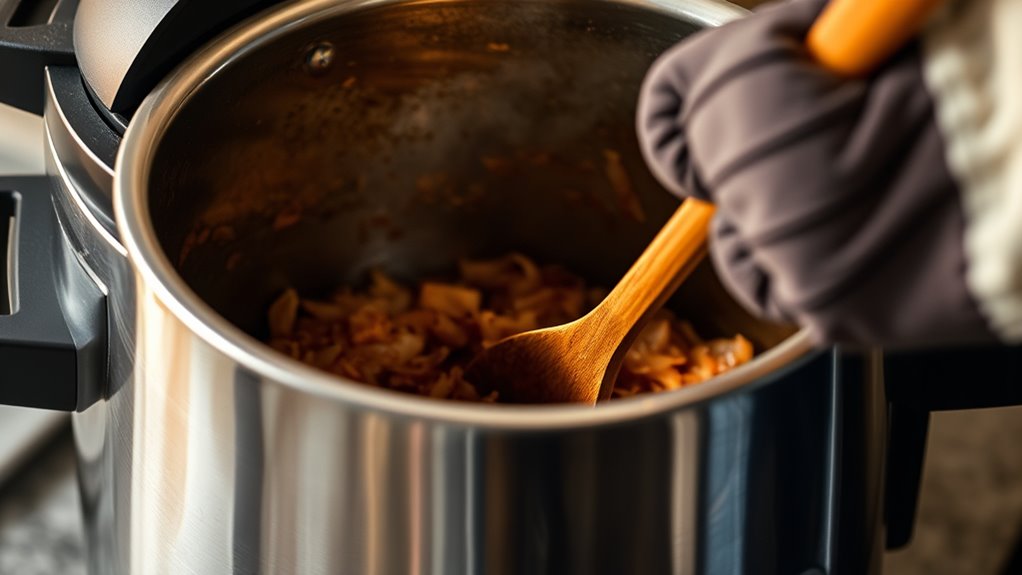
Browning and sautéing are key steps for building deep, complex flavors in your dishes, and using the Instant Pot’s sauté function makes this process quick and convenient. You can brown meats to develop rich, savory notes and sauté aromatics like onions and garlic to enhance depth right in the same pot. To do this, select the sauté mode, add a small amount of oil, and heat until shimmering. Brown meat in batches if needed to avoid overcrowding, which prevents proper searing. Once browned, remove the meat and sauté vegetables until fragrant. Deglaze the pot with a bit of broth or wine to lift flavorful browned bits from the bottom—these add richness to your dish. This method saves time, reduces cleanup, and boosts flavor without additional pans.
Incorporating Fresh Ingredients and Delicate Items Correctly
Incorporating fresh ingredients and delicate items into your Instant Pot recipes requires careful timing to preserve their texture and flavor. You want to add these components at the right moment to prevent overcooking or loss of freshness.
- Add greens and herbs after pressure cooking to keep their vibrant color and crispness.
- Stir in dairy products like cream or cheese after the cooking cycle to avoid curdling.
- Incorporate soft fruits or delicate seafood at the end to prevent overcooking.
- Use quick release methods for vegetables to retain their texture and avoid mushiness.
- Utilize local automation features to set reminders or alerts for adding delicate ingredients at optimal times during cooking. Additionally, understanding cooking timing can help you better coordinate ingredient additions for optimal results.
- Paying attention to ingredient preparation can further enhance the preservation of delicate items’ quality throughout the cooking process.
- Being mindful of temperature control during the final stages can also help maintain the integrity of sensitive ingredients.
- Familiarizing yourself with cooking techniques specific to your multicooker can improve the overall outcome of adapting traditional recipes.
Using Pressure Release Methods to Achieve Perfect Results
Choosing the right pressure release method is essential for achieving consistently perfect results with your Instant Pot. The method you select impacts moisture retention, texture, and flavor. Use natural release (NR) for meats, allowing juices to settle and stay tender, typically 10-15 minutes. Quick release (QR) is ideal for vegetables and delicate dishes, preventing overcooking. A combination approach, such as 10 minutes NR followed by QR, works well for layered recipes. Here’s a guide:
| Food Type | Recommended Release | Purpose |
|---|---|---|
| Meat | Natural (NR) | Juicy, tender results |
| Vegetables | Quick (QR) | Prevent overcooking |
| Delicate Items | Combination | Balance moisture and texture |
Choosing correctly ensures your dish’s perfect consistency and flavor.
Modifying Seasonings and Spices for Intense Flavors
When adjusting seasonings and spices for pressure-cooked recipes, keep in mind that the intense environment amplifies flavors. You’ll want to modify your approach to avoid overpowering dishes. Start with half the amount of spices called for in traditional recipes, then taste and adjust after cooking. Consider these tips:
- Use fresh herbs early for a brighter flavor, but add delicate herbs like parsley after cooking.
- Reduce salt slightly, as pressure cooking concentrates flavors.
- Incorporate acidic ingredients (like vinegar or lemon juice) after cooking to balance intensity.
- Be cautious with strong spices like cumin or chili powder; add sparingly and build flavor gradually.
This way, your dishes stay flavorful without becoming overwhelming under pressure. Proper adjustments ensure your grandma’s recipes retain their charm and taste.
Tips for Troubleshooting Common Challenges in Recipe Conversion
Converting traditional recipes to the Instant Pot can present several challenges, but many common issues can be resolved with simple troubleshooting techniques. If your dish turns out too watery, check the liquid level—add less or use the sauté function afterward to reduce excess. Overcooked vegetables or meats indicate overcooking; reduce the cooking time based on the guidelines, especially for delicate ingredients. If you encounter burn notices, ensure your ingredients are evenly layered and that there’s enough liquid covering everything. For tough cuts that aren’t tender enough, increase pressure or cooking time slightly. If flavors are weak, consider seasoning adjustments or longer pressure infusion. Remember, trial and error help perfect conversions, so keep notes and adjust as needed for consistent results.
Frequently Asked Questions
Can I Convert All Traditional Recipes to the Instant Pot?
You can’t convert all traditional recipes to the Instant Pot, but many work well with some adjustments. Focus on recipes that benefit from pressure cooking, like stews, braises, and tougher meats. You’ll need to modify cooking times, add enough liquid, and adjust ingredients like delicate greens or dairy. Some dishes may not translate perfectly, especially those relying on slow cooking or precise textures, so use your judgment and tweak as needed.
How Do I Prevent Overcooking Vegetables in Pressure Cooking?
To prevent overcooking vegetables in pressure cooking, use shorter cooking times—generally 5-15 minutes depending on the vegetable. Opt for quick release to stop the cooking process immediately once done. Layer delicate vegetables on top or add them after pressure cooking to maintain texture. Also, avoid overfilling with liquid, and consider cutting vegetables into uniform pieces to make certain of even cooking without turning mushy.
What’s the Best Way to Adjust Seasoning for Pressure-Cooked Dishes?
To adjust seasoning for pressure-cooked dishes, start with less salt and spices than usual, since flavors intensify under pressure. After cooking, taste and add more seasoning gradually, allowing flavors to meld. Use fresh herbs or acids like lemon juice or vinegar at the end to brighten the dish. Remember, you can always add more, but you can’t easily fix over-seasoned food once it’s cooked.
How Do I Handle Recipes With Dairy or Delicate Ingredients?
You should add dairy and delicate ingredients after pressure cooking to prevent curdling or overprocessing. Once the cooking cycle finishes and the pressure releases, open the lid carefully and gently stir in milk, cream, or fresh greens. This approach preserves their texture and flavor, ensuring your dish stays creamy and vibrant. Always avoid cooking these ingredients under pressure to maintain their quality and taste.
Can I Use the Sauté Function for Thickening Sauces After Cooking?
Yes, you can use the sauté function to thicken sauces after cooking. Simply remove the lid and switch to sauté mode, allowing excess liquid to evaporate and the sauce to thicken. Stir frequently to prevent scorching. This method helps you achieve a desired consistency without overcooking your ingredients, making it an easy way to finish your dish with a rich, velvety sauce.
Conclusion
Adapting grandma’s recipes for your Instant Pot is like transforming a classic painting into a modern masterpiece—preserving its soul while embracing new techniques. With a little patience and experimentation, you’ll master pressure cooking and bring out flavors you never knew possible. Trust in your instincts, keep notes, and enjoy the journey. Before long, you’ll be creating comforting, delicious meals that honor tradition while embracing innovation—deliciousness that’s as timeless as a family favorite.