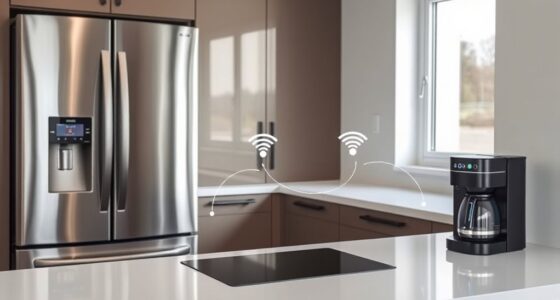

To protect your smart appliances from power surges and outages, use a layered approach with main panel surge protectors, sub-panel devices, and point-of-use protectors on sensitive gadgets. Unplug devices during storms and consider a whole-home surge protector for thorough safety. Regularly check and replace these devices, and incorporate backup power options like UPS systems. Keep your electrical system maintained, and you’ll find effective ways to safeguard your devices and prevent damage. Discover more strategies to keep your smart tech safe.
Key Takeaways
- Install layered surge protection devices at main, sub-panels, and point-of-use outlets for comprehensive safeguarding.
- Unplug smart appliances during storms or power outages to prevent damage from voltage spikes.
- Use uninterruptible power supplies (UPS) to provide backup power and protect against surges upon power restoration.
- Regularly inspect and replace surge protectors, especially after major surges or every two years, for optimal protection.
- Ensure proper grounding and consider whole-home surge protectors for automatic, effective defense against voltage spikes.
Understanding Power Surges and Their Impact on Smart Devices

Power surges occur when voltage levels spike above normal household levels, often exceeding 120 volts. These sudden increases can damage smart devices by overwhelming their sensitive electronic components. Internal surges happen when motorized appliances like air conditioners or refrigerators turn off abruptly, redirecting excess energy to other electronics. External surges originate from lightning strikes, power line faults, or grid fluctuations outside your home. Even small, frequent surges can wear down your smart devices over time, reducing their lifespan and causing malfunctions. Because smart appliances rely heavily on precise voltage levels, they’re especially vulnerable to surges. Without proper protection, surges can lead to data loss, hardware failure, or complete device breakdown. Understanding these causes helps you take steps to shield your smart home from costly damage. Power surges can also weaken internal components gradually, making protective measures even more essential. Additionally, home electrical systems may not always be equipped to handle unexpected voltage spikes, increasing the risk of damage. Recognizing the importance of voltage regulation can help ensure your smart appliances stay protected during electrical fluctuations. Implementing surge protection devices can significantly reduce the risk of damage from these unpredictable power events.
Implementing a Layered Surge Protection System at Home
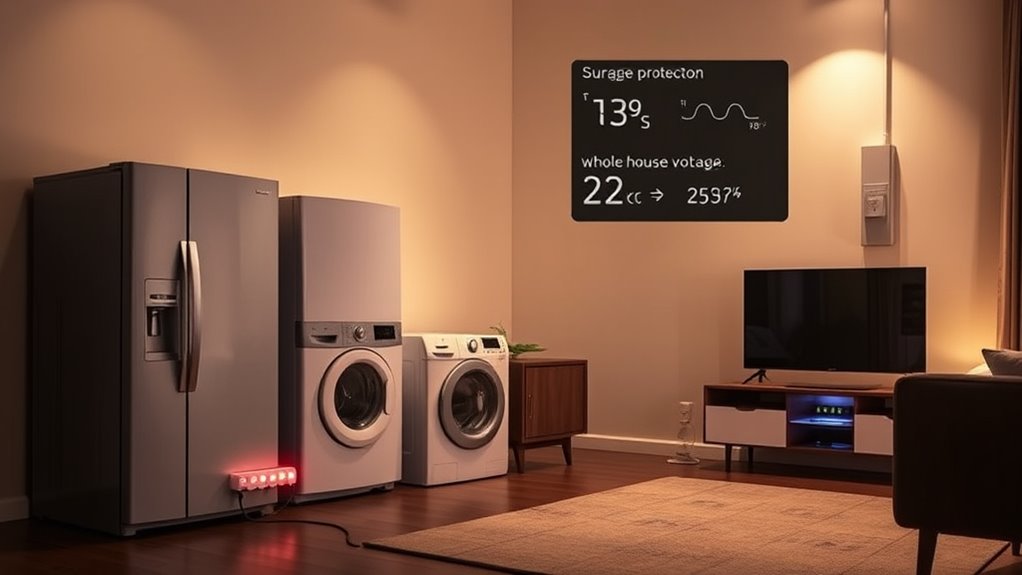
To effectively shield your smart appliances from damaging surges, implementing a layered protection system is essential. This approach adds multiple defense points, reducing the chances of surge-related damage. First, install a Type 1 surge protector at your main electrical panel to block large external surges. Second, add Type 2 protectors at sub-panels or distribution points to catch residual and internal surges. Third, use Type 3 point-of-use devices on sensitive electronics like smart appliances, offering targeted protection. Combining these layers ensures thorough coverage, preventing surges from entering your home’s wiring, and protecting your devices at every level. Remember, no single device provides complete protection; layering minimizes risks and extends your appliances’ lifespan. Understanding electrical concepts helps you make informed decisions about the best protection strategies for your home, including considerations of electrical safety and proper installation. Additionally, understanding surge current capacity can help you select the most effective devices for your specific needs. Incorporating proper grounding further enhances the effectiveness of all protection layers, ensuring safe and reliable operation of your appliances. Recognizing the importance of surge protection devices can also help prevent costly repairs and replacements.
Choosing the Right Surge Protectors for Your Smart Appliances

Choosing the right surge protectors for your smart appliances involves understanding their specific needs and the features that provide ideal protection. Look for devices with low voltage protection levels (Up) to ensure sensitive electronics are safeguarded from small, repeated surges. A high joule rating indicates longer-lasting protection, especially important for critical appliances. Response time matters; faster devices react quickly to voltage spikes, reducing damage risk. For added convenience, consider smart surge protectors that connect to home automation systems, offering remote control and real-time surge alerts. Always select protectors with relevant certifications like UL 1449 to guarantee safety and reliability. Additionally, paying attention to Piercings-Body precautions such as proper aftercare and hygiene can prevent damage and ensure longevity of the protection devices. Incorporating surge protection systems that integrate with your home’s electrical infrastructure can provide comprehensive coverage against external power surges and outages, giving you peace of mind. Investing in electrical safety measures ensures your entire electrical system is protected from unpredictable voltage fluctuations. Finally, combine point-of-use protectors with whole-home systems for extensive coverage, ensuring your smart appliances stay protected against both internal and external power surges.
Regular Maintenance and Replacement of Surge Protection Devices

Regular maintenance and timely replacement of surge protection devices are essential to guarantee they continue to provide reliable defense against voltage spikes. Over time, surge protectors degrade and lose effectiveness, especially after absorbing large surges. To stay protected, you should: 1. Replace surge protectors after a major surge event, like a lightning storm. 2. Swap out protectors every two years, even if no surge has occurred. 3. Use smart protectors with failure indicators or Wi-Fi alerts to know when replacement is needed. Regularly inspect your household wiring for damage or wear, as outdated wiring can cause internal surges. Incorporating smart home technology such as connected surge protectors can provide real-time monitoring and alerts for added security. Additionally, understanding how electrical systems function can help you identify potential issues before they cause damage. Being aware of vulnerable appliances can help you prioritize which devices need extra protection, ensuring your smart appliances stay safe, functioning at their best, and protected from unseen electrical threats. It’s also beneficial to stay informed about power quality and how fluctuations can impact your devices over time.
Additional Strategies to Safeguard Your Electronics During Outages
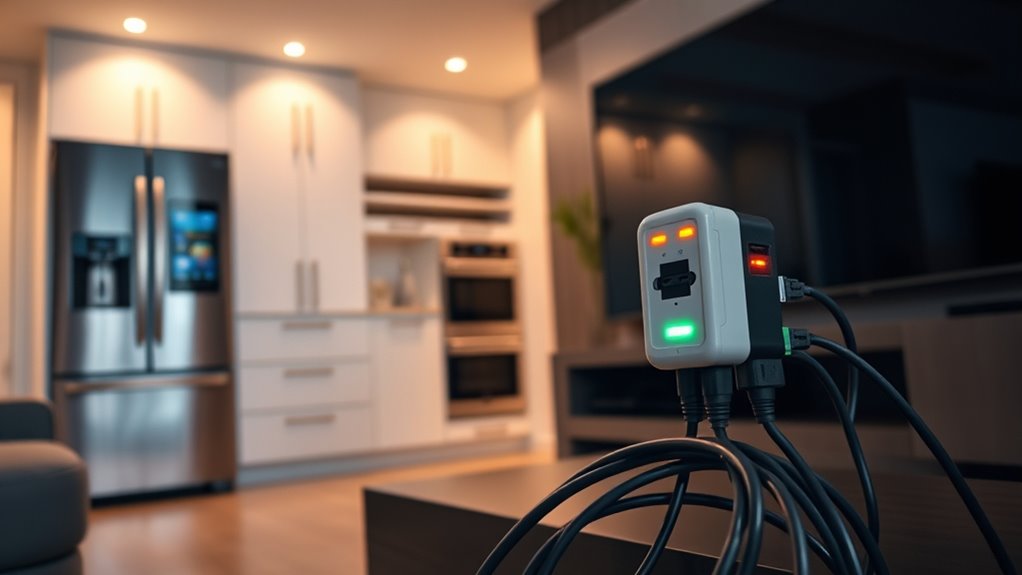
Power outages can catch you off guard, leaving your smart appliances vulnerable to sudden power fluctuations when the electricity returns. To protect your devices, consider installing uninterruptible power supplies (UPS). These devices provide backup power during outages and help prevent surges when power resumes. Additionally, unplug sensitive electronics during outages to avoid damage from unpredictable voltage spikes. Using voltage stabilizers can regulate inconsistent power flow, reducing risks of internal surges. Regularly inspect your wiring for wear and upgrade outdated electrical systems to minimize internal surge sources. Employing a sizing and load‑planning approach ensures your backup power system can handle your critical appliances effectively. Understanding your electrical system and its capacity can further safeguard your devices during unpredictable power events. Incorporating surge protection devices can provide an extra layer of defense against transient voltage spikes, especially in areas prone to electrical storms. Being aware of your local power grid stability can also help you anticipate and prepare for potential outages or fluctuations.
Best Practices for Managing Power Surges During Storms and Grid Fluctuations
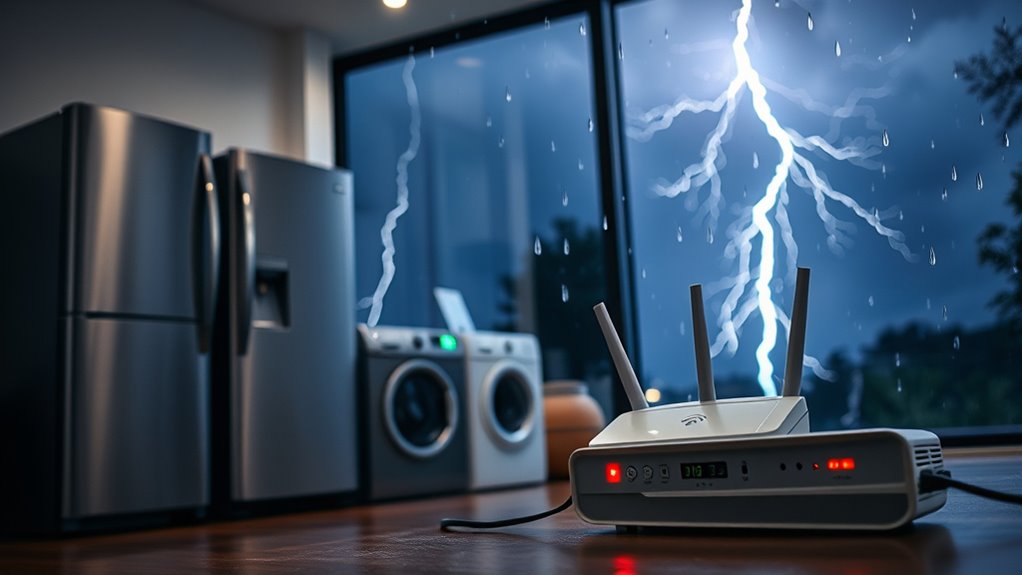
During storms and grid fluctuations, unplugging your devices is the simplest way to prevent damage from power surges. Installing whole-home surge protectors adds an essential layer of defense, safeguarding all your appliances automatically. Proper power surge protection and regular inspection of surge devices are critical for effective home safety & accessibility, providing peace of mind during severe weather. Additionally, understanding Free Floating electrical loads can help optimize your system’s response to sudden fluctuations. Incorporating Deaf Vibes techniques in your home safety measures can further enhance your awareness of electrical anomalies, ensuring timely interventions.
Unplug Devices During Storms
Lightning strikes and grid fluctuations can cause sudden voltage surges that damage your appliances, especially when they’re plugged in. During storms, your best defense is to unplug devices to prevent surge damage. This simple step removes the risk of power spikes reaching your smart appliances. To maximize safety, consider these practices:
- Unplug all sensitive electronics, including smart appliances, during thunderstorms.
- Disconnect devices from outlets, especially if a lightning storm is imminent.
- Avoid using extension cords or power strips connected to storm-prone outlets.
- Remember that power surges can also occur due to other electrical issues, so taking protective measures is always recommended.
Use Whole-Home Surge Protectors
Installing whole-home surge protectors is one of the most effective ways to guard your smart appliances against unexpected power spikes caused by storms and grid fluctuations. These devices are installed at your main electrical panel, creating a barrier that stops surges before they reach your wiring and connected devices. They protect every outlet and appliance in your home, preventing small, cumulative surges and sudden voltage spikes from damaging sensitive electronics. Choose a surge protector with a low voltage protection level (Up), a high joule rating, and fast response time. Regularly inspect and replace your surge protector following a major surge event or every two years to maintain ideal protection. Using whole-home surge protectors provides peace of mind, especially during storms and unpredictable grid conditions.
Frequently Asked Questions
Can Surge Protectors Prevent All Damage From Lightning Strikes?
No, surge protectors can’t prevent all damage from lightning strikes. While they absorb many surge events, a direct lightning strike can cause power surges so powerful that even the best protectors might fail. To minimize risk, unplug your devices during storms, use whole-home surge protection, and consider additional safeguards like voltage stabilizers. Combining these measures offers the best chance to protect your smart appliances from severe lightning-related damage.
Are Smart Surge Protectors Compatible With All Home Automation Systems?
Smart surge protectors are like the nervous system of your home automation, seamlessly integrating with many systems. They’re compatible with most popular home automation platforms, allowing you to control, monitor, and receive alerts. However, compatibility can vary depending on specific brands and models. Always check the manufacturer’s specifications to guarantee your smart surge protector will work harmoniously with your existing setup, so your devices stay safe and connected.
How Do I Know When My Surge Protector Needs Replacing?
You’ll know your surge protector needs replacing when it shows signs of wear, like physical damage or frayed cords. Smart protectors often have automatic alerts or indicator lights that signal failure or reduced capacity. If you’ve experienced a major power surge, replace it promptly, as its joule capacity diminishes. Regularly check for these signs and adhere to the recommended two-year replacement interval to guarantee peak protection.
Do Power Outages Affect the Lifespan of Surge Protection Devices?
Did you know that power outages can reduce your surge protector’s lifespan by up to 50%? When outages occur, surge protectors absorb voltage spikes caused by sudden power restoration, which wears down their components. Frequent outages or large surges accelerate this process, making it essential to replace your device sooner. To keep your appliances safe, consider upgrading your surge protection system regularly, especially after significant outages or storms.
Can Installing Surge Protectors Void My Smart Appliance Warranties?
Installing surge protectors generally won’t void your smart appliance warranties if you choose certified, high-quality devices. Manufacturers often recommend using surge protection to safeguard their products, and doing so can even support your warranty claims if damage occurs due to power surges. However, make sure you’re following the warranty terms and using approved protectors, as some warranties might specify specific brands or types of surge protection for coverage.
Conclusion
Think of protecting your smart appliances like shielding a delicate garden from a sudden storm. Just as a sturdy fence and timely watering keep plants safe, using the right surge protectors and maintenance keeps your devices secure. When a power surge hits, it’s like a thunderclap—without protection, your gadgets suffer. Stay prepared with layered defenses, so your smart home remains a safe, thriving space no matter the weather.