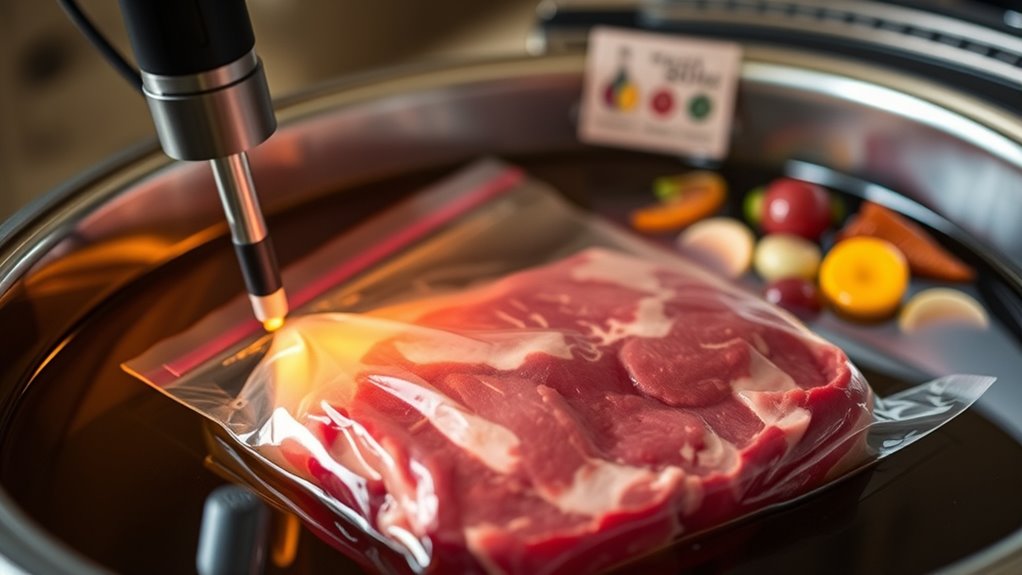

Low-temperature cooking methods like sous vide and slow cookers retain flavor by keeping a steady, precise temperature that prevents overcooking and preserves natural juices. Vacuum sealing enhances this by locking in aromatics and nutrients while protecting against oxidation. These techniques also maintain tender, juicy textures and prolong shelf life, ensuring food stays safe and flavorful longer. If you want to discover how these methods maximize taste and nutrition, keep exploring further.
Key Takeaways
- Precise temperature control in sous vide and slow cookers prevents overcooking, locking in natural juices and flavors.
- Vacuum sealing removes air, protecting flavor and nutrients, and enhances taste retention during low-temperature cooking.
- Consistent, gentle heat preserves delicate proteins’ tenderness and moisture, maintaining optimal flavor.
- Stable low temperatures inhibit bacterial growth, ensuring food safety and preserving flavor over longer periods.
- Controlled thermal environments retain vitamins, aroma, and textures better than traditional high-heat methods.
How Precise Temperature Control Preserves Flavors
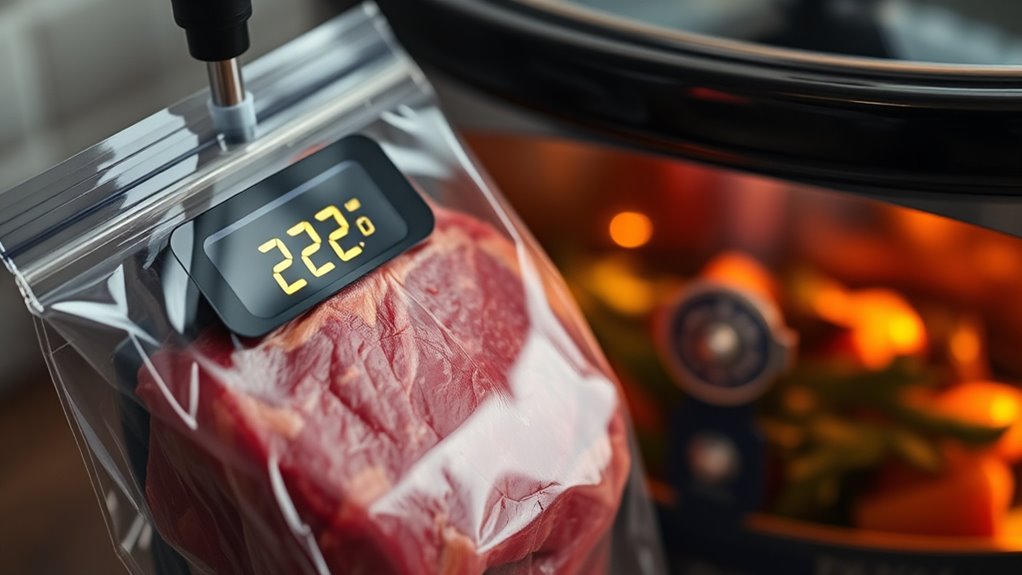
Precise temperature control plays an essential role in preserving and enhancing flavors during cooking. When you set your sous vide device to the exact temperature you need, your food cooks evenly without overcooking or burning. This accuracy guarantees that delicate proteins like fish or chicken stay perfectly tender and juicy. Unlike slow cookers, which have fixed settings and fluctuating temperatures, sous vide maintains a steady heat within 1-2 degrees, preventing loss of moisture and flavor. Because the food isn’t exposed to high heat or temperature swings, natural juices and flavors stay locked inside the bag. This controlled environment helps your ingredients retain their original taste and aroma, making each bite more flavorful and satisfying. Additionally, energy efficiency, such as precise temperature control, allows for more efficient resource use, reducing waste and energy consumption during the cooking process.
The Role of Vacuum Sealing in Flavor Retention
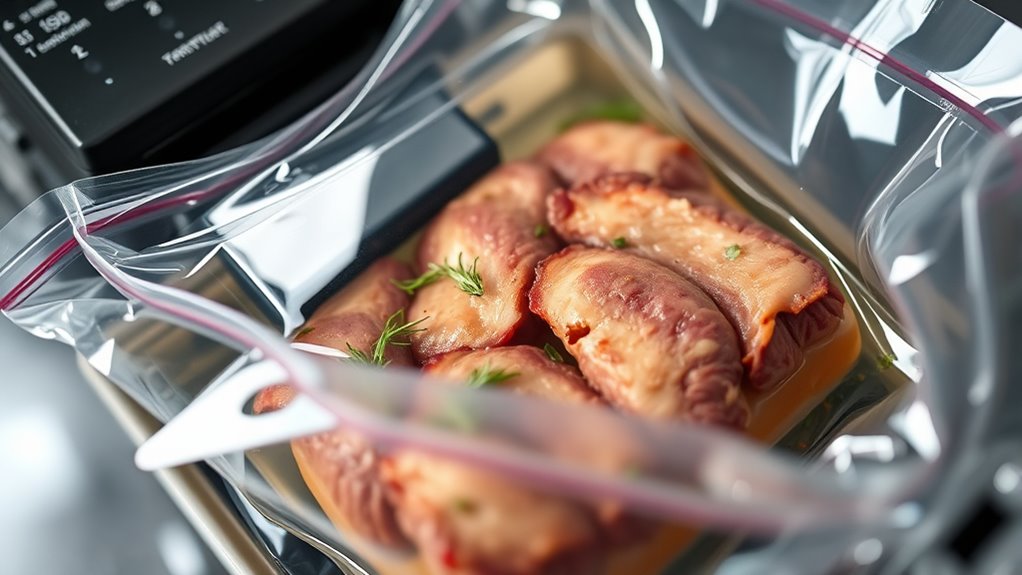
Vacuum sealing plays a crucial role in preserving flavors during sous vide cooking by removing air and creating an airtight environment around the food. This process prevents oxidation, which can degrade flavors and nutrients over time. By eliminating air pockets, vacuum sealing guarantees that natural juices and aromatics stay locked inside the bag, intensifying the taste. It also minimizes moisture loss, maintaining the food’s original texture and succulence. Unlike traditional methods where exposure to air can lead to flavor dilution, vacuum sealing concentrates flavors, making each bite more vibrant. Additionally, this sealed environment prevents contamination from external sources, ensuring food remains fresh during extended cooking. Proper food storage techniques like vacuum sealing also help prevent spoilage and maintain quality over longer periods. Furthermore, vacuum sealing supports food safety by reducing the risk of bacterial growth in stored foods. Using vacuum-sealed bags for extended storage can significantly prolong shelf life without compromising flavor or texture. Overall, vacuum sealing is essential for maximizing flavor retention and achieving consistent, high-quality results in low-temperature cooking.
Comparing Nutritional Preservation in Sous Vide and Slow Cooking

When comparing nutritional preservation in sous vide and slow cooking, it’s clear that sous vide generally retains more vitamins and bioactive compounds. The precise temperature control and vacuum sealing prevent nutrient loss and oxidation, keeping essential nutrients intact. In contrast, slow cooking’s higher temperatures and longer durations can lead to gradual nutrient degradation, especially for heat-sensitive vitamins like C and B complex. The sealed environment of sous vide minimizes exposure to air and light, preserving nutrients better than open or semi-closed slow cookers. Additionally, temperature stability in sous vide ensures minimal nutrient breakdown during cooking. This controlled environment also reduces oxidation, which can cause nutrient deterioration in foods. The ability of sous vide to maintain consistent temperatures contributes to better retention of nutrients, making it a healthier choice for preserving the nutritional quality of foods. Furthermore, cooking duration plays a significant role in nutrient preservation, with shorter cooking times in sous vide helping to preserve more nutrients than the typically longer durations used in slow cooking. The vacuum sealing process in sous vide also helps prevent nutrient loss by limiting exposure to oxygen and light. As a result, foods cooked sous vide often have higher nutritional value, making it a healthier choice for maintaining your meal’s nutritional profile. If nutrition is your priority, sous vide offers a clear advantage over traditional slow cooking methods.
Impact of Cooking Environment on Texture and Juiciness

The cooking environment plays an essential role in determining the texture and juiciness of your food. In sous vide, precise temperature control guarantees uniform doneness, resulting in consistently tender, juicy textures. Slow cookers, with less precise settings, can cause uneven results, sometimes over-softening ingredients. The sealed environment in sous vide traps moisture, keeping meat and vegetables moist and vibrant. In contrast, slow cookers expose food to open liquid, which may leach out juices, affecting tenderness. Understanding the cooking environment can help you choose the best method for your desired outcome. Additionally, factors like temperature stability and cooking duration further influence how well flavors and textures are preserved during the process. Proper moisture retention techniques are crucial for ensuring optimal flavor and tenderness in your dishes. Furthermore, the cooking temperature directly impacts how well these techniques work, emphasizing the importance of precise control for ideal results. A well-maintained environment ensures consistent results, making your cooking more reliable and satisfying.
Shelf Life and Food Safety Advantages of Low-Temperature Methods

Low-temperature cooking extends the shelf life of your food by slowing bacterial growth and preventing spoilage. Because sous vide keeps food sealed and at safe temperatures, it reduces contamination risks compared to traditional methods. This approach allows you to store and enjoy your meals longer without sacrificing safety or quality. Additionally, food safety benefits are supported by scientific studies demonstrating how controlled temperatures inhibit harmful microorganisms. Utilizing low-temperature techniques can also help preserve the nutritional value of foods, making your meals both safer and healthier. Properly controlling air quality during storage further enhances food safety and freshness over time. Regularly monitoring filter indicators and maintaining proper airflow can optimize storage conditions. By employing reliable backup power strategies, you can ensure your refrigeration and food preservation systems remain operational during power outages, safeguarding your food supply.
Extended Shelf Life
Vacuum-sealing and precise temperature control in low-temperature cooking methods considerably extend the shelf life of prepared foods. By removing air and maintaining consistent temperatures, your food stays fresher longer and resists spoilage. This process reduces microbial growth and slows oxidation, keeping flavors intact.
- Vacuum packaging can prolong freshness up to five times longer than traditional storage
- Consistent low temperatures inhibit bacterial development
- Sous vide allows safe storage of cooked foods for weeks
- Freezing cooked items maintains quality for 6-12 months without degradation
- Proper sealing minimizes moisture loss and prevents freezer burn
These advantages mean you can prepare meals in advance, store them safely, and enjoy high-quality flavors later. Low-temperature methods not only preserve food longer but also ensure it remains safe and flavorful over time.
Enhanced Food Safety
Maintaining precise and consistent temperatures during low-temperature cooking substantially enhances food safety by reducing the risk of bacterial growth. Sous vide devices keep food within safe temperature zones, preventing pathogens from thriving. Unlike slow cookers, which can experience temperature fluctuations, sous vide ensures the entire process stays within the danger zone (40°F-140°F). Vacuum packaging also limits exposure to air, decreasing contamination risks and extending shelf life. Additionally, sous vide works well with frozen foods stored for months without quality loss. Here’s a quick comparison:
| Feature | Sous Vide | Slow Cooker | Food Safety Impact |
|---|---|---|---|
| Temperature Control | Precise (±1-2°F) | Less precise | Reduces bacterial growth |
| Exposure to Air | Sealed environment | Open environment | Limits contamination |
| Shelf Life Extension | Up to 5 times longer | Standard | Enhances safety and freshness |
| Temperature Fluctuations | Minimal | Possible | Maintains safe cooking zones |
| Frozen Food Safety | Safe for long-term storage | Less ideal | Preserves quality and safety |
Food safety benefits are further amplified by temperature stability, which is essential for maintaining consistent, safe cooking conditions.
Best Applications for Flavor Retention in Different Proteins
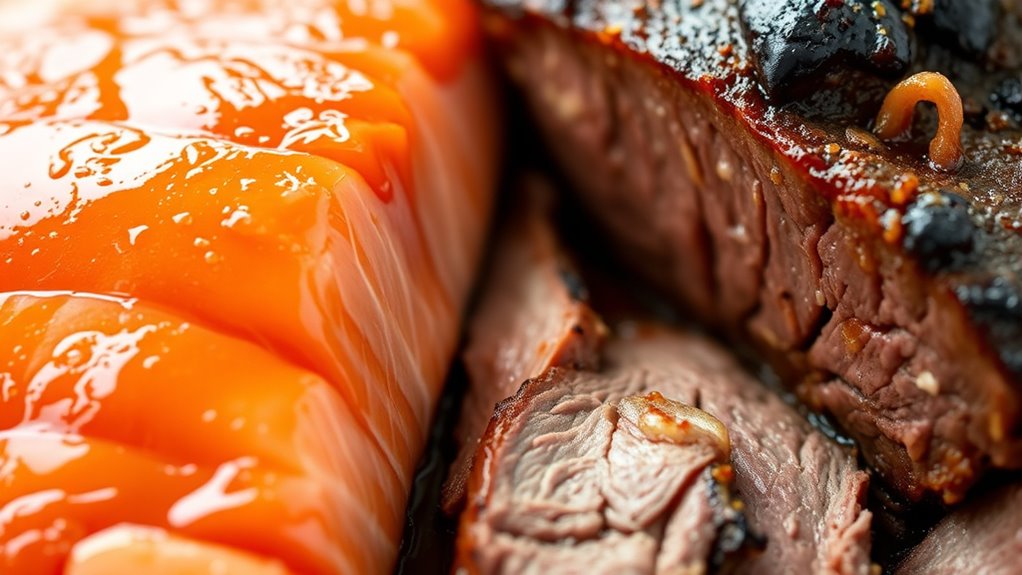
For ideal flavor retention, sous vide is perfect for delicate proteins like fish and chicken breasts, as it cooks gently at precise temperatures that preserve natural juices and subtle flavors. This method prevents overcooking and keeps ingredients tender and moist. You’ll find it especially effective for maintaining the integrity of tenderloin, scallops, or salmon fillets without losing their delicate textures. Additionally, choosing the right application method can further enhance flavor preservation during cooking. Incorporating low-temperature cooking techniques can also help maintain the flavor profile of a variety of proteins while ensuring they stay juicy and tender. Employing thermal control can optimize the process and maximize flavor retention.
Frequently Asked Questions
How Does Temperature Fluctuation Affect Flavor Consistency in Slow Cooking?
Temperature fluctuation in slow cooking can cause inconsistent flavor because the food’s environment isn’t stable. When temperatures vary, some ingredients may overcook or undercook, leading to uneven taste and texture. This can cause flavors to become dull or overly concentrated in some areas, reducing overall harmony. To maintain flavor consistency, it’s best to use a slow cooker on its correct setting and avoid frequent lid removal, which can disrupt temperature stability.
Does Vacuum Sealing Impact the Intensity of Natural Flavors Over Time?
Vacuum sealing locks in your food’s natural flavors, much like sealing a treasure chest preserves its gems. Over time, this airtight environment prevents oxidation and flavor loss, maintaining intensity. Studies show sous vide cooking with vacuum seals keeps nutrients and flavors more concentrated than traditional methods. So, if you want your food bursting with natural taste, vacuum sealing is like giving it a permanent, flavor-locking shield against time.
Are There Specific Nutrients Better Preserved by Sous Vide Than Slow Cooking?
You’ll find that sous vide preserves more nutrients than slow cooking because its precise temperature control prevents nutrient breakdown and oxidation. The vacuum-sealed environment locks in vitamins, minerals, and bioactive compounds, ensuring you get higher nutritional value. Unlike slow cooking, which exposes food to prolonged heat, sous vide keeps nutrients intact, making your meals healthier without sacrificing flavor or texture.
How Does Moisture Loss Influence Flavor Concentration During Prolonged Cooking?
Think of moisture loss as a shrinking vessel of flavor inside your food. As it evaporates during prolonged cooking, it leaves behind a concentrated essence, intensifying taste. However, too much moisture loss can make your dish dry and less appealing. You need a delicate balance—slow and steady, like a gentle tide—preserving enough moisture to keep flavors rich, juicy, and satisfying without sacrificing tenderness.
Can Low-Temperature Methods Prevent Flavor Degradation in Frozen Foods?
Yes, low-temperature methods prevent flavor degradation in frozen foods by maintaining precise, stable heat that minimizes nutrient and flavor loss. When you cook frozen foods sous vide or in a slow cooker, the gentle heat preserves natural flavors, juices, and nutrients, preventing oxidation and overexposure to high temperatures. This controlled environment guarantees your food retains its original taste and texture, making low-temperature cooking ideal for preserving quality in frozen ingredients.
Conclusion
Think of low-temperature cooking as tending a delicate garden, where each precise step nurtures the flavors you cherish. Just as a gentle gardener preserves vibrant blooms, sous vide and slow cookers safeguard the essence of your ingredients. By mastering this art, you become a steward of taste, ensuring every bite blooms with depth and juiciness. Embrace this culinary harmony, and your dishes will flourish with the richness only careful patience can cultivate.