Yes, smart kitchen appliances can communicate with each other through standardized protocols like Matter, Zigbee, Z-Wave, Wi-Fi, and Bluetooth. These protocols enable devices from different brands to coordinate actions, share data, and automate tasks efficiently. Some appliances connect directly, while others rely on hubs to manage multiple protocols. As technology advances, security and seamless integration become even more important, so there’s much more to explore about how these systems work together.
Key Takeaways
- Yes, many smart kitchen appliances can directly communicate through standardized protocols like Matter, Zigbee, or Z-Wave.
- Communication between appliances enables automation, such as an oven signaling the range hood to activate.
- Hubs or controllers manage multiple protocols, facilitating seamless interaction among diverse devices.
- Protocols like Bluetooth Low Energy enable quick, localized pairing, supporting appliance-to-appliance communication.
- Enhanced security measures protect data exchange, ensuring safe and reliable appliance communication.
The Role of Standardized Protocols in Appliance Communication

Standardized protocols play an essential role in ensuring seamless communication between smart kitchen appliances. They establish common languages that different devices use to understand each other, regardless of brand or model. Protocols like Matter enable appliances from various manufacturers to work together effortlessly, reducing compatibility issues. Wi-Fi provides high-speed connectivity for cloud-based control and data sharing, while Bluetooth Low Energy facilitates quick, localized pairing and control. Zigbee and Z-Wave are designed for low-power devices, ensuring sensors and battery-operated appliances stay connected reliably. These standards streamline setup, improve interoperability, and enhance user experience. Standardization also fosters innovation by enabling developers to create compatible solutions across different brands and platforms. Additionally, adopting energy-efficient protocols can further optimize device performance and reduce overall power consumption in the smart kitchen environment.
How Direct Communication Enhances Kitchen Coordination
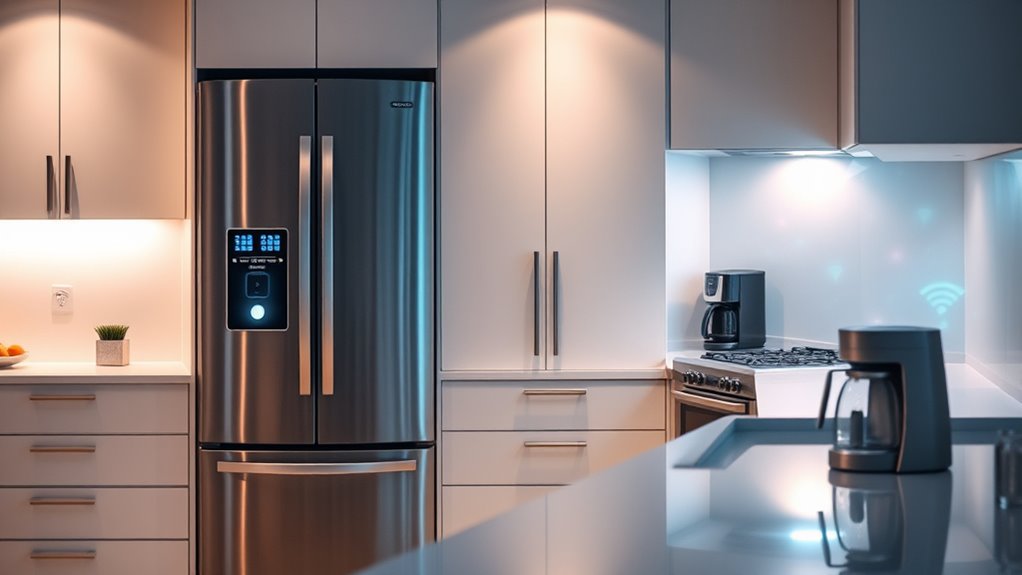
Direct communication between kitchen appliances substantially improves coordination by enabling them to exchange information instantly without relying on cloud services. This immediate data sharing allows appliances to work seamlessly together, reducing delays and manual adjustments. This coordination optimizes efficiency and convenience. For example, your oven can signal the range hood to activate when cooking begins, or your washer can send alerts when a cycle finishes. This type of device interoperability is crucial for creating a truly connected kitchen environment. Moreover, interoperability standards ensure that different brands and models can communicate effectively, further enhancing the overall smart kitchen experience. As these standards evolve, they support more cross-platform integration, making the entire kitchen ecosystem more cohesive and user-friendly. Additionally, reliable communication protocols are essential to maintaining consistent and secure data exchange among appliances.
The Function of Hubs in Managing Multiple Technologies

Hubs play a crucial role in managing multiple kitchen appliances that use different communication protocols. They serve as central controllers, streamlining device interaction and simplifying your smart kitchen setup. With a hub, you can:
- Integrate diverse protocols like Zigbee, Z-Wave, Matter, and Thread, allowing appliances from various brands to work together seamlessly. Protocol compatibility is essential for a smooth and reliable setup.
- Coordinate complex automations by processing data from multiple devices, enabling actions such as pre-heating ovens or adjusting lighting based on your routines. This can also help in sensor integration to optimize appliance performance.
- Extend coverage through mesh networking, ensuring all appliances, even in larger kitchens, stay connected and responsive. This connectivity can also help in detecting issues like ear wax odor, which might affect appliance sensors or performance.
- They also provide a trusted reputation that gives users confidence in their ability to manage multiple devices effectively. Additionally, a reliable hub can improve interoperability, making your smart kitchen more efficient and user-friendly.
Security Measures Protecting Appliance Data Exchange
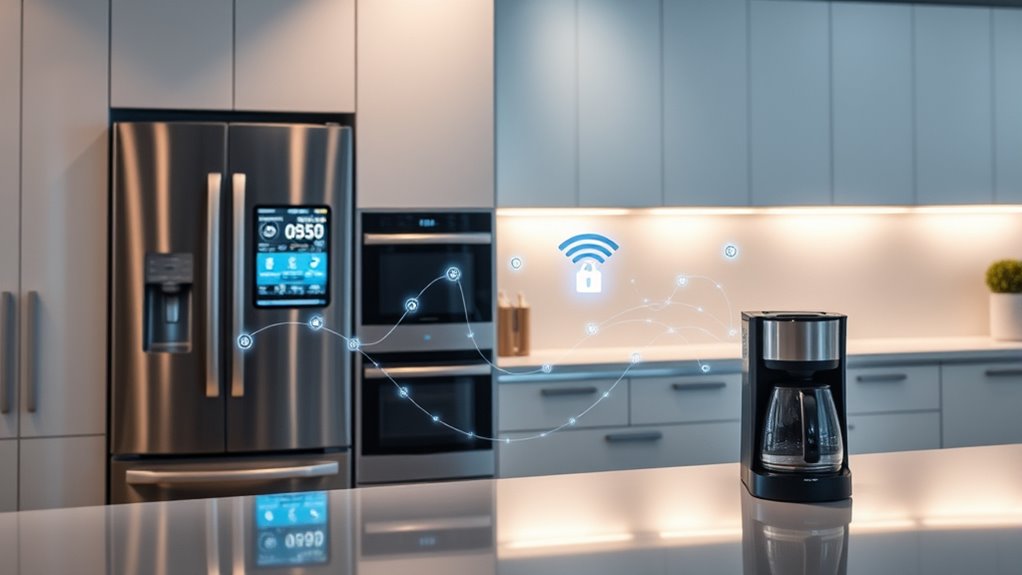
To guarantee your kitchen appliances stay secure during data exchange, manufacturers incorporate robust security measures into their communication protocols. They use encryption standards like AES-128 for Zigbee and Z-Wave, ensuring your data remains private and protected from eavesdropping. The Matter protocol adds layers of security with encryption, authentication, and access controls, preventing unauthorized access. Regular firmware updates patch vulnerabilities and strengthen defenses against emerging threats. Proprietary protocols might offer advanced security, but they can limit compatibility across brands. You benefit from these measures because they help prevent hacking attempts, data breaches, and unauthorized control of your appliances. By supporting secure data exchange, these protocols keep your smart kitchen safer and more reliable, allowing you to enjoy automation without compromising your privacy. Additionally, implementing vetted security standards ensures consistent protection across different devices and brands. Incorporating interoperability protocols further enhances security by enabling secure communication across diverse smart devices. Moreover, adopting standardized security practices encourages industry-wide improvements in safeguarding user data. Incorporating comprehensive security measures that adapt to evolving threats is essential for maintaining long-term privacy and trust. Furthermore, employing regular security audits can help identify potential vulnerabilities early, ensuring ongoing protection.
Future Trends in Smart Kitchen Connectivity

Emerging trends in smart kitchen connectivity focus on creating more seamless, secure, and energy-efficient appliances through advanced protocols like Matter and Thread. You’ll see future devices that communicate effortlessly, reducing setup time and enhancing automation. Here’s what to expect:
Future smart kitchen devices will connect seamlessly, securely, and efficiently using advanced protocols like Matter and Thread.
- Universal Compatibility: Devices will use protocols like Matter to work across brands, simplifying integration. Interoperability standards will allow appliances from different manufacturers to work together more reliably. As these standards are adopted widely, device compatibility will improve significantly, making smart kitchens more cohesive.
- Enhanced Security: End-to-end encryption and regular firmware updates will protect your data and privacy.
- Smarter Energy Use: Appliances will share detailed operational data, enabling real-time energy optimization and predictive maintenance.
- Interoperability Standards: As these protocols become more widespread, the interoperability of devices will improve, making smart kitchens even more adaptable and user-friendly.
These advancements will create a more connected kitchen where appliances coordinate smoothly, saving you time and energy while boosting security. The future of smart kitchen connectivity promises a more integrated, efficient cooking environment tailored to your needs.
Frequently Asked Questions
Can Appliances From Different Brands Communicate Directly Without a Hub?
Yes, appliances from different brands can communicate directly without a hub if they’re Matter-certified. Matter enables interoperability, allowing devices from various manufacturers to exchange data and coordinate actions without depending on a central hub. For example, your oven can signal the range hood to turn on during cooking. This direct communication simplifies automation, reduces reliance on proprietary systems, and ensures seamless integration across brands, making your smart kitchen more efficient.
How Secure Are the Data Exchanges Between Kitchen Appliances?
The data exchanges between your smart kitchen appliances are quite secure, thanks to encryption standards like AES-128 used in protocols such as Zigbee and Z-Wave. Matter also incorporates encryption, authentication, and access controls to protect your data. Regular firmware updates further patch any vulnerabilities. To keep your information safe, make certain your devices are always updated and use secure networks, like your home Wi-Fi with strong passwords.
Do Appliances Require Internet Access to Communicate Locally?
No, appliances don’t need internet access to communicate locally. Many use protocols like Zigbee, Z-Wave, and Matter, which enable direct device-to-device communication within your home network. This local communication allows appliances to coordinate actions, send alerts, or share data without relying on the internet. You get faster responses, more privacy, and less dependence on external servers, making your smart kitchen more reliable and secure.
What Is the Range of Direct Communication Between Appliances?
The range of direct communication between appliances varies depending on the protocol used. Zigbee and Z-Wave typically reach up to 30 meters indoors, ideal for most kitchens. Bluetooth Low Energy usually covers around 10 meters, suitable for close proximity controls. Matter protocol supports reliable local communication, often within the same range as Zigbee or Z-Wave, ensuring your appliances stay connected without needing Wi-Fi, even across larger kitchen spaces.
How Does Energy Management Data Improve Household Efficiency?
You might notice that when your smart appliances share energy data, it’s like your kitchen becomes more intelligent, saving you time and money. By analyzing operational patterns, you can optimize energy use, reduce waste, and lower bills. For example, your fridge or oven adjusts power based on real-time needs, preventing unnecessary consumption. This seamless sharing of data turns your household into a well-oiled machine, making daily routines more efficient and eco-friendly.
Conclusion
Imagine a kitchen where every appliance seamlessly talks to each other, transforming cooking into an effortless symphony. With standardized protocols, direct communication, and smart hubs, your kitchen becomes a powerhouse of efficiency and security. As technology advances, you’ll experience convenience so extraordinary it feels like having a personal chef at your fingertips. Embrace the future of smart kitchens—where connected appliances make your life simpler, safer, and more incredible than you ever imagined.