
Smart appliances connect to Wi-Fi and offer remote control, automation, and integration with other systems, boosting convenience and control. Energy-efficient appliances focus on reducing resource use through improved design, with no need for connectivity. While smart models enhance ease of use, energy-efficient ones save money and help the environment. Understanding these differences helps you choose what’s best for your goals—exploring further reveals how each impacts your budget and sustainability efforts.
Key Takeaways
- Smart appliances connect to Wi-Fi for remote control and automation, while energy-efficient appliances focus on reducing resource use without connectivity.
- Energy-efficient models primarily improve design for savings; smart appliances add convenience with features like scheduling and automation.
- Smart appliances often cost more upfront but offer automation benefits; energy-efficient models typically provide greater long-term utility bill savings.
- Both promote sustainability but achieve it through different means: energy-efficient appliances reduce consumption directly, while smart appliances optimize usage timing.
- Choosing between them depends on priorities like cost savings, convenience, or environmental impact, as they serve different consumer needs.
Defining Smart and Energy-Efficient Appliances
Smart appliances are devices that connect to your home Wi-Fi network and can be controlled remotely via smartphones or voice assistants. They often include features like automation, real-time monitoring, and integration with other smart home systems, offering convenience and control at your fingertips. These appliances can adjust their operations based on your usage patterns, provide maintenance alerts, and sometimes even predict future needs. On the other hand, energy-efficient appliances focus on reducing resource consumption, primarily electricity and water, through improved design and technology. They may lack smart connectivity but still deliver significant savings on utility bills. While smart appliances emphasize convenience and automation, energy-efficient models prioritize sustainability and resource conservation without necessarily requiring internet access. Additionally, smart appliances can enhance overall home safety and efficiency through features like HVAC optimization, adaptive energy management, and automated scheduling. Incorporating energy management systems can further optimize energy use in homes by coordinating smart and energy-efficient devices for maximum efficiency. Moreover, advancements in appliance technology continue to blur the lines between these categories, offering hybrid solutions that combine both benefits.
Core Technological Differences and Capabilities
While both smart and energy-efficient appliances aim to optimize performance, their core technological differences stem from their design and connectivity features. Smart appliances incorporate Wi-Fi, sensors, and automation, enabling remote control, usage monitoring, and integration with home systems like Alexa or Google Home. They often include features like automated cycles and maintenance alerts. In contrast, energy-efficient appliances focus on mechanical and electronic design improvements, such as better insulation, variable-speed compressors, and optimized mechanical components, to reduce resource consumption. These appliances operate independently of connectivity and don’t require internet access. Smart appliances may use energy efficiently but primarily prioritize convenience and automation, while energy-efficient models concentrate on resource conservation through advanced engineering, often without any smart features. In addition, Energy optimization is a key goal shared by both, but they achieve it through different technological approaches. Technological innovation in energy-efficient appliances often involves incremental improvements that can be implemented without connectivity, making them more accessible in various settings. A focus on sustainable design further enhances their environmental benefits without relying on smart technology. Moreover, advances in component materials can contribute to increased durability and efficiency in energy-saving appliances.
How They Impact Energy Consumption
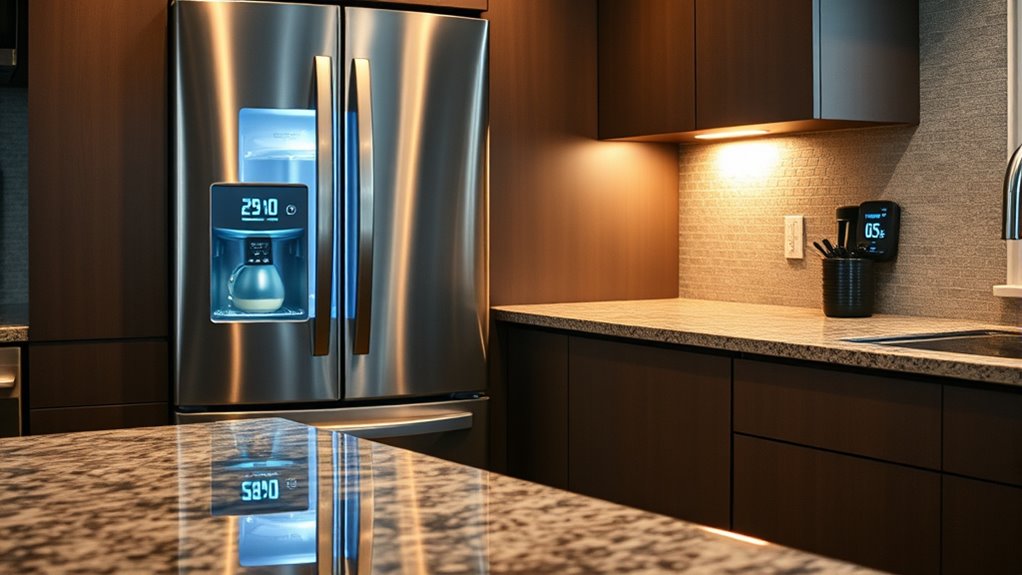
Energy consumption varies markedly between smart and energy-efficient appliances, with each approach contributing differently to reducing overall power use. Energy-efficient models are designed to consume less energy through advanced insulation, better compressors, and optimized mechanical systems, often achieving 10-50% savings compared to older appliances. Smart appliances, meanwhile, typically don’t use substantially more energy than standard models, especially when ENERGY STAR certified. They can, however, shift usage during peak periods with features like auto-start or scheduling, subtly reducing demand. Smart tech also enables remote monitoring and adjustments, helping you optimize usage and avoid waste. Additionally, user behavior plays a significant role in determining the actual energy savings of smart devices. Properly configuring home automation systems can significantly enhance the efficiency gains from smart appliances. Overall, energy-efficient appliances directly cut consumption through design, while smart features add a layer of flexibility and fine-tuning to conserve power more intelligently. Energy consumption varies based on how each appliance’s technology is implemented and utilized. Furthermore, the effectiveness of smart features depends on how well users utilize automation and scheduling to maximize efficiency, including understanding energy management systems and their capabilities.
Cost Implications and Long-Term Savings
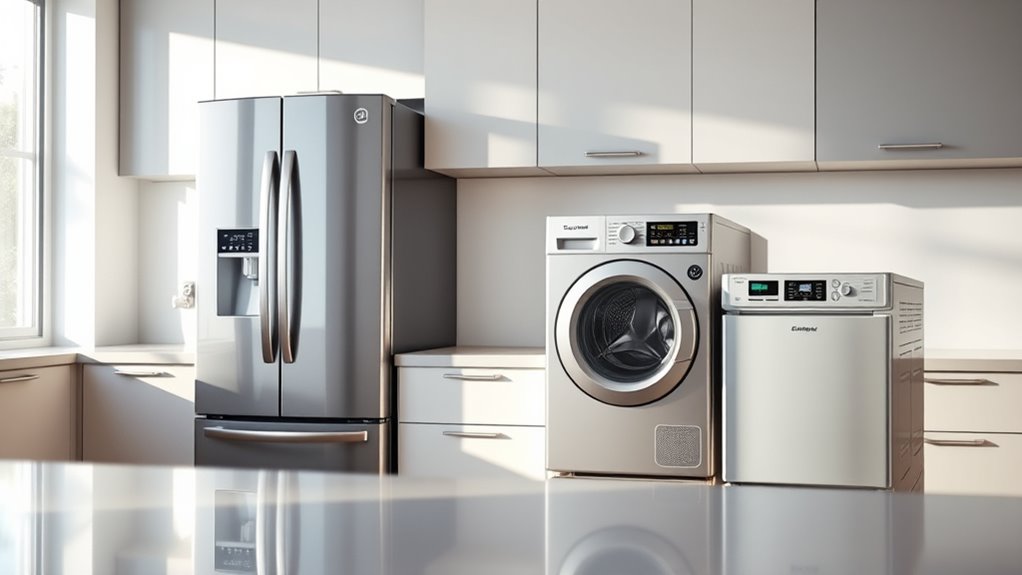
Smart appliances usually cost more upfront than standard models, but they offer convenience and automation that can save you time. Energy-efficient appliances may have a higher initial price but help reduce your utility bills over time. Keep in mind, maintenance costs for smart devices can be higher due to specialized repairs and diagnostics. Additionally, understanding home wiring is crucial for safe installation and operation of these devices. Proper electrical safety measures can prevent hazards and ensure the longevity of your smart systems. When leasing or purchasing appliances, consider lease terms and potential costs associated with upgrades or repairs to optimize your investment. Being aware of energy-saving tips can further enhance the long-term savings of energy-efficient appliances. Incorporating free floating design principles can also contribute to a more adaptable and efficient appliance setup in your home.
Upfront Investment Differences
Investing in appliances often requires weighing initial costs against long-term benefits. Smart appliances generally come with a higher upfront price due to advanced connectivity, automation, and integrated features. In contrast, energy-efficient models tend to cost less initially but may still require a premium over standard appliances. Consider these factors:
- Smart appliances can cost 20-50% more upfront than traditional models with similar capacity.
- Energy-efficient appliances usually have a smaller initial price difference but still carry a premium compared to basic models.
- The added expense of smart features may be offset by convenience and remote control capabilities.
- Long-term savings from energy-efficient appliances can outweigh their initial cost through lower utility bills over time.
- Additionally, some water-saving features in modern appliances can contribute to overall household conservation efforts.
- When evaluating options, it’s important to understand the initial investment and how it aligns with your budget and savings goals.
Your choice will depend on balancing these initial investment differences against potential long-term gains.
Utility Cost Savings
While upfront costs can be higher for smart appliances, the real savings often come over time through reduced utility bills. Energy-efficient appliances are designed to cut your long-term expenses by consuming less electricity and water. They often qualify for ENERGY STAR certification, ensuring significant savings—sometimes 10-50% less energy than older models. Many energy-efficient units lower your bills immediately, even with a higher initial price. Smart appliances add convenience and automation, which can lead to subtle energy savings via features like scheduling and peak demand shifting. Although smart models tend to cost more initially, their ability to optimize resource use and reduce consumption can result in lower utility expenses over their lifespan. Both types of appliances support cost savings strategies that benefit your household budget. Incorporating energy management features can further enhance savings and efficiency. Additionally, understanding reliance on cloud services can help you assess the sustainability of smart appliance functionalities. The decision to choose between these options should also consider potential warranty considerations and the manufacturer’s policies, which can impact long-term costs. Ultimately, both types help save money, but energy efficiency delivers the most direct cost benefits. Understanding energy savings can help you make better choices when selecting appliances for your home.
Maintenance Expense Factors
Maintenance expenses can substantially impact the long-term cost-effectiveness of your appliances. Smart appliances often require specialized diagnostics and repairs, which can increase service costs over time. Energy-efficient models tend to have fewer moving parts and simpler designs, reducing maintenance needs. However, they might need more frequent component replacements, like filters or sensors, to sustain efficiency. Keep these factors in mind:
- Smart features may demand software updates and electronic repairs, increasing costs
- Energy-efficient appliances often have longer intervals between major repairs
- Advanced mechanical parts in energy-efficient models can occasionally need replacement
- Connectivity issues in smart appliances might require professional troubleshooting
- The affordable maintenance of appliances depends on both design simplicity and availability of replacement parts
Balancing initial costs with ongoing maintenance helps you maximize savings. While smart tech offers convenience, energy-efficient appliances typically translate into lower long-term repair expenses.
Environmental Benefits and Contributions
Energy-efficient appliances offer significant environmental benefits by reducing overall energy consumption and lowering greenhouse gas emissions. When you choose ENERGY STAR-rated models, you help decrease the demand for electricity, which often relies on fossil fuels. This reduction directly cuts your carbon footprint and lessens pollution. These appliances incorporate advanced insulation, efficient compressors, and optimized mechanical systems to achieve savings. Even if not connected, they contribute positively to the environment. Smart appliances also support sustainability through features like auto-shutdown and load shifting, which help balance energy use during peak times. While smart tech mainly enhances convenience, it can subtly support environmental goals by reducing unnecessary energy use. Overall, both types of appliances help create a cleaner, greener future by conserving resources and lowering emissions.
Consumer Choices and Market Trends

Are consumers increasingly blending smart technology with energy efficiency when choosing appliances? Many want the convenience of remote control, automation, and integration with home systems. This trend leads to a growing market for appliances that combine both features, though not all consumers prioritize the same benefits. Some focus on cost savings and durability, favoring traditional energy-efficient models. Others seek the latest smart features for added convenience and monitoring. Market trends show:
- Increased availability of hybrid smart and energy-efficient appliances
- Consumers valuing long-term utility savings over initial costs
- Growing interest in appliances that support smart grid capabilities
- A preference for simplicity in traditional models despite smart options’s rising popularity
These choices reflect diverse priorities, shaping a dynamic appliance landscape.
Frequently Asked Questions
Can Smart Appliances Operate Without Wi-Fi Connectivity?
Smart appliances can’t operate fully without Wi-Fi connectivity because their key features, like remote control, automation, and monitoring, depend on a stable internet connection. Without Wi-Fi, you lose these convenience functions, though the appliance itself may still perform basic tasks. If you prefer simple operation without relying on internet access, traditional or energy-efficient appliances without smart features might be a better choice.
Are All Energy-Efficient Appliances Necessarily Smart-Enabled?
Back in the days of rotary phones, appliances were straightforward. Today, not all energy-efficient appliances are smart-enabled. They focus solely on resource conservation through better design and technology, like improved compressors and insulation. You can find many efficient models that don’t require Wi-Fi or remote control. These appliances save energy and money, but if you want smart features, you’ll need to choose models specifically designed for connectivity.
Do Smart Appliances Require More Maintenance Than Traditional Models?
Smart appliances often require more maintenance than traditional models because they have complex electronics and Wi-Fi components that can malfunction or need software updates. You might need specialized technicians for repairs, and troubleshooting can take longer. Regular updates, connectivity checks, and potential repairs of digital parts make smart appliances more demanding to maintain. If you prefer simplicity and lower upkeep, traditional models might suit you better.
How Quickly Do Energy-Efficient Appliances Typically Pay for Themselves?
You might be surprised how fast energy-efficient appliances pay for themselves—often within 3 to 5 years! As you see your utility bills drop, you’ll realize the initial investment was worth it. Thanks to lower energy consumption and rebates, you’ll start saving right away. Over their lifespan, these appliances can cut hundreds of dollars from your yearly costs, making the wait totally worth it.
Do Smart Features Always Lead to Better Energy Savings?
Smart features don’t always lead to better energy savings. While they can optimize usage, automation, and off-peak operation, these benefits depend on how you use them. If you don’t schedule or manage your smart appliances effectively, you might not see significant savings. Plus, smart appliances often come with higher upfront costs. Focus on energy-efficient models first, and add smart functions if you want convenience and monitoring, not just savings.
Conclusion
Remember, choosing between smart and energy-efficient appliances is like steering through a garden of promises—each bloom offers benefits, but only some truly flourish. By understanding their differences, you can make smarter choices that save energy, cut costs, and protect the planet. Like a guiding star in the night sky, your informed decision leads to a brighter, more sustainable future—proving that small steps today can create a legacy of positive change tomorrow.