Smart kitchen appliances now come with advanced parental controls and locking features to keep your family safe. You can set access restrictions, create user profiles, and disable functions during specific hours, all remotely through mobile apps or voice commands. These controls help prevent children from accidentally operating appliances or accessing inappropriate settings. With safety locks, age-appropriate restrictions, and monitoring options, you gain peace of mind. If you want to explore how these features work together, discover more below.
Key Takeaways
- Parental controls allow creation of user profiles with age-appropriate access restrictions on smart kitchen appliances.
- Lock functions disable touch panels and prevent unauthorized operation, enhancing safety for children.
- Usage limits and automatic shutoff features restrict appliance operation during designated times or upon misuse.
- Age verification steps and content filtering prevent children from accessing unsafe recipes or videos.
- Remote management and monitoring enable parents to oversee appliance activity and enforce safety measures remotely.
Overview of Safety Lock Features in Modern Kitchen Devices

Modern kitchen devices prioritize safety by incorporating various lock features designed to prevent accidental operation, especially by children. Many appliances, like smart ranges and oven controls, feature child lock functions that disable touch panels during use, ensuring kids can’t change settings or start a fire. Induction cooktops often include automatic shut-off systems that activate if no cookware is detected for an extended time, reducing fire risks. Wall ovens implement temperature limit settings to prevent excessive heat exposure, while gas ranges have flame failure devices that cut off gas if the flame is extinguished. These safety lock mechanisms offer peace of mind, making your kitchen safer by actively preventing unsafe operation and reducing potential accidents. Additionally, some smart appliances utilize navigation and mapping technologies to monitor and adapt to their environment, further enhancing safety and operational control. This integration of advanced safety features demonstrates how modern appliances are evolving to provide smarter, more secure culinary experiences, including remote control options that allow for monitoring and adjustments from outside the kitchen. Moreover, a focus on user interface design ensures that safety controls are intuitive and accessible to users of all ages, adding another layer of security. Incorporating sensor technology can also help detect hazards such as smoke or gas leaks, providing an extra level of safety for users.
Integration of Parental Controls With Home Networks
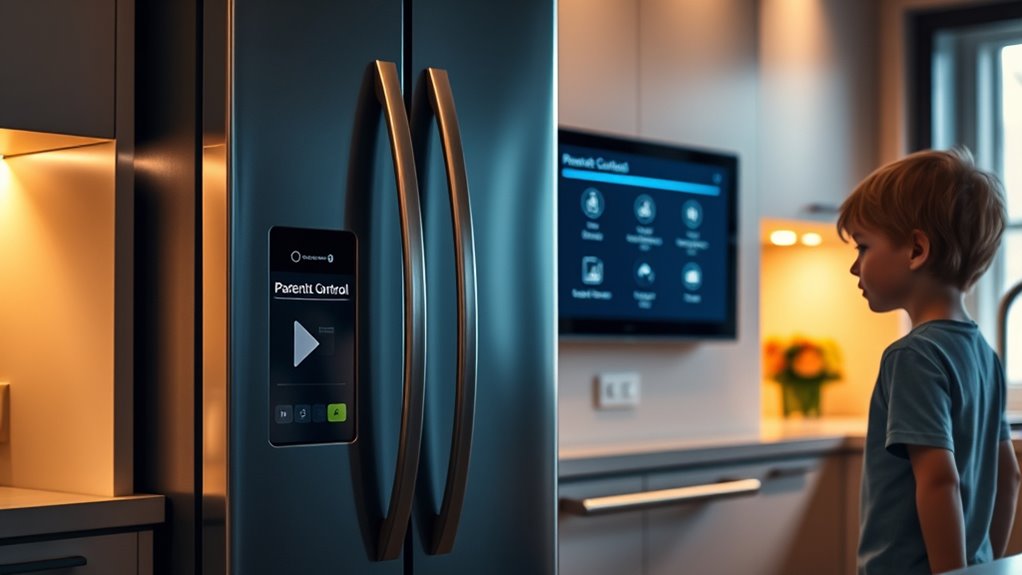
Integrating parental controls with home Wi-Fi networks allows you to manage smart kitchen appliances more effectively. By connecting your devices to a centralized network, you can set restrictions on usage times, disable functions during specific hours, and monitor activity remotely. Many routers support built-in parental control features, letting you create custom rules for each appliance. This integration guarantees you can limit high-risk functions, such as automatic shut-off or temperature adjustments, during supervised periods. Content filtering also extends to appliances with internet access, preventing exposure to unsuitable recipes or videos. Using a unified network management system simplifies oversight, giving you peace of mind while your household uses smart kitchen devices. This setup enhances safety by consolidating control and reducing the chance of unauthorized access. Additionally, leveraging European Cloud Servers ensures your data remains secure and compliant with regional privacy standards. Understanding network security principles helps protect your smart appliances from potential cyber threats, especially when considering the security of connected devices within your home network. Implementing privacy policies that clearly define data handling practices further strengthens your overall security posture.
Remote Monitoring and Management of Appliance Usage

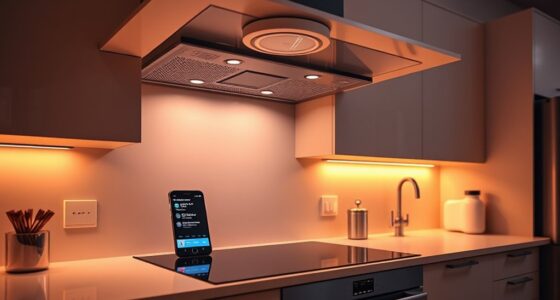
Once your smart kitchen appliances are connected to your home network, you gain the ability to monitor and manage their usage remotely. This feature allows you to stay informed about what’s happening in your kitchen, even when you’re away. You can receive real-time notifications for unusual activity or extended operation times, giving you peace of mind. Mobile apps let you check appliance status, adjust settings, or turn devices on and off remotely. Voice assistants enable quick verbal commands without physical interaction. Additionally, usage history tracking helps you understand appliance patterns and optimize energy consumption. Overall, remote management provides convenience and increased control over your kitchen appliances, ensuring safety and efficiency at all times. Implementing remote management features can also help prevent potential malfunctions before they become costly repairs. Being aware of appliance operation patterns can further assist in maintaining your appliances’ longevity and performance. Regular software updates are essential to keep your devices secure and functioning properly. Moreover, security protocols are essential to protect your devices and personal information from unauthorized access. Incorporating remote monitoring can also help detect issues early, saving you time and money.
Age-Appropriate Restrictions and User Profiles
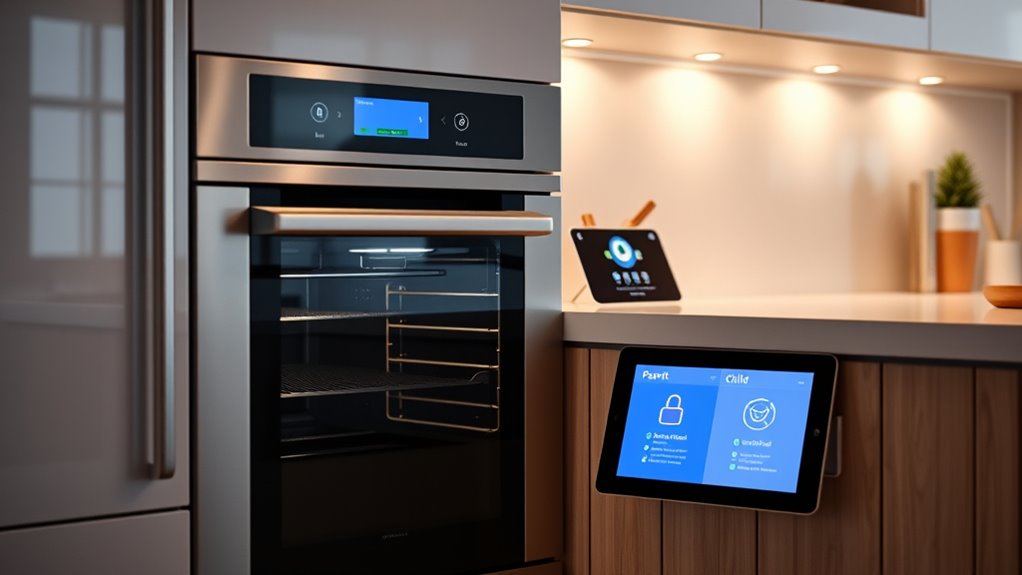
Age-appropriate restrictions on smart kitchen appliances help guarantee safety by tailoring access and functionalities to household members’ maturity levels. You can set up user profiles that specify which features each family member can access. For example, younger users might see simplified interfaces with pre-programmed recipes or limited controls, reducing the risk of mishandling. Adult profiles allow full functionality, including advanced settings and customization options. You can also implement age verification steps before granting access to certain features, ensuring children cannot bypass restrictions. By customizing permissions based on age, you enhance safety without hindering the usability for older users. Incorporating parental controls into your smart appliances is an effective way to manage and monitor usage. This approach helps create a secure environment while encouraging independence for younger household members. Utilizing user profiles can also streamline the management of multiple users and their specific needs. Additionally, setting usage limitations can prevent overuse or accidental activation of complex appliance functions. Implementing safety features such as automatic shutoff or alerts further boosts protection and peace of mind.
Specialized Safety Features in Refrigeration and Food Storage

Smart refrigeration and food storage units come equipped with specialized safety features designed to prevent accidents and guarantee food safety. These features help you monitor contents, control access, and avoid mishaps. For example, internal cameras let you check what’s inside without opening doors, reducing the risk of spills or temperature fluctuations. Temperature zone controls restrict children from accessing freezer compartments with inappropriate settings. Door-in-door designs give quick access to frequently used items while keeping main storage secure. Additionally, smart dispensers with cup size recognition prevent overfilling accidents, and antibacterial liners plus advanced lighting maintain food safety during frequent access. These features work together to create a safer, more controlled environment for your household. Monitoring capabilities allow for remote oversight, further enhancing safety and convenience. Incorporating user-friendly interfaces ensures that all household members can operate these features safely and effectively. Advanced safety features are often integrated with smart home connectivity, enabling seamless management alongside other household devices. Furthermore, remote monitoring systems contribute to overall safety by alerting you to potential issues before they escalate. These systems often utilize digital alerts and notifications to keep you informed about appliance status and safety concerns.
Voice and Gesture Recognition Safety Protocols

Voice verification systems guarantee only authorized household members can operate appliances, preventing misuse. Gesture activation safeguards require specific motions to prevent accidental starts or changes. These protocols help you maintain control and safety, especially when kids are nearby. Incorporating water safety measures can further ensure that appliances are used responsibly around aquatic environments. Additionally, integrating smart sensor technology can detect unintended interactions and trigger safety locks automatically. Implementing user authentication methods enhances overall security and helps prevent unauthorized access to smart appliances.
Secure Voice Verification
To prevent unauthorized access and guarantee safe operation, secure voice verification systems use user-specific voice profiles that recognize authorized household members. This ensures only trusted individuals can operate sensitive appliances like ovens or cooktops. The system listens for specific voice commands, matching them to stored profiles, and grants or denies access accordingly. You can customize voice profiles for each family member, adding an extra layer of security.
- Recognizes individual voice patterns for authentication
- Rejects unfamiliar or unverified voices
- Allows personalized appliance settings based on user profiles
- Provides audio feedback confirming or denying command execution
Gesture Activation Safeguards
Gesture activation safeguards enhance safety by ensuring that only intentional movements trigger appliance functions, reducing the risk of accidental activation. You’re protected because the system requires specific motion patterns or gestures to initiate commands, preventing accidental presses or misinterpretations. When children or untrained users try to activate appliances, sensors detect their movements and ignore unintended gestures, minimizing hazards. Proximity sensors can disable touch controls when children are nearby, adding an extra layer of safety. Multi-step verification processes, like combining gestures with voice confirmation, further prevent accidental starts of high-temperature cooking modes. Customizable settings allow you to restrict gesture-based controls to trusted household members. Overall, these safeguards ensure appliances operate only when you intend, keeping your family safe from unintended or hazardous activations.
Frequently Asked Questions
How Do Safety Locks Affect Daily Cooking Routines?
Safety locks make your daily cooking routines safer by preventing accidental operation, especially around children. They disable touch panels, restrict access to certain functions, and automatically shut off appliances if unsafe conditions are detected. You can still control appliances remotely or with voice commands, but safety locks help you avoid mishaps and maintain peace of mind. Overall, they add a layer of security without disrupting your essential cooking activities.
Can Parental Controls Limit Specific Appliance Functions Individually?
Think of parental controls as a skilled gatekeeper, selectively opening or closing access to your appliances. Yes, they can limit specific functions individually, like preventing the oven from reaching high temperatures or restricting microwave power levels. You have the power to customize these restrictions based on user profiles or time schedules, ensuring safety without shutting down the entire appliance. It’s like having a smart safety net tailored just for your household needs.
Are Remote Monitoring Features Accessible Without Internet Access?
No, remote monitoring features aren’t accessible without internet access. You need an active Wi-Fi connection to use mobile apps, receive real-time alerts, or check appliance statuses remotely. Without internet, you can still operate some functions locally, like using voice commands or touch panels, but the remote features require a live connection. So, guarantee your smart kitchen appliances stay connected online if you want continuous remote monitoring and control.
How Do Age Restrictions Adapt for Different Household Members?
Age restrictions adapt by tailoring access levels based on household members’ ages, balancing safety and independence. You set specific profiles—children get simplified controls and limited functions, while adults access full features. As kids grow, you can upgrade their permissions, gradually granting more autonomy. This dynamic approach ensures safety without hindering development, creating a seamless progression from strict restrictions to responsible independence, all managed effortlessly through your smart appliance system.
What Are the Best Practices for Setting up Family Profiles?
You should create detailed family profiles by assigning age-appropriate access levels for each member. Set up user verification and customize permissions to restrict high-risk functions for children, while allowing adults full control. Use the appliance’s profile settings to filter recipes, limit operation times, and enable safety features. Regularly review and update these profiles to adapt to your household’s changing needs, ensuring everyone’s safety and proper usage.
Conclusion
As you embrace smart kitchen appliances for convenience, remember that safety features protect your loved ones just as much as they simplify your life. While remote controls and user profiles offer peace of mind, they can’t replace the comfort of knowing your children are safe from accidental harm. In a world of high-tech gadgets, don’t forget that the true value lies in safeguarding your family’s well-being amid the sleek, connected appliances you trust.