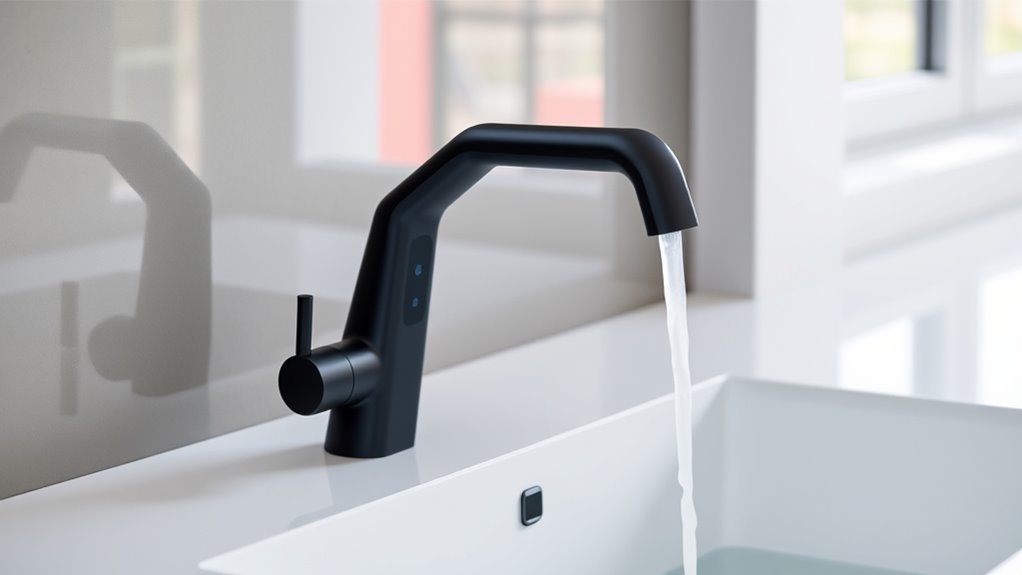

A smart faucet is worth considering if you want to save water, improve hygiene, and add modern convenience to your space. They use sensors to reduce waste, lower water bills, and minimize germ spread with touchless operation. Plus, their sleek design fits well in contemporary environments. Although the upfront cost is higher, long-term savings and safety benefits often justify it. To discover if a smart faucet suits your needs, explore the detailed advantages ahead.
Key Takeaways
- Smart faucets significantly reduce water waste, lowering utility bills and supporting environmental sustainability.
- They enhance hygiene by offering touchless operation, reducing germ spread in public and healthcare settings.
- Although initial costs are higher, long-term savings on water, energy, and maintenance make them cost-effective.
- Their sleek design and customizable features improve user experience and seamlessly integrate with modern decor.
- The durability and reliability of smart faucets ensure long-term performance, justifying the investment over time.
Water Conservation Advantages of Smart Faucets

Smart faucets substantially boost water conservation by using sensor technology to control water flow precisely when needed. When you approach, the faucet automatically activates, delivering only the amount of water required for the task, preventing waste. This automatic shut-off feature stops water from running when not in use, saving significant amounts during idle periods. Studies show these faucets can save between 30% and 70% of water compared to traditional models. The EPA estimates households can save up to 700 gallons annually with sensor faucets. Plus, their precise dispensing capabilities ensure you only use what’s necessary, whether for cooking or cleaning. By activating only with motion, these faucets eliminate unnecessary flow, making them an efficient choice for both residential and commercial settings.
How Touchless Technology Enhances Hygiene and Safety

Touchless technology substantially boosts hygiene by eliminating the need to touch faucet handles, which are common surfaces for germs and bacteria. When you don’t have to grasp handles, you reduce the risk of cross-contamination, especially in high-traffic areas like public restrooms or healthcare facilities. Sensors activate the water flow only when your hands are detected, preventing unnecessary contact. This minimizes the spread of germs from multiple users, helping maintain a cleaner environment. Plus, precise temperature controls reduce the chances of scalding accidents, ensuring safety for everyone. An understanding of water chemistry can also help optimize the performance and safety of touchless faucets. Proper installation and maintenance are vital to ensure the system functions correctly and continues to promote hygiene. Regular system checks can help identify and resolve issues before they compromise sanitation or safety. Additionally, user awareness about proper operation can further enhance hygiene practices and system longevity. Educating users on proper usage protocols promotes consistent hygiene and prolongs system life. Overall, touchless faucets promote healthier practices by keeping hands free from potentially contaminated surfaces and reducing the likelihood of transmitting illnesses. They’re an effective way to enhance hygiene and safeguard your health and that of others.
Cost Savings and Long-Term Financial Benefits
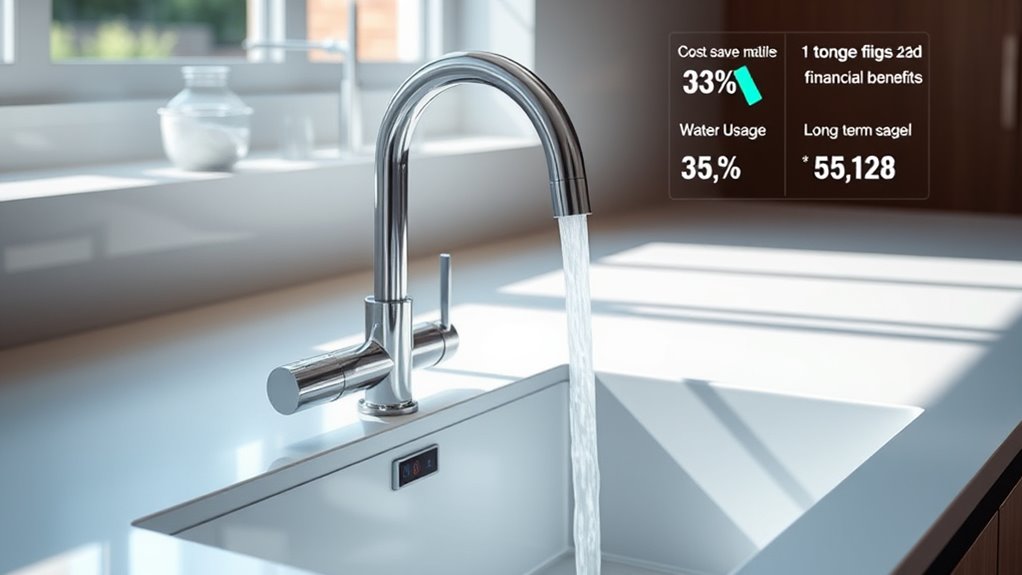
Although the initial investment in a smart faucet may be higher than traditional models, it can lead to significant long-term savings. By reducing water usage through sensor activation and automatic shut-off, you’ll cut your monthly utility bills. Studies show smart faucets save between 30% and 70% of water, which adds up over time. Additionally, precise temperature controls prevent unnecessary energy consumption for water heating, lowering your energy costs. Their durability and ease of maintenance also minimize replacement and repair expenses. Many users find that the savings on water and energy quickly offset the higher upfront price. Incorporating water efficiency strategies such as installing smart fixtures can further enhance your savings and promote conservation efforts. Using smart technology in your fixtures can optimize water flow and temperature, maximizing savings over the long run. Choosing models with robust construction and reliable sensors can prevent frequent repairs, ensuring consistent performance. Moreover, some smart faucets include usage analytics features that help monitor and improve your water habits. Over the years, these benefits make smart faucets a cost-effective choice, helping you save money while supporting sustainability efforts.
Improving User Experience and Convenience
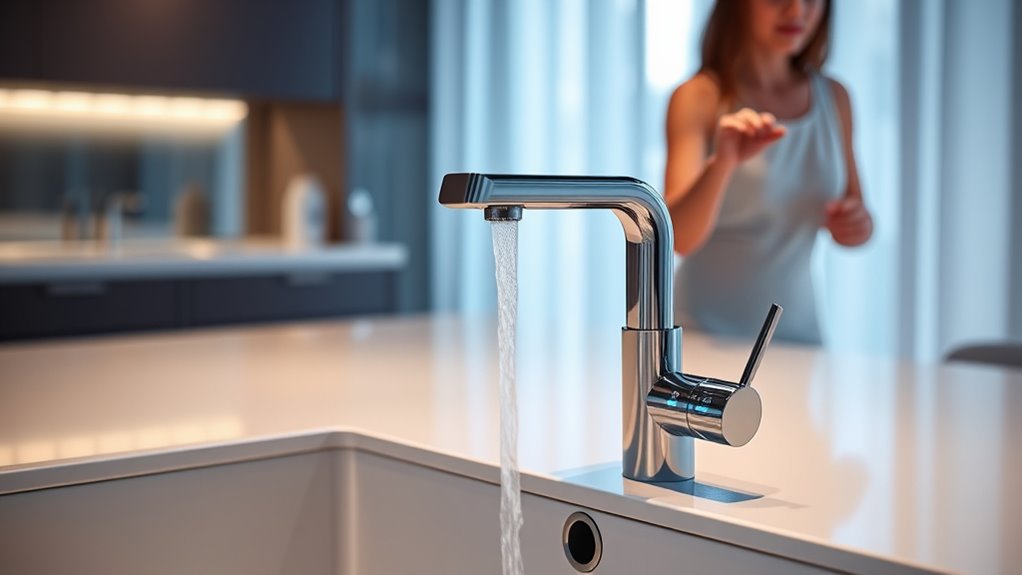
Enhancing user experience and convenience is one of the key benefits of smart faucets. You’ll appreciate their touchless operation, which works seamlessly through motion sensors, letting you turn water on and off without touching handles. Voice control and smartphone integration make remote operation simple, so you can start the flow or check for leaks from anywhere. Adjustable flow rates and timers let you customize water usage for different tasks, saving time and effort. Hands are often dirty or full, and smart faucets address this by providing a hygienic, hands-free experience. Modern designs blend well with contemporary aesthetics, offering sleek finishes that upgrade your space. Additionally, smart faucets often incorporate water conservation features that help reduce waste and promote environmentally friendly practices. These features are often designed with flow control technology to optimize water use without sacrificing performance. Incorporating smart technology can also alert you to potential leaks early, preventing water damage and waste. To maximize benefits, it’s important to understand the home plumbing systems that support these features, ensuring proper installation and operation. Proper understanding of plumbing integration can help you troubleshoot issues more effectively. Overall, smart faucets make daily routines easier, more efficient, and more hygienic, transforming your interaction with water into a more convenient experience.
Market Trends and Industry Adoption
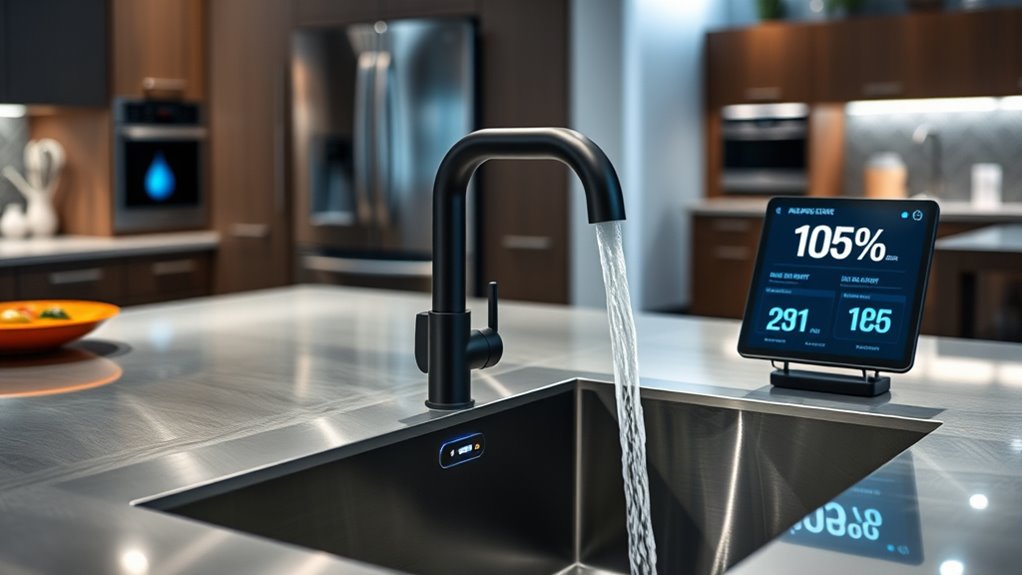
The smart faucet market is experiencing rapid growth, with projections estimating it will reach USD 3.4 billion by 2034. Industry leaders in North America and Europe are increasingly adopting these devices, especially in commercial sectors like hospitality and healthcare. As more industries prioritize sustainability, the adoption of smart faucets continues to expand across various sectors. Additionally, advancements in connectivity standards are making these devices more integrated and user-friendly. As AI-driven technologies become more prevalent, the integration of smart faucets with other connected systems is expected to further enhance their functionality and efficiency, leveraging AI integration to optimize water management and user experience. The ongoing development of AI detectors may also play a role in ensuring the authenticity and security of connected device data, fostering greater trust in these smart systems. Moreover, expert voice actors are increasingly involved in creating compelling marketing content that highlights the benefits of smart home devices like faucets.
Market Growth and Projections
Market growth for smart faucets is expected to accelerate considerably over the next decade, driven by increasing adoption across both residential and commercial sectors. The global market, valued at USD 1.9 billion in 2024, is projected to reach USD 3.4 billion by 2034, reflecting robust growth. In North America, especially the U.S., smart faucet adoption is strong, capturing 77% of the regional market. Commercial sectors like hospitality are rapidly integrating these fixtures to meet sustainability standards. Europe’s market is also expanding, with a CAGR of 5.6%. As water conservation and hygiene become priorities, more consumers and businesses will see the value in upgrading to smart faucets. This trend indicates sustained growth, driven by technological advancements, government incentives, and increasing environmental awareness. Modern kitchen technology continues to evolve, making smart faucets an increasingly attractive choice for eco-conscious consumers. Additionally, the market projections highlight the importance of understanding industry trends for making informed purchasing decisions and adopting new water-saving solutions. The rise of connected home devices further supports the integration of smart faucets into comprehensive home automation systems, fostering more efficient water management and user convenience. Emphasizing innovative water management technologies can further accelerate adoption and improve overall efficiency.
Regional Market Leaders
North America leads the way in adopting smart faucets, with the United States accounting for 77% of the regional market share in 2024. You’ll find major brands and innovative companies driving this growth, making smart faucets a common feature in homes and businesses. Industry leaders are prioritizing water conservation, hygiene, and user convenience, fueling widespread adoption. This regional dominance reflects a commitment to sustainability and modern design, setting industry standards. Additionally, sound science principles are being integrated into product development to enhance functionality and user experience. The integration of advanced technology further underscores the region’s focus on innovation and efficiency.
Sector Adoption in Industries
Industries across the board are increasingly adopting smart faucets to meet evolving demands for sustainability, hygiene, and efficiency. Commercial spaces like hotels, restaurants, and healthcare facilities lead the way, integrating touchless technology to reduce water waste and prevent cross-contamination. Hospitality giants such as Marriott and Hilton are installing smart faucets to improve guest experience while complying with sustainability standards. In healthcare, hospitals adopt them to enhance hygiene and prevent germ spread. Educational institutions and public restrooms also embrace smart faucets for cleanliness and water conservation. The commercial sector’s shift toward smart fixtures aligns with broader environmental goals, making these systems a strategic investment. As industry adoption grows, smart faucets are becoming essential tools for organizations aiming to balance operational efficiency with sustainability commitments.
Environmental Impact and Sustainability Contributions

Smart faucets help you reduce water waste and lower your environmental footprint by conserving up to 30% of water use. They also cut energy consumption through precise temperature control and automatic shut-off features. By choosing smart technology, you support sustainability efforts and contribute to resource preservation.
Water Conservation Benefits
Since water conservation is a crucial aspect of sustainability, integrating sensor faucets into your home or business can greatly reduce water waste. These faucets save between 30% and 70% of water compared to traditional models, according to multiple studies. The EPA estimates that households can save up to 700 gallons annually with sensor faucet installation. Automatic shut-off features prevent water from running when not needed, reducing unnecessary use. Precise water dispensing ensures you only use the exact amount needed for tasks like cooking or cleaning. Additionally, smart faucets activate only when motion is detected, minimizing waste in both residential and commercial settings. Overall, these features contribute considerably to conserving water, supporting environmental sustainability, and lowering your water bills.
Reducing Energy Usage
By reducing water waste through automatic shut-off and precise temperature controls, smart faucets also cut down on the energy needed to heat water. This efficiency lowers your energy bills and reduces environmental impact. Imagine:
- The faucet activating only when you need water, so no energy is wasted in idle time.
- Exact temperature controls delivering just the right hot water amount, preventing overheating and energy drain.
- Consistent, precise flow adjustments that minimize excess hot water use during tasks like cleaning or cooking.
These features collectively minimize the energy required for water heating and flow management. As a result, your home or business consumes less power, helping you lower your carbon footprint while supporting sustainability efforts. Smart faucets make energy conservation effortless and effective.
Design and Aesthetic Options for Modern Spaces

Modern spaces demand fixtures that blend functionality with style, and smart faucets offer a wide range of design and aesthetic options to meet this need. You can choose from sleek, minimalist designs or more ornate styles that complement your decor. Smart faucets come in various finishes like brushed nickel, matte black, chrome, and brass, allowing you to match your space perfectly. They also feature different handle types, from single-lever to touchless sensors, enhancing both form and function. The following table highlights some popular options:
| Style | Finish Options |
|---|---|
| Minimalist, sleek | Chrome, brushed nickel |
| Modern, geometric | Matte black, brass |
| Classic, elegant | Satin gold, stainless steel |
Maintenance, Durability, and Reliability Factors

When considering a smart faucet, you should evaluate its long-term durability and how well it stands up to daily use. Ease of maintenance is key to keeping it functioning smoothly without frequent repairs or replacements. Reliability in operation guarantees you won’t face unexpected breakdowns that disrupt your water management.
Long-Term Durability Standards
Long-term durability standards for smart faucets focus on ensuring they remain reliable and easy to maintain over years of use. These standards emphasize high-quality materials and rigorous testing to prevent leaks, corrosion, and wear. When evaluating durability, picture these factors:
- Robust build quality, with corrosion-resistant metals like brass or stainless steel that withstand daily use.
- Consistent performance, ensuring sensors and electronic components operate flawlessly for prolonged periods without frequent failures.
- Ease of repair, allowing you to replace parts like sensors or cartridges quickly, minimizing downtime and service costs.
Ease of Maintenance Tasks
Maintaining a smart faucet is generally straightforward, thanks to its durable construction and thoughtful design. You’ll find that cleaning and troubleshooting are simple, often requiring just routine checks. The sensors and electronic components are built to last, reducing frequent repairs. If issues arise, user-friendly manuals and customer support make fixes easy. Regular maintenance, like replacing filters or cleaning sensors, keeps your faucet functioning smoothly.
| Ease of Maintenance | Emotional Impact |
|---|---|
| Simple troubleshooting | Confidence in long-term use |
| Easy filter replacement | Peace of mind |
| Minimal repairs | Satisfaction from hassle-free setup |
Reliability in Usage
Smart faucets are designed with durability and reliability in mind, ensuring they perform consistently over time. You can expect them to:
- Resist daily wear and tear, thanks to high-quality materials that prevent corrosion and damage.
- Maintain precise sensor operation, so water flows only when needed, minimizing malfunctions.
- Last through years of use with minimal maintenance, thanks to sturdy components and reliable engineering.
These features mean you won’t worry about frequent repairs or sudden breakdowns. Regular cleaning of sensors and prompt replacement of worn parts keep your faucet functioning smoothly. With proper care, your smart faucet offers dependable performance, making it a worthwhile investment for long-term reliability.
Comparing Smart Faucets With Traditional Models
When comparing smart faucets to traditional models, the key differences often come down to water efficiency, hygiene, and convenience. Smart faucets use sensors to activate flow only when needed, saving up to 70% of water and reducing waste during idle times. They also prevent overuse with precise flow control, which traditional faucets lack. Hygiene improves considerably since touchless operation minimizes germ transmission, especially in public or shared spaces. Convenience is another advantage—smart faucets respond to motion, voice commands, or smartphone controls, making hands-free use effortless. While the initial cost is higher, long-term savings on water and energy offset this expense. Overall, smart faucets offer smarter, cleaner, and more efficient alternatives to conventional models, making them a worthwhile upgrade for many users.
Is Investing in a Smart Faucet Justified?
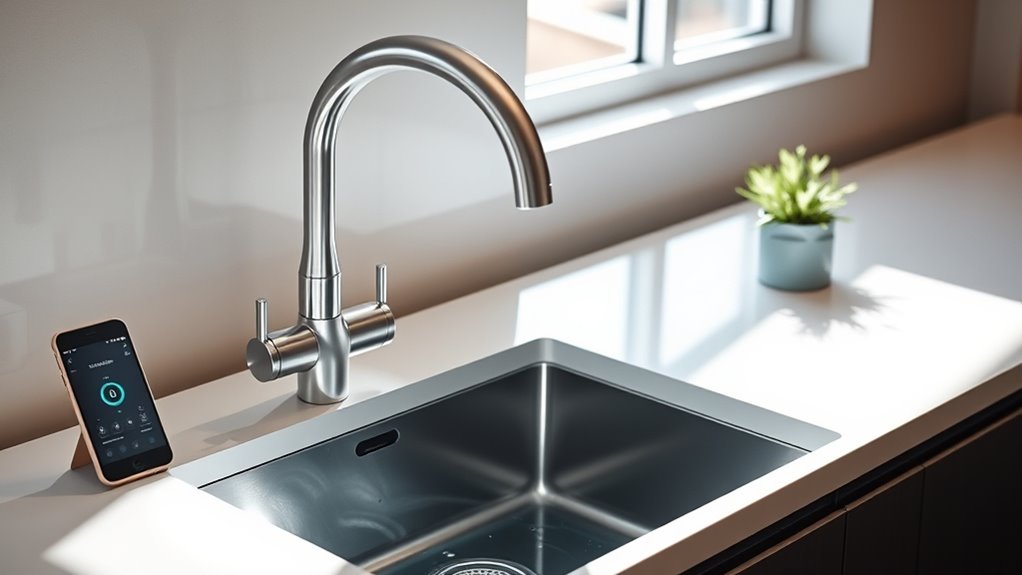
Investing in a smart faucet can be a wise decision if you prioritize water efficiency, hygiene, and long-term savings. Imagine:
- Turning on the faucet with a simple wave, reducing contact with germs.
- Watching water flow only when needed, saving hundreds of gallons annually.
- Enjoying precise temperature control that prevents scalding and conserves energy.
These features not only improve hygiene and reduce waste but also lower your utility bills over time. Although the upfront cost is higher than traditional models, the savings on water and energy quickly offset this expense. Plus, the durability and ease of maintenance mean fewer replacements and repairs. If sustainability, convenience, and long-term value matter to you, investing in a smart faucet is a justified choice.
Frequently Asked Questions
Are Smart Faucets Compatible With Existing Plumbing Systems?
Smart faucets are generally compatible with existing plumbing systems, making installation straightforward. You’ll need to confirm your plumbing connections match the faucet’s specifications, which most models accommodate easily. Some installations might require minor adjustments or additional fittings, but overall, they’re designed for standard setups. If you’re unsure, consulting a professional plumber can help verify compatibility and ensure a smooth, hassle-free installation process.
What Are the Installation Requirements for Smart Faucets?
You’ll need compatible plumbing, typically standard US or European fittings, and a grounded electrical outlet nearby for power. Check your sink’s size and mounting options to make certain the faucet fits properly. Some models may require additional adapters or a power source if not already installed. Follow the manufacturer’s instructions carefully during installation, and consider hiring a professional plumber if you’re unsure about connecting the electrical components safely.
Can Smart Faucets Be Integrated With Home Automation Systems?
Imagine your home as a symphony where smart faucets harmonize seamlessly with your automation system. Yes, you can integrate them, often through voice control, smartphone apps, or smart home hubs. This connection allows you to turn on water, adjust flow, or check for leaks effortlessly. With compatible devices, your smart faucet becomes an intuitive part of your smart home, offering convenience, efficiency, and a touch of modern elegance.
How Do Smart Faucets Handle Power Outages or Technical Malfunctions?
During power outages or technical malfunctions, your smart faucet may temporarily stop working or revert to manual operation if it has a backup power source. Many models include batteries or manual override features, allowing you to still use water when needed. Regular maintenance and updates guarantee reliability, but it’s smart to have a backup plan for outages, like traditional faucets, to avoid inconvenience during technical issues.
Are There Eco-Friendly or Biodegradable Options for Smart Faucet Components?
Yes, eco-friendly and biodegradable options for smart faucet components are emerging, but they’re not widespread yet. You can choose models with energy-efficient features that reduce environmental impact, like low-power sensors and recyclable materials. Some manufacturers focus on sustainable production practices, using biodegradable plastics or recycled metals. While options are limited, selecting these eco-conscious products helps you minimize your environmental footprint and supports ongoing innovation toward greener smart plumbing solutions.
Conclusion
Ultimately, investing in a smart faucet is like choosing a future-proof upgrade for your home. With their water-saving features, enhanced hygiene, and sleek design, they offer more than just convenience—they transform your daily routine. While the initial cost might seem steep, the long-term savings and benefits outweigh the expense. So, are you ready to embrace innovation and turn your space into a smart oasis? The faucet of the future is just a tap away.