When planning a smart kitchen remodel, start by setting a realistic budget with a contingency buffer and develop a detailed timeline that breaks down design, procurement, and construction phases. Focus on integrating smart technology by planning dedicated circuits and wiring for future upgrades. Design an efficient layout that optimizes workflow and storage options, choosing durable materials and energy-efficient appliances. To discover how to balance these elements smoothly, consider exploring further.
Key Takeaways
- Develop a detailed project plan covering design, procurement, construction, and timelines, starting at least 6 months in advance.
- Budget carefully with a 15-20% contingency, tracking costs regularly and prioritizing essential features and energy-efficient solutions.
- Incorporate smart technology by planning dedicated circuits, wiring for connectivity, and consulting licensed electricians for safety and code compliance.
- Design an efficient layout with optimal work zones, ample counter space, and smart storage solutions to enhance workflow and minimize clutter.
- Choose durable, energy-efficient appliances and materials, verifying compatibility and future expansion needs, to ensure long-term functionality and resilience.
Developing a Comprehensive Planning Timeline
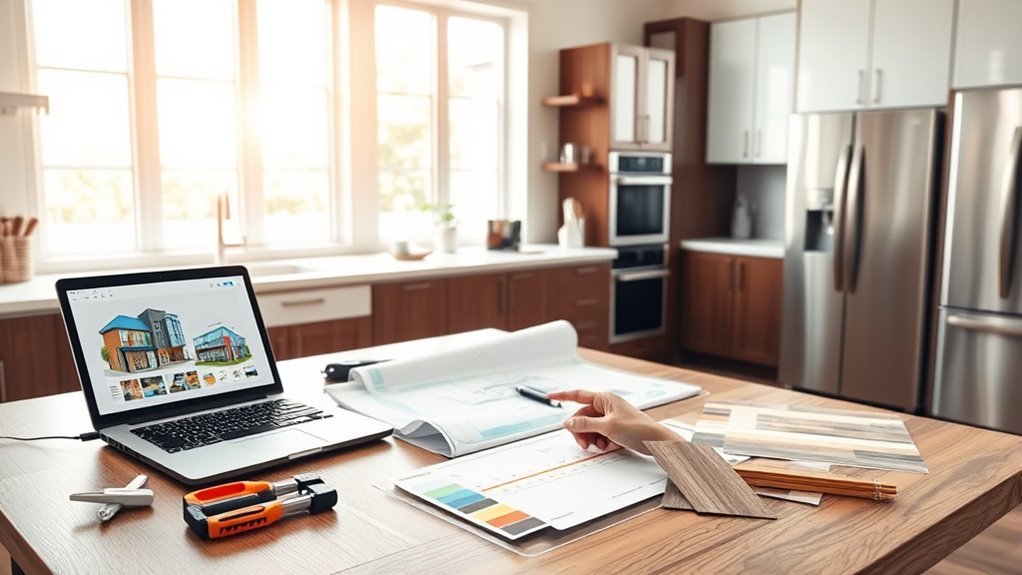
Creating a detailed planning timeline is essential to make sure your kitchen remodel stays on track and within budget. Start planning at least six months before your desired completion date to allow ample time for all phases. Break down tasks into manageable steps, such as design, procurement, and construction. Allocate 3-4 months for ordering custom cabinets and specialty materials, which often have long lead times. Schedule site inspections and measurements early to identify structural constraints and avoid delays. Finalize your layout, materials, and appliances within the first 1-2 weeks of planning. Regularly review progress against your timeline, adjusting as needed to stay on schedule. A well-structured plan keeps your project organized and minimizes surprises during the renovation process. Incorporating document management techniques can help you keep track of all your plans, receipts, and schedules efficiently. Additionally, setting up a project tracking system can improve communication among contractors and suppliers, ensuring everyone remains aligned with your timeline. Utilizing collaborative tools can further streamline coordination and reduce potential misunderstandings throughout the project. To enhance your project management, consider establishing clear milestones to monitor progress at key stages and ensure timely completion. Moreover, understanding the home theatre projector technology can help you plan your space effectively for optimal viewing.
Establishing a Realistic Budget and Cost Management
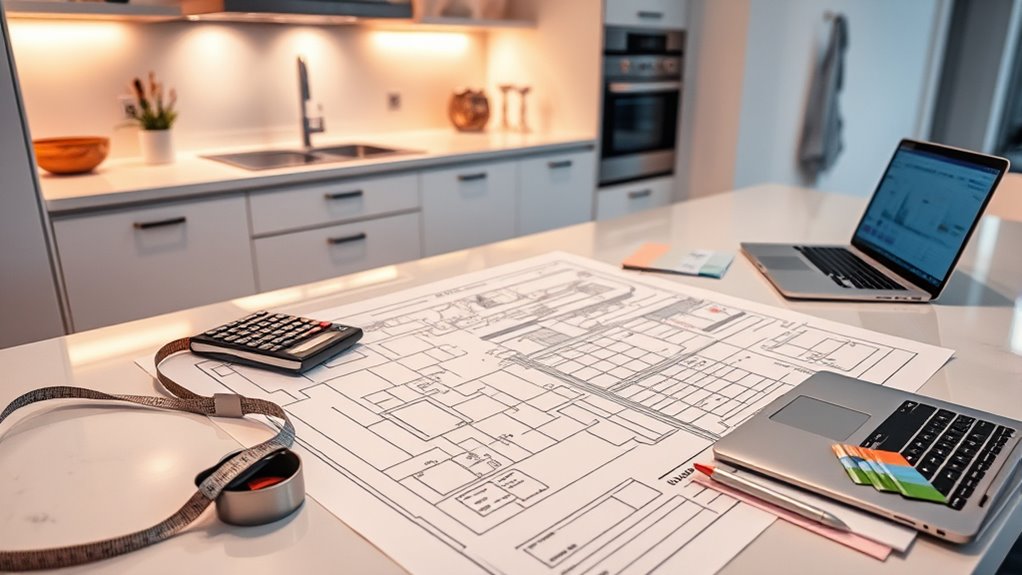
Setting a realistic budget is key to a successful remodel, so be sure to include a buffer of 15-20% for unexpected expenses. Break down your costs clearly, considering project scope and material choices, to stay on track financially. Managing surprises requires proactive planning and flexibility to adjust your plan without overspending. Incorporating aspects like landscaping can enhance the overall look while remaining within budget. Additionally, understanding zodiac traits and personalities can help you better communicate your design preferences and expectations with contractors and suppliers. Exploring energy-efficient cloud solutions can also inspire innovative features for your kitchen, ensuring it’s well-equipped for long-term resilience.
Budget Buffer Strategies
To manage your kitchen remodel budget effectively, it is vital to include a contingency buffer of 15-20% of your total costs. This buffer accounts for unexpected expenses, design changes, or price increases that often arise during construction. By allocating this extra funds upfront, you reduce the risk of running out of money before project completion. Keep track of your expenses regularly and adjust your spending if necessary to stay within your overall budget. Prioritize essential features and plan for potential upgrades later, rather than overextending your initial budget. Remember, a realistic buffer helps you navigate surprises smoothly, ensuring your remodel stays on track financially without sacrificing quality or key components. Additionally, understanding body jewelry measurements and materials can be beneficial if your smart kitchen incorporates AI technology, as it ensures ethical considerations are addressed during the design process.
Cost Breakdown Planning
A detailed cost breakdown is essential for establishing a realistic kitchen remodel budget and managing expenses effectively. Start by listing all major categories, including cabinetry, appliances, countertops, lighting, and labor. Research current prices for materials and services to set accurate estimates. Factor in additional costs such as permits, delivery, and installation fees. Allocate a portion of your budget to unexpected expenses, typically 15-20%, to cover surprises. Prioritize components based on your needs and preferences, balancing quality and cost. Track each expense carefully throughout the project to avoid overspending. Use this breakdown to make informed decisions, adjust scope if necessary, and stay within your financial limits. This approach helps prevent surprises and keeps your remodel on track financially. Additionally, understanding the cost management process can help you identify areas where you might save without compromising quality. Incorporating budget tracking tools can further enhance your ability to monitor expenses in real-time, ensuring you stay aligned with your financial plan.
Managing Unexpected Expenses
Managing unexpected expenses is crucial to keeping your kitchen remodel on track financially. You should allocate a 15-20% buffer within your budget to cover surprises like hidden structural issues or unforeseen material costs. Stay flexible by prioritizing essential upgrades and delaying non-urgent features if costs escalate. Regularly track all expenses and compare them against your initial estimates to identify potential overruns early. Reuse existing materials or fixtures when possible to save money. Obtain detailed quotes from contractors and suppliers to prevent hidden fees. If costs exceed your budget, consider adjusting your scope—such as choosing alternative materials or appliances. Staying proactive and maintaining a contingency fund ensures you’re prepared for surprises without compromising your overall project goals. Additionally, understanding electric power generation with bike generators can inspire creative energy solutions during your renovation process.
Integrating Smart Technology and Electrical Planning

Integrating smart technology into your kitchen requires careful electrical planning to guarantee all devices function seamlessly. You need to ensure your wiring can support current and future smart appliances, avoid overloads, and maintain safety standards. Here are three key considerations:
- Dedicated Circuits: Install separate circuits for smart appliances to prevent power disruptions and overloads. This approach minimizes the risk of outages caused by high electrical demands from multiple devices operating simultaneously. Proper circuit design is essential for accommodating the increased electrical load safely. Additionally, consulting with a licensed electrician can help ensure your wiring configuration meets all safety and code requirements. Planning for future expansion can help your system adapt as your smart kitchen evolves.
- Pre-wired Connectivity: Plan for wiring that supports Wi-Fi boosters and network hubs to ensure reliable connectivity across all devices. Proper network infrastructure is vital for maintaining a responsive smart kitchen.
- Smart Panel Setup: Incorporate a dedicated electrical panel or sub-panel to manage the increased electrical load from smart technology efficiently. Proper load management ensures your system remains safe and efficient as your smart home evolves.
Designing an Efficient Layout and Workflow
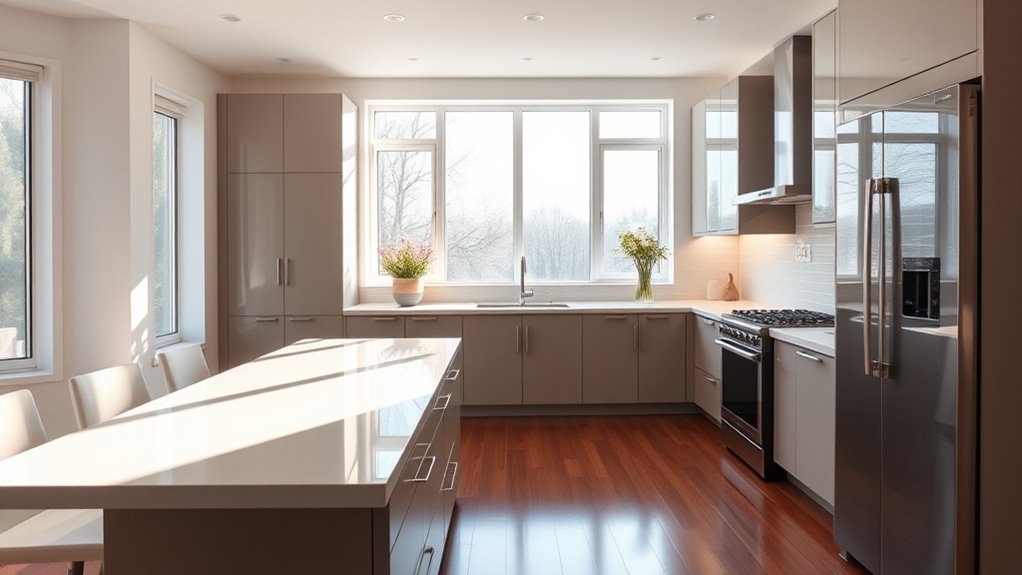
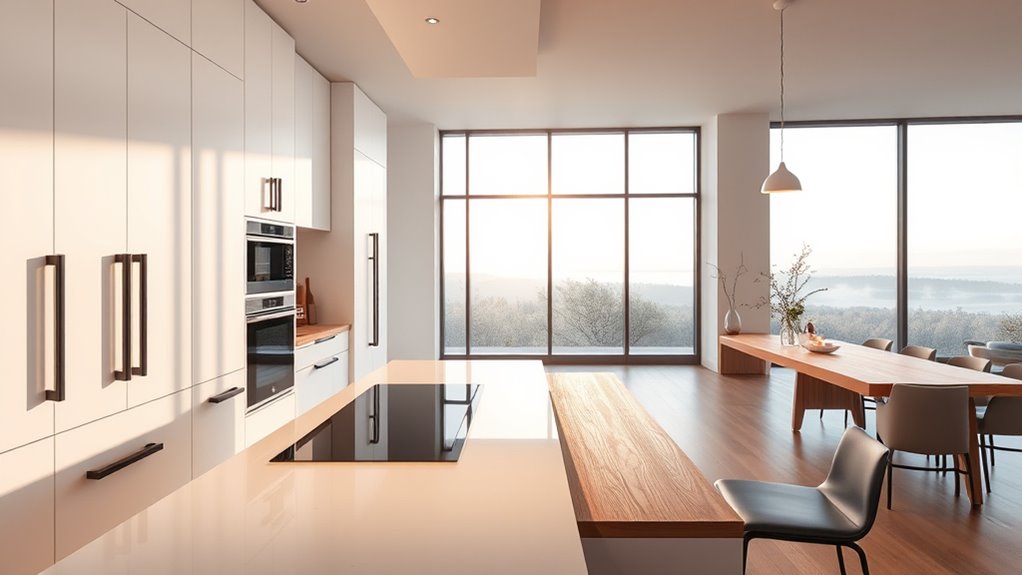
Designing an efficient kitchen layout starts with understanding how you move through the space and ensuring key work zones are ideally positioned. You want the sink, stove, and refrigerator to form the classic work triangle, minimizing travel distance. Adequate counter space on either side of these zones is essential for prep and cooking. Uninterrupted work surfaces of at least 36 inches improve flow, while 18-36 inches of clearance around major stations prevent congestion. Strategic placement of appliances and work areas helps streamline your tasks. Use this visual to plan your layout:
| Zone | Key Features |
|---|---|
| Prep Area | Counter space, near sink and refrigerator |
| Cooking Zone | Cooktop, oven, good counter access |
| Cleaning Station | Sink, dishwasher, nearby storage |
| Storage | Cabinets, pantry, accessible to all zones |
| Serving & Cleanup | Close to dining area, easy access to dishwasher & sink |
Optimizing Storage and Organizational Solutions

Efficient storage solutions are the backbone of a well-functioning kitchen, helping you keep everything organized and within easy reach. To maximize space and accessibility, consider these options:
- Pull-out shelves – make accessing pots, pans, and pantry items quick and easy.
- Appliance garages – hide small appliances while keeping them accessible, reducing countertop clutter.
- Tall pantry units with built-in charging docks – store food efficiently and keep your devices charged and ready. Incorporating adjustable shelving can further customize your storage to fit diverse items and changing needs. Additionally, integrating modular storage systems allows for flexible configurations that adapt to your evolving kitchen requirements.
These solutions enhance your workflow by reducing clutter and making everyday tasks smoother. Think about adjustable shelving to customize storage for your needs, and use dividers or racks to keep utensils and accessories organized. Incorporating ventilation considerations can also improve air quality and comfort in your kitchen. Additionally, proper thermal behavior management can help maintain consistent temperatures, especially when working with high-heat appliances or ovens. Studies show that optimal angles for pinball machines can improve game longevity and performance, analogous to how proper appliance placement can enhance kitchen efficiency. The goal is to create a seamless, clutter-free environment that supports your cooking habits.
Selecting Durable Materials and Appliances
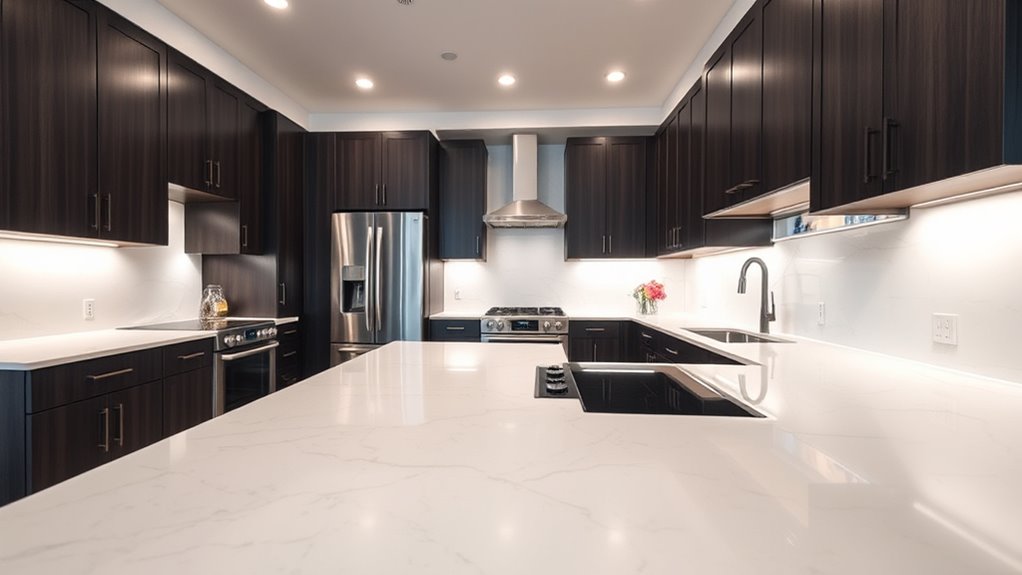
Choosing sturdy materials and appliances is essential to guarantee your kitchen remains functional and attractive over time. You want surfaces that withstand daily use, so opt for granite or quartz countertops, which resist scratches and stains, or durable laminates for budget-friendly options. When selecting cabinets, consider hardwood or high-quality laminate finishes for longevity. Prioritize energy-efficient appliances with robust build quality to ensure they last longer and save you money on utilities. Verify dimensions and compatibility to avoid installation issues later. Investing in high-quality, durable materials not only reduces replacement costs but also maintains your kitchen’s appearance and functionality for years. Proper planning and load management can help prevent overloads and ensure your backup power system supports all your appliances reliably. Additionally, consulting power backup guidelines can help you select appliances that are compatible with your emergency systems. Remember, the right choices today will ensure your kitchen remains a reliable, stylish centerpiece of your home.
Frequently Asked Questions
How Do I Prioritize Smart Features Within My Overall Renovation Budget?
You should prioritize smart features by first identifying which ones add the most value and convenience for your daily routines. Focus on essential tech like smart appliances, built-in charging stations, and Wi-Fi connectivity, then allocate budget accordingly. Consider long-term savings from energy-efficient devices and guarantee your electrical system can support these upgrades. Reuse existing wiring where possible to keep costs down and balance smart tech with your overall renovation goals.
What Are the Best Practices for Future-Proofing My Smart Kitchen Technology?
To future-proof your smart kitchen technology, you should prioritize flexibility, scalability, and compatibility. Choose devices that integrate seamlessly with evolving platforms, opt for systems that allow easy upgrades, and verify wiring and networking are robust enough to support new innovations. Regularly research emerging trends, invest in adaptable infrastructure, and select open-source or widely supported products to keep your smart kitchen ready for the future.
How Can I Minimize Disruptions During a Full Kitchen Gut Renovation?
To minimize disruptions during a full kitchen gut renovation, you should plan ahead by scheduling work in phases, communicating clearly with your contractor, and setting realistic expectations. Keep essential items accessible or temporarily relocate them. Protect surrounding areas with plastic sheeting, and consider temporary solutions like a portable cooktop or microwave. Staying organized and being flexible helps reduce stress and guarantees the project runs smoothly.
What Permits or Regulations Should I Consider for Electrical Upgrades?
You’ll need to check local electrical codes and obtain the necessary permits before upgrading your kitchen’s wiring. Ironically, what seems straightforward often involves maneuvering a maze of regulations and inspections. You should verify whether your project requires a permit, schedule inspections, and guarantee all work complies with safety standards. Skipping these steps can lead to costly delays or even fines, so don’t skip the paperwork for a smooth upgrade.
How Do I Coordinate Timing Between Cabinet Delivery and Appliance Installation?
You should coordinate cabinet delivery and appliance installation by scheduling the cabinet arrival first, ensuring there’s enough time for adjustments and installation prep. Once cabinets are in place, you can arrange for the appliances to be delivered and installed without delay. Communicate clearly with your contractor and suppliers to align these timelines, allowing buffer time for any unforeseen delays and ensuring a smooth, efficient process.
Conclusion
By carefully planning every detail, you’ll transform your kitchen into a sleek, smart hub that works perfectly for you. Stick to your timeline, budget wisely, and embrace innovative tech to create a space that’s as efficient as it is stunning. With thoughtful design and durable choices, your remodel will be nothing short of revolutionary—your kitchen will become the envy of everyone who enters. Get ready to enjoy a space that elevates your entire home experience!