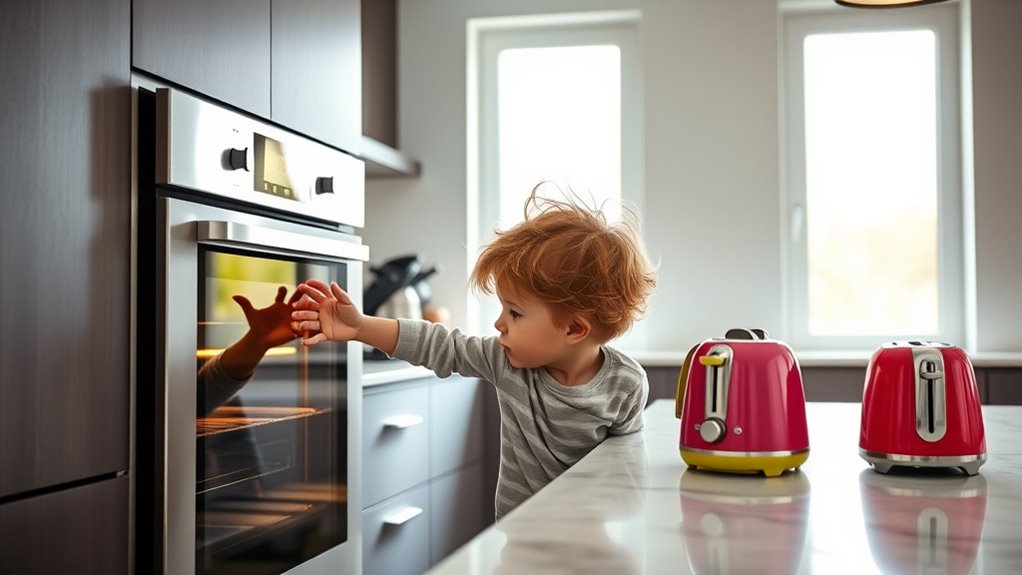

Smart kitchen appliances can offer convenience but also pose risks for children, such as tip-overs, burns, or injuries from physical hazards. They can be vulnerable to hacking, compromising your family’s privacy and safety. Children under 12 often don’t understand device dangers, making supervision essential. Using safety features, childproofing your kitchen, and staying vigilant can greatly reduce risks. To guarantee your kids’ safety, it’s important to understand how these devices work and how to manage them properly.
Key Takeaways
- Smart appliances pose tip-over and physical injury risks, especially if children climb or access hazardous compartments.
- Vulnerabilities like hacking can compromise safety features and violate privacy, increasing potential dangers for children.
- Young children often lack awareness of appliance hazards, making supervision and safety locks essential.
- Built-in safety features such as sensors, automatic shut-offs, and remote controls help prevent accidents and injuries.
- Proper childproofing, supervision, and regular firmware updates significantly reduce risks associated with smart kitchen appliances.

KIZZHISI 5 Pack Child Proof Refrigerator Lock, Baby Proofing Cabinet Locks, Oven Lock Child Safety, Fridge Lock, for Fridge, Drawers, Dishwasher, Oven, Cupboard, Closet, Adhesive, No Tools Need(Grey)
【5 PACK REFRIGERATOR LOCK】Get more value with our 5-pack refrigerator lock set, providing versatile protection for drawers, cabinets,…
As an affiliate, we earn on qualifying purchases.
As an affiliate, we earn on qualifying purchases.
The Risks of Tip-Over Incidents in Smart Kitchens

Tip-over incidents in smart kitchens pose a serious risk to young children, especially those five years old and younger. You need to be aware that furniture and appliances can tip over easily if not secured properly. According to CPSC data, 93% of furniture and appliance tip-over fatalities involve children under six. Every year, around 11,000 kids suffer injuries from tip-overs needing emergency treatment. Smart appliances with drawers or surfaces children can climb increase this danger, as they may accidentally topple them. Battery compartments in devices also pose choking hazards. Most importantly, head trauma is common in fatal tip-overs, often caused by children falling onto or under appliances. Taking safety measures, like anchoring furniture and supervising children, is essential to prevent these tragic incidents. Additionally, understanding furniture stability and how to improve it can significantly reduce the risk of tip-overs in smart kitchens. Regular safety checks and ensuring that appliances are properly secured can further minimize hazards. Properly distributing weight and ensuring stability of appliances can help prevent accidents. Enhancing appliance design to include safety features can also help prevent accidental tip-overs and injuries. Incorporating childproofing techniques that are designed for smart appliances can further enhance safety.

Baby Proofing Child Safety Locks (2 Pack) by Skyla Homes – The Safest, Quickest and Easiest 3M Adhesive Cabinet Latches, No Screws & Magnets, Multi-Purpose for Furniture, Kitchen, Ovens, Toilet Seats
Get the most multipurpose locks for a variety of storage spaces or kitchen appliances at a bargain basement-price
As an affiliate, we earn on qualifying purchases.
As an affiliate, we earn on qualifying purchases.
Digital Security Concerns and Potential Cyber Threats

As smart kitchen appliances become more common, concerns about digital security and privacy grow. You need to realize that these devices can be vulnerable to cybercriminals who may hack into them remotely. Hackers could manipulate functions, like activating heating elements or disabling safety features, creating dangerous situations. Many smart appliances lack robust security protocols, making unauthorized access easier. Children’s limited understanding of technology and their natural curiosity can increase risks if devices are compromised. Additionally, devices with cameras or microphones pose privacy threats if hacked. Protecting your family means staying vigilant about firmware updates, using strong passwords, and ensuring your smart appliances have proper security measures. Otherwise, cyber threats could turn your smart kitchen into a safety hazard. Recognizing the influence of Dark Psychology tactics can help you stay alert to potential manipulations or breaches that threaten your household security. Furthermore, understanding IoT security vulnerabilities can help you identify and mitigate potential risks before they impact your home. Regularly auditing your device connections and security settings can also reduce cybersecurity risks associated with smart appliances. Being aware of device encryption practices can further enhance your defenses against unauthorized access. Staying informed about emerging cyber threats is crucial to maintaining a safe and secure smart kitchen environment.
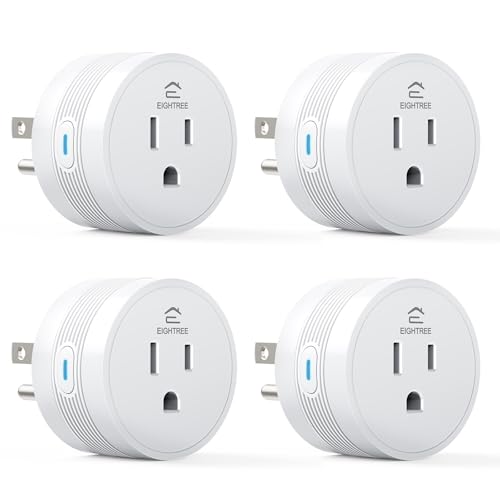
EIGHTREE 15A Smart Plug, Wi-Fi & Bluetooth Smart Outlet for High-Power Home Appliances, Works with Alexa & Google Home, Easy Setup, Timer & Remote Control, FCC & ETL Certified, 2.4GHz Wi-Fi Only
[15A High-Load Smart Plug for Home Appliances]: Designed for high-power devices such as coffee makers, heaters, air conditioners,…
As an affiliate, we earn on qualifying purchases.
As an affiliate, we earn on qualifying purchases.
Understanding Children’s Cognitive Limitations With Smart Devices

Children under twelve often struggle to understand how smart devices work or recognize potential dangers. Their limited cognitive development makes it hard for them to grasp risks, especially with complex controls or unfamiliar functions. As a result, young kids may accidentally activate hazardous features or fail to see warning signs, increasing safety concerns in the kitchen. Additionally, their lack of sound judgment can lead to unpredictable interactions with smart appliances, further elevating safety risks. Their inability to interpret safety features can cause them to overlook important precautions when using smart kitchen devices. Recognizing that children’s comprehension of smart device operation is limited highlights the importance of supervision and secure design to minimize accidents. Moreover, understanding astrological signs and their influence on personality traits can help parents better assess their child’s behavior around such devices, emphasizing the need for appropriate safety measures. Being aware of how essential oils for various health issues can influence children’s well-being underscores the importance of cautious use and supervision around these natural remedies in a household with kids.
Cognitive Development Challenges
Because young children’s cognitive development is still in progress, they often lack the ability to understand how smart kitchen devices work or recognize their potential dangers. You might notice that children aged five to eight have minimal understanding of the technology behind these appliances. Their limited cognitive skills prevent them from grasping how to operate complex controls or predict outcomes. This developmental stage also makes it difficult for children to comprehend potential hazards, increasing the risk of accidents. Children’s natural curiosity may prompt them to explore these devices without realizing the risks involved. They also can’t modify settings or identify warning signs that indicate danger. As a result, their developing minds make them more vulnerable to accidents, especially when smart appliances are left unattended or improperly secured. Additionally, cognitive limitations can impair their ability to respond appropriately in emergency situations. Recognizing the importance of child safety awareness is essential for parents and caregivers. Consistent supervision and visual cues are essential to prevent mishaps.
Recognizing Device Dangers
Have you ever wondered how well young kids can understand the smart devices in your kitchen? Children under twelve often lack the cognitive skills to recognize dangers or control these appliances safely. For example, only 30-40% of kids aged five to twelve can effectively operate voice-activated smart devices. Young children’s curiosity may lead them to press buttons or activate features without understanding the consequences. They might unintentionally turn on heating elements, open dangerous compartments, or manipulate settings, risking burns, injuries, or other accidents. Their limited awareness makes it difficult for them to identify hazards or respond appropriately. Additionally, cognitive development varies widely among children, affecting their ability to grasp complex safety concepts. Understanding how child safety awareness develops can help you implement more effective safety measures around your appliances. For instance, child safety features such as lock functions and alert systems are designed to prevent accidents, but they should complement supervision rather than replace it. Kitchen Science & Materials can help you better understand how appliances respond to different inputs and how to keep them safe around children.

Adhesive Furniture Wall Anchors (4 Pairs), Anti Tip Furniture Straps Kit for Baby Proofing, Secure Bookcase Dresser Shelf Cabinet to Wall for Child Safety
【Zero Screw Design】No drilling or tools required, our baby proof furniture anchor adopts heavy duty self-adhesive pads that…
As an affiliate, we earn on qualifying purchases.
As an affiliate, we earn on qualifying purchases.
Monitoring Capabilities and Safety Features of Smart Appliances

Smart appliances offer remote monitoring options that let you keep an eye on your kids’ interactions and detect potential hazards early. Built-in safety features, like automatic shut-offs and alerts, help prevent accidents if children tamper with or accidentally activate dangerous functions. These capabilities give you added peace of mind while ensuring your kids stay safe in the kitchen. Incorporating safety features and reliability from vetted security information can further enhance your confidence in using these devices. Additionally, understanding the security standards associated with smart appliances can help ensure your family’s safety from potential cyber threats. Being aware of electrical safety protocols can also help prevent electrical hazards in the home environment.
Remote Monitoring Options
Remote monitoring capabilities allow parents to keep a close eye on their kitchen appliances and children’s activities in real-time. With these features, you can receive alerts if your child interacts with appliances, such as opening a drawer or activating a device. Many smart appliances offer cameras or sensors that enable you to view live footage through your smartphone, providing peace of mind. You can also monitor appliance status, like whether a stove is on or off, from anywhere. If something unusual happens, such as unexpected activity or a safety concern, your system can send immediate notifications. This proactive approach helps prevent accidents and ensures you stay informed about your child’s interactions with potentially hazardous kitchen equipment, enhancing overall safety even when you’re not physically present.
Built-in Safety Features
Built-in safety features in smart kitchen appliances actively work to prevent accidents and protect children from harm. These features include sensors that detect smoke, carbon monoxide, or unusual sounds, alerting you before a crisis occurs. Many appliances have remote control options, allowing you to deactivate devices if children are nearby. Automatic shut-offs prevent hazardous situations if a device is left unattended. For example, smart ovens can pause cooking if unsafe conditions are sensed, and some refrigerators limit access to door compartments. These safety measures help reduce risks associated with tip-overs, burns, or choking.
| Safety Feature | How It Protects You |
|---|---|
| Sensors & Alerts | Detect hazards early, prompt action |
| Remote Control | Disable appliances remotely when needed |
| Automatic Shut-offs | Prevent accidents if devices malfunction |
Best Practices for Childproofing in Smart Kitchen Environments
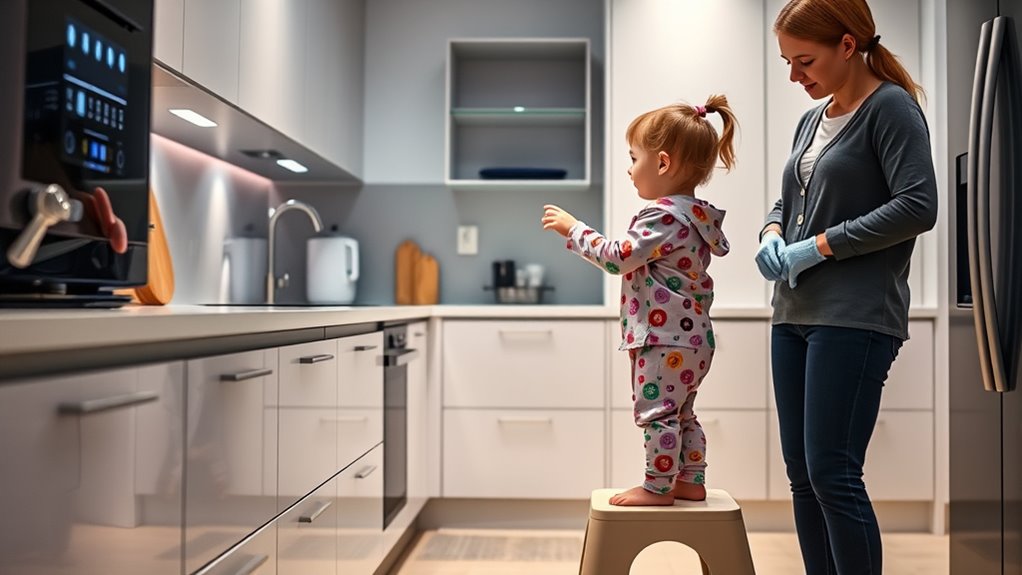
To effectively childproof a kitchen with smart appliances, you need to combine traditional safety measures with modern technology safeguards. Start by securing heavy or tip-over-prone appliances with anchoring devices to prevent accidents. Use safety locks on drawers and cabinet doors, especially on smart appliances with accessible compartments or control panels. Regularly update your devices’ firmware to make certain security features are current and functioning properly. Enable parental controls and disable voice activation or remote features when children are nearby. Set up alerts for unusual activity or access attempts. Keep batteries and small parts out of reach to prevent choking hazards. Finally, educate your children about safe boundaries, and maintain supervision, especially around unfamiliar or programmable smart devices.
The Role of Parental Vigilance and Supervision

Parental vigilance and supervision are essential for ensuring safety in a smart kitchen environment. You must actively monitor your child’s interactions with appliances, especially those with touchscreens or voice controls. Regularly check for unfamiliar device activity or alerts. Use remote controls and safety features to disable functions when needed. Educate your children about potential hazards and set clear boundaries. Keep a close watch during meal prep or appliance use to prevent tipping or tampering. Here’s a quick overview:
| Safety Focus | Action Needed |
|---|---|
| Appliance Tipping | Supervise to prevent climbing or tipping |
| Device Access | Use parental controls to restrict access |
| Smart Alerts | Monitor alerts for unusual activity |
| Voice Commands | Teach children appropriate voice use |
| Emergency Response | Be ready to deactivate appliances remotely if necessary |
Your active supervision minimizes risks and keeps your kids safe.
Safety Devices and Their Effectiveness in Reducing Accidents

Safety devices play a crucial role in reducing accidents involving young children in the smart kitchen. These devices, like automatic shut-offs, safety locks, and remote controls, help prevent injuries by limiting children’s access to dangerous functions or appliances. When properly installed, safety features can deactivate heating elements, lock drawers, or disable controls if children attempt to operate smart appliances unsupervised. Sensor-based alerts can notify you of unusual activity, allowing quick intervention. Anchoring appliances and adding childproof covers further reduce tip-over risks. Studies show that integrating safety devices can prevent up to 80% of tip-over injuries and other accidents. While no safety measure is foolproof, combining these devices with vigilant supervision considerably improves your child’s safety in the kitchen.
Privacy and Abuse Risks Linked to Connected Kitchen Technologies

While safety devices like locks and alarms help prevent physical injuries, connected kitchen appliances introduce new privacy and security concerns. If these devices are hacked, malicious actors could manipulate or disable them, creating dangerous situations or denying access to essentials like food and water. Children’s limited understanding of technology makes them especially vulnerable to manipulation or unintended activation of smart functions. Privacy risks also loom large, as hackers could access cameras or microphones embedded in some appliances, leading to unauthorized surveillance. With children’s natural curiosity, they might inadvertently reveal sensitive information or interact with compromised devices, increasing exposure to abuse or exploitation. These risks highlight the importance of securing connected kitchen systems to protect children’s safety and privacy in the digital age.
Strategies to Protect Children and Secure Smart Kitchen Systems
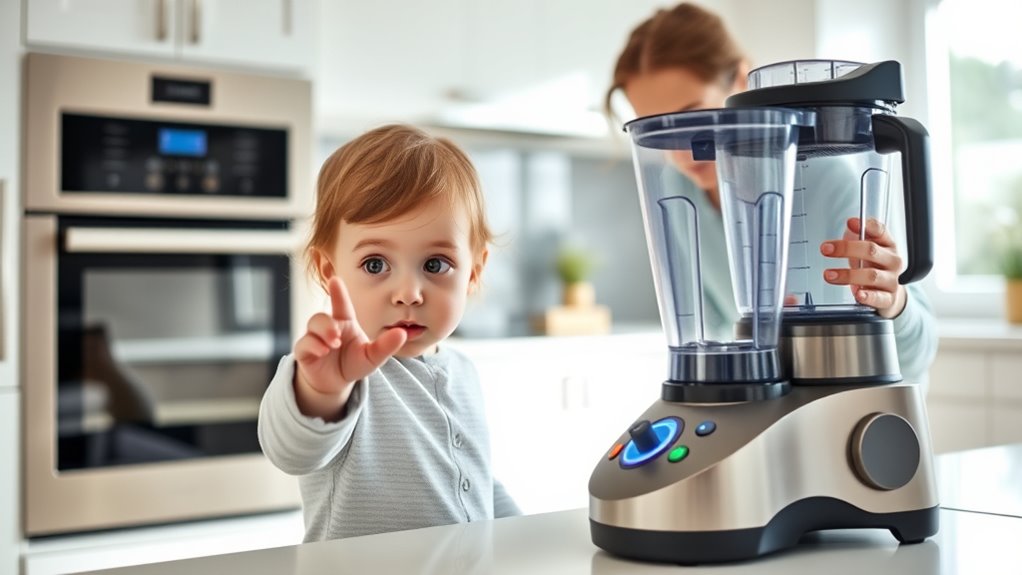
Securing smart kitchen systems requires a proactive approach that combines technology, education, and careful setup. First, enable all available safety features, such as automatic shut-offs, child locks, and remote controls, to prevent unintended use. Second, guarantee your Wi-Fi network is secure by changing default passwords and using strong encryption, making it harder for hackers to access your appliances. Third, educate your children about safe interactions with smart devices, emphasizing that they shouldn’t operate unfamiliar controls or tamper with settings. Additionally, regularly update device firmware to patch vulnerabilities. By combining these steps, you minimize safety risks, protect against cyber threats, and help your children develop responsible habits around smart kitchen appliances.
Frequently Asked Questions
Can Smart Appliances Be Remotely Hacked to Cause Harm?
Yes, smart appliances can be hacked remotely, which could cause harm. Cybercriminals might manipulate functions like heating elements or disable safety features, creating dangerous situations in your kitchen. Since many smart devices have security vulnerabilities, hackers could gain control without your knowledge. To protect your family, make sure your appliances have strong passwords, regular software updates, and security protocols, reducing the risk of remote hacking and potential harm.
Are There Child-Friendly Smart Kitchen Devices Designed for Safety?
Yes, there are child-friendly smart kitchen devices designed for safety. You can find appliances with built-in safety features like automatic shut-offs, locking drawers, or restricted access modes. These devices help prevent accidents by limiting children’s ability to operate dangerous functions. When you choose and install these appliances properly, you reduce the risk of tip-overs, choking hazards, and unauthorized use, creating a safer environment for your kids in the kitchen.
How Effective Are Current Safety Features in Preventing Smart Appliance Accidents?
Current safety features in smart kitchen appliances are somewhat effective but not foolproof. You can rely on automatic shut-offs, alerts, and remote controls to prevent accidents. However, kids’s limited understanding of technology and curiosity can still lead to risky situations. To maximize safety, you should always supervise children around appliances, secure hazardous parts, and use available safety features diligently. Regularly updating device security also helps prevent unauthorized access and potential dangers.
Do Smart Kitchens Have Fail-Safe Mechanisms for Child Safety?
Smart kitchens often include fail-safe mechanisms like automatic shut-offs, remote controls, and safety alerts designed to protect children. You can activate these features to prevent accidents, such as disabling appliances when kids are nearby or when dangerous conditions are detected. However, you should also monitor children closely, secure appliances properly, and stay updated on security settings, since some vulnerabilities could still pose risks despite these safety measures.
What Are the Legal Responsibilities of Manufacturers Regarding Child Safety?
Manufacturers must maintain meticulous measures to meet legal liabilities, ensuring child safety is prioritized. You’re responsible for designing devices with diligent diligence, including durable defenses against dangers like tip-overs and tampering. They’re required to adhere to safety standards, conduct thorough testing, and provide clear warnings. You must also implement intelligent interventions like automatic shut-offs and security safeguards, minimizing risks and maximizing protection for children, and helping parents prevent preventable accidents.
Conclusion
While smart kitchen appliances offer convenience, they also pose risks for kids, especially since 85% of accidental injuries in homes involve furniture or appliances. To keep your children safe, stay vigilant, use safety features, and childproof your smart kitchen. Remember, active supervision and proper security measures are your best defenses against accidents and cyber threats. By staying informed and cautious, you can enjoy the benefits of smart appliances without compromising your child’s safety.