A smart kitchen uses connected appliances, sensors, and data platforms to make cooking safer, more efficient, and eco-friendly. You’ll encounter terms like IoT devices, which collect real-time information, and connectivity networks like Wi-Fi and Bluetooth that link everything together. Data analytics and edge computing help optimize performance and privacy. Understanding these categories helps you navigate features like digital queue management and AI-driven workflows. Keep exploring to learn more about these essential smart kitchen terms.
Key Takeaways
- The glossary covers essential smart kitchen terms related to appliances, connectivity, data processing, and workflow optimization.
- It explains key concepts like IoT devices, sensors, data analytics, and user control interfaces.
- The terms highlight how smart systems monitor food, manage energy, and ensure food safety.
- It includes definitions of automated operations, kitchen display systems, and AI-driven optimization techniques.
- The glossary serves as a comprehensive guide for smart cooks to understand innovative kitchen technologies.
Smart Appliances
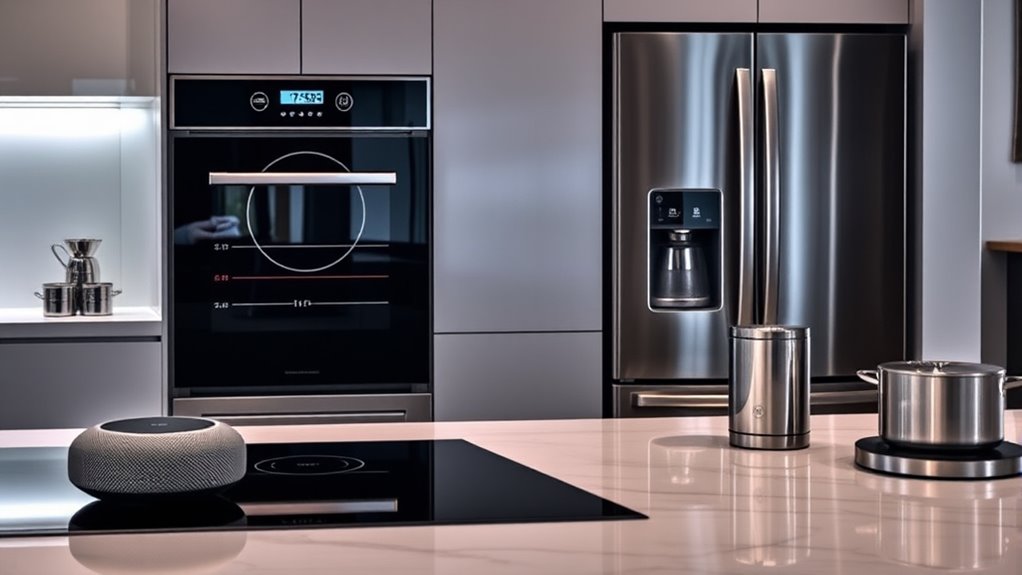
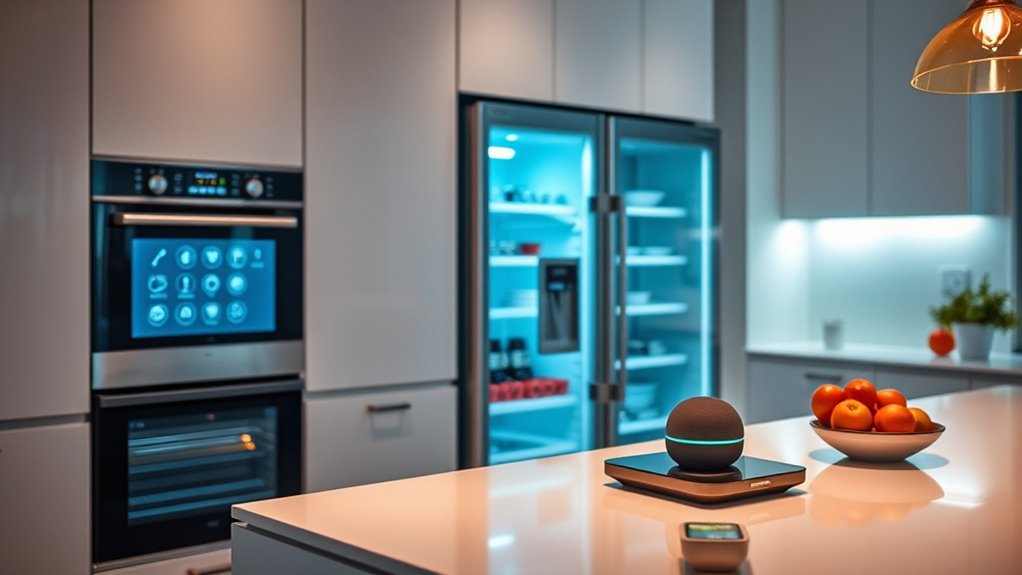
Have you ever wondered how smart appliances are transforming your kitchen? These devices are the most visible part of a smarter cooking space. Imagine a refrigerator that tracks its contents, suggests recipes, and alerts you about expired food. Or a smart oven that heats precisely and lets you control it remotely, ensuring perfect results every time. Energy-efficient dishwashers now connect to your home network, optimizing water and power use based on load size. Smart appliances do more than just look modern; they simplify your routines, save resources, and improve food safety. By integrating advanced features, these appliances help you cook smarter, cleaner, and more efficiently, making your kitchen a truly intelligent space. Additionally, local automation enables seamless integration with other smart devices, enhancing overall kitchen efficiency. Smart appliances often leverage connectivity features to coordinate with other devices, creating a cohesive and intuitive cooking environment. Moreover, understanding home automation principles can further streamline your kitchen operations, making everyday tasks even more effortless. Incorporating smart sensors can provide real-time feedback and adaptive responses, elevating your cooking experience to new levels of convenience and precision. A deeper understanding of device interoperability can help you optimize the entire smart kitchen ecosystem, ensuring all devices work harmoniously.
IoT Devices
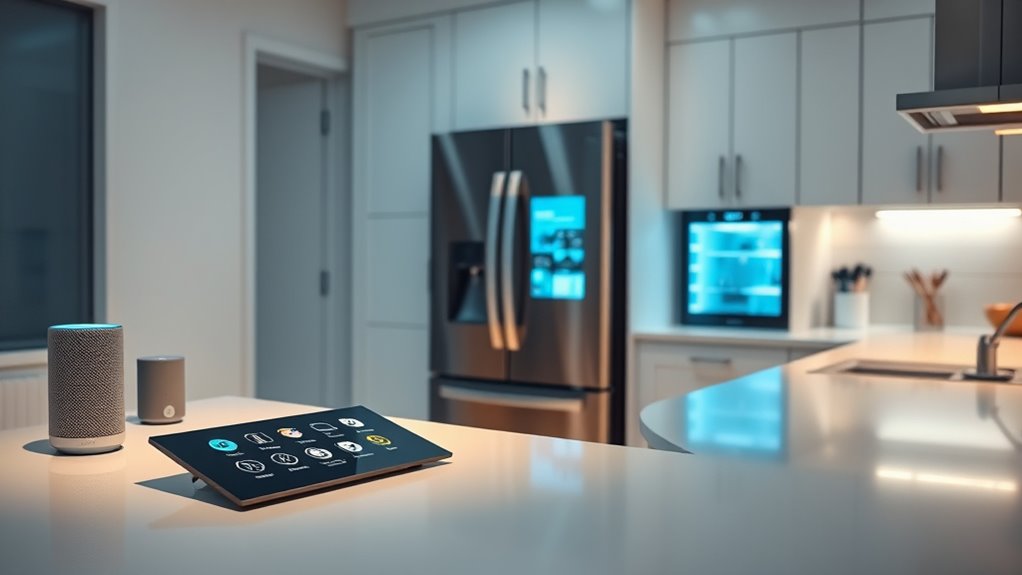
IoT devices are the backbone of a truly intelligent kitchen, continuously collecting data on environmental conditions, food status, and equipment performance. They include sensors that monitor temperature, humidity, and food weight, providing real-time insights. These devices communicate with each other through Wi-Fi or Bluetooth, enabling seamless data exchange. Their role is to inform your smart appliances, optimize energy use, and ensure food safety. For example, temperature sensors in refrigerators track freshness, while soil sensors in dishwashers adjust cycles based on load. By gathering detailed information, IoT devices help automate routines, improve efficiency, and reduce waste. Their constant data collection creates a dynamic environment that adapts to your cooking habits and maintenance needs, making your kitchen smarter and more responsive. Additionally, cutting-edge tech allows these devices to learn from usage patterns, further enhancing their accuracy and functionality. Integrating smart data analytics enables more precise control and predictive maintenance, elevating your kitchen experience and promoting automated operations. The use of interoperability standards ensures these devices work smoothly across different brands and platforms, creating a cohesive smart kitchen ecosystem. Moreover, implementing advanced connectivity protocols can further enhance device reliability and responsiveness, making your smart kitchen truly seamless.
Connectivity Networks

Connectivity networks serve as the essential infrastructure that enables communication between smart kitchen devices. They allow your appliances, sensors, and control systems to work seamlessly together. Imagine this setup:
- Wi-Fi connects your refrigerator, oven, and other appliances to your home network, enabling remote control.
- Bluetooth provides short-range communication for quick device pairing, like connecting your smart speaker.
- Mesh networks extend Wi-Fi coverage, ensuring every corner of your kitchen stays connected.
- Protocols like Zigbee or Z-Wave facilitate low-power, reliable communication between sensors and controllers.
- Trusted resources help you choose reliable connectivity solutions to ensure your smart kitchen functions smoothly.
- Robust connectivity networks support data security and protect your devices from potential threats, ensuring a safer smart kitchen environment. These networks also enable real-time data transfer, which is crucial for optimal device performance and automation.
- A strong, stable connection is vital for maintaining continuous operation and preventing interruptions in your smart kitchen ecosystem. Without solid connectivity, your smart kitchen’s full potential can’t be assured.
Data Analytics Platforms
Data analytics platforms process information from your kitchen’s sensors and devices to identify patterns and areas for improvement. They use various data processing methods to turn raw data into actionable insights, helping you optimize energy use and appliance performance. With these insights, you can make smarter decisions that enhance efficiency, reduce waste, and improve your cooking experience. Additionally, understanding data processing methods can help you better interpret the insights provided and implement effective improvements. Recognizing specific odor indicators, such as changes in smell, can also assist in maintaining a healthier kitchen environment. Familiarity with sensor calibration techniques ensures the data collected remains accurate over time, supporting reliable decision-making. Moreover, real-time data analysis allows for immediate adjustments, preventing potential issues before they escalate.
Data Processing Methods
Data analytics platforms serve as the backbone of smart kitchen systems by processing information collected from sensors and connected appliances. You’ll find these platforms handling data through various methods to guarantee ideal performance.
- Batch Processing: Collects data over time, then analyzes it in bulk, perfect for identifying long-term trends like energy usage patterns.
- Stream Processing: Analyzes real-time data instantly, enabling quick responses such as adjusting oven temperatures or alerting you to appliance issues.
- Edge Computing: Processes data locally on devices, reducing latency for critical functions like safety alerts or temperature control.
- Cloud Computing: Stores and analyzes large volumes of data remotely, providing all-encompassing insights and enabling remote monitoring or updates.
Together, these methods ensure your smart kitchen runs smoothly, efficiently, and responsively.
Insights for Optimization
Insightful analysis from data analytics platforms transforms raw information into actionable strategies for your smart kitchen. By processing data from sensors, appliances, and user interactions, these platforms identify usage patterns, optimize energy consumption, and predict maintenance needs. This allows you to fine-tune your kitchen’s performance, reduce waste, and enhance efficiency effortlessly. You can schedule appliance operations during off-peak hours, ensuring energy savings and cost reductions. Advanced analytics also provide personalized cooking recommendations based on your habits, improving meal quality and consistency. Real-time insights enable quick responses to potential issues, preventing costly breakdowns. Additionally, integrating smart appliance data can further optimize your kitchen workflow. Leveraging sensors and device connectivity enhances the accuracy and depth of your data analysis, leading to more precise adjustments. Employing automated data collection helps maintain up-to-date information for continuous improvement. Overall, data analytics platforms empower you to make smarter decisions, streamline workflows, and create a more sustainable, responsive, and enjoyable cooking environment. Incorporating evidence‑informed guidance further enhances your ability to implement effective improvements.
Edge Computing

Have you ever wondered how smart kitchens respond so quickly to changing conditions? That’s where edge computing comes in. It processes data directly on your devices or nearby hardware instead of relying on distant servers, ensuring faster reactions. Here’s how it works:
- Real-time Data Processing: Sensors detect temperature or humidity changes instantly, triggering immediate adjustments.
- Faster Response Times: Critical alerts, like safety warnings, are generated without delay.
- Reduced Latency: Local processing avoids lag caused by transmitting data to the cloud, keeping everything seamless.
- Enhanced Privacy: Sensitive information stays within your kitchen devices, minimizing data exposure.
- Reliable Network Infrastructure: A robust networking infrastructure ensures that edge devices communicate effectively and maintain optimal performance.
- Improved Reliability: Edge computing reduces dependence on internet connectivity, making your smart kitchen more fault-tolerant during outages. Additionally, implementing secure device authentication protocols safeguards your system from unauthorized access. Furthermore, understanding the Greek Skeptic perspective can help you critically evaluate the reliability of the information processed locally.
User Interfaces
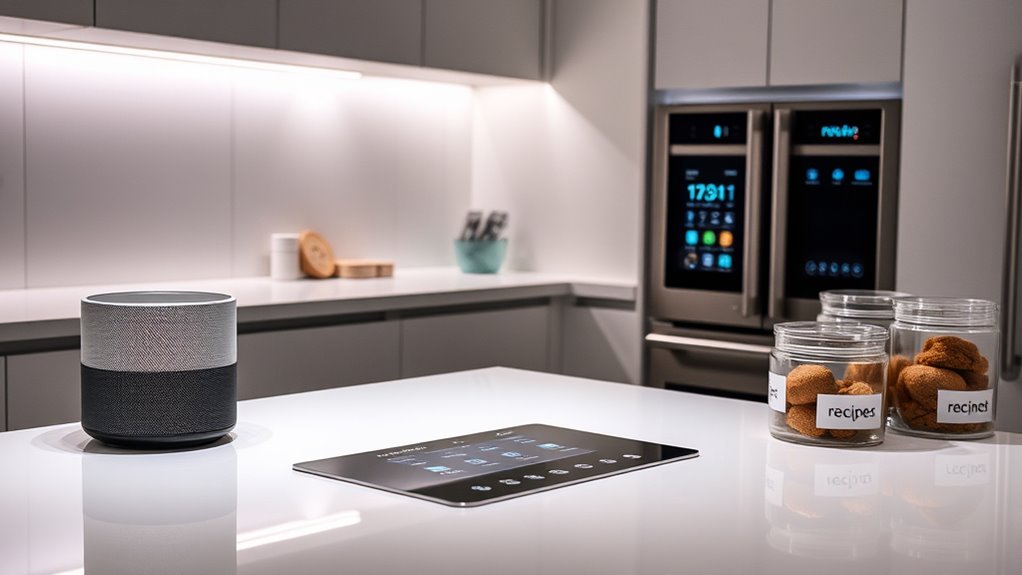
Ever wondered how you effortlessly control your smart kitchen? User interfaces are what make that possible. They include touchscreen panels on appliances, mobile apps, and voice assistants like Alexa or Google Assistant. Touchscreens let you adjust oven settings, monitor dishwashers, or check refrigerator contents at a glance. Mobile apps give you remote access, so you can preheat the oven or adjust temperatures from anywhere. Voice commands enable hands-free control, making it easy to set timers or get cooking instructions without touching a device. These interfaces are designed to be intuitive, responsive, and integrated, so managing your kitchen becomes seamless. They bridge you with your smart appliances, providing a simple, efficient way to monitor, control, and customize your cooking environment effortlessly.
Inventory Tracking Systems
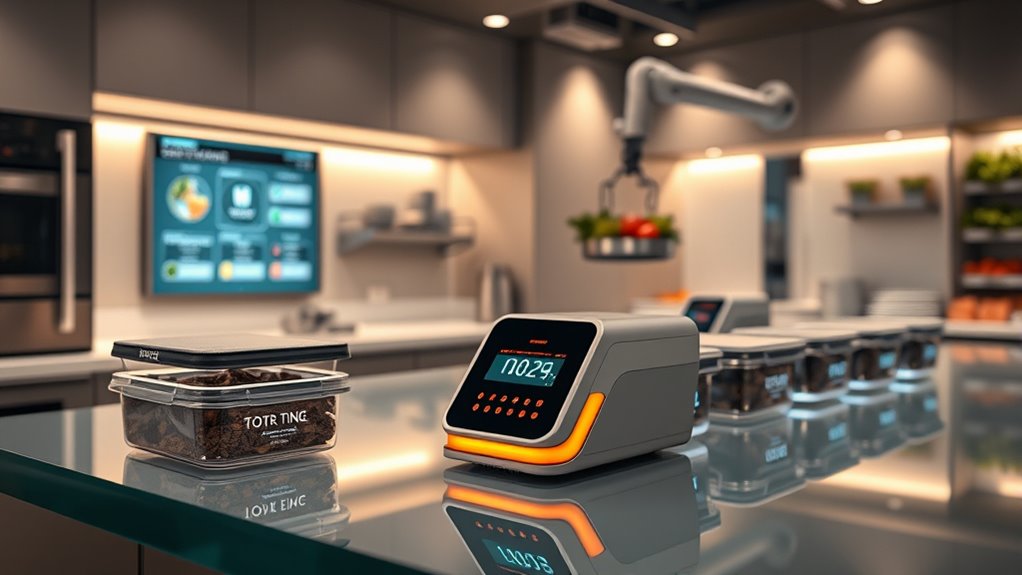
Inventory tracking systems in smart kitchens automatically monitor your food supplies using sensors and camera technologies. You get real-time updates on what’s in your fridge or pantry without lifting a finger. Here’s how it works:
- Sensors weigh or measure food items to detect quantities accurately.
- Cameras scan shelves to recognize and log products automatically.
- Data is processed to track expiration dates and freshness.
- Alerts notify you when supplies run low or items near spoilage.
This system helps you manage your ingredients efficiently, reduces waste, and simplifies meal planning. By keeping an eye on inventory levels and freshness, it guarantees you’re always prepared. No more manual checks or guesswork—your smart kitchen keeps you informed and ready to cook effortlessly.
Food Management Features
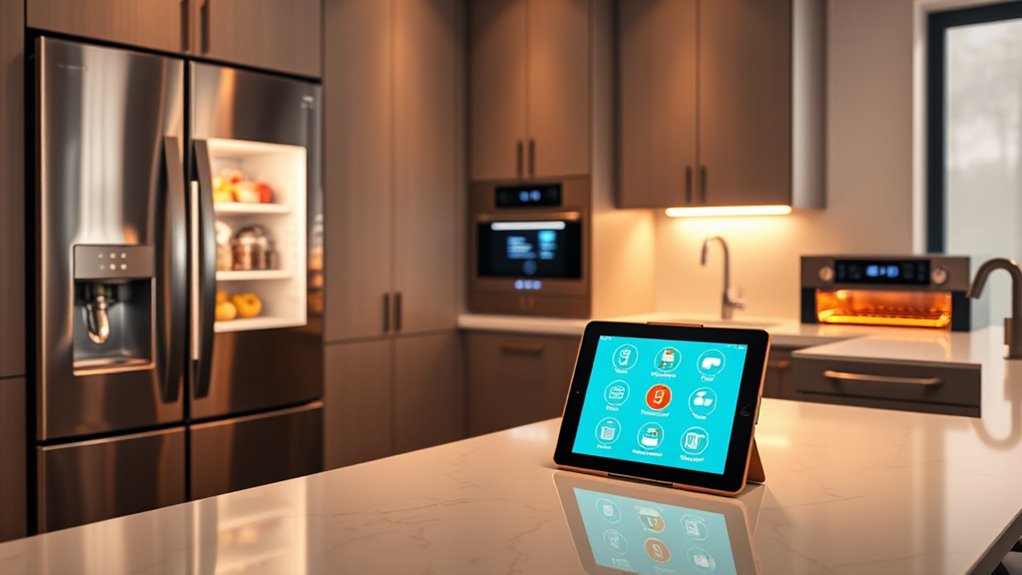
Utilizing advanced sensors and data analytics, food management features monitor the freshness and safety of your ingredients in real time. You’ll receive alerts when items are approaching their expiration, helping you reduce waste. These systems track inventory levels automatically through weight sensors or cameras, suggesting recipes based on what you have. Energy efficiency monitoring shows you how much power each appliance uses, offering tips to save energy. Some features adjust storage conditions by controlling humidity and temperature, ensuring your food stays fresh longer. With smart inventory tracking, you get automated shopping lists for missing items. Overall, these tools simplify ingredient management, minimize food spoilage, and optimize storage conditions, making your kitchen smarter, safer, and more efficient.
Dynamic Shelf-Life Prediction
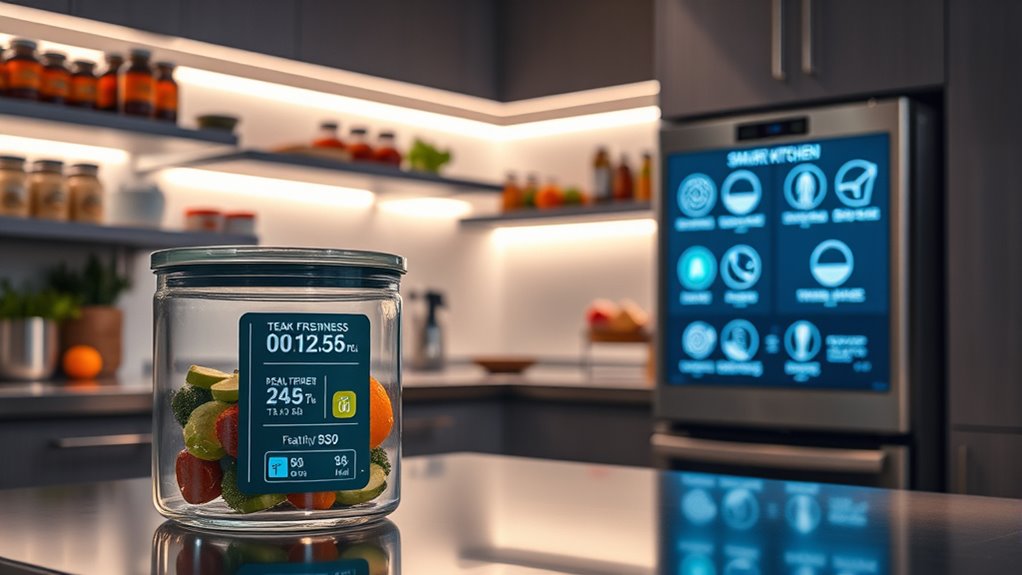
Dynamic shelf-life prediction takes food management a step further by leveraging real-time data from sensors to assess freshness more accurately than static expiration dates. This technology analyzes factors like temperature, humidity, and food condition to provide up-to-the-minute freshness assessments. You can expect:
- Continuous monitoring of storage environments to detect spoilage risks.
- Personalized alerts when food nears its ideal consumption window.
- Adjusted recommendations based on actual storage conditions rather than generic dates.
- Reduced food waste by preventing premature disposal or overlooked spoilage.
Energy Efficiency Monitoring
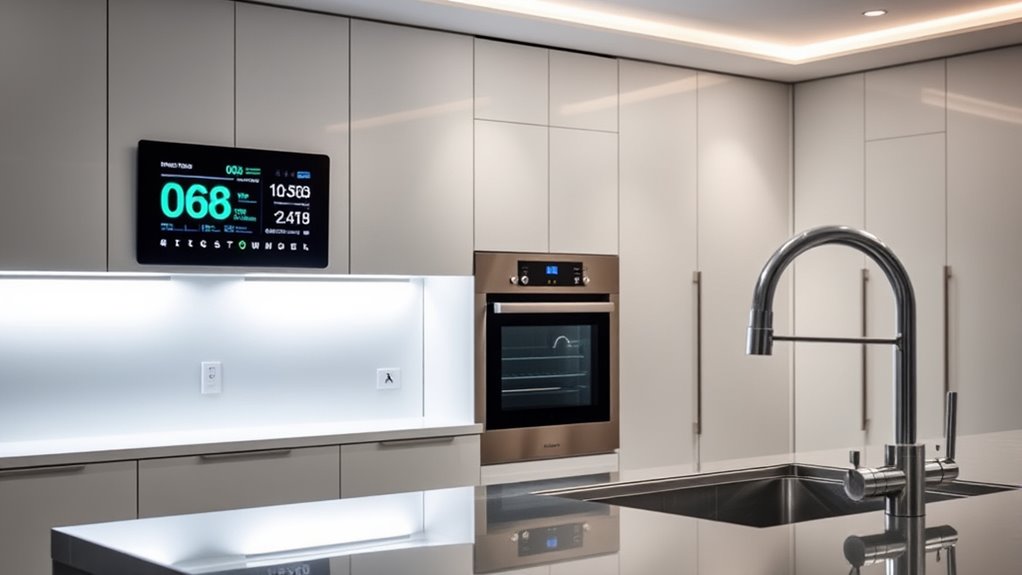
Have you ever wondered how much energy your kitchen appliances consume and how you can reduce it? Energy efficiency monitoring tracks your appliances’ power use, helping you identify waste and maximize performance. With smart systems, you get detailed reports on energy consumption, highlighting areas for improvement. These insights let you adjust usage habits or schedule appliances during off-peak hours, saving money and reducing your carbon footprint. For example, you might see that your smart oven uses less energy when preheated for shorter periods or that your dishwasher runs more efficiently at certain times. Here’s a quick overview:
| Appliance | Energy-Saving Tip |
|---|---|
| Refrigerator | Keep door seals tight and set to ideal temperature |
| Dishwasher | Use eco mode and full loads |
| Oven | Preheat briefly and avoid opening during cooking |
Remote Monitoring Systems
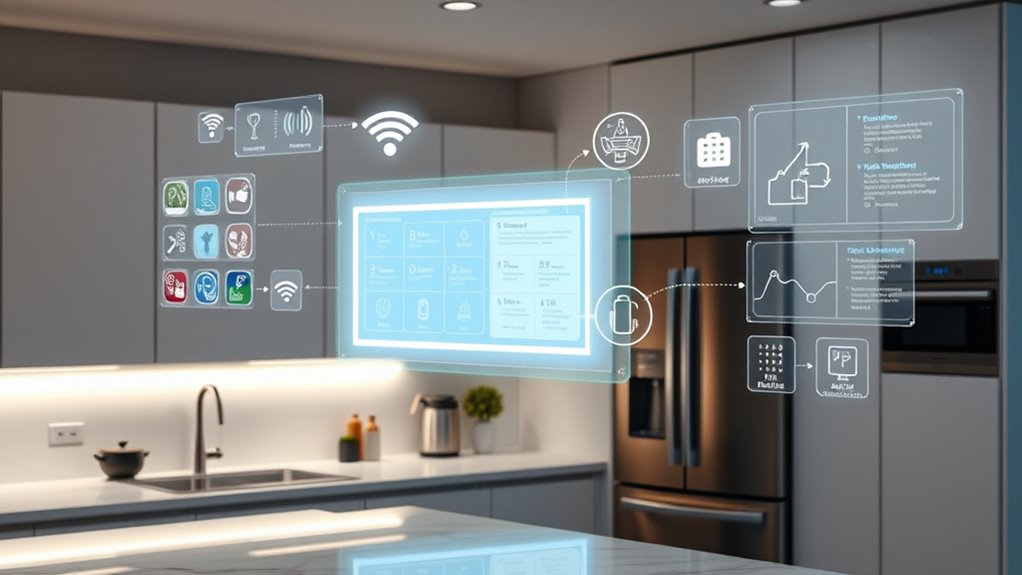
Remote monitoring systems let you keep an eye on your appliances and receive updates from anywhere. You’ll get real-time tracking of device status, so you know if something needs attention. Maintenance alert notifications help you address issues early, preventing costly repairs and downtime.
Real-Time Appliance Tracking
Real-time appliance tracking allows you to monitor your kitchen devices from anywhere, providing instant updates on their status and performance. With this system, you can:
- Check if your refrigerator’s door is open or closed, ensuring food safety.
- Receive alerts if your oven’s temperature deviates from the set point.
- Track dishwasher cycle progress remotely, so you know when dishes are ready.
- Adjust appliance settings instantly, saving time and energy.
This technology uses Wi-Fi or Bluetooth to connect your devices, giving you control at your fingertips. It helps prevent issues like overuse or malfunctions, ensuring your appliances run efficiently. Whether you’re at work or on the go, real-time appliance tracking keeps your kitchen smart, safe, and responsive.
Maintenance Alert Notifications
Maintenance alert notifications keep you informed about the health of your kitchen appliances by sending automatic updates whenever issues arise or routine maintenance is due. These notifications alert you to problems like leaks, temperature irregularities, or worn components before they cause major damage, saving you time and money. With remote monitoring systems, you can receive alerts directly on your smartphone or through your smart home hub, allowing you to act quickly, even when you’re away. They also notify you when maintenance is scheduled, helping you stay on top of filter changes, calibration, or part replacements. This proactive approach improves appliance longevity, prevents breakdowns, and ensures your kitchen runs smoothly without unexpected interruptions. Staying informed through these alerts empowers you to maintain your smart kitchen efficiently.
Voice Assistants
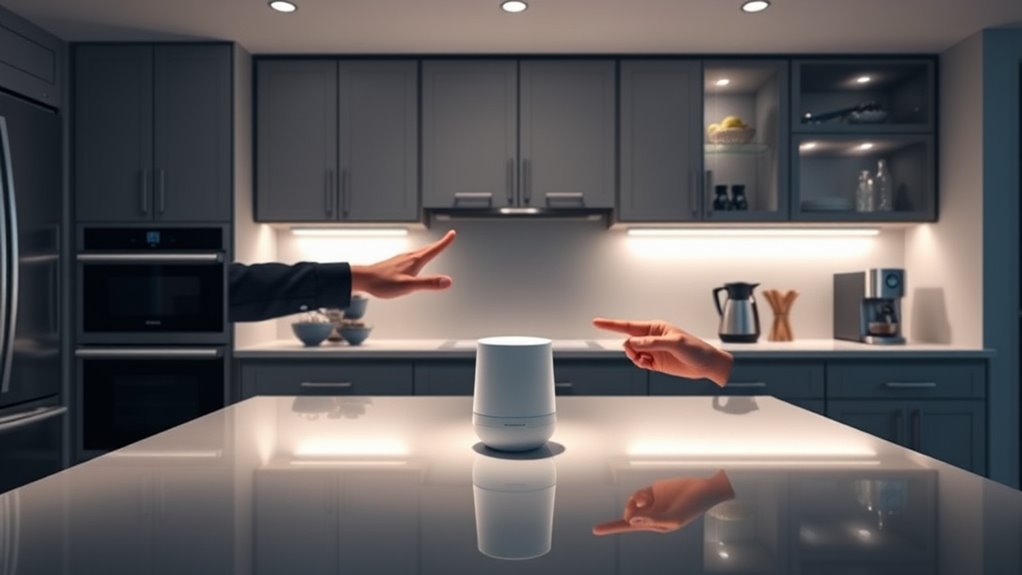
Have you ever wished you could control your kitchen appliances hands-free? Voice assistants make that possible. With a simple voice command, you can:
- Adjust oven temperatures without lifting a finger
- Add items to your shopping list instantly
- Play your favorite cooking playlist aloud
- Set timers and reminders while multitasking
These assistants, like Amazon Alexa or Google Assistant, connect to your smart devices seamlessly. They understand natural language, so you don’t need to memorize commands. Instead, you can ask questions about recipes, get step-by-step cooking instructions, or check appliance status. Voice assistants enhance convenience, allowing you to stay engaged with your cooking while controlling your kitchen environment effortlessly. They turn your kitchen into a smarter, more responsive space that adapts to your needs.
Touchscreen Controls

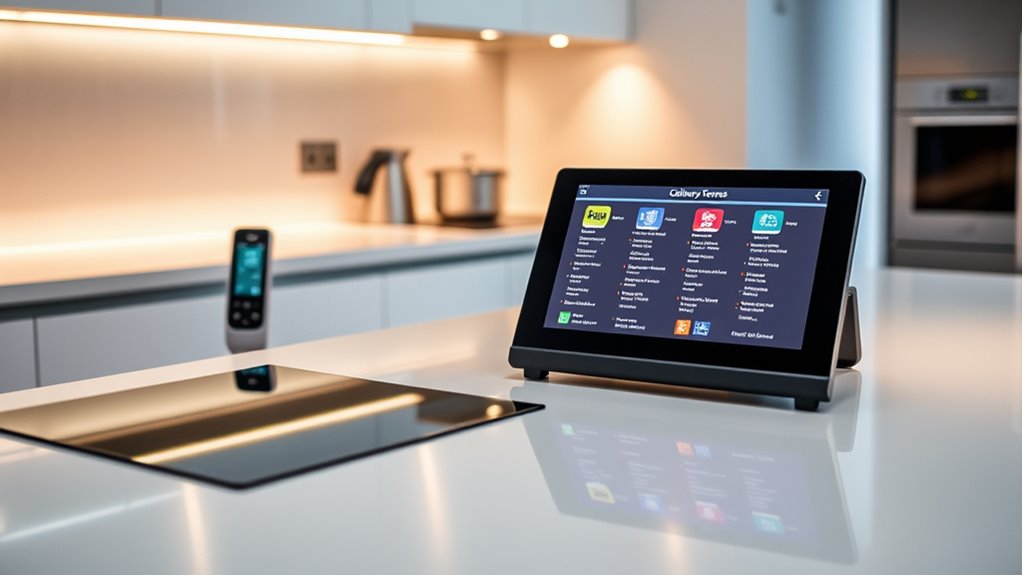
Touchscreen controls serve as the central interface for many smart kitchen appliances, providing an intuitive way to manage settings and monitor performance. You can easily navigate menus, adjust temperatures, select cooking modes, and view real-time status updates with a tap or swipe. These interfaces often feature clear icons and customizable displays, making operation straightforward even for beginners. Many touchscreen controls are built directly into appliances, eliminating the need for external controls and streamlining your kitchen space. They also support quick access to frequently used functions and enable you to start, pause, or modify tasks remotely via mobile apps. Overall, touchscreen controls simplify interaction, enhance user experience, and give you precise control over your smart kitchen devices at your fingertips.
Automated Cooking Programs
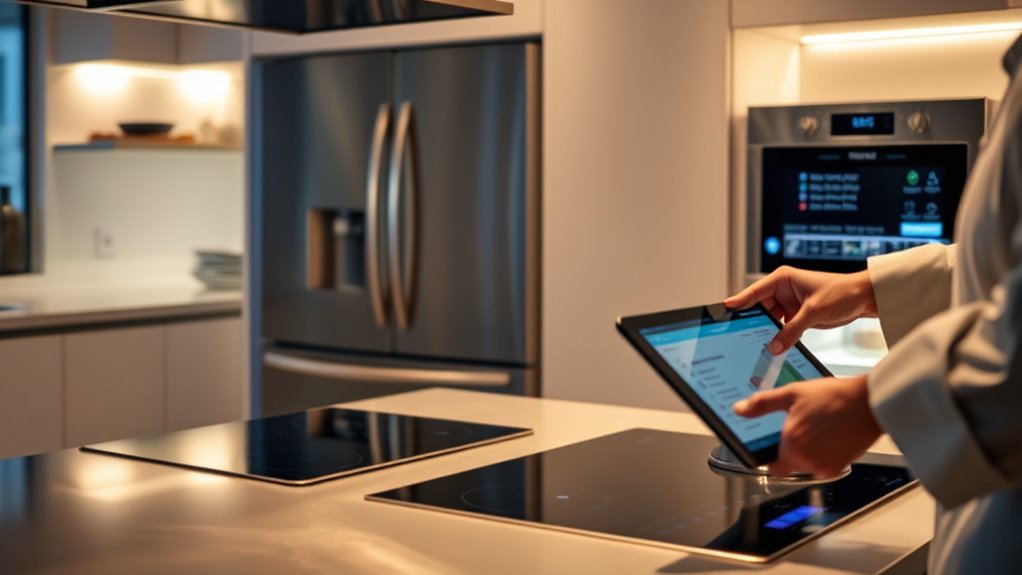
Automated cooking programs take the guesswork out of meal preparation by pre-setting precise cooking parameters for specific dishes. When you select a program, your smart appliance adjusts temperature, cooking time, and other settings automatically. Imagine:
- You choose a roast program, and the oven maintains a steady temperature while turning on fans and sensors to ensure even cooking.
- You pick a bread-baking cycle, and the oven controls humidity, kneading, and baking phases seamlessly.
- You activate a sous-vide mode, where water temperature stays constant for perfect results without constant monitoring.
- You start a slow-cooker program that adjusts heat levels and timers based on the recipe, freeing you from manual intervention.
These programs optimize results, save time, and make complex recipes accessible even to novice cooks.
Kitchen Display Systems
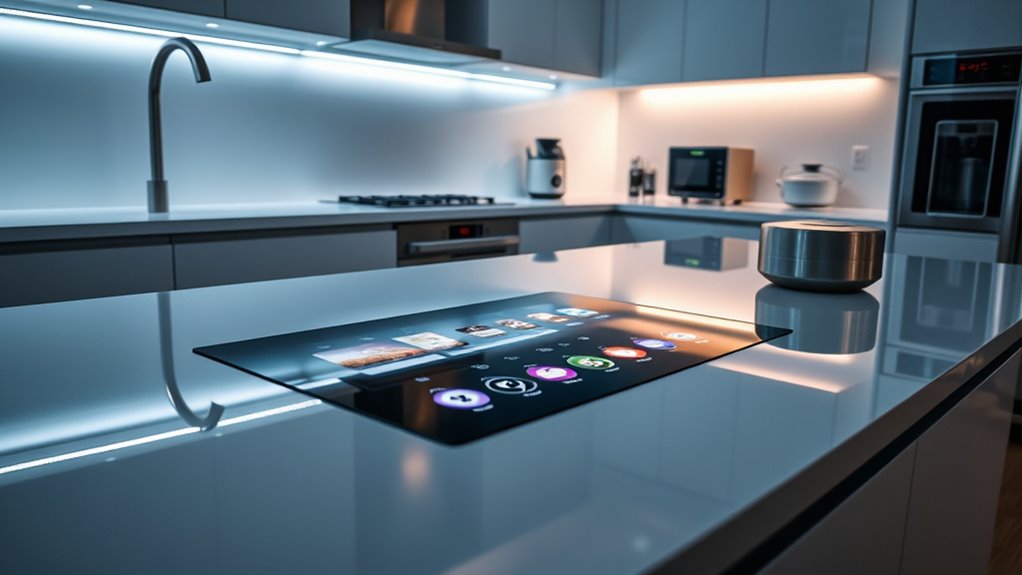
Kitchen Display Systems help you streamline order management by replacing paper tickets with digital screens, reducing errors and speeding up service. They enhance kitchen efficiency by providing real-time updates and clear communication between staff members. With these systems, you can coordinate tasks more smoothly and serve customers faster.
Streamlining Order Management
Streamlining order management with Kitchen Display Systems (KDS) transforms how commercial kitchens handle orders by replacing paper tickets with digital screens. This shift speeds up communication, reduces errors, and improves overall workflow. You’ll see orders appear instantly on screens, allowing your team to prioritize tasks effectively. Consider these benefits:
- Orders display in real-time, eliminating delays.
- Staff can update order statuses instantly, improving transparency.
- Screens organize tasks by priority, reducing confusion.
- Digital alerts notify you of any issues or delays immediately.
With KDS, your kitchen becomes more synchronized, ensuring dishes are prepared faster and more accurately. This automation minimizes mistakes caused by misreading handwritten tickets and helps maintain a steady flow during busy hours. It’s a game-changer for modern kitchen management.
Enhancing Kitchen Efficiency
Implementing Kitchen Display Systems (KDS) substantially boosts efficiency by providing real-time order updates and streamlined communication. You see orders immediately as they come in, reducing errors and delays caused by paper tickets or manual input. KDS centralizes information on screens, so your team stays synchronized, ensuring everyone knows what’s next. This setup cuts down on miscommunication, speeds up prep times, and improves overall workflow. With clear visibility into order status, you can prioritize tasks effectively, minimizing idle time and bottlenecks. Plus, KDS integrates with other smart kitchen components, like inventory management and automation systems, helping you optimize resource use. Ultimately, this technology creates a faster, more organized kitchen environment, making service smoother and your team more productive.
Smart Fryers

Smart fryers leverage advanced technology to deliver precise temperature control, oil monitoring, and automatic filtration, ensuring consistently high-quality food while extending oil life. This means you get crispy, perfectly cooked dishes with less fuss. Here’s what they offer:
Smart fryers use advanced tech for perfect cooking, oil savings, and easy maintenance.
- Temperature Precision: Maintains ideal frying temps automatically for even cooking.
- Oil Monitoring: Tracks oil quality and alerts you when it’s time to change or filter.
- Automatic Filtration: Cleans and filters oil without manual intervention, reducing waste.
- Remote Management: Allows you to monitor and control the fryer remotely via smartphone apps.
With these features, you save time, reduce oil consumption, and improve food consistency, making smart fryers a valuable addition to commercial and home kitchens alike.
Digital Queue Management
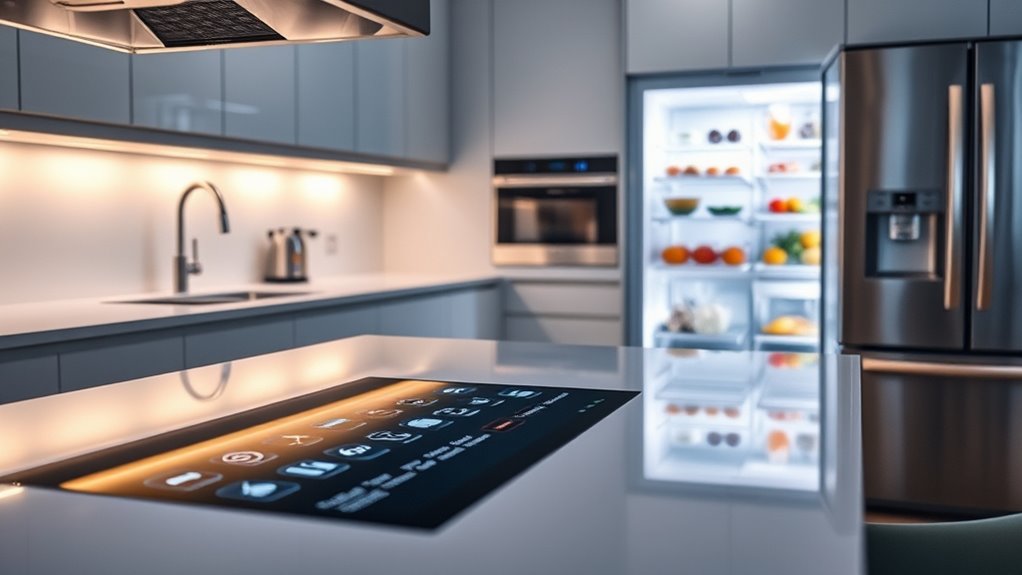
Have you ever waited in line at a busy restaurant and wished the process was smoother? Digital Queue Management in a smart kitchen helps do just that. It uses software to organize and prioritize tasks, orders, or appliance use based on preparation times and delivery schedules. In commercial kitchens, it streamlines workflow by automatically assigning tasks to staff and appliances, reducing wait times and bottlenecks. This system updates in real-time, adjusting priorities as conditions change. You can monitor progress through user interfaces on tablets or smartphones, giving you better control and visibility. By optimizing order flow and resource allocation, Digital Queue Management guarantees faster service, reduces errors, and enhances overall efficiency in your kitchen operations.
Shared Kitchen Booking Systems

Shared kitchen booking systems help you schedule and optimize the use of communal spaces, ensuring maximum efficiency. They provide usage analytics to track how often and when the kitchen is in demand, helping you manage resources better. By analyzing this data, you can improve scheduling practices and reduce downtime, making shared kitchens more productive for everyone.
Scheduling and Optimization
Scheduling and optimization in shared kitchen booking systems focus on maximizing equipment utilization and minimizing downtime. You can do this by:
- Real-time scheduling: Adjust bookings instantly based on current usage and availability, avoiding conflicts.
- Automated reminders: Send alerts to users before their reservation, reducing no-shows and idle periods.
- Peak time analysis: Identify busy hours and allocate resources accordingly, ensuring equipment is used efficiently.
- Usage forecasting: Predict demand trends to optimize future bookings and maintenance schedules.
These strategies help you make the most of shared kitchen resources, reduce waiting times, and improve overall productivity. By leveraging smart scheduling tools, you guarantee that every minute counts, keeping your kitchen running smoothly and efficiently.
Usage Analytics and Management
How can you optimize the utilization of shared kitchen resources? Usage analytics and management tools help you do just that. Shared kitchen booking systems track how often and when users reserve space, revealing patterns that highlight peak times and underused periods. With this data, you can adjust schedules, reduce idle time, and improve overall efficiency. These systems also monitor appliance usage, identifying overused or underused equipment, so maintenance can be planned proactively. Real-time analytics alert you to issues like equipment failures or resource conflicts, preventing delays. By analyzing user behavior and resource demand, you optimize space allocation, minimize waste, and increase productivity. Overall, usage analytics empower you to make data-driven decisions that maximize the value of your shared kitchen environment.
AI-Powered Workflow Optimization
AI-powered workflow optimization leverages real-time data and machine learning algorithms to enhance efficiency in commercial kitchens. It analyzes patterns, predicts bottlenecks, and suggests improvements. Here’s how it works:
- Streamlines Tasks: Automates scheduling of prep, cooking, and cleaning to reduce delays.
- Predicts Maintenance: Alerts you before equipment breakdowns, preventing downtime.
- Optimizes Staffing: Adjusts staff schedules based on order volume and peak hours.
- Reduces Waste: Uses data insights to fine-tune inventory levels and cooking processes.
Sensors and IoT Devices

Have you ever wondered how smart kitchens gather real-time information to operate efficiently? Sensors and IoT devices are the key. These small gadgets monitor temperature, humidity, food weight, and energy usage continuously. They send data to your connected appliances and control systems, enabling instant adjustments. For example, a humidity sensor can prevent mold by alerting you when conditions are off, while weight sensors in your fridge track inventory automatically. IoT devices communicate via Wi-Fi or Bluetooth, creating a seamless network that simplifies management. This data helps optimize cooking, reduce waste, and save energy. By providing real-time insights, sensors and IoT devices make your kitchen smarter, more responsive, and easier to control—turning complex tasks into simple, automated processes.
Frequently Asked Questions
How Secure Are Smart Kitchen Devices Against Hacking and Data Breaches?
Smart kitchen devices can be vulnerable to hacking and data breaches if you don’t take proper precautions. They often connect via Wi-Fi or Bluetooth, which can be exploited by cybercriminals. To keep your devices secure, verify your network uses strong passwords, regularly update firmware, and enable two-factor authentication when available. Avoid using default settings, and consider segmenting your smart devices from your main network for added protection.
Can Smart Kitchen Systems Integrate With Existing Home Automation Setups?
Did you know that over 60% of smart home users integrate multiple systems? Yes, smart kitchen systems can seamlessly connect with your existing home automation setup. You’ll enjoy centralized control via apps or voice commands, making it easy to manage lighting, climate, and appliances together. Compatibility depends on your devices’ standards, but many brands now support common platforms like Alexa, Google Assistant, or Apple HomeKit, simplifying integration and enhancing your smart home experience.
What Maintenance Is Required for Iot-Enabled Kitchen Appliances?
You should regularly check your IoT-enabled kitchen appliances for firmware updates, as these fix bugs and improve performance. Clean sensors, filters, and vents to guarantee peak operation, and inspect power connections for wear or damage. Keep the software apps updated on your devices, and monitor for any unusual activity or alerts that may indicate a malfunction. Scheduled maintenance and prompt troubleshooting help keep your appliances running smoothly and efficiently.
How Do Smart Kitchens Support Sustainability and Eco-Friendly Practices?
Smart kitchens support sustainability by tracking energy use, reducing waste, and optimizing resources. You can monitor appliances’ power consumption and receive suggestions to save energy. Inventory sensors help you minimize food waste by tracking freshness and expiration dates. Automated cooking and portion control prevent over-preparing meals. Plus, remote management lets you control devices efficiently, ensuring eco-friendly practices that lower your carbon footprint and promote responsible resource use.
Are Smart Kitchen Gadgets Compatible Across Different Brands and Platforms?
You might worry about compatibility issues, but many smart kitchen gadgets now support cross-platform use through common standards like Wi-Fi, Bluetooth, and open APIs. This means you can often connect devices from different brands seamlessly, especially if they use popular ecosystems like Alexa, Google Assistant, or Apple HomeKit. Always check device specifications beforehand, but generally, multi-brand compatibility is improving to give you more flexibility and control in your smart kitchen.
Conclusion
Now that you’re familiar with these smart kitchen terms, you’re ready to turn your space into a tech-savvy haven. Think of it as upgrading from a bicycle to a rocket—your cooking experience will soar with these innovations. Embrace the future of culinary convenience, where connectivity and intelligence work hand in hand. With these tools, you’ll not just cook—you’ll craft masterpieces with the ease of a maestro conducting a symphony.