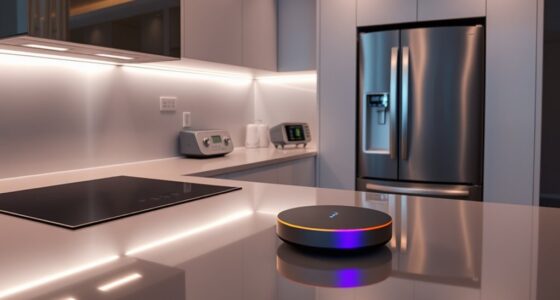
A smart appliance connects to your home network using protocols like WiFi, Bluetooth, or Zigbee, allowing you to monitor and control it remotely. These devices use sensors to track usage, temperature, and maintenance needs, adapting to your habits for efficiency. They often work with voice assistants and apps for easy management and integrate into broader smart home systems. Keep exploring to discover how these technologies can transform your kitchen experience.
Key Takeaways
- Smart appliances connect via wireless protocols like WiFi, Bluetooth, Zigbee, Z-Wave, or Thread for seamless communication.
- Embedded sensors enable real-time data collection on usage, temperature, and maintenance needs.
- They offer remote control and automation through smartphone apps and voice assistants such as Alexa or Google Home.
- Advanced features include AI-driven personalization, predictive maintenance, and energy management for efficiency.
- Compatibility with various ecosystems and standards facilitates integrated control but may require hubs or bridges.
Key Features That Define Smart Appliances

What truly sets smart appliances apart from traditional devices? It’s their ability to connect, monitor, and adapt. These appliances feature wireless communication protocols like WiFi, Bluetooth, or Z-Wave, allowing seamless data exchange. Sensors embedded in these devices track usage patterns, temperature, and maintenance needs, providing valuable insights. Unlike basic programmable appliances, smart ones can be controlled remotely via smartphone apps, giving you flexibility and convenience. They often operate autonomously, using scheduling or AI algorithms to optimize performance. Smart home integration also enables these appliances to work in concert with other devices, creating a cohesive and efficient living environment. This interconnectedness enhances device interoperability and allows for more sophisticated automation. The integration of connected technology further enhances their capabilities, making daily routines more effortless and efficient. Additionally, the inclusion of remote monitoring allows users to keep an eye on appliance status and issues from anywhere, boosting peace of mind. Recognizing the importance of user data security ensures that these connected systems protect your personal information as they become more integrated into daily life. These key features make smart appliances more intuitive, responsive, and capable of improving your daily routines effortlessly, setting them apart from their traditional counterparts.
Connectivity Protocols and Communication Standards

You need to understand the common wireless protocols like WiFi, Bluetooth, Zigbee, Thread, and Z-Wave, which enable communication between your smart appliances. Compatibility across different systems can be tricky, often requiring research before making a purchase. Physical network connections, such as Ethernet or WiFi, also play a key role in ensuring reliable, two-way communication with your devices. Additionally, understanding projector technology can help you better integrate smart systems with your home entertainment setup. Knowing how essential oils may influence your environment can also be beneficial when designing a cohesive smart kitchen or wellness space. Familiarity with wireless standards can further enhance your ability to select devices that work seamlessly together. Monitoring signals like mesh networks is essential to maintain a robust and reliable smart home connectivity. Recognizing how security protocols protect your data is also vital for maintaining privacy in connected environments.
Common Wireless Protocols
Wireless protocols serve as the backbone for connecting smart kitchen appliances to each other and to your home network. They enable seamless communication, data exchange, and remote control. Different protocols have unique strengths: WiFi offers high bandwidth for streaming and updates; Bluetooth is great for short-range, low-power connections; Zigbee, Thread, and Z-Wave are optimized for low-energy, reliable mesh networks ideal for home automation. Understanding protocol compatibility helps ensure your appliances work smoothly together. Being aware of interoperability standards can also facilitate smoother integration among diverse devices. Additionally, staying informed about device security is essential to protect your connected appliances from potential cyber threats. Recognizing the communication protocols used can help you select devices that operate harmoniously within your smart kitchen ecosystem. Moreover, knowing about frequency bands can assist in avoiding interference and maintaining a stable connection.
Compatibility Challenges Across Systems
While various wireless protocols enable smart kitchen appliances to communicate effectively, compatibility issues often arise due to the diversity of standards and technologies in use. Not all devices support the same protocols, such as Zigbee, Z-Wave, WiFi, or Bluetooth, making seamless integration challenging. Many appliances are designed to work within specific ecosystems, like Amazon Alexa, Google Home, or Apple HomeKit, but they don’t always cross-compatibility across platforms. This fragmentation forces you to research compatibility before purchasing, as mismatched devices might not communicate or could require extra hubs or bridges. Additionally, interoperability between devices can be limited, further complicating setup processes. As a result, you may face increased costs, setup complexity, and limited flexibility. Understanding connectivity protocols and their interoperability capabilities is essential for building a cohesive smart kitchen environment. Improving standardization in communication standards could significantly ease integration challenges in the future. Overcoming these challenges requires careful planning to guarantee your appliances can coexist and operate smoothly within your preferred smart home ecosystem.
Physical Network Connections
Connecting smart kitchen appliances relies on a variety of communication standards and protocols that facilitate data exchange between devices and your home network. WiFi offers high-speed, reliable connections suitable for streaming data and remote control. Bluetooth provides short-range, low-energy links ideal for close-proximity control and device pairing. Protocols like Zigbee, Z-Wave, and Thread are designed for low-power, mesh networking, enabling multiple devices to communicate efficiently within your smart home. These standards vary in compatibility and range, so researching supported protocols before purchasing ensures seamless integration. Your appliances connect physically through Ethernet cables or wirelessly via WiFi or other protocols, establishing a two-way communication channel that allows remote monitoring, control, and automation. Understanding these protocols helps you build a cohesive, functional smart kitchen network. Additionally, many appliances now incorporate connectivity protocols that enhance interoperability and simplify setup, making your smart kitchen more intuitive and integrated. Choosing the right protocols is essential for ensuring your devices work together smoothly and reliably. Exploring standardized communication methods can further improve device compatibility and future-proof your smart kitchen setup. Being aware of interoperability standards helps ensure your devices can work together across different brands and ecosystems.
Remote Control and User Interface Options
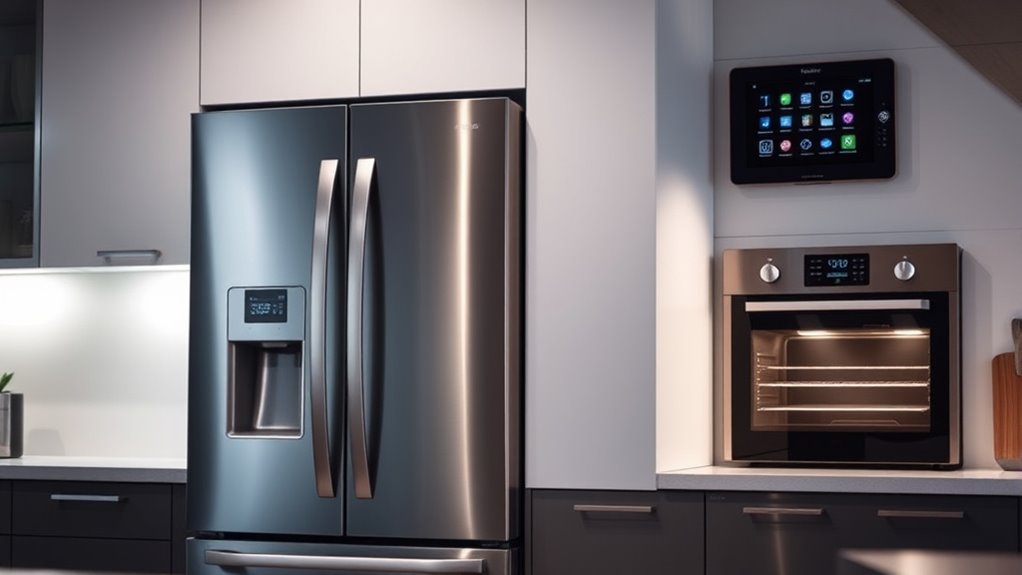
You can control your connected kitchen appliances easily through dedicated smartphone apps, giving you remote access and real-time updates. Voice assistants like Alexa, Google Home, or Apple HomeKit let you operate devices hands-free with simple commands. These options make managing your appliances more convenient, flexible, and integrated with your daily routines. Understanding the materials and craftsmanship behind these devices helps appreciate their quality and durability. Additionally, knowing about system integration can enhance how seamlessly your appliances work together within your smart home ecosystem. Being aware of software updates ensures your appliances remain secure and function with the latest features.
Smartphone App Control
Smartphone apps serve as the primary user interface for controlling and monitoring connected kitchen appliances remotely. With these apps, you can start, pause, or adjust settings from anywhere, giving you full control without being physically present. They provide real-time status updates, such as cycle progress or temperature readings, so you’re always informed. Notifications alert you to issues like a fridge door left open or maintenance reminders, helping prevent problems before they escalate. Scheduling features let you set appliances to operate during off-peak hours, saving energy and costs. User-friendly interfaces make it simple to customize preferences and access detailed reports on energy consumption. Overall, smartphone app control enhances convenience, allows flexible management, and integrates your appliances seamlessly into your daily routine.
Voice Assistant Compatibility
Voice assistant compatibility transforms how you control and interact with connected kitchen appliances. With this feature, you can use voice commands through Amazon Alexa, Google Home, or Apple HomeKit to start, stop, or adjust appliance settings effortlessly. This hands-free control makes multitasking in the kitchen more convenient, especially when your hands are full. You can ask your voice assistant to check the status of your oven, adjust refrigerator temperature, or set timers without opening an app. Compatibility varies across brands and models, so it’s vital to verify that your appliance supports your preferred voice platform. This integration creates a seamless user experience, allowing you to manage your kitchen appliances naturally and efficiently, enhancing convenience and accessibility in your smart kitchen ecosystem.
Integration With Smart Home Ecosystems

How seamlessly connected are your kitchen appliances within your overall smart home system? If your devices support multiple protocols like WiFi, Zigbee, or Z-Wave, you can create a unified ecosystem. Compatibility with smart home hubs guarantees smooth device communication and centralized control. Some appliances integrate directly with voice assistants, simplifying operation. However, fragmentation can hinder seamless integration, requiring careful research before purchase.
| Protocol | Compatibility | Control Method |
|---|---|---|
| WiFi | Widely compatible | Smartphone, voice |
| Zigbee | Smart hubs, sensors | Centralized control |
| Z-Wave | Compatible with hubs | Mobile app, voice |
| Bluetooth | Short-range control | Direct device control |
| Thread | Emerging protocol | Secure mesh network |
Advanced Technologies Powering Smart Functionality

Advanced technologies such as artificial intelligence (AI), machine learning (ML), and sophisticated sensors are the driving forces behind the enhanced functionality of modern connected kitchen appliances. AI and ML enable your appliances to learn your habits, optimize performance, and adapt to your preferences automatically. Sensors monitor variables like temperature, usage patterns, and appliance health, providing real-time data that enhances precision and reliability. These technologies also power autonomous features such as scheduling, maintenance alerts, and inventory tracking. Connectivity protocols like WiFi, Zigbee, or Z-Wave facilitate seamless communication between appliances and your smart home ecosystem. As a result, your appliances become more intuitive, efficient, and capable of automating routine tasks, making your kitchen smarter, more responsive, and easier to manage.
Energy Management and Efficiency Advantages

Have you ever wondered how connected kitchen appliances help you save energy and reduce costs? Smart appliances track your usage patterns and adjust their operation accordingly, preventing waste. For example, a smart refrigerator can optimize cooling cycles based on how often you open it, while smart ovens can preheat only when needed. Scheduling features let you run appliances during off-peak hours, lowering energy bills and supporting a greener grid. Real-time energy data helps you identify wasteful habits and make smarter choices. ENERGY STAR-certified devices combine efficiency with connectivity, ensuring you’re not only saving money but also reducing your environmental impact. With automatic adjustments and better monitoring, you get maximum efficiency with minimal effort, making your kitchen smarter and more sustainable.
Monitoring and Maintenance Capabilities

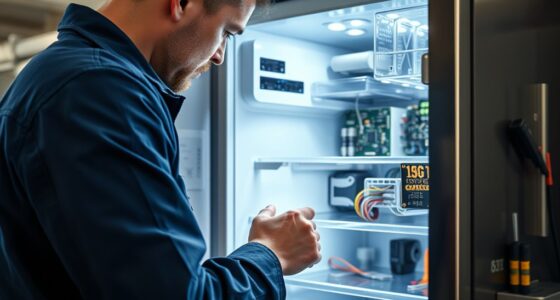
Smart kitchen appliances go beyond energy savings by offering real-time monitoring and maintenance features that keep your devices running smoothly. These capabilities allow you to track performance, detect issues early, and schedule maintenance before problems escalate. You can receive alerts if, for example, your refrigerator’s door is left open or if a dishwasher’s filter needs cleaning. Additionally, sensors monitor usage patterns and component health, helping you extend appliance lifespan.
Smart appliances offer real-time alerts and maintenance insights to keep your kitchen running smoothly.
- Receive maintenance alerts via smartphone
- Monitor energy and usage data remotely
- Detect operational anomalies instantly
- Schedule preventative maintenance automatically
Compatibility and Market Availability
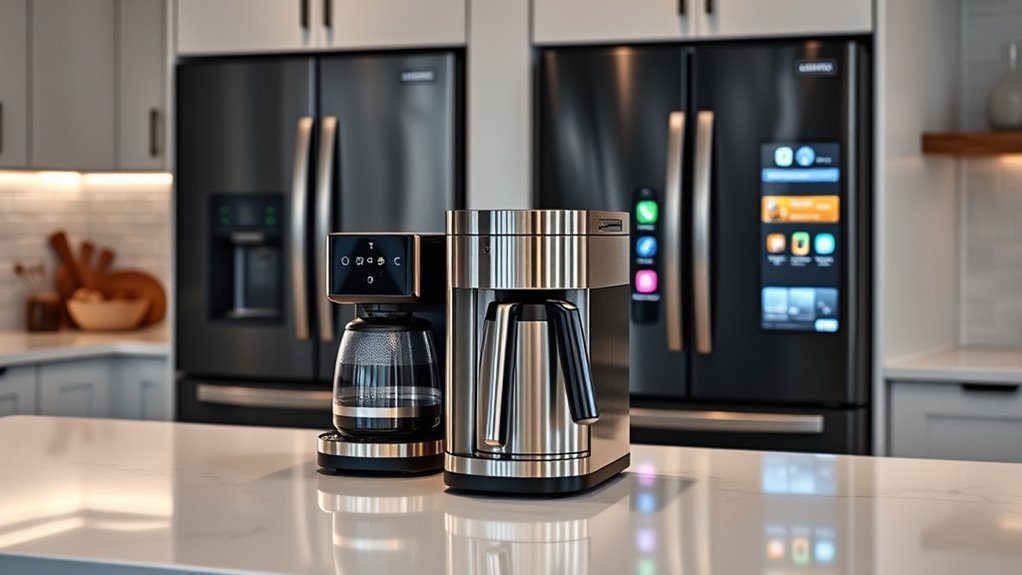
Are you wondering whether your kitchen appliances will work seamlessly together? Compatibility is key in the smart home ecosystem, but it can be tricky. Different brands often use varied protocols like WiFi, Zigbee, or Z-Wave, making integration a challenge. Before buying, research whether devices support common standards or are compatible with your smart home hub or ecosystem, such as Amazon Alexa, Google Home, or Apple HomeKit. Market availability also varies; some appliances are widely accessible, while others are limited by region or retailer. Keep in mind that frequent new model releases mean features improve rapidly, but this can also lead to compatibility issues. To avoid frustration, verify device compatibility and check for updates on market options before making your purchase.
Benefits of Smart Kitchen Appliances

The benefits of smart kitchen appliances extend beyond simple convenience; they markedly enhance energy efficiency, safety, and overall cooking experience. You gain remote control and real-time monitoring, making daily routines more flexible. They help reduce energy consumption through intelligent scheduling and automatic adjustments, saving you money and supporting sustainability. Additionally, smart appliances improve safety by sending alerts for issues like leaks or door ajar notifications. They streamline meal prep with features like guided cooking and inventory tracking, reducing waste and frustration.
Smart kitchen appliances boost safety, save energy, and simplify meal prep with remote control and real-time alerts.
- Save energy with off-peak scheduling and usage data
- Increase safety through real-time alerts
- Enhance convenience with remote control and automation
- Minimize waste via inventory management and smart adjustments
Future Trends in Connected Kitchen Technology
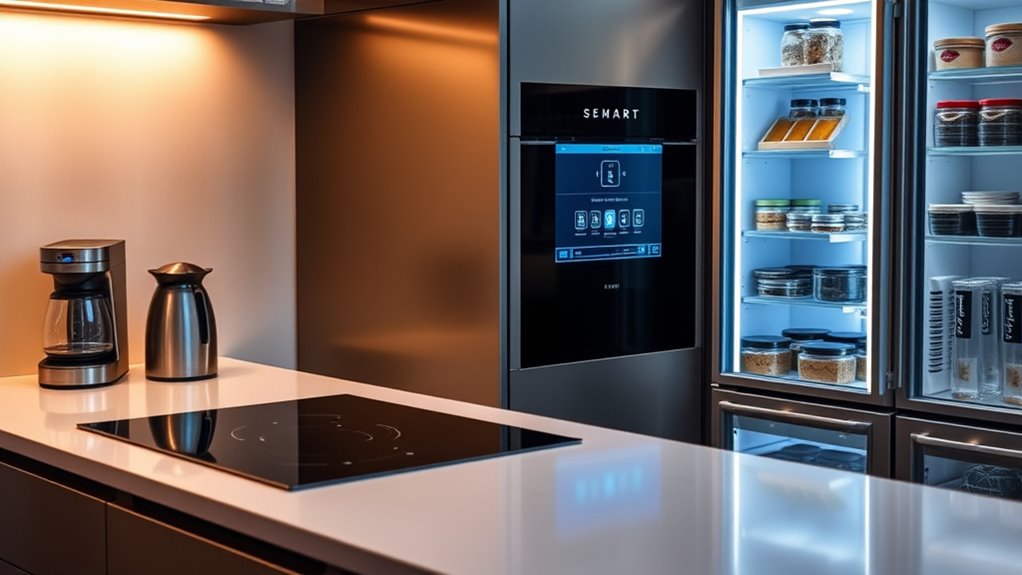
Future connected kitchen tech will see smarter appliances that anticipate your needs using enhanced AI. You’ll notice greater ecosystem interoperability, allowing devices from different brands to work seamlessly together. Additionally, sustainable energy solutions will become more integrated, helping you reduce waste and lower your environmental impact effortlessly.
Enhanced AI Integration
Enhanced AI integration is set to revolutionize connected kitchen technology by enabling appliances to anticipate your needs and adapt to your habits seamlessly. You’ll see smarter ovens that preheat based on your cooking schedule, refrigerators that suggest shopping lists, and coffee makers that start brewing when your alarm goes off. AI-driven appliances will analyze usage patterns to optimize energy consumption, reduce waste, and customize functions for you.
- Predictive maintenance alerts before breakdowns occur
- Personalized recipe recommendations based on available ingredients
- Adaptive temperature controls that respond to environmental changes
- Automated routine adjustments, like adjusting lighting or ventilation during cooking sessions
This evolution makes your kitchen more intuitive, saving time and effort while enhancing convenience and efficiency.
Greater Ecosystem Interoperability
As connected appliances become more intelligent and personalized, the focus shifts toward creating seamless interactions across entire smart kitchen ecosystems. You’ll see greater interoperability as devices communicate effortlessly, regardless of brand or protocol. Standards like Matter aim to unify compatibility, making it easier to connect appliances without frustration. This means your refrigerator, oven, and coffee maker can work together smoothly, sharing data and automating routines. Hubs and controllers will become more versatile, managing multiple protocols seamlessly. You’ll experience fewer disconnects or setup issues, enabling a truly integrated environment. As ecosystem interoperability advances, you’ll enjoy enhanced convenience, smarter automation, and a more cohesive kitchen experience—where devices collaborate intuitively to meet your needs without manual intervention.
Sustainable Energy Solutions
Sustainable energy solutions are shaping the next wave of connected kitchen technology by prioritizing efficiency and environmental impact. You’ll see appliances that optimize energy use through smart scheduling, adjusting operations during off-peak hours or when renewable energy sources are available. These innovations include:
- Integration with smart grids to balance power demand and supply
- Real-time energy consumption tracking for smarter usage
- Automated adjustments to reduce waste without user input
- Compatibility with solar and renewable energy systems
Frequently Asked Questions
How Secure Are Smart Appliances From Hacking or Data Breaches?
Smart appliances can be vulnerable to hacking or data breaches if you don’t take proper precautions. They connect to your home network, so weak passwords, outdated software, or unsecured WiFi can expose them. To stay safe, use strong, unique passwords, keep firmware updated, and enable security features like two-factor authentication when available. Regularly review device permissions and disconnect unused devices to minimize risks and protect your personal data.
Do Smart Appliances Require a Constant Internet Connection to Function Properly?
No, smart appliances don’t need a constant internet connection to work, but don’t expect them to perform all their fancy features without it. You can still control and use basic functions offline, like turning on the oven or checking the fridge’s temperature. However, for remote monitoring, updates, or AI-driven features, a steady internet connection is your best friend. Otherwise, you’re just stuck with a really smart-looking appliance.
Can Smart Appliances Work With Multiple Smart Home Platforms Simultaneously?
Smart appliances can often work with multiple smart home platforms simultaneously, but it depends on their compatibility. You need to check if the device supports various protocols like Zigbee, Z-Wave, or WiFi, and if it integrates with different ecosystems like Alexa, Google Home, or Apple HomeKit. Using a compatible hub or bridge can help connect devices across platforms, giving you more flexibility and control over your smart home setup.
What Is the Typical Lifespan of a Smart Appliance’s Connectivity Features?
Smart appliances typically maintain their connectivity features for about 5 to 10 years, but this varies. You might find that software updates, compatibility with new protocols, or hardware wear can shorten or extend this lifespan. Regular updates and maintenance help keep your device connected longer. However, as technology advances rapidly, you may need to replace or upgrade the appliance sooner to enjoy the latest features and security improvements.
Are There Any Health or Safety Concerns Related to Connected Kitchen Devices?
You should be aware that connected kitchen devices may pose health and safety concerns, such as data privacy risks or hacking vulnerabilities. If security isn’t tight, malicious actors could access your appliances or personal information. Additionally, faulty sensors or software glitches might cause malfunctions, like overheating or leaks, leading to safety hazards. To stay protected, keep firmware updated, use strong passwords, and choose devices with robust security features.
Conclusion
Imagine waking up to a coffee maker that starts brewing as your alarm goes off, all controlled from your phone. Smart appliances make this possible by connecting seamlessly and offering convenience, efficiency, and control. As technology advances, your kitchen will become even more intuitive—helping you save time and energy. Embrace these innovations now, and transform your cooking experience into a smarter, more connected routine that adapts to your lifestyle.