
To protect your Wi-Fi-enabled kitchen appliances, change default passwords to strong, unique ones and keep firmware updated regularly. Use secure network practices like enabling encryption (WPA3 or WPA2) and setting up guest networks to isolate devices. Regularly review connected devices and disable remote access if you don’t need it. Industry standards and certifications help guarantee device security, and staying informed about future tech developments will keep your smart kitchen safe—if you want to learn more, continue exploring.
Key Takeaways
- Change default passwords to strong, unique credentials for all Wi-Fi-enabled kitchen appliances.
- Regularly update device firmware to patch security vulnerabilities and prevent malware exploits.
- Use guest networks to isolate smart appliances from main devices, reducing hacking risks.
- Enable two-factor authentication and disable remote access when not needed for added security.
- Choose appliances with industry security certifications like UL Gold IoT Security Rating for enhanced protection.
The Rise of Smart Kitchen Appliances and Connectivity Trends

The rise of smart kitchen appliances is transforming how you manage your kitchen by integrating advanced connectivity features. Today’s devices, like smart fridges, ovens, and coffee makers, connect seamlessly to your Wi-Fi, giving you remote control via smartphones or voice assistants. This trend is fueled by improvements in IoT technology, allowing appliances to automatically adjust cooking times or preheat remotely, saving you time and effort. As 5G and Wi-Fi infrastructure expand, these devices communicate more smoothly, creating integrated ecosystems that make kitchen management more convenient. Consumers increasingly prefer connected appliances that talk to each other, offering a unified experience. This rapid adoption reflects a shift toward smarter, more efficient kitchens where technology enhances everyday routines. WildernessSense emphasizes the importance of securing these connected devices to prevent potential vulnerabilities. To fully benefit from these advancements, understanding connectivity security is essential to protect your smart kitchen from potential hacks. Additionally, maintaining strong network safeguards helps ensure your devices remain protected from unauthorized access. Incorporating specialized security protocols can further mitigate risks associated with connected appliances. Understanding cloud security is also vital, as many smart appliances rely on cloud services to function effectively.
Common Security Weaknesses in Wi-Fi Enabled Kitchen Devices
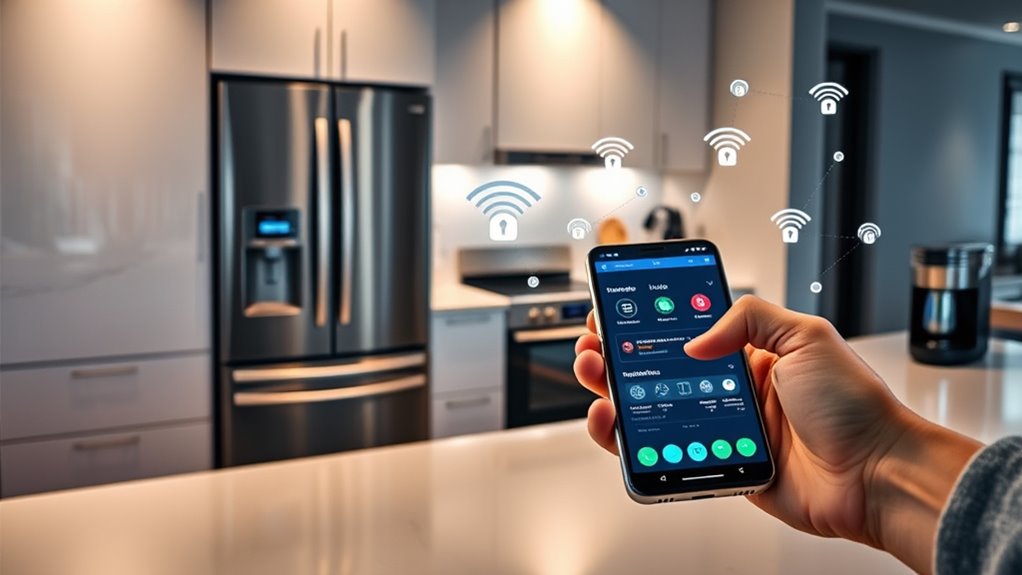
One common security weakness in Wi-Fi-enabled kitchen devices is using default passwords, which hackers can easily guess or find online. Outdated firmware also creates vulnerabilities, leaving devices open to known exploits. Addressing these issues is vital to keeping your smart kitchen safe from cyber threats. Additionally, implementing trustworthy networking hardware can help ensure that your devices are better protected against unauthorized access. Regularly updating device firmware and changing default settings are crucial steps in network security to prevent unauthorized access and potential breaches. Being aware of potential cyber threats can further enhance your smart kitchen’s security posture. Moreover, employing strong, unique passwords for each device adds an extra layer of protection against unauthorized intrusion. Incorporating security best practices can significantly reduce the risk of cyber attacks on your connected appliances.
Default Password Risks
Have you ever considered how default passwords on Wi-Fi-enabled kitchen devices pose a considerable security risk? Many manufacturers set simple or generic default passwords, making it easy for hackers to gain unauthorized access. If you don’t change these passwords, cybercriminals can exploit known vulnerabilities, infiltrate your appliances, and potentially access your entire home network. Once inside, they could manipulate device functions, steal personal information, or use your device as a gateway for broader attacks. Default passwords are often published online or easily guessed, leaving your smart kitchen vulnerable. To protect yourself, always change default credentials immediately after setup and choose strong, unique passwords. Doing so markedly reduces the risk of unauthorized access and keeps your smart appliances—and your home—safe. Changing default passwords is a crucial step in maintaining your smart home’s security. Additionally, understanding device security best practices can further enhance your protection against cyber threats.
Outdated Firmware Vulnerabilities
Default passwords are just one piece of the puzzle; outdated firmware on Wi-Fi-enabled kitchen devices also creates significant security gaps. When firmware isn’t updated, vulnerabilities remain open, leaving your appliances exposed. Hackers often exploit these weaknesses through:
- Known security flaws in old firmware versions.
- Unpatched software that lacks recent security patches.
- Lack of support for the latest encryption protocols.
- Increased risk of malware or ransomware infiltration.
Manufacturers may stop providing updates after a few years, leaving devices vulnerable. This can allow cybercriminals to gain control, access personal data, or infiltrate your home network. Regularly checking for firmware updates is essential to keep your smart kitchen secure. Additionally, staying informed about security best practices can further protect your connected appliances from potential threats. Implementing device authentication measures can also help prevent unauthorized access and safeguard your network. Being proactive about cybersecurity awareness helps ensure your devices remain protected against emerging threats.
Notable Incidents of Kitchen Appliance Hacking and Data Breaches

Although smart kitchen appliances enhance convenience and efficiency, they’ve also become targets for cybercriminals seeking to exploit vulnerabilities. Notable incidents highlight the risks. In 2015, hackers exploited a vulnerability in a smart fridge to intercept email logins and access connected accounts. In 2020, researchers demonstrated how smart coffee machines could be hacked to deliver ransomware via firmware flaws. These breaches often reveal personal routines and data, which cybercriminals use for further attacks. Some hackers have used compromised devices to monitor household activities or infiltrate other home systems. These incidents show that even everyday appliances can serve as entry points for cyberattacks. Such breaches underscore the importance of securing smart kitchen devices and regularly updating their software to prevent exploitation. Additionally, as regional cybersecurity awareness demonstrates, regional differences in cybersecurity awareness can influence how seriously consumers take device protection. Implementing strong security protocols and using updated firmware are crucial steps to mitigate these risks. Ensuring that devices are configured with robust passwords and network segmentation can further reduce the likelihood of a breach. Moreover, adopting regular security audits can help identify vulnerabilities before they are exploited by hackers.
How Cybercriminals Exploit Vulnerabilities in Smart Appliances

Cybercriminals actively seek out vulnerabilities in smart appliances to gain unauthorized access and control. They use various tactics to exploit weak points, such as:
Cybercriminals target smart appliances by exploiting vulnerabilities to gain unauthorized access and control.
- Probing for open ports with automated tools to find access points.
- Exploiting outdated firmware that manufacturers no longer support, leaving security gaps.
- Using default credentials that users forget to change, making devices easy targets.
- Scanning for weak encryption or misconfigured network settings, enabling breaches.
- They may also exploit security gaps in the device’s design to bypass protections and access sensitive information. Additionally, many cybercriminals leverage known vulnerabilities in outdated hardware to compromise devices more easily. Regularly updating firmware and understanding field-of-view concepts can help mitigate some risks.
Once inside, hackers can manipulate your appliances, access your Wi-Fi network, or gather personal data. They might even launch attacks using your smart kitchen devices as part of larger botnets, putting your entire home network at risk. Awareness of these tactics helps you stay protected.
Key Security Features Implemented by Leading Manufacturers
Leading manufacturers prioritize robust security features to protect smart kitchen appliances from cyber threats. They incorporate advanced encryption protocols like WPA3 and WPA2 to secure device connections, ensuring data remains private during transmission. Many brands embed layered security measures, including encrypted firmware updates and secure boot processes, preventing unauthorized access. Some appliances come with automatic security checks that detect vulnerabilities and prompt updates. Manufacturers also adhere to recognized standards, like the UL Gold IoT Security Rating, demonstrating their commitment to security best practices. Additionally, AI-driven security tools monitor device activity in real-time, identifying suspicious behaviors. Incorporating water-resistant components further enhances appliance durability and security against environmental factors. These features collectively create a strong defense, making it harder for hackers to compromise appliances and safeguard your connected kitchen environment. A focus on cybersecurity protocols ensures ongoing protection as technology evolves.
Practical Tips for Consumers to Safeguard Their Connected Kitchens

To effectively protect your connected kitchen, start by keeping all smart appliances’ firmware and software up to date, as manufacturers often release security patches that fix vulnerabilities. Next, follow these practical tips:
- Change default passwords on all devices to strong, unique ones.
- Enable two-factor authentication where available for added security.
- Use a guest network for your smart appliances, isolating them from your main devices.
- Regularly review connected devices and remove any unfamiliar or unused ones.
Additionally, guarantee your Wi-Fi network uses WPA3 encryption, and disable remote access unless necessary. By staying proactive with updates, strong passwords, network segmentation, and monitoring, you markedly reduce the risk of hacks targeting your smart kitchen.
The Role of Industry Standards and Certifications in Enhancing Security
Industry standards and certifications set clear benchmarks that manufacturers must meet to guarantee smart kitchen devices are secure. When you see certifications like UL Gold IoT Security Rating, you can trust the product has undergone rigorous testing for vulnerabilities. These compliance measures help protect your home by promoting consistent security practices across the industry.
Certification Effectiveness Measures
Certifications and standards play a crucial role in strengthening the security of smart kitchen appliances by establishing consistent benchmarks for safety and data protection. These measures help you identify reliable products that meet rigorous security criteria. To evaluate certification effectiveness, consider:
- How frequently certifications are updated to reflect emerging threats
- The scope of security controls included, such as encryption and firmware integrity
- The transparency of certification processes and third-party audits
- The real-world performance of certified appliances against known vulnerabilities
A strong certification program ensures manufacturers maintain high-security standards, giving you confidence in your devices. It also encourages ongoing improvements, reducing risks of hacks and data breaches in your smart kitchen ecosystem.
Industry Compliance Benefits
Adhering to industry standards and certifications considerably boosts the security of your smart kitchen appliances by establishing clear benchmarks that manufacturers must meet. These standards ensure devices incorporate essential security features like encryption, secure firmware updates, and vulnerability management. Certifications such as UL IoT Security Rating and WPA3 compliance signal that manufacturers prioritize safety and resilience against cyber threats. When appliances meet these recognized standards, you gain confidence that they’ve undergone rigorous testing and adhere to best practices. This reduces the risk of vulnerabilities that hackers could exploit. Industry compliance also encourages manufacturers to implement consistent security protocols across products, making your smart kitchen a safer environment. Ultimately, adhering to these standards helps protect your personal data, prevents unauthorized access, and maintains the integrity of your connected ecosystem.
Future Developments in Smart Kitchen Security Technologies

As smart kitchen security continues to evolve, future technologies are focusing on enhancing protection through advanced encryption methods, AI-driven threat detection, and seamless device authentication. You can expect to see:
- Quantum encryption securing data transmission against future hacking techniques.
- AI systems that monitor device behavior in real-time to identify anomalies and potential threats.
- Biometric authentication, like fingerprint or facial recognition, to guarantee only authorized users access appliances.
- Blockchain-based device identities that provide tamper-proof records of device ownership and activity.
These innovations aim to make your smart kitchen more resilient by proactively preventing attacks, reducing vulnerabilities, and ensuring that your appliances and data stay safe in an increasingly connected world.
Building Consumer Awareness and Promoting Best Security Practices
How can consumers stay protected in the rapidly expanding world of smart kitchen appliances? The key is to stay informed and adopt best security practices. Start by changing default passwords on your devices and use strong, unique passwords for each appliance. Keep your firmware and software updated—manufacturers often release patches that fix vulnerabilities. Enable two-factor authentication where available, and disable unnecessary remote access features. Regularly review your device settings and privacy controls to ensure they align with your comfort level. Educate yourself about common threats, like open ports or outdated firmware, and stay cautious of suspicious activity. Using a secure, encrypted Wi-Fi network with a strong password adds another layer of defense. By taking these steps, you considerably reduce your risk of falling victim to hacks.
Frequently Asked Questions
How Often Should I Update My Smart Kitchen Appliances’ Firmware?
You should update your smart kitchen appliances’ firmware as soon as updates are available. Manufacturers often release firmware updates to fix security vulnerabilities and improve performance, so staying current helps protect against hacking attempts. Check for updates regularly—at least once a month—and enable automatic updates if possible. This proactive approach guarantees your devices remain secure, functional, and compatible with the latest features, reducing the risk of exploitation.
Are There Specific Security Protocols Recommended for Smart Kitchen Networks?
You should use WPA3 or WPA2 encryption for your smart kitchen network, as they offer strong security for device connections. Verify your router’s firmware is up-to-date, and enable network segmentation to keep appliances separate from other devices. Always change default passwords, enable automatic security updates, and regularly monitor your network for unusual activity. These protocols help protect your appliances and personal data from hacking attempts.
Can I Detect if a Smart Appliance Has Been Hacked?
You can definitely spot if your smart appliance’s been hacked; it’s like catching a ghost in your smart kitchen. Watch for unusual behavior, like strange noises, unresponsive devices, or sudden network slowdowns. Unexpected data usage or new, unknown connections are dead giveaways. Regularly monitor your network activity and update firmware. Trust your instincts—if something feels off, it’s time to investigate or reset that device to keep your kitchen secure.
What Are the Signs of a Compromised Connected Kitchen Device?
You’ll notice your smart kitchen device acting strangely, like responding slowly or not at all. Unexpected app behavior, unfamiliar devices connected to your Wi-Fi, or increased data usage also signal potential hacking. If you see unfamiliar settings or constant reboots, these are red flags. Regularly check for firmware updates, change default passwords, and monitor your network activity to catch and address compromised devices early.
How Do I Choose Secure Smart Appliances From Manufacturers?
When choosing secure smart appliances, you should look for trusted brands that prioritize cybersecurity, like those earning UL Gold IoT Security Ratings. Check if they use robust encryption standards, like WPA3, and offer regular software updates. Opt for products with transparent privacy policies and clear support timelines. These measures guarantee your devices stay protected, giving you peace of mind while enjoying the convenience of connected kitchen appliances.
Conclusion
To keep your smart kitchen safe from cyber villains, stay vigilant and follow best security practices. Regularly update your devices, change default passwords, and stay informed about the latest threats. Think of your connected kitchen as a fortress—nothing should break through! With a little effort, you can turn your smart appliances into invincible protectors, ensuring your culinary haven remains secure and hacker-free. Protecting your kitchen is the ultimate power move—don’t leave it to chance!