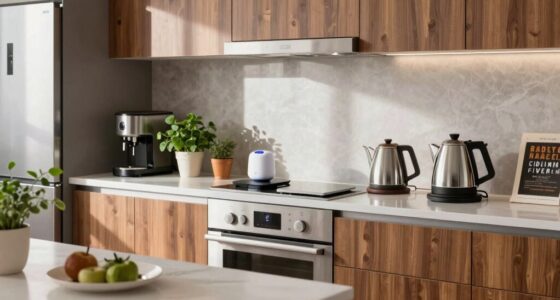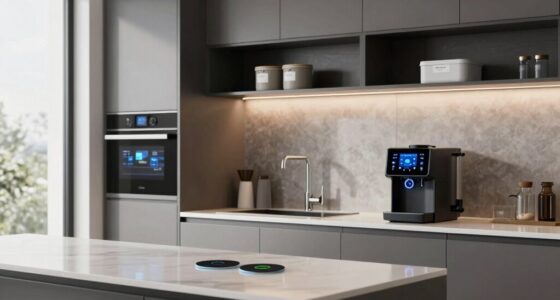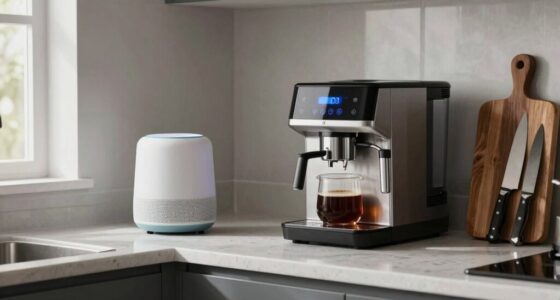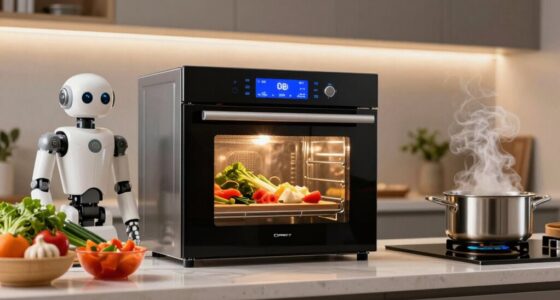
Smart kitchens often fail for beginners due to complex interfaces and confusing apps that lead to frustration. Many people underestimate the importance of proper installation and compatibility, which can result in more headaches. Budget issues can also arise if you overspend on gadgets you don’t truly need. To fix these challenges, focus on user-friendly appliances, prioritize essential items, and set clear expectations for automation. Keep learning about tips and tricks to streamline your smart kitchen experience.
Key Takeaways
- Complex interfaces and confusing apps frustrate beginners; opting for intuitive controls can simplify the transition to a smart kitchen.
- Overspending on unnecessary gadgets is common; prioritize essential appliances to maintain a manageable budget.
- Proper installation is crucial; reading instructions thoroughly and considering professional help can prevent future issues.
- Setting realistic expectations for automation is key; practice and revisiting resources can enhance efficiency and routines.
- Regular maintenance and timely software updates are vital; beginners should familiarize themselves with these practices to avoid technical problems.

Have you ever wondered how technology can transform your kitchen into a smart haven? It’s an exciting prospect, but many beginners find that their journey into smart kitchens doesn’t go as smoothly as they’d hoped. Smart appliances promise convenience and efficiency, yet they often come with challenges that can lead to frustration. If you’re among those who’ve faced these hurdles, you’re not alone, and you can fix it.
One of the primary reasons smart kitchens fail for beginners is the complexity of technology integration. You might invest in the latest smart refrigerator or oven, only to discover that the user-friendly interfaces aren’t so user-friendly after all. Many appliances require apps that can be confusing, making it tough to navigate settings or features. Start by focusing on devices known for their intuitive controls, which will make the change smoother.
One major hurdle for beginners in smart kitchens is the confusing tech integration; prioritize intuitive devices for a smoother transition.
Budget considerations also play a significant role. It’s easy to get carried away and spend more than you intended on a variety of gadgets. When planning your smart kitchen, prioritize essential appliances first. Look for beginner resources that help you understand what you really need and what can wait. This way, you won’t feel overwhelmed by costs or choices.
Installation tips are important too. Many beginners underestimate the effort needed for proper setup. Some smart appliances need specific Wi-Fi connections or even professional installation, which can be a headache. Always read the installation instructions thoroughly and consider if you need help. A poorly installed appliance can lead to maintenance issues down the road, making it essential to get it right the first time. Additionally, understanding the role of automation in a smart kitchen can help you set realistic expectations and create effective routines. You might expect your smart kitchen to cook, clean, and organize perfectly on its own. However, it takes time to learn how to set up automated tasks effectively. Don’t hesitate to revisit those beginner resources, which often provide tips for maximizing automation benefits. Regular maintenance is also crucial, especially for beginners unfamiliar with software updates, which can improve functionality and security. Staying on top of updates can prevent many common issues and enhance your overall experience. Furthermore, exploring biosensors and wearable tech can provide insights into how integrated systems can optimize your kitchen activities and personal health, making your smart kitchen even more beneficial.

The Confident Bella 4Qt Slim Air Fryer Cookbook: Simple, Healthy and Delicious Recipes for Everyday Family-Friendly, Guilt-Free Meals (Smart Kitchen Appliance Recipes)
As an affiliate, we earn on qualifying purchases.
As an affiliate, we earn on qualifying purchases.
Frequently Asked Questions
What Budget Should I Plan for a Smart Kitchen Upgrade?
You should plan a budget of around $5,000 to $15,000 for a smart kitchen upgrade. Curiously, 40% of homeowners see energy savings within the first year. To make the most of your investment, consider budget considerations like prioritizing essential smart appliances. Look for cost-saving tips, such as buying last year’s models or taking advantage of sales. This way, you can enjoy a modern kitchen without breaking the bank.
How Do I Choose Compatible Smart Devices?
To choose compatible smart devices, start by checking the ecosystems they operate in, like Google Home or Amazon Alexa. Confirm your devices support the same standards, such as Wi-Fi or Zigbee. Look for user experience reviews that highlight connectivity and integration ease. Avoid devices that don’t communicate well with others, as this can lead to frustration. Prioritize products with broad compatibility to enhance your smart kitchen experience seamlessly.
Can I Retrofit My Existing Kitchen With Smart Technology?
Absolutely, you can retrofit your kitchen with smart technology! Think of it like upgrading your phone—exciting, yet a bit intimidating. Start by picking smart gadgets that fit your current setup. Be mindful of integration challenges; not all devices play nicely together. Focus on user experience to guarantee everything’s intuitive. For installation tips, check compatibility with existing wiring and follow manufacturer instructions. Soon, you’ll have a kitchen that’s as smart as you are!
What Are the Top Brands for Smart Kitchen Appliances?
When it comes to top brands for smart kitchen appliances, consider names like Samsung, LG, and GE. These brands excel in kitchen integration and offer reliable products that enhance your user experience. You’ll find smart refrigerators, ovens, and dishwashers that not only connect seamlessly but also make cooking and meal prep a breeze. Investing in trusted brands guarantees you get the best performance and longevity from your smart appliances.
How Can I Ensure My Smart Kitchen Is Energy-Efficient?
To guarantee your smart kitchen is energy-efficient, focus on energy monitoring and appliance integration. Did you know that smart appliances can reduce energy consumption by up to 30%? Start by connecting your devices to a central hub, allowing you to track usage patterns and adjust settings accordingly. Use energy-efficient appliances with smart features, like scheduling and remote control, so you can optimize energy use and save on utility bills without sacrificing convenience.

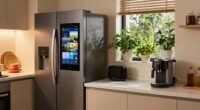
Samsung RF29DB9900QD 29 Cu. Ft. Stainless 4-Door French Door Smart Refrigerator
No Keywords Found
As an affiliate, we earn on qualifying purchases.
As an affiliate, we earn on qualifying purchases.
Conclusion
In the world of smart kitchens, nearly 70% of users abandon their gadgets within the first year. This shows how quickly excitement can fade when things get complicated. But don’t let that scare you off! With the right guidance and a little patience, you can create a seamless cooking experience. Embrace the technology, start small, and watch how it transforms your culinary adventures. Your kitchen can become a smart haven with just a few simple steps!
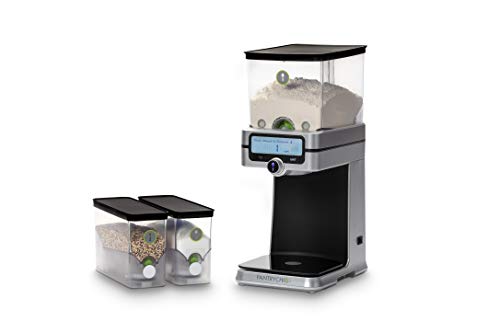
PantryChic Smart Storage System – Starter Kit – Automatically Measures & Dispenses from Storage Containers with Digital Scale Accuracy – Kitchen & Pantry Organization & Storage
Airtight, BPA Free Dry Ingredient Food Storage Containers with Lids to Keep Ingredients Fresh
As an affiliate, we earn on qualifying purchases.
As an affiliate, we earn on qualifying purchases.

Heavy Duty 20-Amp 2400-Watt Appliance Surge Protector Smart Circuit Plug with Outlet Saver Power Cord
🛡️ PROTECTS Refrigerators (up to 32 CU ft.), Freezers (up to 25 CU ft.), Air Conditioners (up to…
As an affiliate, we earn on qualifying purchases.
As an affiliate, we earn on qualifying purchases.