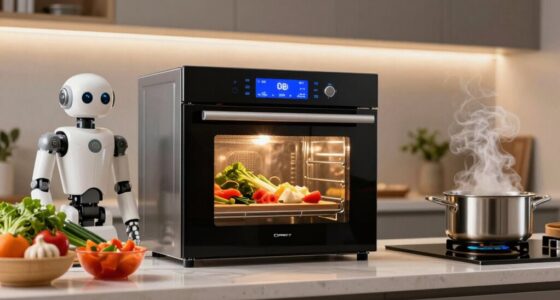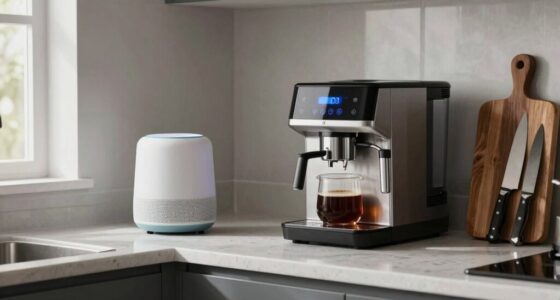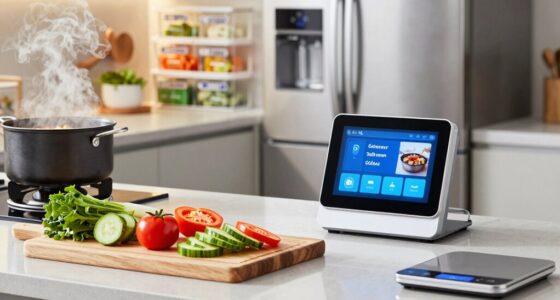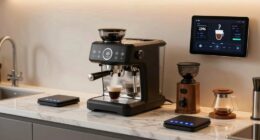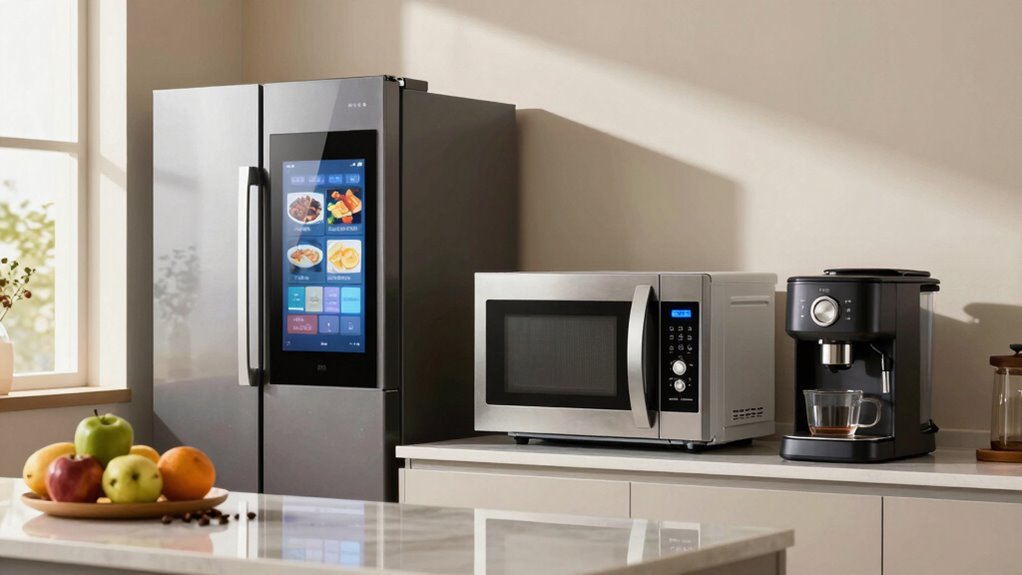

Smart appliances connect to your home network, letting you control them remotely and optimize energy use. Digital appliances, while easier to use with advanced displays, lack internet connectivity and automation features. Programmable appliances allow you to set specific operation times but don’t offer real-time adjustments or online control. Each type brings its own convenience and functionality. If you’re curious about which one best fits your home needs, there’s more to discover!
Key Takeaways
- Smart appliances connect to the internet for remote control and automation, learning user habits for optimized energy use and convenience.
- Digital appliances feature advanced displays and controls but lack internet connectivity, offering ease of use without automation capabilities.
- Programmable appliances allow users to set specific operation times but do not connect to the internet, providing convenience without real-time adjustments.
- Connectivity in smart appliances enables integration with other devices, enhancing communication within home automation systems for better efficiency.
- Understanding these differences helps consumers choose appliances that best meet their needs for convenience, energy efficiency, and technology integration.
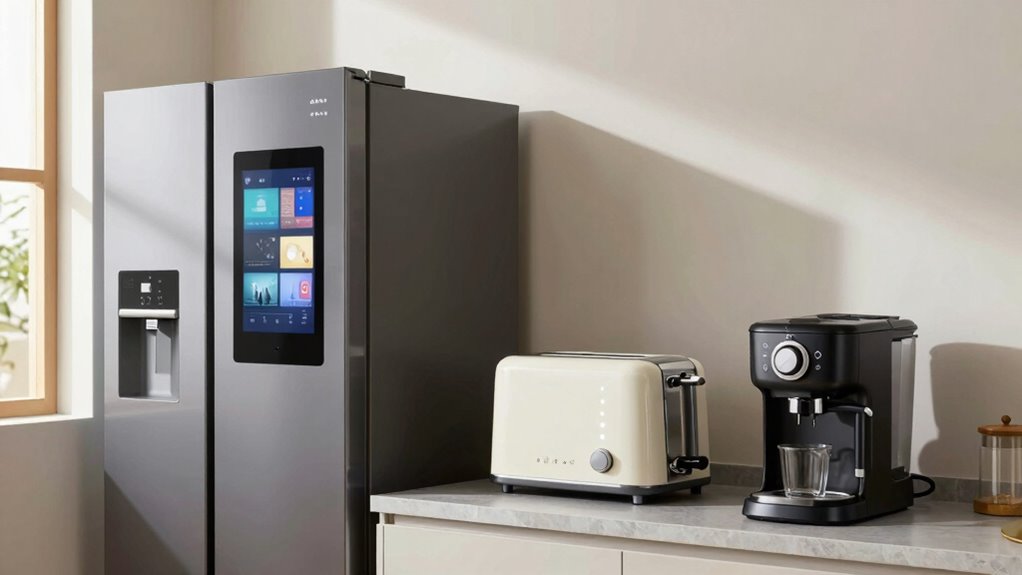
Smart appliances are the crème de la crème of modern technology. They connect to your home network, allowing you to control them remotely via smartphone apps. Imagine adjusting your thermostat or starting your washing machine while you’re still at work. This level of device integration not only offers unparalleled convenience but also promotes energy efficiency. You can monitor and optimize your energy use, helping you save on bills while reducing your carbon footprint. With smart technology, your appliances can even learn your habits, making adjustments automatically to suit your lifestyle.
Smart appliances seamlessly connect to your home network, offering remote control and energy efficiency while adapting to your lifestyle.
Digital appliances, on the other hand, incorporate advanced displays and electronic controls but lack the connectivity features of smart devices. Think of a digital microwave that lets you select cooking times with the push of a button. While these appliances provide greater convenience compared to traditional models, they don’t connect to your home network or interact with other devices. They’re designed for efficiency and ease of use but don’t offer the same level of automation that smart appliances do. Understanding appliance connectivity can help you determine what features are most beneficial for your home. Additionally, understanding home automation systems can help you see how these devices can work together seamlessly. Learning about device interoperability can also help you understand how appliances can be integrated into a cohesive system. When you explore the benefits of home automation, you’ll see how different devices can communicate and work together efficiently.
Programmable appliances bridge the gap between traditional and smart options. They allow you to set specific times for operation, like programming your coffee maker to brew at 7 AM. While they’re not connected to the internet, they still offer a degree of convenience that can greatly improve your daily routine. However, they lack the real-time adjustments and remote control capabilities that smart appliances provide. Understanding appliance connectivity can help you determine what features are most beneficial for your home. When you think about home automation, it’s essential to reflect on how these appliances can work together. Smart appliances can seamlessly integrate with other smart devices in your home, creating a cohesive system that enhances your overall experience. Whether you’re looking for convenience, energy efficiency, or the latest in technology, understanding the differences between smart, digital, and programmable appliances can help you make informed choices.

LG 4.5 Cu. Ft. Ultra Large Capacity Front Load Washer, Smart Wi-Fi Enabled, TurboWash 360° Technology, Built-In Intelligence, White
Smart Front-Load Washer: The LG washer is equipped with smart technology, allowing you to control and monitor the…
As an affiliate, we earn on qualifying purchases.
As an affiliate, we earn on qualifying purchases.
Frequently Asked Questions
How Do Smart Appliances Communicate With Each Other?
Smart appliances communicate with each other using inter-device communication, relying on various protocol standards like Wi-Fi, Zigbee, and Bluetooth. These protocols let your appliances share data and commands seamlessly. For instance, when you adjust the settings on one device, it can send information to another, allowing for coordinated actions. By utilizing these standards, your smart home functions more efficiently, enhancing convenience and automation in your daily life.
Are Digital Appliances More Energy-Efficient Than Traditional Ones?
Yes, digital appliances are often more energy-efficient than traditional ones. They usually incorporate advanced technology that optimizes energy usage, leading to significant cost savings on your utility bills. By using sensors and smart features, these appliances adjust their performance based on your needs, minimizing waste. So, if you’re looking to reduce your energy consumption while saving money, investing in digital appliances is a smart choice for your home.
Can Programmable Appliances Learn User Preferences Over Time?
Imagine a chef who watches you cook, adjusting the recipe to suit your taste. That’s what programmable appliances can do! They can learn user preferences through adaptive learning, fine-tuning their operations over time. So yes, they can pick up on your habits, like your favorite settings or schedules. As they adapt, you’ll find your tasks become more efficient and tailored to your needs, making everyday life a little easier.
What Security Risks Are Associated With Smart Appliances?
Smart appliances come with security risks like data privacy issues and hacking vulnerabilities. If you don’t regularly update their firmware, you might expose your home network to threats. Weak user authentication can also make it easier for hackers to gain access. Always guarantee you use strong passwords and enable two-factor authentication when possible. By staying proactive, you can help protect your data and enjoy the convenience of your smart home safely.
How Do I Maintain and Troubleshoot Digital Appliances?
To maintain your digital appliances, regularly clean them and check for software updates. Keep an eye on any unusual sounds or performance issues. If something isn’t working right, try these troubleshooting tips: unplug the appliance for a minute, then plug it back in, or consult the user manual for specific error codes. Regular maintenance guarantees longevity, so don’t skip those checks to keep everything running smoothly!

BLACK+DECKER EM031MB11 Digital Microwave Oven with Turntable Push-Button Door, Child Safety Lock, 1000W, 1.1cu.ft, Black & Stainless Steel, 1.1 Cu.ft
Pre-programmed buttons for popcorn, potato, pizza, frozen vegetable, beverage and dinner plate.Frequency : 60 Hz
As an affiliate, we earn on qualifying purchases.
As an affiliate, we earn on qualifying purchases.
Conclusion
In the world of appliances, understanding the differences between smart, digital, and programmable is key to making the right choice for your home. While they all offer convenience, each serves a unique purpose that can enhance your daily life. Remember, “the right tool for the job” makes all the difference. So, whether you’re looking for basic automation or advanced connectivity, knowing what each type can do will help you get the most out of your appliances.

BLACK+DECKER 12-Cup Digital Coffee Maker, Programmable, Washable Basket Filter, Sneak-A-Cup, Auto Brew, Water Window, Keep Hot Plate, Black
12-CUP DURALIFE GLASS CARAFE: The sturdy 12-cup* carafe has measurement markings for accurate filling and an easy-grip handle…
As an affiliate, we earn on qualifying purchases.
As an affiliate, we earn on qualifying purchases.

4 Channels Smart Relay Switch with Dry Contact, WiFi Bluetooth APP Control Module for Lights/Appliances, Voice Automation with Alexa & Google Home, 10A per Channel, AC110V/DC5V 12V 24V Compatible
FOUR INDEPENDENT CHANNELS Controls 4 devices up to 10A per channel in NO mode or 7A in NC…
As an affiliate, we earn on qualifying purchases.
As an affiliate, we earn on qualifying purchases.