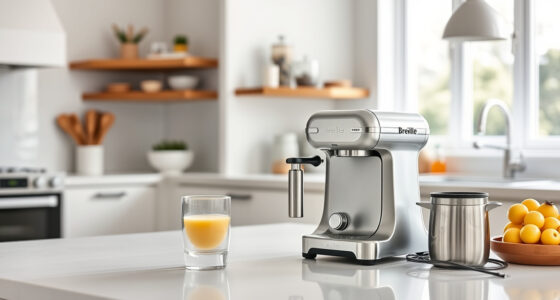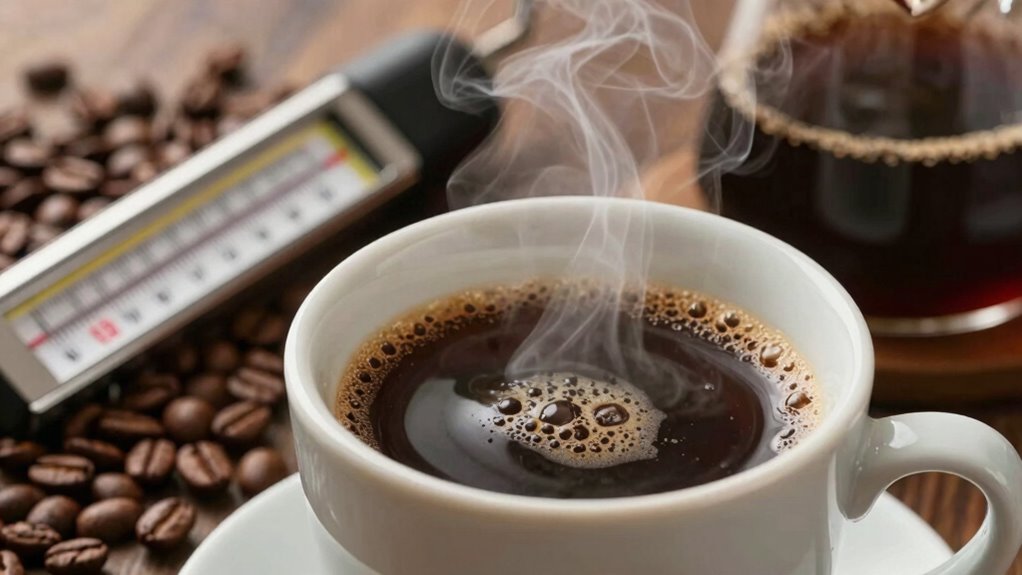
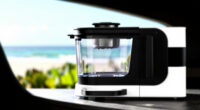
Temperature control is everything in better coffee because it directly affects flavor extraction. Brew your coffee between 195°F and 205°F to avoid bitterness from over-extraction or a weak taste from under-extraction. Proper temperature helps dissolve the right balance of oils, acids, and sugars, leading to a harmonious flavor profile. If you experiment and master temperature control, you can access new taste experiences that elevate your coffee game. Discover more about perfecting your brew.

Get kitchen gear delivered free with Prime
- Fast, free delivery on millions of items
- Prime Video, Amazon Music and more included
- Member-only deals all year
Key Takeaways
- Brew temperature between 195°F and 205°F maximizes extraction efficiency, enhancing overall coffee flavor.
- Over-extraction from too hot water results in harsh, bitter coffee, while under-extraction from too cool water yields weak, watery results.
- Precise temperature control balances the extraction of oils, acids, and sugars, creating a harmonious flavor profile.
- Monitoring brew temperature with a thermometer is essential, especially for methods like espresso that require consistency.
- Experimenting with different temperatures can reveal new flavor notes and improve the coffee experience.

When you brew coffee, the temperature of the water can make or break your cup. If you’ve ever sipped a bitter or overly acidic brew, you might’ve experienced the effects of improper brew temperature. Ideally, water between 195°F and 205°F is perfect for extracting the rich flavors locked in your coffee grounds. If you stray too far from this range, you’ll either under-extract or over-extract your coffee, affecting its overall taste.
The right water temperature is crucial for brewing coffee; aim for 195°F to 205°F to unlock rich flavors.
Using water that’s too hot can lead to over-extraction, pulling out undesirable compounds that make your coffee taste harsh and bitter. On the flip side, using water that’s too cool can result in under-extraction, leaving you with a weak, watery cup that lacks the complexity you’re after. Finding that sweet spot is vital for maximizing extraction efficiency, which is all about getting the most flavor from your coffee grounds without veering into unpleasant territory.
You might wonder how brew temperature affects extraction efficiency. When water interacts with coffee grounds, it dissolves various compounds at different rates. The right temperature facilitates a balanced extraction of oils, acids, and sugars, creating that harmonious flavor profile you love. A precise brew temperature allows you to extract the best qualities from your coffee beans, enhancing the overall experience. Proper temperature control is also crucial because some brewing methods, like espresso machines, rely heavily on maintaining consistent temperature for optimal results.
If you’re using a French press, pour-over, or espresso machine, it’s important to monitor your water temperature closely. A simple kitchen thermometer can help guarantee that you’re hitting the ideal range. If you’re brewing with an automatic coffee maker, check the manufacturer’s specifications. Some machines struggle to maintain the best brew temperature, which can compromise your coffee’s taste.
Experimenting with different temperatures can also be a fun way to discover new flavor notes. If you’ve been brewing at a standard temperature, try adjusting it slightly up or down and see how it transforms your cup. You might find that a higher or lower temperature brings out a unique flavor profile you never noticed before. Additionally, understanding the brewing science behind temperature and extraction can help you fine-tune your process for even better results.
In the end, mastering brew temperature is a game changer for your coffee. When you control the temperature, you control the extraction efficiency, and that means a more satisfying and flavorful cup every time. So, pay attention to that water temperature—it’s worth it!
As an affiliate, we earn on qualifying purchases.
Frequently Asked Questions
How Does Altitude Affect Coffee Brewing Temperature?
Altitude affects coffee brewing temperature because higher elevations mean lower atmospheric pressure. At these elevations, water boils at a lower temperature, which can impact extraction. If you’re brewing at a higher altitude, you might need to adjust your water temperature to get the best flavor. This means experimenting with your brew elevation to guarantee you’re maximizing the coffee’s potential, helping you achieve that perfect cup every time you brew.
Can I Use a Regular Thermometer for Coffee?
You can use a regular thermometer for coffee, but it might not give you the brewing accuracy you need. Did you know that a 1°F difference can alter your coffee’s flavor? Coffee thermometers are designed specifically for precise temperature readings, ensuring you hit that sweet spot between 195°F and 205°F. If you’re serious about your brew, investing in a coffee thermometer will help you reveal the best flavors in every cup.
What Is the Ideal Temperature for Cold Brew?
The ideal temperature for cold brew is around 60-70°F (15-21°C). At this range, you’ll achieve the best flavor without over-extraction. Using proper cold brew techniques, let your coffee steep for 12-24 hours, depending on your taste preference. The longer extraction time at lower temperatures helps create a smoother, less acidic brew. So, experiment within this temperature range to find your perfect cold brew balance!
Does Water Hardness Impact Temperature Control?
Yes, water hardness does impact temperature control. Did you know that about 85% of your coffee’s flavor comes from the water you use? Water chemistry plays an important role in brewing efficiency. Hard water can lead to scaling in your equipment, affecting how well your machine heats the water. This inconsistency can result in uneven extraction, ultimately compromising the taste of your coffee. So, monitoring your water hardness is essential for that perfect brew.
How Can I Maintain Temperature in a Travel Mug?
To maintain temperature in a travel mug, choose one made from double-walled stainless steel or vacuum-insulated materials. These materials help retain heat or cold effectively. Use insulation techniques like preheating your mug with hot water before adding coffee; this helps stabilize the temperature. Also, keep the lid on to minimize heat loss. By focusing on these factors, you’ll enjoy your coffee at the perfect temperature longer.
coffee brewing temperature controller
As an affiliate, we earn on qualifying purchases.
As an affiliate, we earn on qualifying purchases.
Conclusion
In the world of coffee, temperature control is like a maestro conducting a symphony. When you hit that sweet spot, flavors bloom like flowers in spring, transforming each sip into a delightful experience. Too hot, and you’ll scorch the delicate notes; too cold, and they’ll hide away like shy butterflies. So, embrace the art of temperature—treat your coffee like the precious gem it is, and watch it shine with every perfect pour. Your taste buds will thank you!
espresso machine temperature gauge
As an affiliate, we earn on qualifying purchases.
As an affiliate, we earn on qualifying purchases.
pour-over coffee kettle with temperature control
As an affiliate, we earn on qualifying purchases.
As an affiliate, we earn on qualifying purchases.
Fall Picks
fall essentials
As an affiliate, we earn on qualifying purchases.