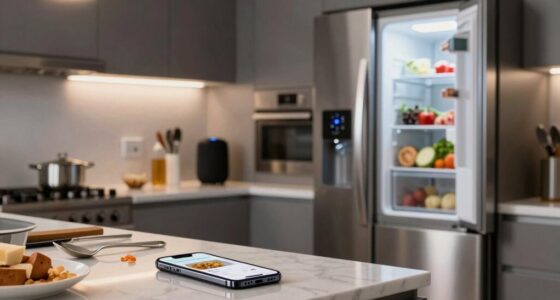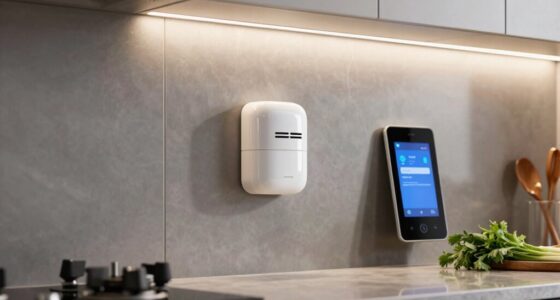
To set up a connected kitchen, start by establishing a reliable Wi-Fi network to guarantee all devices function smoothly and securely. Next, focus on integrating your core appliances like the refrigerator, oven, and coffee maker, making sure they’re compatible with your preferred smart home systems. This foundation allows easy control and automation. If you want to discover additional tips for a seamless smart kitchen, keep exploring how to build a secure and expandable setup.

Get kitchen gear delivered free — and shop member deals
- Fast, free delivery on millions of items
- Access to Prime Big Deal Days deals on October 6–7
- Prime Video, Amazon Music and more included
Key Takeaways
- Establish a stable, secure Wi-Fi network to ensure reliable device connectivity.
- Connect core appliances (fridge, oven, dishwasher) compatible with your smart home ecosystem.
- Set up voice control systems for hands-free operation and improved safety.
- Regularly update device firmware and secure your network to protect data and enhance performance.
- Build a solid foundation with essential smart devices to facilitate future expansion.

Setting up a connected kitchen can seem overwhelming, but focusing on your top priorities makes the process manageable. The first step is to establish a reliable network connection, as all your smart devices depend on a stable Wi-Fi signal. Once your internet is solid, you can start integrating smart appliances that will make your kitchen more efficient. Think about which devices you use most—smart refrigerators, ovens, dishwashers, or coffee makers—and prioritize connecting those first. Smart appliance integration is the backbone of a connected kitchen, and having these devices linked seamlessly allows for automation and remote control. It’s worth investing in appliances that are compatible with your preferred smart home ecosystem, whether it’s Alexa, Google Assistant, or Apple HomeKit. This guarantees smooth operation and simplifies management through a single app or voice commands.
Speaking of voice commands, implementing voice control systems should be your next priority. Voice control allows you to operate your appliances hands-free, which is especially helpful when your hands are full or dirty. Set up your voice assistants to recognize commands related to your kitchen devices, like preheating the oven, checking refrigerator inventory, or turning on the kitchen lights. This not only adds convenience but also enhances safety—imagine asking your voice system to turn off appliances if you forget, reducing energy waste and potential hazards. When choosing voice control systems, make sure they are compatible with your existing smart devices to avoid frustration. Position your microphones strategically, such as near your prep area or central location in the kitchen, to ensure the system picks up commands clearly. Additionally, understanding the importance of Wi-Fi reliability can significantly impact your overall smart home experience, especially since network stability directly influences the performance of connected devices. Ensuring your network is properly secured can prevent unauthorized access and protect your personal data. Proper network security is also crucial to protect your connected devices from potential vulnerabilities. Moreover, regularly updating your device firmware can help mitigate security risks and improve device performance.
While other features like lighting, security cameras, or entertainment systems are important, they should come after establishing your core smart appliance network and voice control setup. These foundational elements create the framework for a truly connected kitchen, allowing you to streamline daily routines and enhance overall functionality. Remember, the goal is to make your kitchen smarter, safer, and easier to manage. By starting with smart appliance integration and voice control systems, you set the stage for future upgrades and expansion. Keep your focus on these priorities, and you’ll find the process more straightforward and rewarding. Once these essentials are in place, you can gradually add other smart features to customize your kitchen to fit your lifestyle perfectly.
smart refrigerator compatible with Alexa
As an affiliate, we earn on qualifying purchases.
As an affiliate, we earn on qualifying purchases.
Frequently Asked Questions
How Much Does a Connected Kitchen Setup Typically Cost?
A connected kitchen setup typically costs between $1,000 and $5,000, depending on the devices and systems you choose. For accurate cost estimation, consider your desired features and brand preferences. Budget planning is essential, so prioritize the devices that will make the biggest impact first, like smart speakers or thermostats. Keep in mind that investing gradually can help you manage expenses while still upgrading your kitchen over time.
What Are the Best Brands for Smart Kitchen Devices?
You should consider brands like Samsung, LG, and Amazon, as they excel in smart device compatibility and have strong brand reputations. These brands lead the market with innovative features, seamless integration, and reliable performance. When choosing smart kitchen devices, prioritize those from reputable brands to guarantee longevity and compatibility. Their products simplify cooking, improve efficiency, and offer peace of mind, making your connected kitchen both smart and dependable.
Is Professional Installation Necessary for Connected Kitchens?
Professional installation isn’t always necessary for connected kitchens, especially if you prioritize smart home integration and appliance compatibility. Many smart devices are designed for easy DIY setup, allowing you to connect and control your appliances seamlessly. However, for complex systems or if you’re unsure about wiring and network configurations, hiring a professional can guarantee everything runs smoothly and safely. Ultimately, it depends on your comfort level and the complexity of your setup.
How Secure Are Connected Kitchen Devices From Hacking?
Are connected kitchen devices secure from hacking? While many devices have encryption and security measures, hacking risks and privacy concerns still exist. You should stay vigilant by updating firmware regularly and using strong, unique passwords. Don’t assume all devices are foolproof; always research security features before purchasing. Your proactive approach helps protect your smart kitchen from potential threats, giving you peace of mind while enjoying its convenience.
Can I Upgrade My Current Kitchen Appliances to Smart Devices?
Yes, you can upgrade your current kitchen appliances to smart devices, but first, check their compatibility with your existing system. Many appliances now support smart features, enhancing energy efficiency and convenience. Make certain your Wi-Fi network is robust to support these upgrades. By choosing devices that are compatible and energy-efficient, you’ll maximize the benefits of your smart kitchen while minimizing potential issues.
As an affiliate, we earn on qualifying purchases.
Conclusion
In wrapping up, remember that a connected kitchen should prioritize simplicity, safety, and seamless integration. Focus on the essentials first—like smart appliances and reliable Wi-Fi—so you don’t bite off more than you can chew. When you get these right, your kitchen becomes more than just a space; it transforms into a hub of innovation and convenience. Keep your eye on the prize, and you’ll have a setup that’s both smart and smooth sailing.
As an affiliate, we earn on qualifying purchases.
As an affiliate, we earn on qualifying purchases.
Halloween Picks
halloween
As an affiliate, we earn on qualifying purchases.