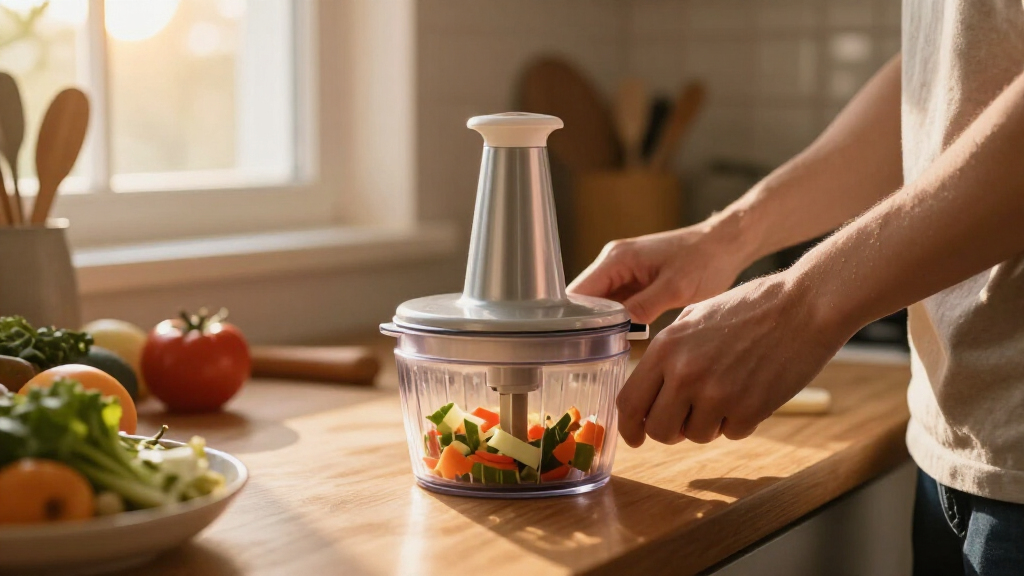

Electric food choppers promise one thing: the end of tedious knife work for onions, garlic, nuts, and herbs. After comparing 14 of the most popular models, the KitchenAid 3.5 Cup Food Chopper (KFC3516) stands out as the best overall pick for its quiet motor, precise two-speed control, and dishwasher-safe bowl that makes cleanup painless. If budget leads your decision, the BLACK+DECKER 3-Cup One-Touch Chopper handles everyday chopping for a fraction of the price, while the Hamilton Beach 12 Cup Stack & Snap makes the most sense for anyone who regularly cooks in volume. The main tradeoff in this category is small-bowl convenience versus true food-processor capacity — mini choppers are easier to store and clean, but families will outgrow them fast. Keep reading for the full breakdown, including which models struggled with tougher jobs like nuts and raw meat.

Get kitchen gear delivered free with Prime
- Fast, free delivery on millions of items
- Prime Video, Amazon Music and more included
- Member-only deals all year
Complete the kit


Key Takeaways
- The KitchenAid KFC3516 won best overall because its two-speed control and drizzle basin allow precision work (dressings, pesto) that single-speed choppers like the BLACK+DECKER One-Touch simply can’t match.
- Capacity was the biggest sorting factor in this lineup: 1.5-cup models (BLACK+DECKER mini, Reemix) only suit garlic-and-herb tasks, while the Hamilton Beach 12 Cup and Ganiza dual-bowl units cover meal-prep-scale jobs.
- Dual-bowl systems from Ganiza and KOIOS solve a real cross-contamination problem — chopping herbs after onions without a flavor-ruining wash cycle — something single-bowl models at every price point fail to address.
- Wattage didn’t predict performance as cleanly as expected: the 200W Ninja Express Chop outpaced several higher-wattage no-name models, so motor quality and blade geometry matter more than the number on the box.
- The BLACK+DECKER 8-Cup 450W is the value pick to beat for meat and nut grinding, but its larger footprint means apartment cooks may prefer trading capacity for the drawer-friendly 3-cup class.


| electric food chopper | Capacity | Dishwasher Safe | Power |
|---|---|---|---|
| KitchenAid 3.5 Cup Food Choppe | 3.5 cups | Yes | — |
| Hamilton Beach 12 Cup Stack & | 12 cups | Yes (removable parts) | 450 watts |
| KitchenAid 3.5 Cup Food Choppe | 3.5 cups | Yes | — |
| BLACK+DECKER 1.5-Cup Electric | 1.5 cups | Yes (removable parts) | — |
| Ninja Food Chopper Express Cho | 16 ounces | Yes | 200 watts |
| Cuisinart Mini Food Processor | 24 ounces (3 cups) | — | — |
| Ganiza Food Processor with 2 B | — | — | 450 watts |
| Food Processor 4 Cup | 4 cups (two bowls) | — | — |
| Proctor Silex Durable Electric | 1.5 cups | Yes | — |
| BLACK+DECKER 3-Cup One-Touch F | 3 cups | — | — |
| KOIOS Food Processor 500W Elec | — | — | 500W copper motor |
| Reemix 1.5-Cup Electric Food C | 1.5 cups | Yes | 100W |
| Hamilton Beach 3-Cup Electric | 3 cups | — | 350 watts |
| BLACK+DECKER Food Processor an | 8 cups | — | 450W |
More Details on Our Top Picks
KitchenAid 3.5 Cup Food Chopper KFC3516CU, Contour Silver
This KitchenAid model earns the top spot because it balances capacity, control, and cleanup better than anything else in this small-chopper group. The 3.5-cup bowl is noticeably larger than the BLACK+DECKER 1.5-Cup, so it handles a full onion or a batch of salsa without the stop-and-scrape routine smaller bowls demand. Two speeds plus pulse give you real control — something the one-touch BLACK+DECKER simply can’t match. Compared with the Ninja Express Chop, the locking blade, handle, and pour spout make serving and transferring noticeably tidier. The tradeoff is honest: this is a chopper, not a food processor. If you need slicing and shredding, the Hamilton Beach 12-Cup Stack & Snap is the better tool.
Pros:- Two speeds plus pulse give precise control over texture
- 3.5-cup bowl handles more than mini choppers in one go
- Locking blade, handle, and pour spout make serving mess-free
- Dishwasher-safe parts and cord wrap simplify storage and cleanup
Cons:- Capacity caps out quickly for family-sized batches
- No slicing, shredding, or advanced attachments — it’s a chopper only
Best for: Home cooks who want a dependable everyday chopper for salsas, onions, and dressings without a full processor’s footprint
Not ideal for: Anyone prepping large batches or slicing/shredding vegetables — the 3.5-cup bowl and single blade aren’t built for that
- Capacity:3.5 cups
- Color:Contour Silver
- Blade:Stainless steel multi-purpose blade
- Speeds:2 speeds plus pulse
- Features:Locking blade, handle, pour spout, cord wrap
- Dishwasher Safe:Yes
Our verdict“If you want one electric chopper that does its core job consistently well, this is the pick that justifies its price.”
Hamilton Beach 12 Cup Stack & Snap Food Processor and Vegetable Chopper
While most entries here are true mini choppers, this Hamilton Beach earns its place as the step-up option for cooks who’ve outgrown 2-cup bowls. The 12-cup sealed bowl is roughly triple the capacity of the KitchenAid 3.5-Cup, and the included slicing and shredding disc adds functions no dedicated chopper in this lineup offers. Stack & Snap assembly means no twisting-and-aligning frustration — a real advantage over models with fiddlier lids. The compromises are real, though: at 450 watts, it can bog down on dense ingredients, and its footprint dwarfs countertop minis like the Ninja Express Chop. There’s also no storage case for the attachments, so expect a cluttered cabinet shelf.
Pros:- 12-cup sealed bowl handles volume no mini chopper can
- Reversible disc adds slicing and shredding versatility
- Stack & Snap assembly removes the usual lid-alignment hassle
- Big Mouth chute reduces pre-cutting of whole vegetables
Cons:- 450W motor can struggle with very tough or dense ingredients
- Takes up significant counter and cabinet space
- No storage case for the attachments
Best for: Meal preppers and families who process large volumes and want slicing and shredding alongside chopping
Not ideal for: Studio apartments or occasional choppers — it’s bulky for small kitchens and overkill for mincing garlic
- Capacity:12 cups
- Power:450 watts
- Attachments:Chopping/pureeing blade, reversible slicing/shredding disc
- Material:BPA-free plastic, stainless steel disc
- Chute:Big Mouth feed chute
- Features:Stack & Snap assembly, non-slip suction feet
- Dishwasher Safe:Yes (removable parts)
Our verdict“Buy this when a mini chopper’s capacity stops being enough — but only if you have the counter space to match.”
KitchenAid 3.5 Cup Food Chopper, KFC3516ER, Empire Red
Mechanically, this Empire Red model mirrors the Contour Silver KitchenAid almost exactly — same 3.5-cup bowl, same two speeds and pulse. What sets it apart is the drizzle basin, a small feature with outsized value if you make emulsified things: you can stream oil into a running mayonnaise or vinaigrette without lifting the lid and splattering. That makes this the specialist choice for sauces, dressings, and salsas, while the Silver version remains my pick for general chopping at the same price. Neither matches the Hamilton Beach 12-Cup for batch size, and both share the same limitation: two speeds cover basics but leave no middle ground for delicate herbs. Choose this one if the color makes you happy — the red finish is genuinely striking on a counter.
Pros:- Drizzle basin lets you add liquids while running — ideal for emulsions
- Two speeds plus pulse handle both chunky salsas and smooth purees
- Locking blade, handle, and pour spout keep serving tidy
- Eye-catching finish and compact countertop footprint
Cons:- 3.5-cup capacity limits batch sizes
- Priced as a premium chopper despite two-speed-only control
Best for: Cooks who regularly make vinaigrettes, pestos, and emulsified sauces and want hands-free liquid incorporation
Not ideal for: Budget-focused buyers who’d get identical chopping from cheaper 3-cup models like the Hamilton Beach mini chopper
- Capacity:3.5 cups
- Color:Empire Red
- Blade:Stainless steel multi-purpose
- Speeds:2 speeds plus pulse
- Special Feature:Drizzle basin for liquids
- Dishwasher Safe:Yes
Our verdict“The drizzle basin is the deciding feature — pick it over its Silver sibling if sauces and dressings drive your cooking.”
BLACK+DECKER 1.5-Cup Electric Food Chopper
This is the cheapest credible option in the roundup, and it wins the budget slot on simplicity rather than specs. One-touch pulse control means you decide texture by holding the button — no dials, no learning curve — which makes it friendlier for hesitant cooks than the KitchenAid’s two-speed setup. Its 1.5-cup bowl is even smaller than the Ninja Express Chop’s 16-ounce capacity, so think garlic, herbs, and garnish nuts rather than half an onion. The 150W motor handles soft produce fine but asks for patience on anything fibrous. Removable dishwasher-safe parts punch above the price class. Compared with the Reemix 1.5-Cup, this BLACK+DECKER’s brand backing and blade quality make it the safer cheap buy.
Pros:- Very low price with dependable brand backing
- One-touch pulse is intuitive and gives direct texture control
- Stay-sharp stainless steel blades outperform typical budget blades
- Removable dishwasher-safe parts make cleanup painless
Cons:- 1.5-cup capacity is the smallest in this lineup
- 150W motor struggles with fibrous or dense ingredients
Best for: Budget buyers, students, or anyone who mainly needs to mince garlic, herbs, and small amounts of produce
Not ideal for: Anyone prepping salsa or batch cooking — 1.5 cups means multiple rounds for modest recipes
- Capacity:1.5 cups
- Motor Power:150 watts
- Blade Material:Stainless steel
- Controls:One-touch pulse
- Dishwasher Safe:Yes (removable parts)
Our verdict“For the price of a takeout salad, this covers small mincing jobs well — just don’t ask it to feed a family.”
Ninja Food Chopper Express Chop with 200-Watt, 16-Ounce Bowl
The Ninja occupies a sweet spot between the BLACK+DECKER 1.5-Cup and the KitchenAid 3.5-Cup: its 200-watt motor is the strongest in the mini class here, yet the 16-ounce bowl keeps it drawer-sized. That power-to-size ratio is why it’s the pick for nuts, garlic, and tough aromatics — tasks where the 150W BLACK+DECKER stalls. The anti-spill splashguard is a genuine convenience when pulsing loose ingredients, an edge over basic minis. What you give up is everything beyond chopping: no attachments, no speed settings beyond pulse, and a capacity that still trails the KitchenAid by a wide margin. Think of it as a specialist small-workhorse rather than a do-everything tool.
Pros:- 200-watt motor is the most powerful in the mini-chopper class here
- Anti-spill splashguard keeps counters clean during pulsing
- Ergonomic, compact design stores easily in a drawer
- Handles nuts and hard aromatics that stall weaker minis
Cons:- 16-ounce bowl limits batch sizes
- No attachments or variable speeds — pulse only
- Can struggle with very hard ingredients despite the stronger motor
Best for: Cooks with limited space who frequently chop hard ingredients like nuts, garlic, and firm vegetables
Not ideal for: Salsa or sauce makers working in volume — 16 ounces fills fast, and there are no attachments for other tasks
- Power:200 watts
- Capacity:16 ounces
- Color:Gray
- Material:BPA-free plastic
- Special Feature:Anti-spill splashguard
- Dishwasher Safe:Yes
Our verdict“The strongest motor per square inch in this lineup — choose it when small, tough jobs are your daily routine.”
Cuisinart Mini Food Processor, Reversible Blade, 3-Cup Capacity
Most mini choppers ask you to accept dull blades and weak motors, but the Mini-Prep Plus flips that script with a reversible stainless steel blade — one edge chops, the flipped edge grinds. That single design choice is why it handles parmesan and pine nuts that would stall a BLACK+DECKER One-Touch Chopper. The 250-watt motor gives it real authority for a 24-ounce bowl, and cleanup is genuinely painless since the bowl and lid go in the dishwasher. Compared with the Proctor Silex 1.5-Cup, the extra capacity makes it far more practical for meal prep rather than garnish work. The tradeoff: it’s a small-batch machine, and the motor base still needs wiping by hand.
Pros:- Reversible blade genuinely chops and grinds with one tool
- 250-watt motor is stronger than most mini choppers
- Dishwasher-safe bowl and lid
- Cuisinart brand reliability with 18-month warranty
Cons:- Not suited to grinding coffee beans despite its grinding function
- Small capacity limits batch cooking
- Motor base can only be wiped clean
Best for: Home cooks who regularly grind hard cheese, herbs, and nuts in small batches and want brand-name durability
Not ideal for: Anyone processing onions or vegetables for a family dinner — the 24-ounce bowl fills up fast
- Capacity:24 ounces (3 cups)
- Motor Power:250 watts
- Blade Type:Reversible stainless steel
- Material:BPA-free plastic
- Controls:Push-button control panel
- Cleaning:Dishwasher-safe bowl and lid
- Warranty:18 months
Our verdict“This pick makes the most sense for buyers who want a premium small-batch chopper that can actually grind, not just chop.”
Ganiza Food Processor with 2 Bowls, 450W Meat Grinder and Vegetable Chopper
The Ganiza’s 450-watt motor puts it in different territory from the Cuisinart Mini-Prep Plus — this is a machine that can break down raw meat, not just herbs and cheese. The standout feature is the dual-bowl setup: an 8-cup glass bowl and an 8-cup stainless steel bowl, so you can keep savory and sweet prep separate without washing between batches. Glass also means no lingering garlic odor, a real advantage over plastic-bowl rivals like the 4-Cup Two-Bowl Chopper. Safety engineering is solid, with auto-stop and overheat protection, though the flip side is that thermal cutoff means cooldown waits during long sessions. For the price, few competitors match this combination of power and capacity.
Pros:- 450W motor handles meat grinding and tough vegetables
- Glass and stainless bowls resist stains and odor transfer
- Overheat protection and auto-stop add safety
- Two speeds give more control than single-touch models
Cons:- Overheat protection forces cooldown pauses during heavy use
- Not built for large-batch commercial quantities
- No noise level specification available
Best for: Cooks who grind meat, make salsas in volume, or prep multiple ingredients back-to-back
Not ideal for: Quiet-kitchen households — no published noise ratings, and big motors like this rarely run silent
- Power:450 watts
- Bowls:8-cup glass bowl and 8-cup stainless steel bowl
- Blades:2 sets of stainless steel blades
- Speed Settings:2 speeds
- Safety Features:Automatic stopping and overheating protection
- Cleaning:Removable blades for easy cleaning
- Functions:Chopping, grinding, mixing
Our verdict“Buy this if raw-meat grinding and dual-bowl versatility matter more to you than compact storage.”
Food Processor 4 Cup, Electric Food Chopper with 2 Bowls, 2 Speed & 4 Blades
This unbranded-feeling chopper earns its spot on value alone: two 4-cup bowls, four blades, and two speeds at a price that undercuts the Ganiza considerably. The dual bowls let you chop onions and then blend a sauce without cross-contaminating flavors — the same core benefit as pricier models, just in plastic instead of glass. It also runs quieter than most competitors, which matters in open-plan kitchens or apartment living. Compared with the BLACK+DECKER 3-Cup One-Touch, you get finer control thanks to the two-speed dial instead of a single button. The honest tradeoff is material quality: plastic bowls scratch and hold odors over time, and only two speeds still limits precision on delicate jobs like herb chopping.
Pros:- Two bowls and four blades at a budget price
- Quieter operation than most electric choppers
- Compact footprint fits cramped counters
- Dishwasher-safe parts and 2-year warranty
Cons:- Plastic bowls stain and retain odors with heavy use
- Only two speeds limit fine-texture control
- Motor housing is not washable
Best for: Budget-conscious cooks in small kitchens who want dual-bowl flexibility without the Ganiza price tag
Not ideal for: Buyers who process pungent ingredients often — plastic bowls absorb odors that glass resists
- Capacity:4 cups (two bowls)
- Number of Blades:4
- Speed Settings:2
- Material:Plastic
- Power Source:Electric (corded)
- Cleaning:Dishwasher-safe parts
- Functions:Chopping, dicing, pureeing vegetables, meats, and nuts
- Warranty:2 years
Our verdict“This model is better suited to first-time buyers who want maximum accessories per dollar and can accept plastic build quality.”
Proctor Silex Durable Electric Vegetable Chopper & Mini Food Processor
For the price of a takeout lunch, the Proctor Silex covers the basics better than anything else in this batch. Its 1.5-cup bowl is small on purpose: it’s built for salsa, baby food purees, emulsified dressings, and quick garnish work — jobs where a Ganiza’s 8-cup bowl would leave you scraping ingredients off the walls. The adjustable pulse control is the key differentiator against the BLACK+DECKER 1.5-Cup, letting you dial in texture rather than betting everything on button-holding technique. Stainless blades and dishwasher-safe parts round out a no-drama package. What you give up is obvious: no multiple speeds, tiny batches, and zero capacity for meal prep beyond one or two servings at a time.
Pros:- Adjustable pulse control gives real texture control at this price
- Handles pureeing and emulsifying, not just chopping
- Dishwasher-safe parts simplify cleanup
- Very low price point with durable build
Cons:- 1.5-cup capacity is strictly single-task sized
- No dedicated speed settings beyond pulse
- Struggles with anything harder than vegetables
Best for: Parents making baby food, and anyone who needs quick single-serve purees, salsas, or dressings on a tight budget
Not ideal for: Meal preppers — the 1.5-cup bowl means processing a single onion fills it to the brim
- Capacity:1.5 cups
- Blade Material:Stainless steel
- Controls:Adjustable pulse control
- Dishwasher Safe:Yes
- Functions:Chopping vegetables, salsa, pureeing baby food, emulsifying sauces
- Size:Compact mini chopper format
Our verdict“Skip the pricier models entirely if your needs stop at small purees and salsas — this covers that job for pocket change.”
BLACK+DECKER 3-Cup One-Touch Food Chopper
The one-touch operation here is the whole point: press and hold to chop, release to stop, and there’s nothing else to learn. That makes it the easiest machine in this roundup to hand to a beginner — no speed dial to interpret, unlike the 4-Cup Two-Speed Chopper, and more capacity than the Proctor Silex at 3 cups instead of 1.5. The clever detail is the oil hole in the lid, which lets you drizzle oil while the blades spin — genuinely useful for mayonnaise and vinaigrettes, and a feature most choppers at this price skip. The tradeoff for that simplicity is control: one speed means texture is managed entirely by how long you hold the button, which takes practice for uniform results.
Pros:- One-touch operation requires no learning curve
- Oil hole in lid enables emulsifying dressings mid-chop
- 3-cup capacity handles most everyday tasks
- Dishwasher-safe removable parts
Cons:- Single speed forces texture control through button timing alone
- 3 cups still falls short for family-scale batches
- No pulse or variable settings for delicate ingredients
Best for: First-time chopper buyers and novice cooks who want zero learning curve plus dressing-making capability
Not ideal for: Precision cooks who want consistent dice sizes — single-speed operation makes uniformity a guessing game
- Capacity:3 cups
- Blade Material:Stainless steel
- Operation:One-touch press and hold
- Removable Parts:Dishwasher-safe
- Additional Features:Oil holes in lid for adding ingredients during processing
- Best Uses:Everyday vegetable chopping, dressings, salsas
Our verdict“This option stands out for buyers who prioritize dead-simple operation and the handy oil-drizzle lid over fine control.”
KOIOS Food Processor 500W Electric Food Chopper with 2 Bowls & 2 Blades
The standout feature here isn’t the 500W motor — it’s the dual 8-cup glass bowls. If you chop onions and then need garlic, you simply swap bowls instead of washing between tasks, something the Hamilton Beach 12 Cup Stack & Snap can’t match with its single work bowl. The glass construction also resists staining and odor retention far better than the plastic bowls on the Ganiza Food Processor.
That power comes with limits, though. A 30-second processing cap per task and overheating protection mean you’ll need to pause during marathon prep sessions. Compared with the BLACK+DECKER 8-Cup model below, this trades slicing and shredding attachments for raw chopping power and bowl flexibility.
Pros:- Dual glass bowls eliminate cross-contamination and mid-prep washing
- 500W copper motor powers through dense vegetables and meat
- Dishwasher-safe detachable parts make cleanup fast
- Safety interlock prevents operation unless properly assembled
Cons:- 30-second processing limit forces pauses on bigger jobs
- Overheating protection interrupts extended use
- Bowls can warp if handled carelessly around the blades
Best for: Batch cooks and meal preppers who alternate between ingredients and hate washing bowls mid-recipe
Not ideal for: Anyone who wants slicing and shredding functions — this is a chopper only, with no disc attachments
- Power:500W copper motor
- Bowl Capacity:8 cups (2 L) each
- Number of Bowls:2
- Blade Type:Bi-level stainless steel
- Material:Stainless steel, glass
- Voltage:120V
Our verdict“This pick makes the most sense for cooks juggling multiple ingredients who value two bowls over attachments.”
Reemix 1.5-Cup Electric Food Chopper, 100W Mini Food Processor
At this price, the Reemix undercuts the Ninja Food Chopper Express Chop while covering the same small-task basics: herbs, garlic, nuts, and baby food portions. The 100W motor won’t challenge the KitchenAid 3.5 Cup Food Chopper for power, but for a single clove of garlic or a handful of walnuts, it doesn’t need to.
The safety lock is a thoughtful touch at this price point — the unit simply won’t run unless assembled correctly, which matters if kids help in the kitchen. Where it falls behind pricier minis is capacity: at 1.5 cups, it matches the BLACK+DECKER 1.5-Cup chopper but holds roughly half of what the Cuisinart Mini offers.
Pros:- Very low price point for a functional electric chopper
- Compact footprint fits in a drawer or tiny counter
- Dishwasher-safe bowl and blade simplify cleanup
- Safety lock prevents accidental operation
Cons:- 100W motor struggles with dense or fibrous ingredients
- 1.5-cup capacity limits you to small batches
Best for: Budget-conscious cooks, students, and small-household kitchens that only need single-serving prep
Not ideal for: Anyone prepping for more than two people — the 1.5-cup bowl fills after one onion
- Capacity:1.5 cups
- Power:100W
- Material:Food-grade stainless steel and plastic
- Blade:Stainless steel
- Safety Feature:Built-in safety lock
- Dishwasher Safe:Yes
Our verdict“Skip it for family cooking, but as a cheap, drawer-sized chopper for garlic and herbs, it earns its spot.”
Hamilton Beach 3-Cup Electric Vegetable Chopper & Mini Food Processor
Most choppers in this lineup stop at dry prep, but the built-in oil dispenser in the lid sets this Hamilton Beach apart — it slowly streams oil while the blades spin, which is exactly how you build a stable mayonnaise or vinaigrette. The Cuisinart Mini Food Processor handles emulsifying too, but without the dispenser you’re drizzling by hand.
The stack & press design is refreshingly simple: no locking tabs to fight with, just press the lid down to run. Its 350W motor outmuscles the Reemix by a wide margin, though it shares the same 3-cup ceiling as the Cuisinart. If you regularly make batches larger than a single dressing recipe, step up to the KOIOS dual-bowl model instead.
Pros:- Oil dispenser enables hands-free emulsifying for dressings and mayo
- Stack & press operation is the simplest interface in this roundup
- 350W motor handles nuts, onions, and cooked vegetables with ease
- Dishwasher-safe parts cut cleanup time
Cons:- 3-cup capacity caps batch sizes
- No speed settings — it’s press-to-run or nothing
Best for: Home cooks who make their own salad dressings, mayo, and pesto in small batches
Not ideal for: Large families — the 3-cup bowl rules out batch cooking or big-batch salsa
- Capacity:3 cups
- Power:350 watts
- Blade Material:Stainless steel
- Operation:Stack & press
- Special Feature:Built-in oil dispenser
- Cleaning:Dishwasher-safe parts
Our verdict“For sauce and dressing makers, the oil dispenser alone justifies choosing this over comparable 3-cup minis.”
BLACK+DECKER Food Processor and Vegetable Chopper, 8-Cup Capacity, 450W
This is the most versatile machine in the batch, and the only one with a reversible slicing/shredding disc on top of a chopping blade. That means one appliance covers coleslaw, grated cheese, and sliced cucumbers — tasks the KOIOS and the Hamilton Beach 3-Cup simply can’t do. The touchpad controls with low, high, and pulse also give you precision the press-and-hold minis lack, letting you coax delicate herbs instead of obliterating them.
The tradeoffs are noise and cleanup: the 450W motor runs loud, and the reversible disc’s nooks trap food, demanding more scrubbing than a simple blade. Compared with the Hamilton Beach 12 Cup Stack & Snap, you give up 4 cups of capacity but gain a cleaner control panel and a lower price.
Pros:- Reversible disc adds slicing and shredding beyond basic chopping
- Three speed settings plus pulse for texture control
- 8-cup bowl handles family-sized batches
- Touchpad controls wipe clean easily
Cons:- Motor is noticeably loud during operation
- Reversible disc is awkward to clean thoroughly
Best for: First-time food processor buyers who want chopping, slicing, and shredding in one affordable machine
Not ideal for: Quiet-kitchen households or anyone who only ever chops — the extra attachments add cleaning chores you won’t use
- Capacity:8 cups
- Power:450W
- Blade:Stainless steel
- Attachments:Reversible slice/shred disc
- Controls:Touchpad with low, high, and pulse
- Functions:Chop, slice, shred, puree
Our verdict“If you want one budget machine that does more than chop, this BLACK+DECKER is the most function per dollar here.”
How We Picked
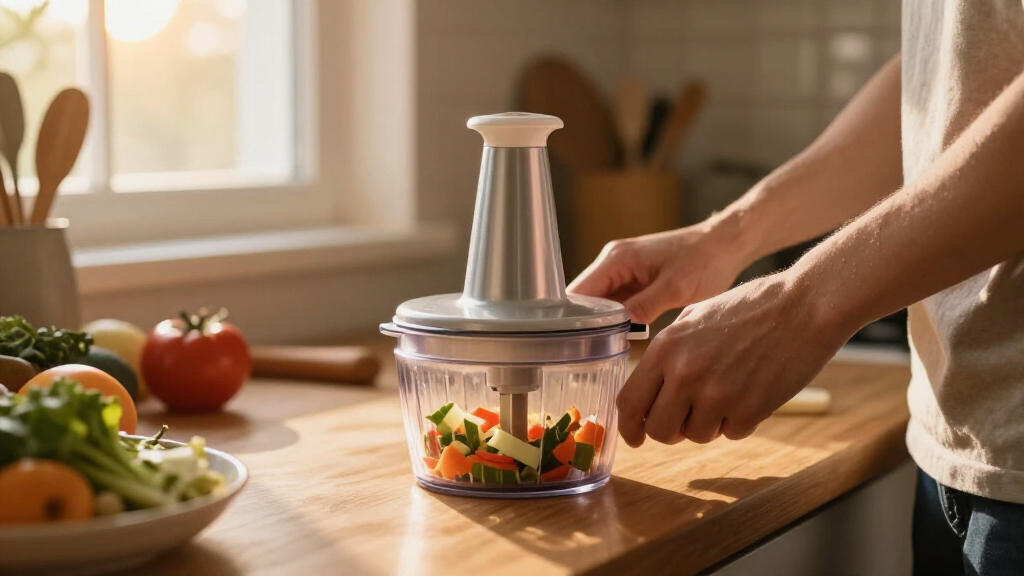
I evaluated each chopper through the lens a real buyer faces daily: how well it chops the four jobs people actually buy these for — onions, garlic, nuts, and herbs — and how much friction exists between pulling it out and putting it away. Chop consistency came first, because uneven results defeat the purpose. Capacity honesty came second; many “3-cup” bowls only process about half that usefully, and I flagged models where the stated size oversold the working volume. Cleanup design — dishwasher-safe parts, sealed crevices, blade removal — separated the pleasant-to-own from the soon-abandoned.
From there, I weighed motor quality versus wattage claims, since several budget units advertise big numbers but bog down under nuts or raw meat. Price-per-capability determined the value rankings: a $20 chopper that handles garlic well beats a $40 one that struggles with everything. Finally, versatility extras like drizzle basins, dual bowls, and reversible blades acted as tiebreakers rather than primary criteria, because a chopper that can’t chop well is just a small blender with problems.
| electric food chopper | Dishwasher Safe |
|---|---|
| KitchenAid 3.5 Cup Food Choppe | Yes |
| Hamilton Beach 12 Cup Stack & | Yes (removable parts) |
| KitchenAid 3.5 Cup Food Choppe | Yes |
| BLACK+DECKER 1.5-Cup Electric | Yes (removable parts) |
| Ninja Food Chopper Express Cho | Yes |
| Cuisinart Mini Food Processor | — |
| Ganiza Food Processor with 2 B | — |
| Food Processor 4 Cup | — |
| Proctor Silex Durable Electric | Yes |
| BLACK+DECKER 3-Cup One-Touch F | — |
| KOIOS Food Processor 500W Elec | — |
| Reemix 1.5-Cup Electric Food C | Yes |
| Hamilton Beach 3-Cup Electric | — |
| BLACK+DECKER Food Processor an | — |
Factors to Consider When Choosing Electric Food Choppers
Choosing an electric food chopper comes down to matching the tool to your actual cooking habits — not the most impressive specs on the box. These are the factors that genuinely change how satisfied you’ll be six months after purchase.Bowl Capacity: Buy for Your Real Batch Size, Not Your Aspirations
The most common mistake buyers make is choosing capacity based on holiday cooking rather than Tuesday dinner. A 1.5-cup chopper handles garlic, ginger, a single onion, or a handful of nuts perfectly, and its small blade sits close enough to the food to chop evenly. Step up to 3–4 cups and you gain the ability to make a full salsa or pesto batch, but the tradeoff is a bowl that needs minimum volume to chop effectively — a single clove of garlic can spin untouched beneath the blade. Families cooking for four or more should skip mini choppers entirely and look at 8–12 cup units, accepting that these demand cabinet or counter space rather than a drawer. One practical test: think about the last three times you’d have used a chopper and estimate the largest single ingredient quantity. That number, not the marketing on the box, is your capacity.
Wattage Claims Versus Actual Motor Quality
Wattage is the most misleading spec in this category. A well-built 200-watt motor with sharp, properly angled blades will outperform a cheap 500-watt unit that stalls on almonds or overheats after thirty seconds. Established brands like KitchenAid, Ninja, and Cuisinart tend to rate their motors conservatively, while lesser-known brands often advertise peak wattage — a burst number the motor can’t sustain. The practical tells of a quality motor are weight (heavier base units vibrate less and last longer), warranty length, and whether the unit offers multiple speeds. Multiple speeds signal a motor confident enough to run slow for herbs and fast for hard ingredients. If nuts, cheese, or raw meat are on your regular list, prioritize motor quality over every other spec, because underpowered units don’t just work slowly — they strip gears and burn out.
Cleanup Design Decides Whether You Keep Using It
Every chopper in this category chops adequately on day one; the difference between a beloved tool and a dusty one is how many minutes cleanup takes. Look for dishwasher-safe bowls and blades, minimal nooks where food traps, and blade assemblies that come apart for washing. Sealed one-piece lids feel convenient until onion residue ferments in the seam. Dual-bowl systems — like those from Ganiza and KOIOS — add a second benefit: you can chop onions, swap bowls, and immediately chop herbs without washing in between. This matters most if you cook dishes with layered flavor building, where ingredient separation is the whole point. Before buying, picture the full cycle: chop, empty, disassemble, wash, dry, reassemble, store. Any model that makes three of those steps annoying will migrate to the back of a cabinet.
Blade Configuration and What It Actually Changes
Most choppers ship with a single S-shaped blade, which handles 80% of jobs fine. Where blade design earns its keep is at the extremes: reversible blades (as on the Cuisinart mini) let one edge handle chopping while the blunt side can be used for gentler mixing, and multi-blade stacked setups grind meat and nuts more evenly because they cut at multiple heights. More blades aren’t automatically better — a crowded bowl with four blades can bruise herbs and turn onions to water before you pulse twice. Sharpness matters more than count, and replacement blade availability matters more than both, since blades dull over 2–4 years of regular use. If a brand doesn’t sell replacement blades, you’re buying a disposable appliance regardless of its initial quality.
One-Touch Simplicity Versus Speed Control
Entry-level choppers use a single pulse or one-touch operation, which is genuinely better for beginners: press to chop, release to stop, nothing to learn. The limitation appears with delicate jobs — herbs get shredded instead of chopped, and you can’t slow the blade for dressings or mayonnaise. Two-speed and variable-pulse models cost $10–30 more but give you a coarse-chop setting for salsa components and a fine setting for pastes and purees. There’s also a safety angle: models requiring lid-lock engagement before the motor runs prevent the finger injuries that happen when people reach into a bowl to retrieve food. If you cook with kids or tend to multitask while prepping, paying for that interlock is money well spent. If you only ever chop onions, one-touch is all you need.
When to Skip the Chopper and Buy a Food Processor
Electric choppers and food processors overlap, and buying the wrong one wastes money in both directions. If you regularly slice, shred, knead dough, or process batches over four cups, a chopper will frustrate you — it’s a single-purpose blade tool, not a system. Conversely, if your needs are 90% chopping, a $150 food processor is an expensive, hard-to-clean way to dice an onion. The hybrid zone is the 8-cup class, like the BLACK+DECKER 8-Cup, which offers processing capability at chopper prices but without attachments. A reasonable rule: if you can name three non-chopping tasks you do weekly, buy a food processor. If you can’t, buy a chopper and keep $100. Some buyers ultimately own both — a big processor for batch cooking and a $25 mini chopper for daily garlic and herbs — and that two-tool setup often beats compromising on one midsize machine.
Frequently Asked Questions
Can a small electric food chopper handle raw meat and nuts?
It depends on the motor and blade setup rather than the bowl size. Units in the 400–500 watt class with stacked multi-level blades, like the Ganiza 450W or KOIOS 500W, grind raw meat and crush nuts effectively because the blades cut at several heights and the motors sustain load without stalling. Smaller 100–200 watt mini choppers handle soft nuts like walnuts in small batches but may overheat or produce uneven results with almonds, and raw meat often wraps around a single low blade instead of cutting. Partially freezing meat for 15–20 minutes before chopping helps any model considerably, since firm pieces cut cleanly instead of smearing. If meat grinding is a primary use, choose one of the dual-bowl higher-wattage models and skip the mini class entirely.
Is a 3-cup chopper big enough for a family, or do I need an 8–12 cup model?
A 3-cup chopper suits one to two people doing daily prep jobs — an onion, garlic, herbs, a small batch of sauce. Families of three or more, or anyone who meal preps, will hit the ceiling quickly because usable working capacity is roughly half the stated bowl size: a 3-cup bowl really processes about 1.5 cups of ingredients at a time. The 8-cup and 12-cup models, like the Hamilton Beach Stack & Snap, handle full-recipe quantities and larger vegetables without pre-cutting everything into small pieces first. The honest middle path is the 4-cup dual-bowl class, which covers most family chopping while staying reasonably compact. If you regularly cook for guests or batch-cook on weekends, the larger machines justify their counter footprint; otherwise the smaller units win on storage and cleanup.
Why do dual-bowl choppers cost more, and are the extra bowls worth it?
Dual bowls solve a specific workflow problem: flavor cross-contamination between ingredients. If you chop an onion and then need to chop cilantro, a single-bowl chopper requires a full wash — and residual onion scent still taints delicate herbs even after rinsing. With a second bowl, you swap and keep working, which shaves real time off multi-step recipes like salsas, curries, or layered sauces. The extra cost typically runs $10–20 over comparable single-bowl models. That said, if your chopping is usually one-ingredient-per-session — garlic tonight, nuts tomorrow — the second bowl just takes up cabinet space. Dual bowls also help with raw meat, since you can dedicate one bowl to meat and never worry about incomplete sanitization transferring to produce.
How do I keep my chopper from turning onions into watery mush?
Overprocessing is almost always the culprit, not the machine. Pulse in short bursts of one to two seconds and check the texture between pulses, because onions release liquid the moment cell walls rupture, and ten seconds of continuous running floods the bowl. Chill the onions for 20 minutes beforehand — cold onion cells rupture more slowly and release less water. Bowl shape matters too: models with blades set close to the bowl bottom, like the KitchenAid and Ninja units, lift and recirculate pieces for even chopping, while flat-bottomed cheap bowls let half the onion sit in liquid while the other half over-processes. Draining the chopped onion in a strainer for a minute rescues slightly overdone batches. Finally, use the sharper blade setting if your model has speed options, since slow dull chopping bruises more cells than fast clean cuts.
Are the cheap $20–25 choppers actually worth buying, or will I just replace them?
For light-duty use — garlic, ginger, small amounts of soft vegetables, the occasional handful of herbs — the budget models hold up fine and represent genuine value, because there’s little to break in a simple pulse motor and single blade. The failure points appear with hard ingredients: repeated nut crushing and any meat grinding will dull blades and strain motors on the cheapest units within a year or two of regular use. Check whether the brand sells replacement blades and bowls before buying, because a $20 chopper with available $8 replacement parts outlasts a $25 one with no parts support. The Proctor Silex and Hamilton Beach 3-cup models sit in the sweet spot of this class, using proven simple designs rather than novel features. If your weekly chopping totals more than a few minutes of run time, stepping up to the $40–60 tier buys noticeably better motor durability.
Conclusion
After comparing all 14 models, the right choice depends less on specs and more on how you actually cook. For best overall, the KitchenAid 3.5 Cup Food Chopper (KFC3516) earns the top spot with its quiet two-speed motor, precise control, and effortless cleanup — a premium-feeling tool at a midrange price, available in Contour Silver or Empire Red to match your kitchen. The best value is a split decision: the BLACK+DECKER 3-Cup One-Touch wins for small daily jobs at a rock-bottom price, while the BLACK+DECKER 8-Cup 450W takes it for anyone who needs meat and nut capability on a budget.
For beginners, the Hamilton Beach 3-Cup Electric Vegetable Chopper is the friendliest starting point — simple one-touch operation, forgiving design, and no learning curve. Cooks with specific needs should match accordingly: the Hamilton Beach 12 Cup Stack & Snap for volume cooks and meal preppers, the Ganiza or KOIOS dual-bowl models for multi-ingredient recipes where bowl-swapping saves time, the Ninja Express Chop for durability per dollar in the mini class, and the Cuisinart Mini with reversible blade for dressings and small mixing jobs. Whatever you choose, buy for your real batch sizes and cleanup tolerance — that pairing, more than any single feature, determines whether your chopper becomes a daily tool or forgotten cabinet filler.
Halloween Picks
halloween
As an affiliate, we earn on qualifying purchases.