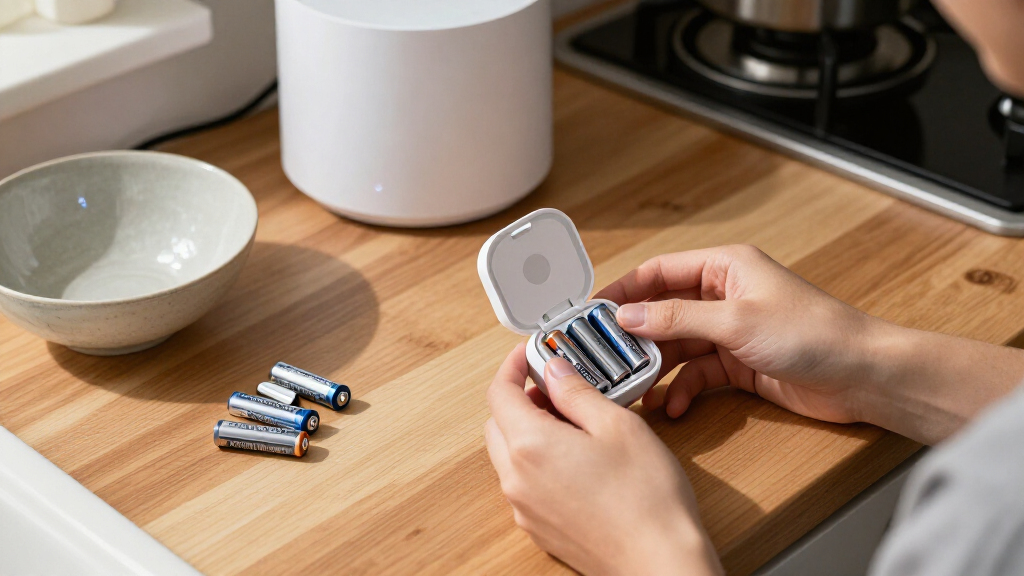

TL;DR
A Matter smart-home user reports that presence sensors in two frequently used rooms ran out of battery during a month when household routines were disrupted. The sensors’ failure stopped some automated fan actions, illustrating that battery-powered devices require monitoring and maintenance; the account does not establish a general battery-life figure for Matter products.
A Matter smart-home owner says batteries in presence sensors in the living room and dining room died during a month when the household was dealing with a family bereavement, stopping some room-based fan automations. The account, published by Matter Alpha, highlights a practical issue for homes that rely on battery-powered sensors: devices can quietly lose power, and automations depending on them may stop working.

Get kitchen gear delivered free with Prime
- Fast, free delivery on millions of items
- Prime Video, Amazon Music and more included
- Member-only deals all year
The writer had installed SwitchBot presence sensors in several rooms and used them to trigger household routines. After the sensors in two frequently used rooms ran out of power, ceiling fans that had previously switched on automatically no longer did so. The writer also found the office sensor at 5% battery while replacing it. These are observations from one home, not a measured battery-life test across Matter devices.
The home includes other battery-powered products, among them IKEA Matter-over-Thread sensors and remotes and SwitchBot devices. The writer uses the Homey app to view battery levels across devices, which avoids checking each sensor individually. But seeing multiple low or depleted batteries at once made the maintenance workload more apparent.
Battery performance differed across the writer’s devices. The SwitchBot Meter Plus and the climate sensors from SwitchBot and IKEA had not needed battery replacement, while some presence sensors had. The writer says the SwitchBot setup warned that expanding a sensor’s detection range could shorten battery life. In the writer’s home, the sensors covering larger spaces appeared to need more attention, though the account does not provide controlled measurements or a precise lifespan for each model.
Battery Upkeep Can Break Automations
Battery-powered sensors can make automations possible without wiring, but their power supplies add recurring work to a smart-home setup. When a sensor stops reporting, routines that depend on its presence data may no longer run as expected. That can make a system feel unreliable even when the lights, fans or other connected devices still have power.
The report also points to a gap between a device being installed and a system being maintained. A household may have many sensors spread across rooms, and battery status can be easy to overlook, especially when notifications are disabled or daily routines are disrupted. For readers planning a sensor-heavy home, the practical question is not only what a device can automate, but also how its battery is monitored and replaced.
This is a single household account, not evidence that Matter devices generally have short battery life. Battery longevity varies by product and use, and the report gives no standardized comparison. Its value is in showing how ordinary maintenance can affect everyday automations.
Products Worth Considering

Ninja Foodi DZ401 DualZone XL Air Fryer, 10 Qt, 6-in-1, Grey

Ninja Air Fryer XL, 6.5 Qt, 6-in-1, MaxCrisp, Dark Grey (AF181)

Vitamix Touch & Go Advance 32-Ounce Bar Blender, White
As an affiliate, we earn on qualifying purchases.
From Wired Switches to Sensors
The writer contrasts the new battery-powered sensors with smart switches installed the previous year. Those switches are hardwired, so they do not require routine battery changes while household power is available. The presence sensors, by comparison, can be placed around rooms without wiring but depend on batteries that eventually need replacement.
The household’s devices come from several product lines, including SwitchBot presence and climate sensors and IKEA sensors and remotes. The writer manages them through Homey, whose battery page lists the devices and their reported charge. The article does not identify a Matter-wide battery-monitoring standard or suggest that Matter itself caused the failures; the reported issue is battery maintenance in particular devices.
“A smart home, despite expectations, doesn’t take care of itself.”
— Matter Alpha report author
Battery Lifespans Vary by Use
The report does not give a precise operating life for the presence sensors or a consistent record of how long each battery lasted. It also does not establish how much of the variation came from sensor range, room traffic, settings, battery type or other factors. The writer links larger detection ranges and frequent movement to greater battery use based on experience, but offers no controlled test.
It is also unclear how widely the reported failures apply to other homes or Matter products. The account covers one household and a mix of devices; it does not show that Matter devices as a category have a battery problem. The exact publication date is not included in the supplied source.
Monitor Levels Before Failure
The writer recommends leaving battery alerts enabled, even if other device notifications are turned off, and replacing batteries before a sensor reaches zero. The report suggests acting when charge reaches roughly 10% to 20%, rather than waiting for an automation to fail. These percentages are practical advice from the author, not manufacturer thresholds or a universal rule.
Households can also review battery-level history in their smart-home app to get a sense of how quickly particular devices lose charge in their own settings. The source does not announce a product fix, manufacturer response or formal follow-up. For now, the confirmed development is the owner’s account of sensors losing power and the resulting disruption, with broader battery-life questions still unanswered.
Key Questions
What happened to the smart-home system?
The report’s author says presence sensors in the living room and dining room ran out of battery, stopping some automated fan routines that relied on them.
Does this show that Matter devices have poor battery life?
No. The source describes one household and does not provide a standardized comparison. It also reports that several other battery-powered sensors in the home had not needed replacement.
What did the author say about battery monitoring?
The author recommends keeping battery alerts enabled and replacing batteries before devices reach zero. The Homey app’s battery page also helped show charge levels across devices.
Why might some presence sensors need more attention?
The author says the larger detection ranges used in some rooms and frequent movement may have affected battery use. The report does not provide controlled measurements, so those observations should not be treated as a general battery-life rule.
Source: rss