
🔍 Read the full analysis: Pizza Margherita At Home: Getting Close To Naples In A Home Oven on Mad Tasting

Get kitchen gear delivered free with Prime
- Fast, free delivery on millions of items
- Prime Video, Amazon Music and more included
- Member-only deals all year
TL;DR
Mad Tasting’s home-pizza guide says cooks can approximate some qualities of Neapolitan Pizza Margherita with carefully fermented dough, restrained toppings and a thoroughly preheated steel or stone. A standard oven remains cooler than a traditional Neapolitan oven, so the result is an approximation, not an exact replica.
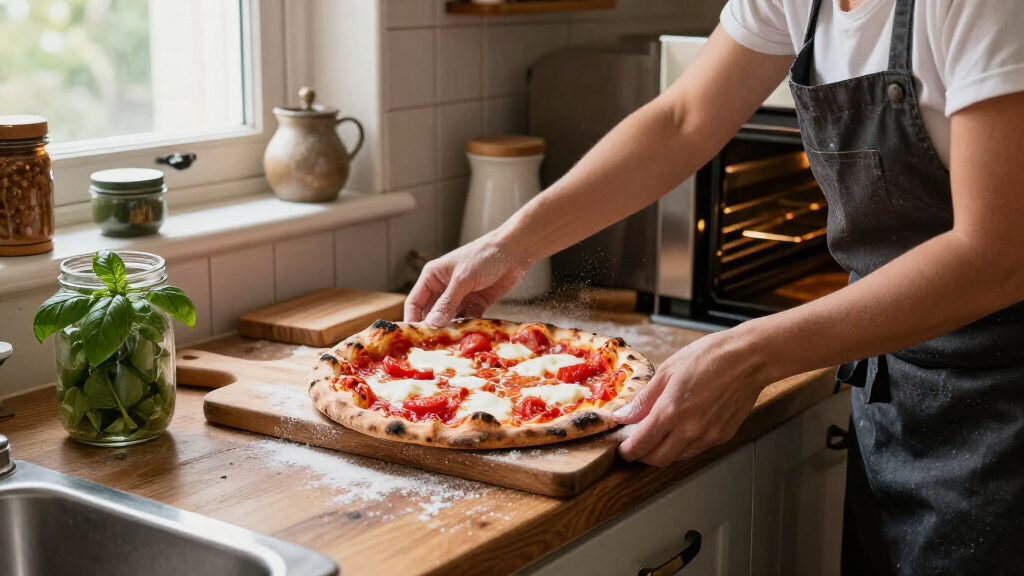
Mad Tasting has published a guide to making Pizza Margherita in a standard home oven, recommending long-fermented dough, quality ingredients and a preheated pizza steel or stone to approximate some features of Naples-style pizza. The advice addresses a basic limitation for home cooks: conventional ovens typically cannot match the much higher temperatures of traditional Neapolitan ovens.
The guide recommends using Italian 00 flour for the dough and canned San Marzano or other high-quality Italian tomatoes for the sauce. It names fresh mozzarella—either buffalo mozzarella or cow’s-milk fior di latte—along with fresh basil, olive oil and salt as the core toppings. Mad Tasting argues that good ingredients let the pizza’s flavors stand out without loading the surface with additions that can affect the crust.
For dough, the article advises a 24-to-72-hour fermentation and gives a hydration range of about 62% to 65%. It says a longer rise can develop flavor and make the dough more extensible, while higher hydration can help create an open, airy crumb. Those methods also bring handling challenges: wetter dough can be harder to shape, and the guide recommends a gentle touch.
The oven advice is to heat it to its maximum setting—given as around 500°F (260°C) for many home ovens—with a pizza steel or thick stone inside for at least 45 minutes. Mad Tasting says the heated surface transfers energy to the dough more effectively than a regular baking sheet, helping produce a crisper, blistered base. The guide contrasts that setup with traditional Neapolitan ovens, which it says operate at roughly 800°F to 900°F (430°C to 480°C).
Home Oven Field Guide · Pizza Margherita
Pizza Margherita at Home: Getting Close to Naples in a Home Oven
Mad Tasting’s guide brings together long-fermented dough, restrained toppings and a thoroughly heated steel or stone. These steps can move a home pizza toward Naples-style qualities, while the oven temperature gap remains.
01 / Build the essentials
Keep the pizza simple
The guide emphasizes ingredient quality and a light topping layer. A short list lets the tomato, mozzarella, basil and crust stay in balance.
00 flour + patient fermentation
Use Italian 00 flour if available. A 24-to-72-hour rise can develop flavor and make dough more extensible; the guide gives about 62% to 65% hydration.
Choose a good base
Canned San Marzano or other high-quality Italian tomatoes are suggested for a focused sauce that supports the rest of the pizza.
Use a restrained hand
Fresh buffalo mozzarella or cow’s-milk fior di latte, fresh basil, olive oil and salt complete the classic topping list.
“The tradeoff involves balancing ease of handling with achieving that light, airy texture.”
— Mad Tasting · Dough handling02 / Understand the heat
A better base, with a real ceiling
A steel or thick stone stores heat and transfers it to the dough more effectively than a regular baking sheet. It can help the base crisp and blister, but it cannot make a home oven reach pizzeria temperatures.
Preheat the baking surface
Set the oven to its maximum setting and let the steel or stone heat inside for at least 45 minutes. Many home ovens top out around 500°F (260°C), though actual temperatures vary.
Illustrative comparison based on the guide’s stated ranges. The steel or stone improves heat transfer at the base; it does not close the full oven-temperature gap.
03 / A practical home sequence
From dough to oven
Plan ahead for fermentation, work gently with wetter dough, and give the cooking surface enough time to heat through.
Ferment
Allow 24 to 72 hours, using a schedule suited to your dough and kitchen temperature.
Shape gently
Higher hydration may feel stickier. Handle the dough lightly as you stretch it.
Heat thoroughly
Preheat the oven at its maximum with the steel or stone inside for at least 45 minutes.
Top lightly
Keep moisture and topping weight in check to help the base cook well.
04 / What to expect
Improve the method, not the oven
These adjustments can help a homemade Margherita approach some Naples-style traits. Equipment, dough temperature, oven calibration and technique still shape the result.
05 / Source limits
Guidance, not a controlled test
Mad Tasting presents practical cooking advice rather than results from a comparison study.
Use the figures as starting points
The guide does not report measured changes in cooking time or crust across ovens, steels and stones. It also does not provide a complete fixed recipe with ingredient weights, yeast quantities, baking time or one fermentation schedule. Treat the temperature and hydration numbers as general ranges, then adjust to your equipment and dough.
06 / Quick answers
Questions cooks ask
Use the recommendations as a starting point and let your own oven and dough guide the adjustments.
Can a home oven make Naples-style Margherita?
It can make a Naples-inspired home version. A steel or stone and a long preheat may improve the crust, but a standard oven generally runs cooler than a traditional Neapolitan oven.
How long should dough ferment?
The guide suggests 24 to 72 hours. It does not prescribe one schedule for every formula or kitchen temperature.
Is a steel or stone necessary?
Mad Tasting recommends one to store and transfer heat more effectively than a standard baking sheet. It can help, but does not guarantee a particular crust.
What should go on top?
Tomatoes, fresh mozzarella, basil, olive oil and salt, applied with a light hand to avoid weighing down or wetting the base.
What Home Ovens Can Approximate
The guide matters to home cooks because it lays out ways to work around an equipment gap rather than suggesting that a standard oven can reproduce a pizzeria’s cooking conditions exactly. A steel or stone, a long preheat and a restrained topping layer can help improve heat transfer and crust texture, while ingredient choices and fermentation affect flavor and dough handling.
Those adjustments involve practical tradeoffs. A steel or stone needs time to heat and can be heavy to move; long fermentation requires planning; and high-hydration dough can be sticky and less forgiving. The approach may improve a homemade pizza, but it does not remove the temperature difference between a home oven and a traditional high-heat oven.
As an affiliate, we earn on qualifying purchases.
The Home Oven Temperature Gap
Pizza Margherita relies on a short list of components—dough, tomato, mozzarella, basil and olive oil—so the guide focuses on ingredient quality and how the dough cooks rather than a long list of toppings. Its approach is to preserve that simplicity while adjusting preparation to suit domestic equipment.
The temperature comparison in the article explains why a steel or stone is part of its advice. The stated home-oven maximum is around 500°F (260°C), compared with a claimed 800°F to 900°F range for traditional Neapolitan ovens. A preheated baking surface can improve the transfer of heat to the base, but the guide presents this as a way to get closer, not as a substitute for the hotter oven.
“This isn’t about perfect imitation; it’s about understanding the essentials and making them work in your kitchen.”
— Mad Tasting
As an affiliate, we earn on qualifying purchases.
Limits of the Recipe Advice
The source is a cooking guide, not a controlled comparison of home ovens, steels, stones or dough recipes. It does not report test results showing how much a steel or stone changes cooking time or crust characteristics across different ovens. Actual outcomes will depend on equipment, oven calibration, dough temperature and the cook’s technique.
The article also does not give a complete, fixed recipe with ingredient weights, yeast quantities, a precise baking time or a single fermentation schedule. Its claims about the effects of flour, tomato origin and long fermentation are presented as guidance, not as findings from cited research. Readers should treat the listed temperature and hydration figures as general ranges rather than guarantees.
As an affiliate, we earn on qualifying purchases.
Testing the Method at Home
The immediate next step for readers is to try the method with their own oven: check its maximum setting, allow the steel or stone to preheat, and keep toppings modest so excess moisture does not weigh down the base. Cooks can then adjust fermentation time and hydration based on how easily the dough stretches and how the finished crust turns out.
Mad Tasting does not announce a follow-up test, product comparison or revised recipe. No further development is specified in the source; the practical result will depend on each kitchen’s equipment and technique.
As an affiliate, we earn on qualifying purchases.
Key Questions
Can a standard home oven make Naples-style Pizza Margherita?
It can make a home version inspired by Naples, according to Mad Tasting, but a standard oven generally runs cooler than a traditional Neapolitan oven. A steel or stone and a long preheat may help improve the crust, but the source does not claim they reproduce the original conditions exactly.
How long should the pizza dough ferment?
The guide suggests 24 to 72 hours. It says longer fermentation can build flavor and affect stretch, but does not provide one schedule that will suit every dough formula or kitchen temperature.
Do I need a pizza steel or stone?
Mad Tasting recommends using one because it can store and transfer heat to the dough more effectively than a standard baking sheet. The guide describes it as helpful, not as a guarantee of a particular crust.
What temperature and preheating time does the guide recommend?
It advises heating the oven to its maximum setting—around 500°F (260°C) in its example—with the steel or stone inside for at least 45 minutes. Actual oven temperatures vary.
Which toppings does the guide recommend?
It recommends tomatoes, fresh mozzarella, basil, olive oil and salt, with a light hand. The guide says minimizing toppings can help keep the dough from becoming weighed down or wet.
Source: Mad Tasting
Fall Picks
fall essentials
As an affiliate, we earn on qualifying purchases.