TL;DR

Get kitchen gear delivered free with Prime
- Fast, free delivery on millions of items
- Prime Video, Amazon Music and more included
- Member-only deals all year
At its second annual FieldNotes gathering in Northern California, SingleThread Farm hosted a workshop demonstrating how the Japanese donabe clay pot can shape both cooking and the experience of eating. Chefs used it for slow cooking, smoking and communal dishes, though the report describes a workshop rather than a formal product launch or research finding.
SingleThread Farm used its second annual FieldNotes gathering in Northern California to show how the Japanese donabe can shape not just cooking but the pace and rituals of eating. In a workshop led by chef and co-owner Kyle Connaughton, chefs demonstrated traditional and contemporary uses of the clay pot, including smoking ingredients and preparing food for sharing at the table.
The workshop, titled “Advanced Donabe: Smoke, Fire & Seasonal Technique,” took place at SingleThread Farm in Dry Creek Valley. Connaughton was joined by Alex Fuentes, the restaurant’s chef of special projects. The event was part of FieldNotes, a gathering for chefs, winemakers, farmers and artisans that featured workshops, meals and conversations about food and craft.
Donabe means earthenware pot in Japanese. The report describes it as cookware suited to open flame: its clay walls absorb and retain heat, supporting slow, even cooking while holding moisture. During the workshop, the chefs served a potato with sunflower nori pesto and smoked salmon finished with a long-scallion shio-koji vinaigrette and radish. Cherry blossom wood chips in a smoker donabe gave the salmon a delicate smoky flavor, according to the report.
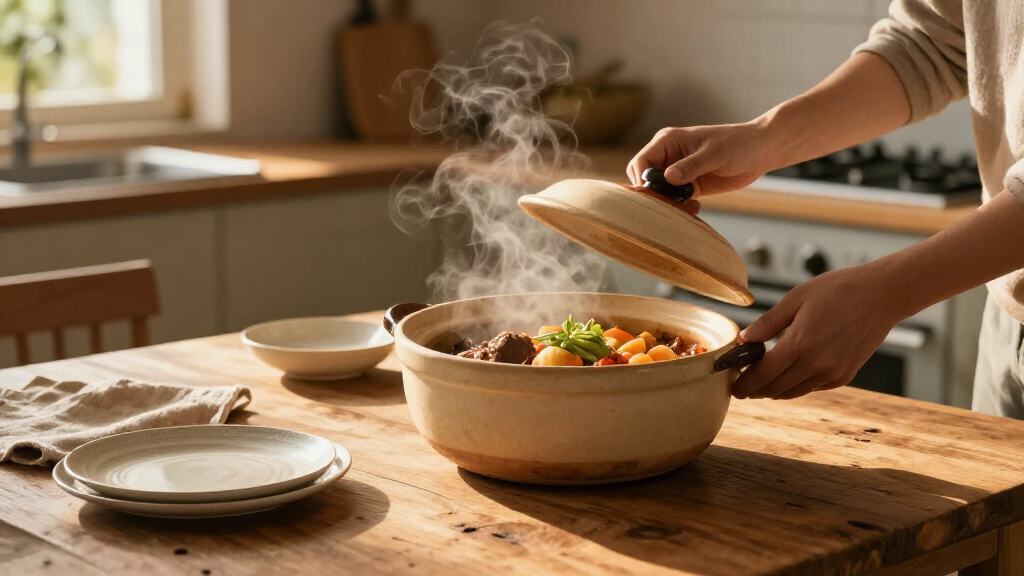
The demonstrations also included a communal dish that the report compared to fondue, illustrating uses beyond familiar Japanese preparations. The pot’s role extended from cooking into serving: lifting its lid released smoke and aroma in front of guests. The report describes that pause and reveal as part of the meal’s experience, rather than simply a visual flourish.
The workshop presented the donabe as a tool that influences when food is served and how diners encounter it, as well as how it cooks. A covered pot can hold heat and moisture; opening a smoker pot releases aromas at the table. Those practical qualities create moments of anticipation and shared attention around a meal.
That perspective matters to readers interested in food, design and hospitality because it connects an everyday object with the structure of a gathering. The report documents a demonstration and the writer’s experience, not controlled testing or evidence that the donabe changes dining for everyone. Its significance here lies in how SingleThread’s chefs use the vessel to bring preparation, presentation and communal eating together.
As an affiliate, we earn on qualifying purchases.
Iga Clay and SingleThread’s Practice
The report identifies Iga as a source of sought-after donabe. Nagatani-en, an eighth-generation family of potters whose work dates to 1832, makes pots in the Iga-yaki tradition. Connaughton attributed the cookware’s performance to the region’s clay, which he said is porous after firing because of its geological history. That explanation is his account of the material, not an independent technical assessment in the report.
Connaughton’s interest in donabe dates to the early 2000s, when he lived with his family in a coastal village on Hokkaido. He later traveled to Iga with Naoko Takei Moore, who imports Iga donabe to the United States through her Los Angeles company, Toiro. They stayed with the Nagatani-en family while working on the cookbook Donabe: Classic and Modern Japanese Clay Pot Cooking. The FieldNotes workshop drew on that history while demonstrating contemporary applications.
FieldNotes sits within SingleThread’s wider focus on farming, cooking and hospitality. The source report also notes the group’s restaurant and farm operations, its Kyoto restaurant, and a forthcoming book and lodging project, but the central development covered here is the donabe workshop—not an announcement of a new pot or cooking method.
As an affiliate, we earn on qualifying purchases.
What the Workshop Does Not Establish
The source is a first-person account of a culinary workshop, not a formal study. It does not provide measurements comparing donabe with other cookware, independent testing of the clay’s properties, or evidence quantifying how the vessel affects diners’ experience. Connaughton’s explanation of Iga clay is attributed to him.
The report also does not give the date of the gathering, a full account of every dish demonstrated, or details of the communal preparation beyond its comparison to fondue. It describes no product launch, policy change or new technical finding. The report’s broader claim about the donabe’s effect on eating is an interpretation of the demonstration and the writer’s experience.
As an affiliate, we earn on qualifying purchases.
Where the Donabe Story Continues
The source report does not announce another donabe event or a scheduled follow-up. It places the workshop within SingleThread’s ongoing work across its farm, restaurants and hospitality projects. The group’s book, SingleThread: A Seasonal Approach to Intentional Cooking, Farming, and Hospitality, was described in the report as forthcoming in November; the report’s publication date is not supplied, so its current release status cannot be established from this material.
For now, the documented next step is the continued use of donabe techniques in SingleThread’s cooking and hospitality work. Whether the workshop leads to further public events or changes in the restaurant’s menu is not stated.
As an affiliate, we earn on qualifying purchases.
Key Questions
What is a donabe?
A donabe is a Japanese earthenware pot. The report says its clay walls retain heat and support slow, even cooking.
What did SingleThread demonstrate?
At its FieldNotes workshop, SingleThread chefs demonstrated traditional and contemporary techniques, including smoking salmon with cherry blossom wood chips and preparing a communal dish.
Why did the report say the pot changes the meal?
The pot can keep food hot and release smoke and aroma when opened at the table. The report interprets those moments as adding anticipation and shared attention to eating.
Where are the donabe described as coming from?
The report highlights Iga in Japan and the Nagatani-en family, whose pottery work dates to 1832. Connaughton said the local clay’s porosity contributes to the pots’ cooking performance.
Was this a product launch or a scientific study?
No. The source describes a culinary workshop and a reporter’s account of it. It does not report a product launch or controlled testing of donabe performance.
Source: rss
Halloween Picks
halloween
As an affiliate, we earn on qualifying purchases.