TL;DR

Get kitchen gear delivered free with Prime
- Fast, free delivery on millions of items
- Prime Video, Amazon Music and more included
- Member-only deals all year
Good Housekeeping published nine kitchen organization ideas that use walls, drawers, shelves and refrigerator space to keep frequently used items accessible. The suggestions include pegboards, spice shelves, plate racks, drawer inserts and a built-in knife block; results will depend on each kitchen’s layout and storage needs.
Good Housekeeping has published nine kitchen organization ideas aimed at making everyday cooking items easier to find and storing them in spaces that might otherwise go unused. The suggestions range from hanging utensils and spices on walls to organizing refrigerator shelves and fitting dividers into drawers.
The report recommends using vertical space for frequently used tools and kitchenware. A pegboard can hold items such as a cutting board, whisk and cheese grater, while wall-mounted spice shelves put seasonings on display. A plate rack can move dishes out of a cabinet or drawer, and bracketed shelves can store glassware in an open area without adding full cabinets.
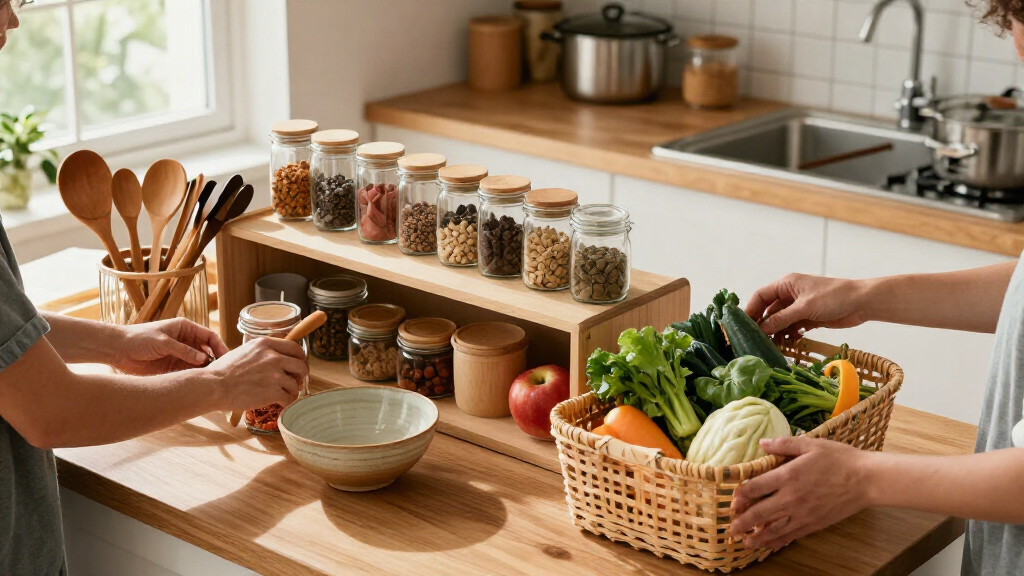
Other ideas focus on small or overlooked storage areas. The report suggests placing wooden mini drawers on an open shelf for spices or measuring spoons, using customizable dividers to separate platters and casserole dishes, and installing a knife block inside a narrow drawer. A towel bar above the sink can hold items that need to stay within reach, including utensils and graters.
For refrigerator organization, the article advises keeping food visible and assigning items to shelves or crisper drawers. It gives leafy greens as an example of produce suited to the crisper and recommends placing dairy near the top and meat on lower shelves or in bottom drawers. These are the report’s organizing suggestions; it does not provide testing or measured results for how much time or space each idea saves.
Making Everyday Storage Easier
The ideas address a practical problem for home cooks: items can be difficult to locate when they are stacked, hidden or stored far from where they are used. Moving selected tools to a pegboard or towel bar, for instance, may make them quicker to reach, while drawer dividers can keep dishes from forming an unstable pile.
Visibility is also central to the refrigerator advice. The report says an organized, visible fridge can make meal preparation more efficient and reduce food going unnoticed at the back. That is the article’s rationale, rather than a quantified finding; it gives no estimate of potential time savings or food waste reductions.
Several suggestions involve mounting or modifying storage, so the best choice depends on available wall and drawer space, household habits and the weight of the items being stored. The list offers options rather than a single layout that fits every kitchen.
Products Worth Considering

Ninja Mega Kitchen System Blender and Food Processor, 1500W, 72-oz Pitcher, 8-Cup Bowl, Black (BL770)

Ninja French Door Premier Air Fry Oven, 10-in-1, 20.3 Qt, Stainless Steel, FO101

Le Creuset Toughened Nonstick PRO 11-Inch Crepe Pan with Rateau
As an affiliate, we earn on qualifying purchases.
Nine Ideas Across Kitchen Zones
The report groups its recommendations around different parts of a kitchen rather than proposing a full renovation. Walls can take pegboards, spice shelves, plate racks, bracketed shelves or a towel bar. Drawers can be fitted with dish dividers or a knife block, while an open shelf can accommodate small storage drawers.
The remaining suggestion concerns the refrigerator’s shelves and crisper drawers. Together, the nine ideas cover display, access and separation of kitchen items. Good Housekeeping’s article is credited to Laura Millar, a freelance lifestyle journalist, and includes home-design coverage overseen by Monique Valeris, the publication’s home design director. The supplied material does not state when the article was published.
Fit Depends on Each Kitchen
The report does not provide product testing, cost estimates, installation instructions or measurements showing how much storage each idea adds. It also does not establish that every recommendation will suit every kitchen, or quantify claims about improved efficiency and reduced food waste.
Before installing wall-mounted storage or altering a drawer, readers would need to check their available space, the wall or surface involved and the items’ weight. The source does not discuss mounting hardware, renter restrictions or whether a particular kitchen layout can accommodate the suggestions.
Choosing Ideas for Your Layout
The report presents the nine suggestions as options, with no announced follow-up, product launch or scheduled next development. Readers can decide which ideas suit their own kitchen by identifying items they use often, storage that is hard to access and spaces that are currently underused.
Any installation details, costs and safety considerations would need to be checked separately for the chosen product and home. The article itself does not prescribe a single sequence for making changes or report outcomes from households that have tried them.
Key Questions
What are the nine kitchen organization ideas?
Good Housekeeping suggests a pegboard wall, spice shelves, a plate rack, mini drawers, refrigerator organization, drawer dividers, a built-in knife block, bracketed shelves and a towel bar.
Which ideas use wall space?
The report recommends a pegboard for frequently used tools, shelves for spices or glassware, a plate rack for dishes and a towel bar above the sink. Each uses vertical space, though the article does not give installation specifications.
How does the article suggest organizing a refrigerator?
It recommends making food visible, keeping produce on shelves or in crisper drawers, placing dairy near the top and using lower shelves or bottom drawers for meat. These are the report’s suggestions, not a tested storage plan for every refrigerator.
Does the report show how much time or space these ideas save?
No. It describes the ideas and their intended uses but provides no measurements or quantified results for time saved, added storage or food waste reduced.
Source: goodhousekeeping.com