
TL;DR

Get kitchen gear delivered free with Prime
- Fast, free delivery on millions of items
- Prime Video, Amazon Music and more included
- Member-only deals all year
An Ideal Home report outlines six habits for drying laundry indoors: remove more water with a suitable spin cycle, space clothes out, use a heated airer or dehumidifier, position the rack for airflow and ventilate the room. The advice addresses moisture from wet clothes, but the report does not quantify how much each step reduces indoor humidity or mould risk.
Ideal Home has published six recommendations for drying laundry indoors while limiting excess moisture in the home, including running a suitable extra spin cycle, leaving space between garments and ventilating the room. The advice matters because water evaporating from wet clothes adds moisture to indoor air, which can contribute to condensation when it is not removed or dispersed.
The report advises removing as much water as is appropriate before hanging clothes. An extra washing-machine spin cycle can reduce the water left in garments and may shorten drying time, particularly for heavier items such as towels, jeans and bedding. The report cautions that the spin speed should be suitable for the load and clothing.
It also recommends leaving space between clothes on the airer so air can move around them. Spread sleeves out, open shirts and avoid folding trouser legs over each other. Lauren Roelofs, a laundry expert at Brabantia, says avoiding an overcrowded rack helps clothes dry more evenly; she also recommends turning heavier items partway through drying to reduce the chance of damp patches.
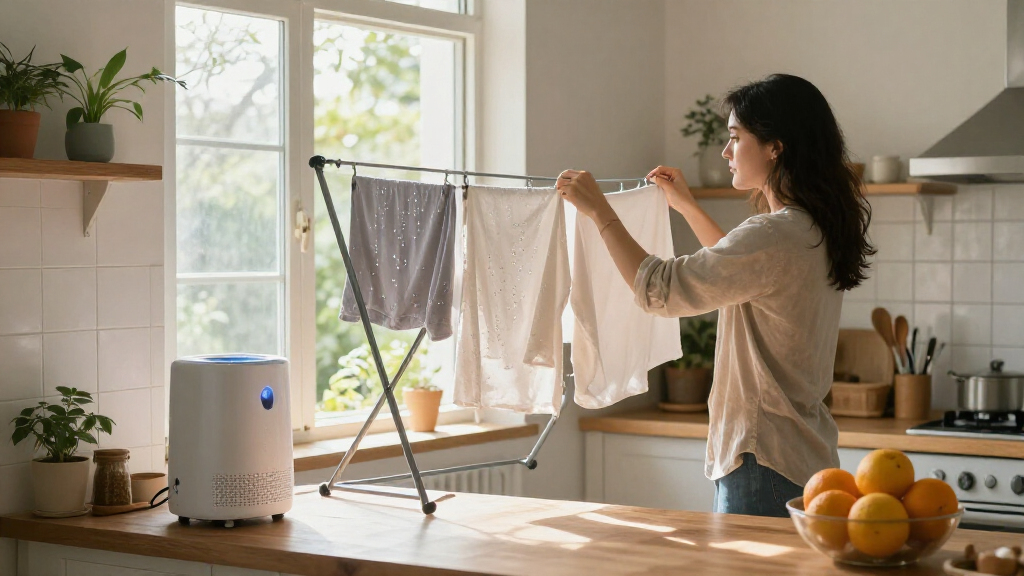
The remaining suggestions focus on the drying setup and the room: use a heated clothes airer if useful, pair it with a dehumidifier to remove moisture from the air, position the airer away from walls where possible, and ventilate the room. Lakeland buying lead Catrin Parry says a dehumidifier can help remove excess moisture, particularly in older homes. The report notes that a cover for a heated airer may reduce drying time, but says the result depends on the load and conditions.
Managing Moisture From Indoor Laundry
These steps address two related problems: slow-drying clothes and moisture released into the home as laundry dries. When damp air is not dispersed or moisture is not extracted, condensation can form on cooler surfaces. Persistent damp conditions can create a risk of mould, although the report does not claim that any single household measure can prevent mould in every home.
The practical value is that several recommendations do not require a new appliance. Spacing garments, turning heavier items and choosing a better position for the airer are changes people can make immediately. A dehumidifier or heated airer may help, but cost, energy use and room conditions vary, and the article provides no comparative measurements for those options.
Products Worth Considering

De'Longhi Rivelia Fully Automatic Espresso Machine with Milk Frother, White

De'Longhi Dinamica Plus Fully Automatic Espresso Machine

Philips 2200 Series Fully Automatic Espresso Machine with Classic Milk Frother, 2 Coffee Varieties, Intuitive Touch Display, Ceramic Grinder
As an affiliate, we earn on qualifying purchases.
Why Indoor Drying Adds Moisture
The report frames its advice around colder, wetter weather, when outdoor drying may be impractical and households rely more on indoor racks. Wet laundry releases water into the surrounding air as it dries. The article says that without ventilation or moisture removal, this can add to indoor humidity and condensation.
It presents the six steps as recommendations from laundry specialists and the publication’s own experience, rather than as a controlled study. The article names heated airers and dehumidifiers as possible aids, but its product descriptions and drying-time claims are not accompanied by test methods or a direct comparison of outcomes.
“One of the simplest ways to speed things up is to avoid overcrowding your drying rack. Leaving space between garments allows air to circulate, helping clothes dry more evenly.”
— Lauren Roelofs, laundry expert at Brabantia, as quoted by Ideal Home
How Much Each Step Helps
The report does not provide measured humidity readings, controlled comparisons or a quantified reduction in mould risk for the six recommendations. It is therefore not possible from this source to rank the steps by effectiveness or predict how quickly a particular load will dry.
Results can depend on the amount and type of laundry, room temperature, ventilation, the airer and dehumidifier used, and the condition of the home. The report’s estimate that a cover can cut drying time by a couple of hours is explicitly conditional on the load and conditions; it is not presented as a guaranteed result. Its final ventilation recommendation is included, but the supplied source text ends before detailing how to ventilate.
Adjust the Setup to Your Room
Readers can apply the low-cost steps first: use a suitable spin setting, space garments out, turn thicker items during drying and leave room for air to circulate. If indoor drying is frequent, the report suggests considering a heated airer and dehumidifier, while taking account of running costs and the room’s ventilation.
There is no announced follow-up study or formal guidance in the source. The next useful indicator at home is whether clothes dry fully and whether condensation persists; the article does not set a specific humidity target or prescribe a single solution for every property.
Key Questions
What are the six recommended habits for drying laundry indoors?
The report recommends a suitable extra spin cycle, spacing clothes on the rack, using a heated airer, pairing the airer with a dehumidifier, placing the airer where air can circulate, and ventilating the room.
Why leave space between clothes on an airer?
More space allows air to circulate around garments, which Roelofs says can help them dry more evenly. The report also advises spreading sleeves and turning heavier items partway through drying.
Does a heated clothes airer remove moisture from the room?
Not by itself, according to the report. A heated airer helps dry clothes, while a dehumidifier removes moisture from the air. The article recommends using them together where suitable.
Should I open a window while drying clothes indoors?
The report lists ventilating the room as one of its six recommendations, but the supplied source text does not give detailed instructions on when or how long to open a window. Ventilation options and conditions vary between homes.
Do these steps guarantee that mould will not form?
No. The report offers practical ways to limit moisture and improve drying, but it provides no evidence that they guarantee mould prevention. Outcomes depend on the home and conditions, including ventilation and persistent sources of damp.
Source: idealhome.co.uk