
TL;DR

Get kitchen gear delivered free with Prime
- Fast, free delivery on millions of items
- Prime Video, Amazon Music and more included
- Member-only deals all year
A registered dietitian writing for Good Housekeeping recommends plain canned pumpkin as an affordable, versatile pantry ingredient with fiber and beta-carotene. The report also advises checking labels: pumpkin pie filling often includes added sweeteners and other ingredients.
A registered dietitian and director of the Good Housekeeping Institute Nutrition Lab is recommending plain canned pumpkin as a practical fall pantry ingredient, citing its nutrients, affordability and range of uses. The report distinguishes pumpkin puree from pumpkin pie filling, which can contain added sugar, sweeteners, spices and other ingredients.
The dietitian says pumpkin is rich in beta-carotene, which the body can convert into vitamin A. According to the report, a half-cup serving provides 100% of the daily value for vitamin A. Vitamin A supports vision and immune function, the article says. Pumpkin also contains fiber and potassium, nutrients associated with digestion and functions including fluid balance and muscle activity.
The article describes canned pumpkin as a convenient alternative to roasting and pureeing fresh pumpkin. It says pumpkin is generally processed soon after harvest, helping preserve many of its nutrients. The report does not provide a product-by-product nutritional comparison or detail the processing methods used by particular brands.
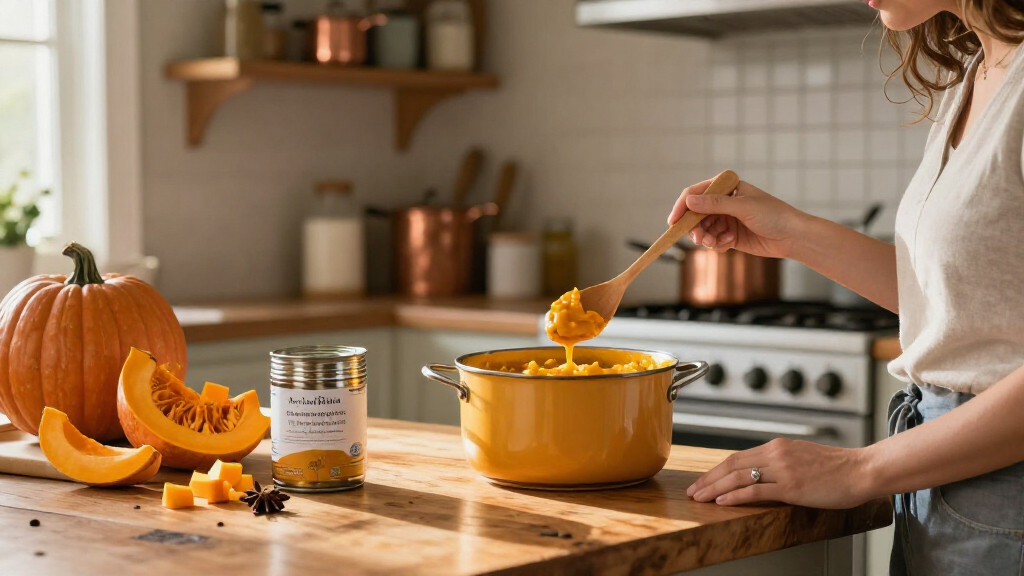
For shoppers, the dietitian recommends checking the ingredient list for 100% pumpkin puree, rather than pumpkin pie mix. Plain puree should list pumpkin as its sole ingredient, while pie filling may have added ingredients. The report also suggests choosing a BPA-free can when possible. It proposes using puree in smoothies, oatmeal, yogurt, baked goods, soups, salad dressing and cheese sauce, rather than limiting it to pies and seasonal desserts.
A Pantry Staple Beyond Pie
The advice presents canned pumpkin as an accessible way to add a vegetable ingredient to everyday meals without the preparation involved in handling a whole pumpkin. Its convenience and versatility may be useful for people looking to vary breakfasts, snacks and savory dishes, though the article does not claim that canned pumpkin alone prevents or treats health conditions.
The distinction between puree and pie filling has practical implications for shoppers. Products that appear similar can have different ingredient lists, so checking the label helps consumers choose the form described in the report. The recommendation to freeze leftovers also offers a way to use an opened can over time rather than letting unused puree go to waste.
Products Worth Considering

Vitamix 64 oz Low-Profile Blender Container with SELF-DETECT, BPA-Free

KitchenAid Classic Series 4.5-Quart Tilt-Head Stand Mixer, Onyx Black

Instant Pot RIO Wide 7.5-Quart 7-in-1 Electric Pressure Cooker
As an affiliate, we earn on qualifying purchases.
Puree Versus Pie Filling
The source is a Good Housekeeping nutrition article written by the publication’s Nutrition Lab director, who identifies herself as a registered dietitian. It is a seasonal food-and-nutrition recommendation, not a newly announced medical guideline or a report of new clinical research.
The article’s central advice is to buy plain pumpkin puree and use it in dishes throughout the year. For leftover puree, it recommends storing it in an airtight container in the refrigerator for three to four days, or freezing it in small portions. These are the source’s storage suggestions; readers should also follow product packaging and applicable food-safety guidance.
“I consider canned pumpkin one of my favorite antioxidant-rich pantry staples.”
— The registered dietitian and Good Housekeeping Institute Nutrition Lab director
Limits of the Nutrition Claims
The supplied article does not specify its publication date, identify a particular canned-pumpkin product, or explain how the vitamin A figure was calculated across brands. Nutrition content can vary by product and serving size, so readers can check the label on the can they buy. The source also does not provide research comparing canned pumpkin with fresh pumpkin or evidence that eating it produces a particular health outcome.
The phrase “superfood” is used as a descriptive label in the headline, not as a defined medical or regulatory category. The reported nutrient content does not establish that pumpkin is uniquely beneficial or that it should replace other foods.
Check Labels and Store Leftovers
Readers considering the recommendation can check the ingredient list for pumpkin as the only ingredient and compare the nutrition panel and serving size on the product. After opening a can, the article advises refrigerating puree in an airtight container and using it within three to four days, or freezing portions for later. The source does not announce a follow-up study or policy change; its next step for readers is applying the shopping and storage tips at home.
Key Questions
Is canned pumpkin the same as pumpkin pie filling?
No. The report says plain pumpkin puree contains pumpkin, while pie filling may include sugar, sweeteners, spices and other ingredients. Check the ingredient list rather than relying on the front label.
What nutrients does canned pumpkin provide?
The article highlights beta-carotene, fiber and potassium. It says a half-cup serving supplies 100% of the daily value for vitamin A; check the product label for the serving and nutrition information for a specific brand.
How can I use pumpkin puree outside of baking?
The dietitian suggests adding it to smoothies, oatmeal, yogurt, soups, dressings and cheese sauce. It can also be used in muffins, pancakes and other baked goods.
How should leftover canned pumpkin be stored?
The report recommends placing leftovers in an airtight container and refrigerating them for three to four days, or freezing smaller portions. Follow the product’s storage instructions and food-safety guidance.
Source: goodhousekeeping.com