TL;DR
Air fryers for small kitchens can handle quick meals, reheating, and crisping without heating a full-size oven, but you need to measure the appliance, its ventilation clearance, and the room needed to open its basket or door. Match usable cooking area to your usual portions, and compare cleanup, noise, and storage needs before you buy.
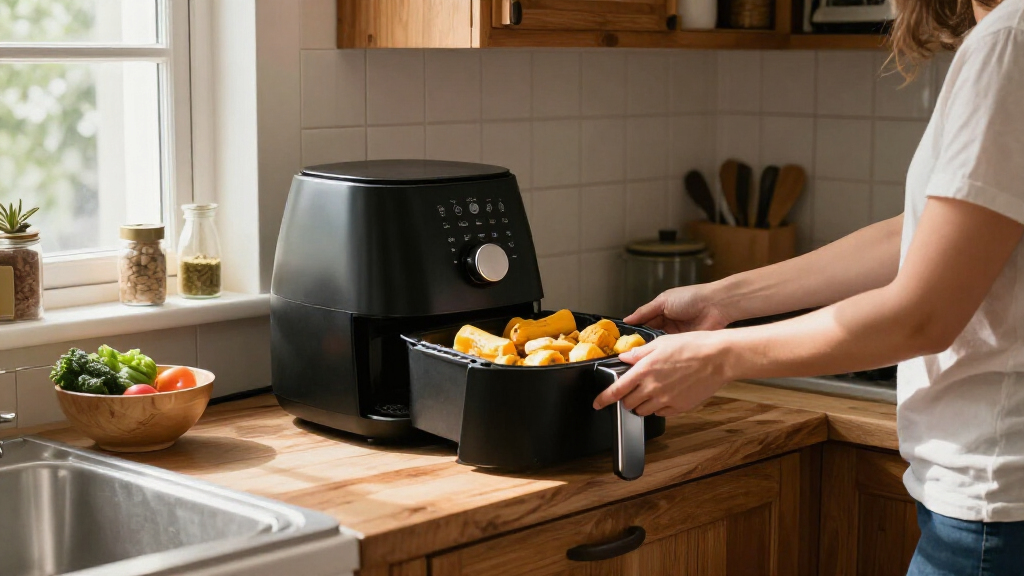
Your counter may have room for an air fryer right up until you pull the basket out and discover it blocks the sink. In a small kitchen, the appliance’s working space matters as much as its listed width.

Get kitchen gear delivered free with Prime
- Fast, free delivery on millions of items
- Prime Video, Amazon Music and more included
- Member-only deals all year
Air fryers can make weeknight cooking easier by heating a small chamber quickly and crisping foods with little added oil. They can also become one more bulky object beside the kettle. This guide helps you weigh counter fit, usable capacity, cleanup, and everyday cooking before choosing a model.
You’ll learn how to measure your setup, compare basket and oven-style designs, and decide whether an air fryer earns its place. Think of it like choosing a compact bike: the frame size matters, but you also need room to turn it around.
Measure width, depth, height, basket or door opening space, cord reach, and manual-specified ventilation clearance before buying.
Compare basket dimensions and single-layer cooking area; quart or liter capacity alone does not show how much food will crisp evenly.
Match the model to your real portions and weekly cooking habits, including whether you can tolerate cooking in batches.
Choose basket or oven-style designs by the foods you make and the cleanup you will actually do.
Air frying can use less oil and may suit small portions, but ingredients and serving sizes still shape a meal’s nutrition.
Know what an air fryer can actually do for you
Air fryers for small kitchens cook food by circulating hot air around it, which can brown and crisp many foods with little or no added oil. They work well for small portions, reheating leftovers, and roasting vegetables, though they do not replace every job a microwave or full-size oven can do.
That quick cooking can make a difference on a Tuesday night. If you want to warm two slices of leftover pizza, a small air fryer may bring back a crisp base while a microwave leaves it soft. A handful of broccoli florets can roast in a compact chamber without heating the whole oven. Actual cooking time varies with the model, amount of food, and recipe, so treat speed as a likely benefit rather than a guarantee.
Many models also bake, roast, or reheat. Some pair an air fryer with toaster-oven functions, which may replace a separate toaster if you use both regularly. But a new function only saves space if it lets you retire another appliance. If your toaster is already tucked away and you mostly cook soup on the stovetop, extra settings may add complexity without solving a real problem.
Air frying can use less oil than deep frying, but the appliance does not make every meal healthier by itself. Ingredients, portions, and toppings still count. A basket of lightly oiled potatoes is different from a large serving covered in cheese. Choose based on meals you actually cook, not the longest list of buttons.
Products Worth Considering
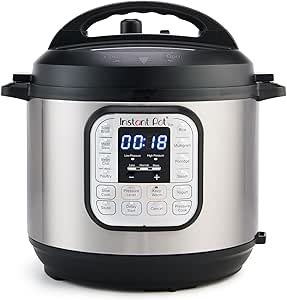
Instant Pot Duo 6-Quart 7-in-1 Electric Pressure Cooker

Traeger Woodridge Pro Wood Pellet Grill & Smoker, 970 Sq. In., WiFIRE Enabled

KitchenAid Artisan Series 5-Quart Tilt-Head Stand Mixer, Milkshake
As an affiliate, we earn on qualifying purchases.
Measure the space you need, including the open basket
An air fryer fits your kitchen only when you can use it safely with the clearances and ventilation its manufacturer specifies. Before shopping, check the unit’s width, depth, and height, then measure the space needed to pull out its basket or open its door.
For example, a narrow counter beside a wall may suit a front-opening basket drawer, but the drawer still needs room to slide out and land somewhere stable. An oven-style model may need less space in front but more depth and height. Measure the whole setup, including cord reach and nearby cabinets, rather than relying on a product photo or a single width figure.
Follow the model’s manual for heat-resistant placement and ventilation. Do not operate an appliance inside a closed cabinet, and do not assume that it is safe beneath low cupboards just because it fits there. Some kitchens have a clear stretch of counter near an outlet; others need the appliance stored away between uses. The manual’s clearance guidance decides what works.
Quick measuring check: mark the appliance footprint on your counter with paper, then add the basket’s opening path and the manufacturer’s required clearance. If that paper patch blocks your chopping board, the air fryer may not be convenient there.
Small models can be awkward to move if they feel heavy or have a slippery grip. Picture lifting one from a high shelf while balancing around a dish rack. If you plan to store it after every use, check its weight and handles along with its dimensions. A compact model that stays out may be more useful than a smaller one you avoid lifting.
Choose capacity by the meals you make, not the quart label
The best air fryer size for you depends on your usual portions and how much food can sit in a single layer. Quart or liter labels describe capacity, but they do not make basket shapes directly comparable.
A wide basket may hold more fries spread out for crisping than a taller, narrow basket with the same advertised capacity. That matters because crowded food blocks airflow. If you cook for one and usually make a salmon fillet with a small serving of vegetables, a compact basket may handle dinner in one go. If you regularly cook for two, you might prefer a wider model—or accept that the vegetables need a second batch.
Use a recent meal as your test case. Imagine making chicken tenders for two: can you lay them in a single layer without stacking, and where will the hot basket rest while you check them? If a small unit means cooking several batches every night, the saved counter space may cost you time and leave the first portion cooling on a plate.
| What you cook | What to check | Likely tradeoff |
|---|---|---|
| Snacks or one-person meals | Basket width for a single serving | Smaller footprint, fewer portions per batch |
| Meals for two | Room for a protein and vegetables, or realistic batch size | More cooking area may take more counter space |
| Several portions or family meals | Usable area, shelves, and total exterior dimensions | Fewer batches, but a larger appliance to place and store |
Usable cooking area beats capacity on paper when crispness matters. Browse product dimensions and basket photos, then compare independent reviews for real batch results. A viewing window or dual baskets can be handy, but neither guarantees a better fit for your counter or your dinner routine.
Compare baskets and oven-style models before buying
Basket air fryers usually offer a simple layout and a compact footprint, while oven-style air fryers add shelves and may suit foods that need a broader cooking surface. Which design works better depends on your meals and the shape of your counter.
A basket model can be easy to pull open, shake, and wash after a serving of potato wedges. The tradeoff is that you may need to cook in batches if you want enough food for two. An oven-style model might fit toast, a small tray of vegetables, and a portion of fish, but shelves and door surfaces can take longer to clean. A larger glass door can also need extra room to swing open.
Recent product lines include combinations with toaster functions, dual baskets, viewing windows, and app controls. These features can be helpful: dual baskets let you cook two foods separately, for example, while a timer keeps you from checking the food every minute. Yet market trends do not prove that a particular model cooks better. Compare dimensions, usable area, noise, warranty, and replaceable parts for the specific unit you’re considering.
Some controls are more valuable than a phone connection in a cramped kitchen. Clear temperature settings, a dependable timer, and an easy-to-read display may save you more fuss. If you tend to cook the same frozen vegetables every week, presets are convenient. If you mostly follow recipes, manual adjustment may be enough. Like choosing a toolbox, you want the tools you use—not every tool that fits inside.
Check dishwasher guidance for each removable part, because compatibility varies by model. Nonstick surfaces can make cleanup easier, but rough scrubbers or unsuitable utensils may damage some coatings. A quick rinse after dinner is a much smaller job than scraping on burnt grease the next morning.
Get crisp results without filling your tiny counter with extra gear
You can get more even, crisp results by giving hot air room to circulate around the food. For most foods that benefit from a crisp surface, arrange pieces in a single layer when possible and cook another batch if the basket is crowded.
Try a Friday lunch of frozen onion rings. If you pour the whole bag into a small basket, pieces buried in the middle may come out limp while the edges get dark. Spread out half the bag, shake or turn it as your recipe directs, and cook the rest while the first batch stays warm. Space helps food brown; it does not make your portion larger, but it can make the result more even.
Use accessories only when they solve a problem. A rack might let you separate two layers in an oven-style unit, but stacking food can still slow airflow. A liner may catch crumbs, but only use one if it is rated and permitted by your model’s instructions. Follow the manual for lightweight foods, wet batters, and drippings; loose paper or grease can cause problems if it blocks airflow or reaches a heating element.
- Check the recipe and manual for temperature, timing, and any food-specific guidance.
- Arrange a single layer when you want crisp edges, leaving gaps between pieces.
- Shake or turn the food at the suggested point, using care with the hot basket.
- Cook a second batch if the food would otherwise pile up.
- Cool and clean the unit after use so grease and crumbs do not build up.
Fan noise and cooking odors are part of the experience, and they vary by appliance and food. A batch of fish may smell stronger than toast; a model near an open window may feel less intrusive. Remove grease and crumbs as the manual directs, since buildup can cause odors or smoke. Let the appliance cool before cleaning, and use only cleaning methods suited to its surfaces.
Decide whether the counter space is worth giving up
An air fryer earns counter space when you use it often enough to make small meals or leftovers easier. It may be a poor fit if you cook infrequently, have nowhere safe to place it, or would need to haul a heavy appliance from a high cabinet for every snack.
Consider a student cooking in a studio apartment. A compact basket model used most evenings for potatoes, vegetables, or reheating could be more practical than turning on a full-size oven for one portion. A couple who already uses a toaster oven daily might get more value from a combination model. But if the counter barely holds a kettle and cutting board, storage and setup may outweigh the convenience.
A small appliance may use less energy than a full-size oven for some small portions because it heats a smaller space. The comparison depends on the model, food, cooking time, and the oven’s operation; there is no single savings figure that applies to every kitchen. If you care about electricity use, compare the appliance’s rated power and the time your usual recipe takes, then consider whether your alternative would be the oven or another method.
Use this simple decision rule: list three meals or snacks you would cook in it each week, then ask where it would live and how often you would clean it. If you can name the meals and the appliance has a safe, practical home, it may be worthwhile. If the answer is mostly “maybe someday,” a bit of empty counter could serve you better.
The key points for choosing are fit, batch size, and frequency. A fryer that can stay safely on the counter and handle your ordinary portions is often more useful than a feature-packed model that makes you rearrange the kitchen each time.
Frequently Asked Questions
What size air fryer works for one or two people?
Start with your usual portion and check whether the food fits in a single layer; advertised capacity alone does not answer that. For example, a wide basket may handle two servings of vegetables more evenly than a taller, narrower basket with a similar quart rating.
How much counter space does an air fryer need?
Check the model’s width, depth, and height, then allow room to open its drawer or door and meet the ventilation clearances in its manual. A paper outline on the counter can help you see whether the appliance crowds your chopping board or blocks a cabinet.
Can I run an air fryer inside a cabinet or under cupboards?
Do not run it inside a closed cabinet. Use it under or near cupboards only when the manufacturer’s instructions allow that placement and you can provide the required clearance and ventilation.
Do air fryers use less electricity than ovens?
They may use less energy for some small portions because they heat a smaller cooking chamber, but the result depends on the model, food, and cooking time. Compare the time and energy for a meal you make often rather than assuming every air-fryer recipe uses less.
Can an air fryer replace a microwave or toaster?
It can cover some reheating, crisping, toasting, roasting, and baking tasks, especially if you choose a combination model. It does not replace every use of a microwave or oven; for example, a microwave can heat soup quickly in a way an air fryer cannot.
How do I keep food crisp and prevent smoke?
Leave space around food, arrange a single layer when practical, and shake or turn it as the recipe directs. Let the unit cool after cooking, then remove crumbs and grease according to the manual; residue can produce odors or smoke.
Conclusion
Choose an air fryer by measuring its working footprint and matching its usable basket area to the meals you make most. Check the manual for placement and clearance, and decide whether its cooking and cleanup routine deserves a permanent place on your counter.
A good small-kitchen appliance should make dinner feel simpler, not turn your counter into a game of Tetris.