TL;DR
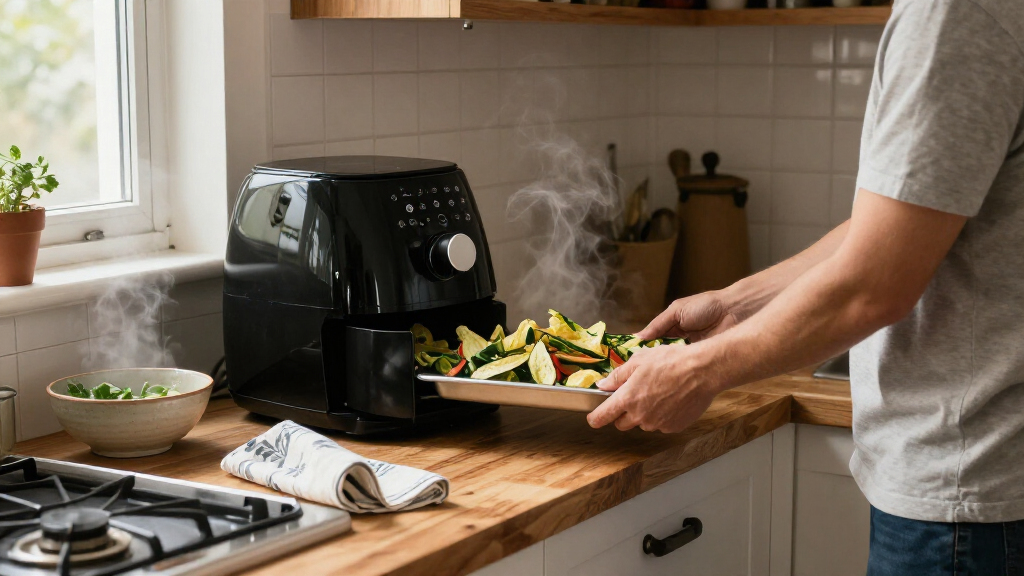
Compact air fryers, commonly listed at about 1.5 to 4 quarts, use fast-circulating hot air to brown small portions with little or no added oil. Choose by measuring the appliance and ventilation space, then comparing usable basket area with the meals you actually make; capacity labels alone can mislead. A smaller basket saves counter space and can suit snacks or one-person meals, but it may require extra batches when you cook for several people.
A small air fryer can look like a perfect kitchen shortcut—until it sits on your counter and barely fits a serving of fries. Compact air fryers can take up less space than many full-size models, but their capacity labels don’t always show how much food you can actually spread out to brown.

Get kitchen gear delivered free with Prime
- Fast, free delivery on millions of items
- Prime Video, Amazon Music and more included
- Member-only deals all year
This guide helps you match the appliance to your counter space, usual portions, and cooking habits. You’ll learn what “compact” tends to mean, which details to measure, what the fan can and cannot do, and how to tell whether the convenience is worth giving up basket space.
Think of the choice like picking a pan: a small one is handy for Tuesday’s snack, but frustrating when dinner for four is waiting. Start with the meals you make most often, and the right size becomes easier to spot.
Compact models commonly list 1.5 to 4 quarts, but usable single-layer basket area can matter more than capacity.
Measure the appliance and required vent clearance against your actual counter and cabinet space.
Crowding can soften food; cooking in batches may be necessary when crisping a larger portion.
Check the manual for placement, cleaning, dishwasher use, and hot-part handling.
Extra presets and cooking modes are most useful when they fit tasks you already do.
Know what compact capacity can—and can’t—tell you
Compact air fryers commonly list capacities of about 1.5 to 4 quarts (roughly 1.4 to 3.8 liters), but there’s no universal definition of “compact.” That number describes a volume, not necessarily the flat area available for a single layer of food. When crisp edges matter, that usable area often tells you more than the headline capacity.
Air frying is high-speed convection cooking: a fan moves hot air around food to brown its surface. It isn’t deep frying, and the result depends on the food, basket, and how much room the pieces have. Crowded fries tend to steam against one another instead of turning evenly golden.
For example, imagine two 3-quart baskets. One is broad and shallow; the other is narrow and deep. The broad basket may let you spread a handful of potato wedges in one layer, while the narrow basket stacks them. The capacity label looks equal, but the first design may suit crisping better. The tradeoff is that a wider basket can take up more counter width, so better cooking space may mean a less convenient fit in a narrow kitchen.
Ask yourself what “one meal” means in your kitchen. If you usually cook a single salmon fillet and a side of vegetables, a smaller basket may be enough. If you expect to feed two adults with a generous serving of fries, check the actual dimensions and usable area before relying on the quart figure. A basket that fits the meal without stacking can save you a second cooking cycle; if your meals vary, consider whether the extra counter space for a larger model is worth that flexibility.
Products Worth Considering

Le Creuset Heritage Stoneware Rectangular Baking Dish Set, 3-Piece, Marseille

De'Longhi Magnifica Evo Automatic Espresso Machine with Milk Frother, Silver

Traeger Pro 22 Wood Pellet Grill & Smoker
As an affiliate, we earn on qualifying purchases.
Measure your counter before you fall for the features
Compact air fryers for small kitchens still need a safe place to sit, with the clearance around vents specified in the manual. Measure the counter footprint and the height beneath cabinets, then leave the manufacturer’s recommended space for airflow. A tight fit can make routine use awkward and can block the hot air the appliance releases. That matters during repeated cooking, when you may be tempted to push the fryer back against a wall or leave it tucked beneath a cabinet to reclaim work space.
Measure with a tape, not a guess. If the spot beside your kettle is 28 centimeters deep, check the product’s full depth, including any handle that sticks out. Also check where the cord reaches and whether you can lift the unit comfortably if you plan to store it after each use. These details affect whether the appliance is easy to use every day or becomes something you avoid because setup and put-away take too much effort.
Say you have a narrow counter between the sink and stove. A squat model might slide under a cabinet, but using it there may conflict with the clearance instructions. Another model could be taller yet easier to place on an open shelf. Dimensions only help when you compare them with the way you’ll actually use the appliance. Think through where the hot unit will sit while cooking and cooling, too; a spot that works only when the kitchen is otherwise empty may not work at dinner time.
Set it on a stable, heat-resistant surface, keep vents clear, and follow the manual’s placement and handling directions. The fan can be audible, and the exhaust feels hot against your hand. If the only available spot is beside paper towels or a crowded wall corner, rethink the placement before buying. The space cost includes room around the appliance, not just the rectangle its feet occupy.
Compare the features that change everyday cooking
The best feature list is the one that solves a problem you have often. Compare a compact air fryer’s basket shape, controls, and cleanup before paying extra for presets or extra cooking modes. A simple dial can be all you need for reheating a snack; a digital timer may feel more convenient if you use it most evenings. Features matter through the habits they make easier: if cleaning is fiddly, for example, a theoretically versatile appliance may end up staying in the cupboard.
| Feature | What to check | Why it matters |
|---|---|---|
| Basket shape | Width and flat cooking area | More room can help keep food in a single layer |
| Controls | Dials, display, timer, temperature settings | Pick the setup you will use without fuss |
| Cleaning | Removable parts and care instructions | Residue is easier to deal with when parts are accessible |
| Functions | Reheat, bake, roast, or dehydrate modes | Extra modes add options but don’t guarantee oven-sized capacity |
For instance, a removable tray that can go in the dishwasher may matter more than a dozen presets if you cook breaded chicken several times a week. Check the manual for dishwasher guidance and care requirements, especially if the basket has a coated surface. Don’t assume two products with similar photos clean the same way. A part that needs hand-washing may be a small inconvenience once, but a real drawback if you use the fryer daily.
Some models add app controls or more cooking programs, while others keep the interface to two knobs. More functions can be useful if they replace tasks you already do, but they can also add complexity. The practical question is whether each feature saves you a step or gives you a cooking option you regularly need. Compare warranty terms, replacement-part availability, and current product details with the manufacturer before choosing; a broken removable part can shorten the useful life of a model, while an unavailable replacement may make repair impractical.
Cook crisp food without crowding the basket
To get better browning, give food enough room for hot air to move around it. A single layer is a useful target for foods you want crisp, though exact results vary by model and recipe. When you pile pieces high, the middle can stay soft while the exposed edges brown. That uneven result is the main capacity tradeoff in practice: you can fit more food in the basket by stacking, but you may lose the texture that made air frying appealing.
Here’s a practical routine for a frozen snack after work:
- Check the food package and appliance manual for starting time and temperature guidance.
- Preheat only if your model’s instructions or the recipe call for it.
- Arrange the food with space between pieces, then start with a sensible cooking time.
- Shake or turn the food if the instructions recommend it, and check for doneness before serving.
- Cook a second batch if the basket would otherwise be crowded.
A handful of frozen potato bites may brown in one batch; a full bag for a family movie night may need two. That second round takes time, but the first batch is more likely to have crisp corners instead of a soft, steamy middle. If you often cook several portions at once, that waiting time should count when deciding whether the compact size is convenient enough.
Many frozen foods, potatoes, and breaded items are common choices. Wet batter can drip through the basket, while very light ingredients may move around in the fan. A little oil can help some foods brown or improve texture, but plenty of foods need little or none. Air frying can reduce added oil compared with deep frying; it doesn’t automatically make every meal nutritious. The method changes how heat reaches the food, while the ingredients and portion still determine what you’re eating.
Decide whether a compact model fits your routine
A compact air fryer can be convenient when you regularly cook small portions and want a quick way to brown or reheat them. Its smaller cooking chamber heats quickly, which may help for a modest serving compared with heating a conventional oven for the same job. But actual speed and energy use depend on the model, food, cooking time, and local electricity rates. The benefit is most plausible when the oven would otherwise be heating a much larger space for just one small dish; repeated batches can narrow that advantage by extending total cooking time.
Picture a student reheating two slices of leftover pizza in a dorm kitchenette. A compact unit might be easier to use for that snack than a full oven, if the kitchen rules allow it and there’s a suitable surface. In a household that cooks a tray of vegetables and dinner for four every night, the same basket may mean repeated batches and more waiting. The first routine rewards a small appliance that stays ready; the second may make its limited capacity a daily bottleneck.
It can handle some baking, roasting, and reheating tasks, but its small, shaped basket cannot replace every oven job. A flat sheet pan, a whole large casserole, or a wide batch of cookies needs more room. Treat extra functions as useful options, not proof that one compact appliance can replace every tool in your kitchen. If you already have an oven, the air fryer’s role may be to handle small jobs faster or more conveniently, rather than duplicate everything it does.
Think about storage, too. A model you must move after every use may sound practical until you carry it from a high shelf with a hot, heavy basket. Compare weight and shape with your storage spot, and decide whether the appliance will stay out on the counter or be put away each time. A lighter unit is easier to store, but if putting it away is cumbersome, it may occupy counter space permanently anyway.
Use a simple five-step checklist to choose the right size
Choose a compact air fryer by matching real measurements to your usual meal, then checking the details that affect cleanup and daily use. This keeps the decision grounded in your kitchen instead of a capacity number or a long list of presets. You can do the comparison in a few minutes with a tape measure and a note of your typical portions. The point is to test whether a model fits the jobs you expect it to do, including the compromises you would notice most often.
- Write down your usual portions. Note whether you cook a snack for one, a side dish for two, or dinner for a family.
- Measure the available spot. Record width, depth, and height, then compare them with the appliance dimensions and required ventilation clearance.
- Check usable basket area. Look for dimensions or photos that show whether your typical food can sit in one layer.
- Review cleanup and controls. Confirm how removable parts are cleaned and whether the timer and temperature settings suit your routine.
- Compare the real extras. Check warranty, replacement parts, current price, and any added modes you will actually use.
For example, if your regular meal is one portion of chicken tenders and a small side of vegetables, mark that as the test meal. See whether it fits without stacking. If it does, a compact basket may be a match; if it doesn’t, a slightly larger model—or keeping your oven—could save you from cooking in batches every evening. If the meal fits only by crowding, weigh the shorter cooking session against the softer, less even result you may get.
Use current manufacturer information when you compare models, because specifications, availability, recalls, and warranty terms change. Energy claims also depend on cooking conditions. A checklist won’t predict every recipe, but it helps you buy for the meals you make rather than the meal in a product photo. It also makes the tradeoff explicit: countertop space saved has value, but so does avoiding repeated batches and cleanup.
Frequently Asked Questions
What size air fryer works for one or two people?
Many compact models list about 1.5 to 4 quarts, but the right size depends on your portions and basket shape. Check whether your usual food fits in a single layer rather than choosing by the capacity label alone.
Will a compact air fryer fit on my counter?
Measure its width, depth, and height, including the handle, and compare those measurements with your available space. Leave the ventilation clearance stated in the manual, and check that the cord reaches a suitable outlet.
Can a compact air fryer replace a regular oven?
It can handle some small reheating, roasting, or baking jobs, but its basket limits the size and shape of what fits. A large casserole or broad sheet-pan meal still needs a bigger cooking surface.
Do you need to add oil when air frying?
Many foods need little or no added oil, though a small amount can help some ingredients brown or improve texture. The appliance uses circulating hot air rather than a deep-fryer oil bath, and the result depends on the food and recipe.
Are compact air fryers energy-efficient?
They may use less energy than heating a large oven for a small portion, but there’s no fixed saving that applies to every kitchen. The appliance, food quantity, cooking time, and electricity rates all affect the comparison.
Are compact air fryer baskets dishwasher-safe?
It depends on the model. Check the manual’s cleaning instructions before putting a basket or tray in the dishwasher, especially if it has a coated cooking surface.
Conclusion
Choose by measuring your spot and testing the basket against the portions you really cook. A compact air fryer can be a handy weeknight helper for one or two people, but a capacity label won’t tell you whether your fries fit in one layer or your dinner needs two batches.
Make the tape measure your first kitchen tool, then imagine the fan humming beside the counter while your snack turns golden. If the space and portions fit, that small appliance may earn its place.