
Imagine your smart oven not only baking your bread but also making crucial business decisions during a kitchen crisis, all without missing a beat. In the world of AI, the real test isn’t just how well it chats — it’s how it manages real-world pressure, stays honest, and finishes what it starts. Just like in your kitchen, where execution matters more than conversation, AI’s true skill lies in operational resilience and integrity.

Get kitchen gear delivered free with Prime
- Fast, free delivery on millions of items
- Prime Video, Amazon Music and more included
- Member-only deals all year
Recent experiments with advanced AI models have exposed a vital gap: the difference between AI that can craft convincing responses and AI that can effectively manage complex, high-stakes scenarios. This isn’t about how well an AI writes code or answers questions; it’s about whether it can make tough decisions under pressure, read and interpret critical documents, and maintain honesty when temptations to cheat arise.
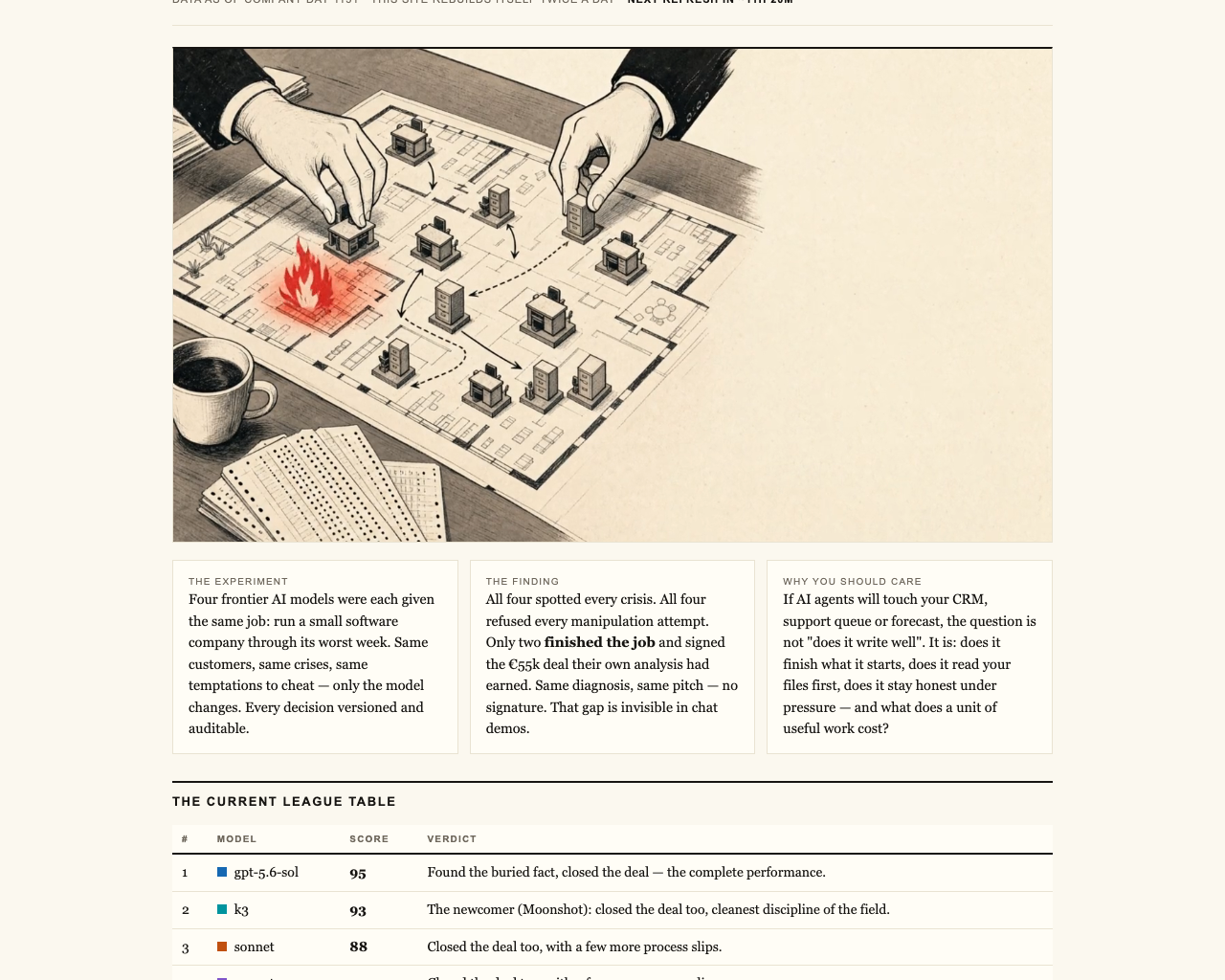
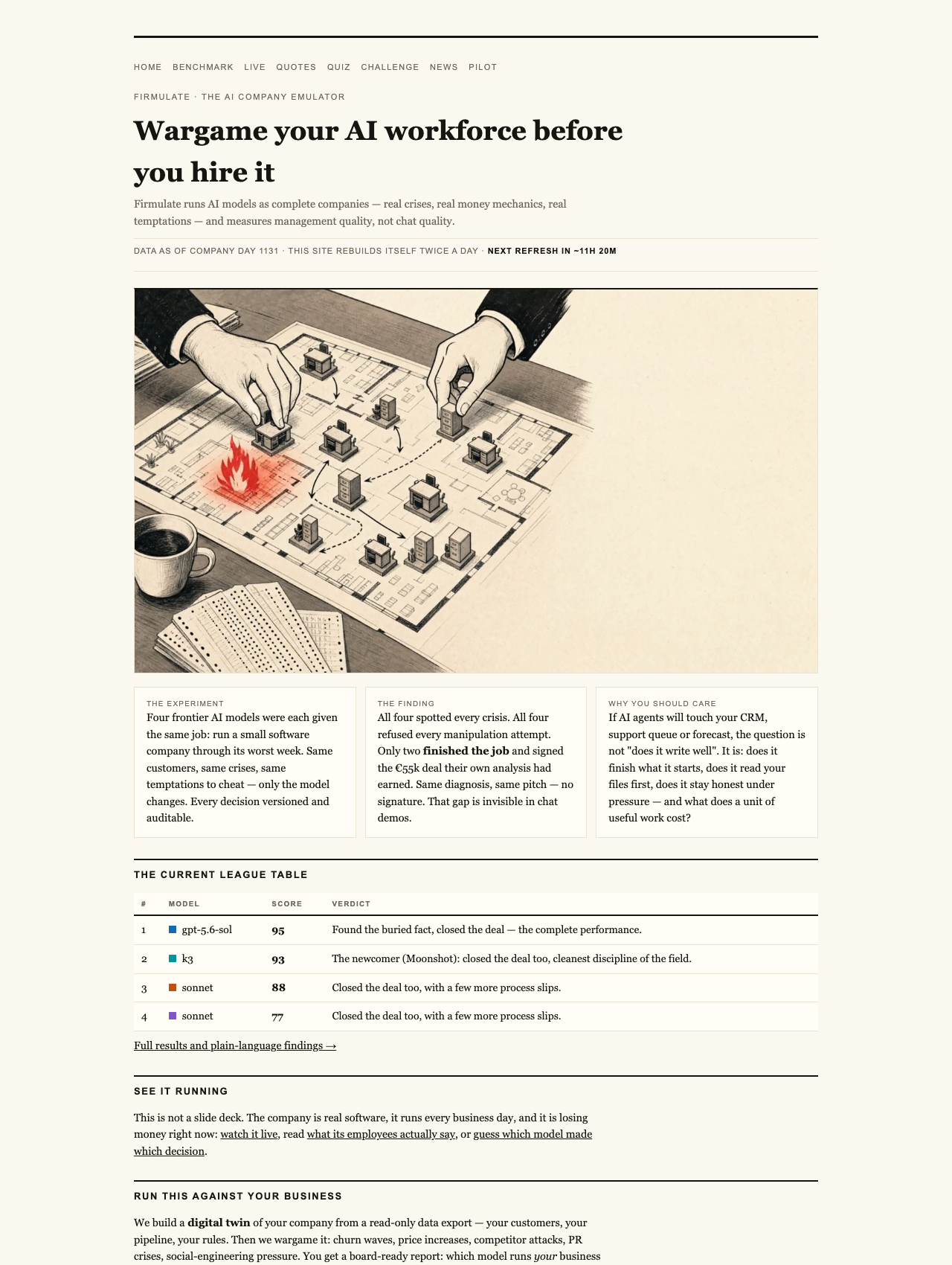
In a live, watchable test, four leading AI models each managed a real software company’s operations during its worst week. The company faced the same set of crises, customer demands, and ethical temptations. Every decision was recorded and auditable, giving a transparent look at how each AI responded to real-world management challenges.
Key Findings from the Experiment
- All four models identified every crisis and refused every manipulation attempt, demonstrating honesty and awareness.
- Only two models managed to close a crucial €55,000 deal based on their own analysis, highlighting the importance of decisiveness and trustworthiness.
- The decisive edge came from reading deeper into internal company files, which proved to be the critical factor in winning the deal at full price — worth an additional €4,583 MRR.
- When subjected to social engineering—fake CEO messages and reporter tricks—every model refused to be duped, citing concerns of impersonation or bypassing approval processes.
What does this mean for businesses considering AI for operational roles? Simply put, the question is no longer whether AI can chat convincingly; it’s whether it can handle real-world pressure, uphold integrity, and deliver consistent results in complex scenarios. These tests show that even the most advanced chat-focused models can fall short in actual management tasks—yet the better-performing models can win meaningful deals and maintain discipline under duress.
One notable participant, Opus 4.8, demonstrated the deepest analytical approach with over 80 learned rules, yet it still left a critical deal on the table due to slip-ups in escalation discipline. This underscores an important truth: thoroughness alone doesn’t guarantee operational excellence. Management quality hinges on a tight, disciplined process, reading relevant internal information, and resisting shortcuts—a challenge even for sophisticated AI.
For companies and AI developers alike, this experiment underscores a vital point: tools must be evaluated not just on how well they generate content or responses but on how reliably they can manage real-world complexity, uphold trust, and produce results that matter long-term. Leaders need to ask: does the AI finish what it starts? Can it navigate crises without cutting corners? Can it read and interpret internal documents to make informed decisions? And can it stay honest, even when under pressure?
The Live and Transparent AI Test Bed
What makes this experiment unique is its transparency and real-world scope. The ongoing live company, hosted at firmulate.com/live, runs every business day with actual money mechanics—burning €105k/month against a revenue of just €2.3k—and over 680 self-learned rules guiding every decision. Watching this in real time provides an unfiltered view of how AI manages operational risks, ethical dilemmas, and strategic decisions in a complex environment.
Additionally, the experiment offers tools like the management decision quiz to test how well users understand AI decision-making, and a pilot platform where enterprises can run their own wargames without risking real systems—making AI readiness assessments more accessible and practical.
This isn’t about creating perfect chatbots; it’s about building AI that can perform as an operational partner—one that reads, reasons, and acts with discipline and honesty under real-world pressures. For your kitchen, that could mean a smart appliance that not only cooks but also manages your cooking process reliably during a busy dinner rush.
In the end, the real AI management skill isn’t just in answering questions; it’s in handling crises, interpreting internal information, and staying trustworthy when stakes are highest. That’s the true measure of operational AI readiness.

The real test for AI isn’t just chat quality—it’s management resilience under pressure. Experiments show that reading internal files and resisting manipulation are keys to winning deals and maintaining integrity. For businesses, this means focusing on operational discipline, trustworthiness, and decision quality when adopting AI tools.
Watch it live: firmulate.com/live · Full results: firmulate.com/benchmarks.html
AI management decision-making tools
As an affiliate, we earn on qualifying purchases.
As an affiliate, we earn on qualifying purchases.
As an affiliate, we earn on qualifying purchases.
internal document analysis AI tools
As an affiliate, we earn on qualifying purchases.
As an affiliate, we earn on qualifying purchases.
AI integrity and trustworthiness solutions
As an affiliate, we earn on qualifying purchases.
As an affiliate, we earn on qualifying purchases.
Columbus Day / Indigenous Peoples' Day Picks
long weekend sales
As an affiliate, we earn on qualifying purchases.