🔍 Read the full analysis: Anchovies, The Italian Way: From Bagna Cauda To Spaghetti With Colatura on Mad Tasting
TL;DR
Italy elevates anchovies as versatile ingredients, used both invisibly in sauces like bagna cauda and proudly as a main ingredient in dishes like spaghetti with colatura. This article details their preparation, cultural significance, and cooking techniques.
Italy’s culinary tradition celebrates anchovies in two distinct ways: as an invisible, savory seasoning integrated into sauces and dishes, and as a prominent ingredient showcased in iconic regional preparations. For a deeper dive into their culinary uses, see the original analysis. This article explores these methods, including Piedmont’s bagna cauda and Campania’s colatura di alici, illustrating their cultural significance and culinary techniques.
Anchovies are a cornerstone of Italian cuisine, valued for their ability to add depth and umami without imparting a fishy taste. You can explore more about their role in Italian dishes in our guide to Italian spaghetti sauces. They are often used melted into sauces, such as the Piedmontese bagna cauda, a warm anchovy-garlic emulsion served with vegetables, and in the preparation of spaghetti with colatura di alici, a PDO amber anchovy essence from Cetara. These ingredients are produced through traditional methods that emphasize patience and low heat, ensuring their flavors are integrated seamlessly into dishes.
In Piedmont, despite being landlocked, salted anchovies arrived via historic trade routes from Ligurian ports, leading to the creation of bagna cauda, which is served as a communal dish with raw and cooked vegetables. Conversely, Cetara on the Amalfi Coast produces colatura di alici by aging anchovies in salt, then extracting a concentrated liquid that is used as a seasoning. Both methods highlight Italy’s regional diversity and mastery in transforming anchovies into culinary treasures. For more on Italian regional specialties, visit the related article.
Experts emphasize that high-quality anchovies—whether fresh, oil-packed, or salted—are essential for achieving authentic flavors. Proper technique involves gentle heat and patience, preventing the fish from becoming bitter or overpowering. These practices preserve the anchovies’ natural glutamates, which enhance dishes without making them taste fishy.
Anchovies, the Italian Way: From Bagna Cauda to Spaghetti with Colatura
Italy treats anchovies in two masterful ways: melted invisibly into sauces for deep savory complexity, or presented proudly as the defining flavor of a regional dish. The secret is quality, restraint, patience, and low heat.
Anchovies dissolve into warm fat, leaving umami and depth rather than an overtly fishy taste.
Fresh, cured, or aged anchovy products become the central identity of the finished dish.
High heat can create bitterness; slow integration preserves balance and natural glutamates.
One ingredient, two culinary identities
Italian cooks use anchovies with intention. Sometimes they disappear completely; elsewhere their briny character is the point. Both approaches favor balance over sheer saltiness.
The invisible flavor engine
Anchovy fillets melt into olive oil, butter, garlic, or a sauce base. Their natural glutamates amplify surrounding ingredients without announcing the presence of fish.
The anchovy as protagonist
In dishes such as spaghetti with colatura di alici, anchovy character remains recognizable. The ingredient is measured carefully but forms the dish’s central identity.
How anchovies vanish into a communal sauce
Despite Piedmont’s inland geography, salted anchovies arrived through historic trade routes from Ligurian ports. The result became one of northern Italy’s most distinctive shared dishes.
Slice the garlic
Use abundant garlic and prepare it evenly so it softens without scorching.
Add olive oil
Heat gently. The oil should remain calm rather than aggressively sizzling.
Melt the anchovies
Stir patiently until the fillets break down into the warm garlic-infused oil.
Create the bath
The components unite as a warm, deeply savory dipping sauce.
Serve with vegetables
Raw and cooked vegetables are dipped communally at the table.
Its social ritual matters as much as its flavor: a warm vessel, seasonal vegetables, and diners gathering around a shared sauce.
Fresh, salt-packed, oil-packed, or concentrated?
The recipe determines the format. Quality anchovies should appear firm and glossy, with a clean briny aroma rather than harsh or stale notes.
| Form | Character | Preparation | Best use | Watch for |
|---|---|---|---|---|
| Fresh anchovies Alici |
Delicate, clean, distinctly marine | Clean, fillet, and cook promptly | Frying, marinating, baking, pasta | Extreme freshness and careful refrigeration |
| Salt-packed Acciughe |
Deep, firm, intensely savory | Rinse, fillet, and dry before use | Bagna cauda and traditional sauces | Excess salt if insufficiently rinsed |
| Oil-packed Convenient |
Round, mellow, ready to dissolve | Drain lightly; reserve flavorful oil | Quick sauces, dressings, vegetables | Soft or oxidized fillets in older jars |
| Colatura di alici Concentrated |
Amber, saline, complex, aromatic | Measure by drops or teaspoons | Pasta, vegetables, beans, finishing | Overuse; additional salt may be unnecessary |
How to avoid a fishy result
Start with excellent anchovies, use restrained quantities, and let them dissolve over low heat. Avoid browning or frying cured fillets aggressively. With colatura, season near the end and taste before adding salt.
Colatura di alici: time transformed into amber essence
On the Amalfi Coast, Cetara preserves anchovies with sea salt and patience. The resulting liquid is filtered and bottled as an intensely savory seasoning for pasta and more.
A coastal tradition
Fishing, preservation, and local knowledge shaped a product inseparable from the maritime identity of the Amalfi Coast.
Salt and gravity
Anchovies are layered with sea salt in wooden containers. During maturation, a concentrated liquid gradually emerges.
Seasoned without cooking
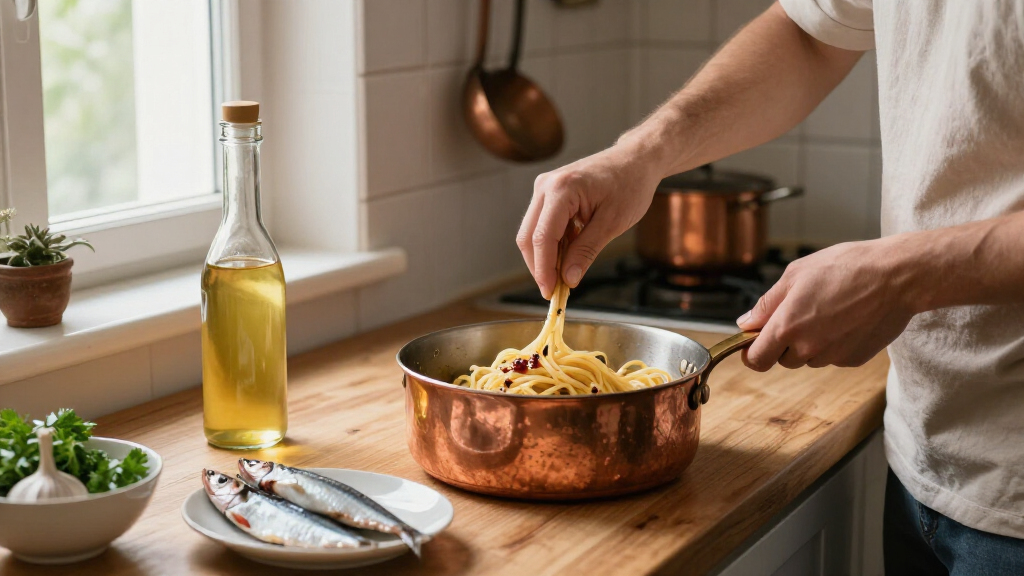
Colatura is commonly combined with olive oil, garlic, parsley, and pasta water, then tossed with hot spaghetti.
Why spaghetti with colatura works
The pasta provides starch and warmth; olive oil carries aroma; colatura supplies measured salinity and umami. No heavy sauce is needed, and boiling the colatura can flatten its complexity.
The next chapter
Artisanal demand is likely to grow alongside more accessible home-cooking formats. Sustainable fishing and climate pressure on anchovy populations will remain central concerns.
The Italian lesson is restraint
Anchovies are not merely a topping. They are a seasoning system, a preservation tradition, a link between inland trade and coastal craft, and a practical route to layered flavor.
Use quality, then step back
Choose clean-tasting anchovies, add them thoughtfully, and allow enough time for integration. The finished dish should feel fuller and more complete, not simply saltier.
Small fish, concentrated value
Anchovies provide protein, omega-3 fatty acids, and calcium when their fine bones are eaten. Their small size generally means lower mercury exposure than larger predatory fish.
Cultural and Culinary Impact of Anchovies in Italy
This dual approach to anchovies—discreet seasoning and star ingredient—reflects Italy’s sophisticated culinary philosophy. Their use enhances flavor complexity and umami, contributing to Italy’s global reputation for nuanced, balanced dishes. Understanding these techniques offers home cooks and chefs alike insight into authentic Italian cooking, emphasizing restraint and technique over saltiness.
high quality anchovies for cooking
As an affiliate, we earn on qualifying purchases.
As an affiliate, we earn on qualifying purchases.
Historical and Regional Roots of Italian Anchovy Use
Anchovies have long been integral to Italian cuisine, with their use dating back centuries. In Piedmont, their arrival via trade routes from Liguria influenced regional dishes like bagna cauda, despite the region’s inland position. In southern Italy, particularly Cetara, anchovy processing has become a centuries-old tradition, with colatura di alici recognized as a PDO product since 2009. These regional practices exemplify Italy’s diverse culinary landscape, shaped by geography, trade, and local tastes.
As an affiliate, we earn on qualifying purchases.
Remaining Questions About Modern Anchovy Usage
While traditional methods are well documented, it is less clear how widespread modern adaptations are, such as the use of fresh anchovies in contemporary Italian kitchens or commercial variations of colatura. Additionally, the impact of climate change on anchovy populations and traditional production practices remains an area of ongoing concern and study.
As an affiliate, we earn on qualifying purchases.
Future Trends in Italian Anchovy Preparation and Consumption
Expect continued interest in authentic, artisanal anchovy products like colatura, alongside innovations that make these ingredients more accessible to home cooks worldwide. Additionally, sustainability efforts may influence fishing and production practices, ensuring the preservation of Italy’s anchovy heritage for future generations.
As an affiliate, we earn on qualifying purchases.
Key Questions
What is bagna cauda and how is it made?
Bagna cauda is a warm Piedmontese anchovy-garlic emulsion made by gently heating olive oil with garlic and anchovies until they melt into a savory sauce. It is traditionally served with raw and cooked vegetables for dipping, often in a communal setting.
How is colatura di alici produced?
Colatura di alici is made by layering anchovies with sea salt in wooden barrels, then aging for several months. The liquid that drips out is filtered and bottled as a concentrated, umami-rich seasoning used in pasta and other dishes.
How can I buy quality anchovies for cooking?
Look for fresh anchovies labeled as alici or acciughe, and choose between salt-packed, oil-packed, or fresh options depending on your recipe. High-quality cured anchovies should be firm, shiny, and have a clean, briny aroma. Store them properly in the refrigerator and use within recommended timeframes.
What techniques prevent anchovies from tasting fishy?
Gentle low heat, patience during cooking, and avoiding overuse are key. Melting anchovies into warm oil slowly ensures their glutamates deepen flavors without imparting a fishy taste. Proper technique is essential to achieve the authentic Italian flavor profile.
Are anchovies healthy?
Yes, anchovies are rich in protein, omega-3 fatty acids, and calcium from their bones. They are generally low in mercury due to their small size but can be high in sodium, especially when cured or processed as colatura.
Source: Mad Tasting