
TL;DR

Get kitchen gear delivered free — and shop member deals
- Fast, free delivery on millions of items
- Access to Prime Big Deal Days deals on October 6–7
- Prime Video, Amazon Music and more included
For air fryers for small kitchens, compare the full appliance dimensions, basket shape, and required ventilation clearance with your counter and storage space. A compact basket model often suits one or two people, while oven-style and dual-basket designs offer different cooking options at the cost of more room. Choose based on meals you regularly make, and expect to cook in batches when food needs space for hot air to circulate.
A small air fryer can save counter space—or become the appliance you have to move every time you make coffee. The difference often comes down to a few inches, the shape of the basket, and where hot air escapes.
This guide explains how to compare air fryers for small kitchens by footprint, usable cooking space, cleaning, and placement. You’ll also see when a compact model makes sense, when a larger design earns its space, and what to check before bringing one home.
Measure the appliance’s full dimensions and manual-specified clearance, including the room needed to open its basket.
Compare usable basket shape and surface area, since advertised quart or liter capacity does not predict how much food crisps in one layer.
Basket-style models often suit small counters; oven-style and dual-basket models can add functions or flexibility while taking more space.
Choose capacity around meals you regularly cook, and decide whether you’re comfortable making batches.
Check cleaning instructions, coating care, warranty, and safe placement before bringing an air fryer home.
Know what an air fryer can—and can’t—do
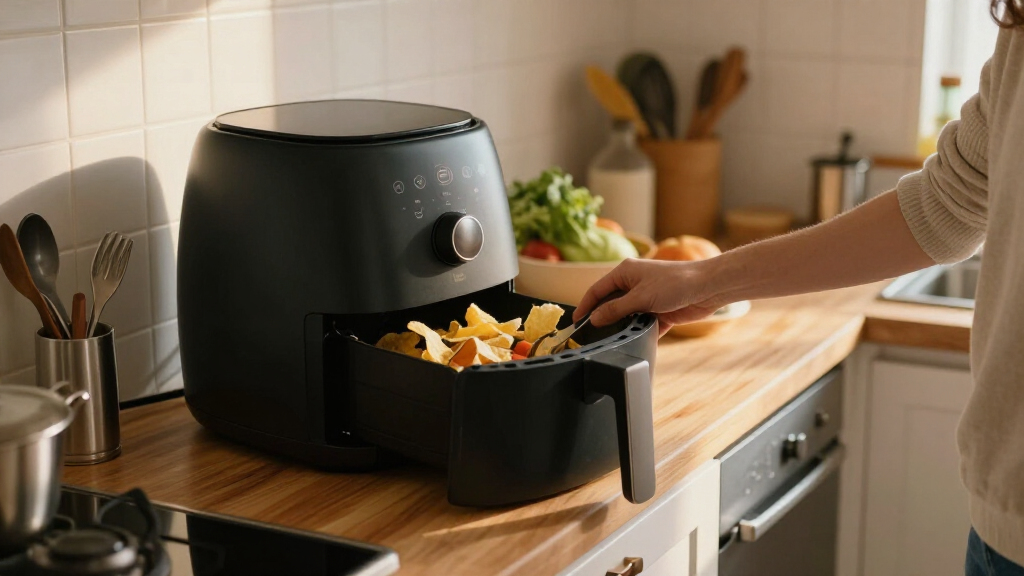
An air fryer is a small convection oven that uses a heating element and fan to move hot air around food. That moving air can brown exposed surfaces, especially when food has room around it, while a little oil can help browning and flavor. It doesn’t immerse food in hot oil, so the crust and texture differ from deep frying.
That distinction matters when deciding whether the appliance deserves scarce counter or cupboard space. Think about jobs it can reliably take on in your routine: reheating pizza so the base stays firmer than it might in a microwave, roasting a tray-sized portion of vegetables, or cooking frozen fries. If it replaces several tasks you already do, its footprint may be worthwhile. If you expect it to reproduce deep-fried food or mostly plan to make occasional novelty snacks, the space may be harder to justify.
Results depend on the ingredients, amount, and arrangement. Hot air needs access to the food’s surface, so a piled-up load tends to steam in the crowded center while exposed edges brown. Shaking or turning can help food cook more evenly, but it cannot compensate for an overloaded basket. Using less oil can reduce added fat compared with deep frying, though the overall meal still depends on what you cook and serve alongside it.
Measure the space you really have before you shop
Air fryers for small kitchens fit well only when their full dimensions and ventilation needs match your available space. Measure the counter, storage cupboard, and path for pulling the basket out; check whether the listed measurements include the handle and controls. These details affect daily use: a unit that fits on paper may block a drawer, leave no room to prep food, or be awkward to lift into storage.
Then account for the air fryer’s exhaust. Hot air needs a clear route, so the appliance may need room behind or above it, as its manual specifies. A unit that physically fits beneath a cabinet may still be a poor fit if the manufacturer requires more clearance. Ignoring that space can expose nearby surfaces and objects to heat, and may make the appliance inconvenient to use in the place you planned.
Imagine a narrow counter between the sink and a wall: a compact model may still need room to open its basket without knocking into the tap. Leave space around the exhaust, keep heat-sensitive items away, and let the appliance cool completely before storing it. Follow the manual’s placement and cord guidance.
Match the fryer style to your counter and cooking habits
Basket-style air fryers are often the easiest to fit on a small counter, oven-style models add racks and functions at a larger footprint, and dual-basket models cook two foods separately but tend to be wider. Compare the dimensions and shape alongside the listed capacity. The useful question is how much food you can arrange with space around it, since a roomy-looking capacity figure may still mean several rounds for the meals you make.
| Style | Space and strengths | Good fit when you… |
|---|---|---|
| Basket | Often a compact footprint; simple pull-out cooking | Make sides, snacks, or modest portions |
| Oven-style | Usually takes more counter space; may add racks and functions | Want room for different foods and have the clearance |
| Dual-basket | Often wider; lets you cook separate foods at once | Regularly prepare two items with different settings |
Capacity in quarts or liters doesn’t tell the whole story. A narrow, deep basket may have less space to spread food out than a wider one with a similar advertised capacity. That usable surface matters because food piled on other food blocks airflow; the result may cook unevenly or soften, and you may need to run another batch. A wider basket can reduce that inconvenience, but only if its larger footprint and clearance fit your kitchen.
For example, a couple who usually cooks salmon and vegetables may prefer a single basket and stagger the food. A household that wants chicken and fries done together might value two zones, which can help coordinate separate settings and finishing times. The tradeoff is a wider appliance and the need to manage two cooking areas; that flexibility is useful only if those meals are common enough to justify the space.
Check these details before you choose a model
The best compact fryer balances footprint, useful cooking space, and easy cleanup. Check how the basket sits inside the appliance, what parts detach, and which tasks the controls simplify before paying for features you may rarely touch. In a small kitchen, a minor inconvenience can matter more because there may be no convenient place to leave the appliance out or set its parts aside while cleaning.
- Cooking space: Check the basket’s shape and usable surface, not just its quart or liter rating. The surface determines how many pieces can cook with air circulating around them, which affects whether dinner takes one round or several.
- Cleaning: Look for removable parts and read whether they’re dishwasher-safe; check how you can reach the interior and heating element for wiping. Easy-to-clean parts make regular use less of a chore, while hard-to-reach grease can accumulate if you avoid cleaning the appliance.
- Coating care: Nonstick surfaces can be convenient, but follow the care instructions to avoid scratches and premature wear. The right utensils and cleaning method help preserve the surface; if care feels fussy, that may affect how often you use the fryer.
- Controls: A clear temperature setting and timer may be enough. Presets, shake reminders, viewing windows, and sync functions add options, but can add cost and complexity. Think about which features solve a recurring problem, such as remembering to turn food or finishing two items together.
- Sound and exhaust: Fans make noise, and hot air leaves the appliance. Consider the location before each use. In a compact kitchen, the fryer may sit close to where you work or eat, and its exhaust can limit where it is practical to place it.
- Warranty and care: Check the manufacturer’s guidance, warranty, and materials information rather than assuming every coating or component performs the same way. These details help set expectations for maintenance and what support is available if a part wears or stops working.
Newer designs may offer compact footprints, quieter operation, easier-clean parts, or app controls. Features vary, though, and extra functions can mean a larger appliance. In a kitchen where every inch matters, what matters most is whether the fryer handles your regular meals without blocking a drawer or taking over the only prep space.
Use these steps to make a small fryer work well
- Set it up by the manual. Place the fryer on a stable surface with the specified clearance. Keep its hot exhaust away from walls, cabinets, and heat-sensitive items. This protects nearby surfaces and leaves the airflow the appliance needs.
- Start with a modest amount. Spread food so air can reach it. If the basket looks heaped, cook in batches. A second round takes longer, but crowded food is more likely to soften or cook unevenly.
- Dry and turn food as needed. Pat wet ingredients dry and shake or turn them during cooking when the recipe or instructions call for it. Removing surface moisture helps browning, while turning exposes more sides to the circulating air.
- Check doneness. Package timing can be a starting point for frozen food, but appliances and portions differ. Check that food is cooked through; smaller or more crowded loads can change how quickly it cooks.
- Clean and store it safely. Follow the parts’ care instructions, wipe accessible surfaces, and wait for the fryer to cool before putting it away. This keeps heat away from enclosed storage and makes the appliance ready for its next use.
Suppose a small basket leaves half a bag of fries waiting. Cook the first batch, keep it warm safely while the second cooks, and avoid stacking the fries into a dense mound. The extra few minutes can make the difference between crisp, golden edges and soft, steamed potatoes.
Don’t buy based on promised energy savings or fixed cooking-time cuts. A fryer may use less energy than an oven for some small portions because it heats a smaller space, but the result depends on the appliance, food, cooking time, and comparison method. The practical benefit is that a smaller cooking chamber can suit a modest portion without heating a full oven; for larger meals or long cooking times, the comparison may change. It can reheat and crisp some foods, yet it won’t replace a microwave or toaster oven for every job.
Choose capacity for the meals you actually make
The right size air fryer depends on how many people you feed, the foods you cook, and whether you accept batches. For one or two people, a compact model may cover snacks, sides, and modest portions; larger items or a full meal may call for more cooking space. Portion count alone can mislead: a bulky item may not sit flat, and foods that need room between pieces can use more basket area than their weight suggests.
That tradeoff shows up on busy evenings. If you usually roast a single portion of vegetables, a small basket can feel quick and tidy. If you want to cook a larger protein with sides at once, a small fryer may mean a second round—fine on a relaxed night, less appealing when everyone is hungry. Buying a larger model can reduce batching, but it also claims more counter and storage room even on days when you only make a snack.
Before buying, list two or three meals you’d use it for each week. Compare their portion sizes with the basket’s shape and usable area, then decide whether you’re happy to cook in batches. An appliance that fits your routine is more useful than a capacity number that looks impressive on a box.
Frequently Asked Questions
What size air fryer fits a small kitchen?
Compare the appliance’s full dimensions, basket shape, and clearance needs with the counter and storage space you have. For one or two people, a smaller basket may work well for sides, snacks, and modest portions, though larger meals may need batches.
Can I store an air fryer in a cupboard?
Often, yes, once the appliance is completely cool, clean, and dry. Follow the manual’s storage and cord guidance, and leave room to move it safely.
How much clearance does an air fryer need?
Use the clearance specified in the manufacturer’s instructions. The exhaust releases hot air, so don’t push the fryer against a wall or beneath low cabinets unless the manual permits that placement.
Are basket or oven-style air fryers better for small kitchens?
Basket models are often easier to fit on a small counter. Oven-style fryers can offer racks and extra functions, but measure their larger footprint and check the clearance they need before choosing one.
Why isn’t my air-fried food crispy?
An overcrowded basket, wet food, or unsuitable time and temperature can leave food soft. Dry ingredients, spread them out so air can circulate, and shake or turn them as needed; batches may cook more evenly.
Conclusion
Before you buy, measure the counter and storage space, check the required clearance, and match the basket to the meals you cook most. A good small-kitchen air fryer should earn its spot with useful dinners, crisp leftovers, or quick sides—not just a clever preset.
Make room for the appliance you’ll actually use, and leave the hot air room to move.
Fall Picks
fall essentials
As an affiliate, we earn on qualifying purchases.