
TL;DR

Get kitchen gear delivered free — and shop member deals
- Fast, free delivery on millions of items
- Access to Prime Big Deal Days deals on October 6–7
- Prime Video, Amazon Music and more included
The Matic robot vacuum became the first device of its kind to receive an FCC ban waiver. The waiver applies to specific models already approved and assembled in the US. Matic’s CEO states the company is expanding domestic production to reduce reliance on foreign components.
The Matic robot vacuum has become the first robovac to receive an FCC ban waiver, according to a report by The Verge. The Federal Communications Commission added the Matic model 4MA0001 and its charging dock to its ban waiver list on October 2. This action permits the import, marketing, and sale of these radio products. However, the waiver appears largely symbolic because the Matic devices were never subject to the FCC’s restrictions on foreign robotics and routers. The company assembles its robots in Mountain View, California, and uses components that already hold existing FCC approvals.
The FCC’s decision specifically targets the Matic model 4MA0001 and the 4DK0008 charging dock. Unlike blanket approvals granted to brands like Asus and Netgear for routers, this waiver is limited to these specific hardware identifiers. The Matic does not require a waiver for current operations because its radio hardware relies on an off-the-shelf Intel AX210 Wi-Fi and Bluetooth chip. This chip carries its own FCC certification, similar to those found in standard laptops and desktops. Consequently, the device’s radio emissions were already compliant with US regulations before the waiver was issued.
Matic’s manufacturing process further insulates it from import bans. The company assembles its units domestically, avoiding the restrictions placed on foreign-made electronics. CEO Mehul Nariyawala confirmed to The Verge that the company moved its R&D offices out of its Mountain View facility three months ago to dedicate the entire 24,000-square-foot space to production. This shift reflects a strategic push toward US-based manufacturing. Matic reports shipping 17,000 robots annually, a significant increase from 1,500 units a year prior.
Symbolic Nature of the Regulatory Approval
This development highlights the complex interplay between regulatory bans and existing supply chains. While the FCC aims to restrict the import of certain foreign technology, companies that assemble products domestically or use pre-approved components often bypass these restrictions. The waiver serves as a legal safeguard rather than a necessary permission slip for current sales. It signals the FCC’s intent to close loopholes, such as requiring component disclosures or cracking down on companies that source critical parts from restricted entities. For Matic, the waiver may protect against future regulatory shifts if the company decides to import new models or if foreign components within the current device trigger new compliance reviews.
As an affiliate, we earn on qualifying purchases.
Matic’s Domestic Manufacturing Strategy
The FCC’s broader bans target future imports of drones, robots, and routers from specific foreign entities. These rules do not retroactively ban products whose radios were approved prior to the new restrictions. Matic’s approach of using Intel AX210 chips leverages existing certifications to maintain compliance. The company sources its core compute platform from Nvidia and claims to source critical components from US companies whenever possible. Nariyawala stated that Matic might be the only floor cleaning robot built in America, positioning domestic manufacturing as a key value proposition. The company is actively seeking more US suppliers to reduce its dependency on foreign parts, aiming to meet the 65 percent US-sourced component threshold for ‘Made in the US’ labeling.
As an affiliate, we earn on qualifying purchases.
Ambiguity in Waiver Scope and Future Compliance
It remains unclear whether the FCC’s waiver extends to future iterations of the Matic robot or if it strictly applies to the 4MA0001 and 4DK0008 models. The FCC has not granted Matic a blanket brand approval, leaving room for interpretation regarding new products. Additionally, the extent to which the FCC will enforce component disclosure requirements is still developing. While Matic sources core components from Nvidia, the company admits it does not yet meet the 65 percent US-sourcing threshold. It is uncertain if specific foreign components in the current model could face scrutiny under future regulatory tightening, despite the current waiver.
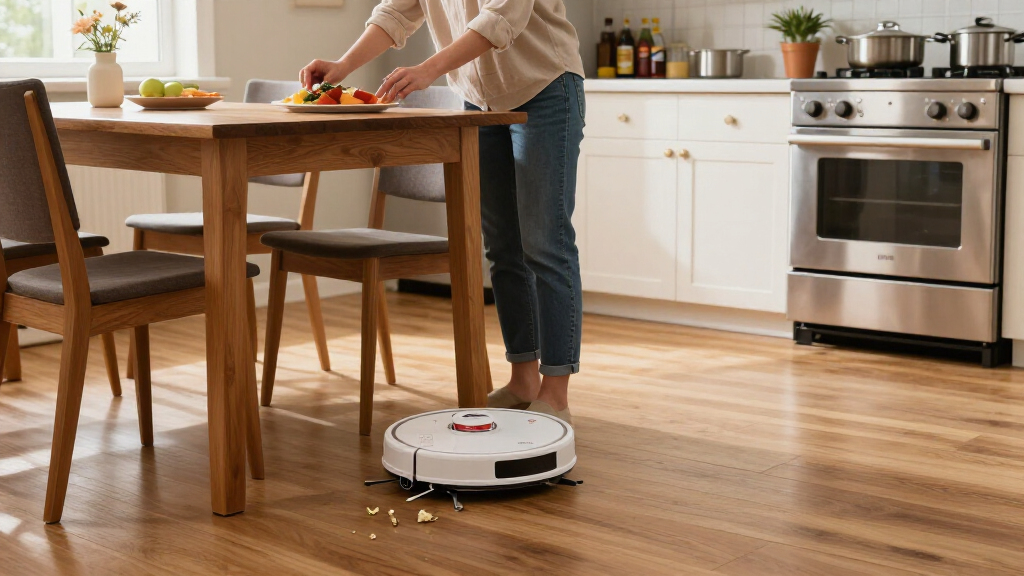
Wi-Fi enabled robot vacuum cleaner
As an affiliate, we earn on qualifying purchases.
As an affiliate, we earn on qualifying purchases.
Expansion of US Supply Chain Sourcing
Matic plans to continue expanding its domestic production capabilities and increase the number of US-based suppliers. The company aims to reduce the percentage of foreign components to align with ‘Made in the US’ standards. This strategy may influence other hardware manufacturers to prioritize onshoring to avoid potential future regulatory hurdles. The FCC is expected to continue refining its ban enforcement mechanisms, potentially requiring more detailed component disclosures from manufacturers. Readers should monitor whether the FCC grants similar waivers to other domestic robotics companies or if it tightens rules on existing approved components.
As an affiliate, we earn on qualifying purchases.
Key Questions
Why did the Matic need an FCC waiver if it was never banned?
The Matic did not strictly need the waiver for current sales because its radio components were already approved. The waiver acts as a legal precaution against future regulatory changes or if the FCC decides to scrutinize the specific combination of components used in the device.
Does the waiver apply to all Matic products?
No. The FCC granted the waiver specifically for the Matic model 4MA0001 and the 4DK0008 charging dock. It is not a blanket approval for the Matic brand, unlike waivers granted to some router manufacturers.
Where are Matic robot vacuums manufactured?
Matic assembles its robots in Mountain View, California. The company recently converted its entire R&D facility into a production site to increase output and emphasize domestic manufacturing.
What components does Matic use for its radio functions?
Matic uses an off-the-shelf Intel AX210 Wi-Fi and Bluetooth chip. This component already holds FCC approval, which means the robot’s radio emissions are compliant without needing a new certification for the specific robot model.
Source: rss
Fall Picks
fall essentials
As an affiliate, we earn on qualifying purchases.