Self-cleaning juicers make juicing much easier by reducing mess and cleanup time. With just a push of a button, these juicers automatically clean the filter and internal parts, saving you from scrubbing manual residues. Many models include water circulation, built-in brushes, and smart sensors for efficient cleaning. They’re user-friendly and perfect for maintaining a tidy kitchen. Keep exploring to discover which models offer the best features for effortless, mess-free juicing.

Get kitchen gear delivered free — and shop member deals
- Fast, free delivery on millions of items
- Access to Prime Big Deal Days deals on October 6–7
- Prime Video, Amazon Music and more included
Key Takeaways
- Self-cleaning juicers automate the cleaning process with a push of a button, reducing mess and cleanup time.
- Built-in water circulation and cleaning brushes efficiently remove pulp from filters, minimizing manual scrubbing.
- Features like rear fins and collection bins help contain pulp and prevent dispersal, keeping your workspace tidy.
- Regular maintenance still requires manual disassembly, but automatic cleaning simplifies overall cleanup.
- Overall, self-cleaning juicers make juicing more convenient and less messy, encouraging regular use.
As an affiliate, we earn on qualifying purchases.
Effortless Cleanup With Self-Cleaning Juicers
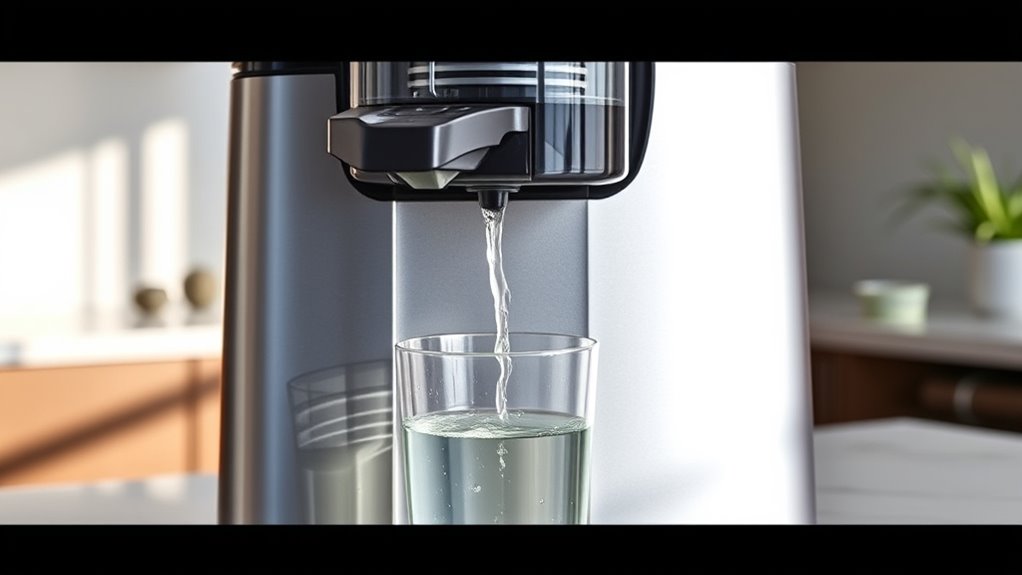
Self-cleaning juicers are revolutionizing how you prepare fresh juice by making cleanup quick and effortless. With just a push of a button, you can activate the built-in cleaning mechanism that automatically removes pulp from the filter, saving you time and effort. Many models, like the PowerXL, feature a self-cleaning brush that engages when you select the clean function on the control dial. The process usually runs for about 25 seconds, during which water circulates through the system, flushing out pulp residue. Some models even incorporate rear fins to prevent pulp from dispersing during cleaning, ensuring a tidy workspace. Once the cycle completes, the juicer typically shuts off automatically, leaving you with a clean filter ready for your next use.
The motor performance of these juicers varies, with power ranges from 600W to 1200W. Even at lower wattages, the self-cleaning process remains effective because of the design of the cleaning system. RPM speeds differ markedly: masticating models operate at 40-100 RPM, focusing on nutrient preservation, while centrifugal types spin up to 25,000 RPM for rapid juice extraction. Turbo blend technology, common in some models like Starlyf, spins at approximately 14,000 RPM, blending ingredients efficiently. Variable speed dials allow you to tailor the processing to soft or hard produce, enhancing juice quality and extraction efficiency. Ease of use features such as simple controls and minimal assembly make these juicers accessible for users of all experience levels.
Cleaning requirements are minimal, but some manual intervention is still necessary. Before activating the self-clean cycle, you typically need to add water to the food shoot. You usually turn a control knob to the “clean” position and hold down the food pusher during the cycle. The auto-clean feature primarily targets the filter, removing pulp and fiber, but it doesn’t eliminate the need for regular disassembly and manual cleaning of other parts like pulp containers and juice collection bins. Despite claims of auto-cleaning, thorough maintenance still involves occasional manual scrubbing, especially for more stubborn residues. Self-cleaning models often have a dedicated water compartment that needs to be filled for the process to work effectively. Additionally, some models include smart sensors to optimize cleaning cycles and prevent overflow during operation. Incorporating advanced cleaning technology ensures the process remains efficient and user-friendly.
Design features for ease of use include reduced assembly parts, intuitive controls, and collection bins with spouts for mess-free pouring. Compact models, like the Zitrux, require only about 0.46 square meters of counter space, fitting neatly into small kitchens. These innovations, along with BPA-free construction in premium models like Hurom H400, prioritize safety and convenience. Overall, self-cleaning juicers markedly reduce cleanup time, making juicing a more enjoyable and less messy experience, while still ensuring your juice is fresh, nutrient-rich, and free of pulp.
automatic juicer with self-cleaning
As an affiliate, we earn on qualifying purchases.
As an affiliate, we earn on qualifying purchases.
Frequently Asked Questions
Do Self-Cleaning Juicers Require Special Cleaning Solutions?
No, you don’t need special cleaning solutions for self-cleaning juicers. Most models use water and sometimes a small amount of mild detergent during their automated cleaning cycles. You simply activate the self-cleaning feature, add water, and let the machine do the work. This process effectively removes pulp and residue without the need for harsh chemicals, making cleanup quick, safe, and convenient for everyday use.
How Often Should the Self-Cleaning Cycle Be Used?
You should use the self-cleaning cycle after every few uses, especially if you juice frequently or with sticky ingredients. This helps prevent pulp buildup and guarantees peak performance. If you notice any residue or reduced efficiency, run the cycle sooner. Regular use keeps your juicer clean, extends its lifespan, and minimizes manual cleaning, making your juicing routine easier and more hygienic.
Are Self-Cleaning Mechanisms Noisy During Operation?
Self-cleaning mechanisms are generally quiet during operation, so you won’t be disturbed by loud noises. Most models run smoothly at low RPMs or gentle water sprays, producing minimal sound. You might notice a soft hum or gentle water flow, but it shouldn’t be loud enough to bother you. This quiet operation makes cleaning convenient, especially if you want to quickly tidy up without creating a noisy environment.
Can Self-Cleaning Juicers Handle Large Quantities of Pulp?
Yes, self-cleaning juicers can handle hefty heaps of pulp with ease. Thanks to their powerful pumps and specialized systems, they swiftly sweep away substantial pulp piles, preventing blockages and buildup. You’ll notice smooth, seamless cleaning cycles that manage large quantities without causing clogs or chaos. Whether you’re juicing a big batch or a small session, these clever machines confidently clean up, keeping your kitchen clutter-free and your juicing flowing freely.
Do Self-Cleaning Juicers Need Manual Cleaning Afterward?
No, most self-cleaning juicers don’t need manual cleaning afterward. You simply activate their cleaning cycle, which uses water or brushes to remove pulp and residues automatically. Once the cycle finishes, you might need to wipe down a few parts, but overall, the process is quick and hassle-free. This design saves you time and effort, making cleanup easier than traditional juicers.
As an affiliate, we earn on qualifying purchases.
Conclusion
With a self-cleaning juicer, you’ll never dread the mess again—it’s as easy as pressing a button, just like in the good old days of the Victorian kitchen. No more scrubbing or soaking; you can enjoy your fresh juice without the fuss. These clever gadgets make juicing a breeze, so you can focus on savoring your drink instead of cleaning. Say goodbye to mess and hello to effortless freshness—your modern kitchen’s new best friend.
electric juicer with auto-clean feature
As an affiliate, we earn on qualifying purchases.
As an affiliate, we earn on qualifying purchases.
Halloween Picks
halloween
As an affiliate, we earn on qualifying purchases.