Using smart plugs to upgrade your old kitchen appliances is simple and effective, but there are some important safety tips. Make certain the appliance’s wattage matches the smart plug’s capacity and avoid high-power devices like ovens or refrigerators. Check compatibility with your voice assistant and Wi-Fi network. Proper setup allows remote control and automation, making your kitchen smarter. If you want to discover how to guarantee safe use and maximize convenience, keep exploring the options available.

Get kitchen gear delivered free with Prime
- Fast, free delivery on millions of items
- Prime Video, Amazon Music and more included
- Member-only deals all year
Key Takeaways
- Ensure the old appliance operates on 120V AC with a compatible plug and stays within the smart plug’s load capacity (10-15 amps).
- Use a smart plug with Wi-Fi and voice assistant support (Alexa, Google, Siri) for seamless control and automation.
- Confirm the appliance’s wattage and power features to prevent overloads or resetting digital displays when powered through the smart plug.
- Set up the smart plug via its app, connect to Wi-Fi, and assign voice commands or schedules to automate operation.
- Regularly monitor energy usage and inspect cords to ensure safety and prevent overheating when controlling older appliances.
smart plug for kitchen appliances
As an affiliate, we earn on qualifying purchases.
As an affiliate, we earn on qualifying purchases.
Understanding Compatibility of Kitchen Appliances With Smart Plugs

Understanding whether your kitchen appliances are compatible with smart plugs starts with checking their power requirements and plug design. Most standard appliances that run on 120V AC power and have a typical grounded or two-prong plug usually work with smart plugs. However, appliances with digital displays or memory functions might reset when powered through a smart plug. The physical design of the plug matters too—rectangular smart plugs often accommodate grounded plugs better than round ones. Always look for compatibility labels on the smart plug packaging, which specify supported device types and ecosystems. Keep in mind that high-wattage appliances like electric kettles or toasters may not be suitable, so verifying their power needs against the smart plug’s ratings is essential. This helps you ensure safe and effective integration, especially considering the power ratings and safety considerations involved in smart home device compatibility. Additionally, understanding appliance compatibility can prevent potential damage to both your appliances and smart devices. Being aware of electrical load limits helps you avoid overloading circuits and ensures longevity of your devices. To ensure reliable operation, it’s also important to consider the electrical load capacity of your home circuits and the smart plug’s maximum wattage. Recognizing electrical safety standards can further help in selecting compatible and safe smart plug setups.
Wi-Fi smart plug compatible with Alexa
As an affiliate, we earn on qualifying purchases.
As an affiliate, we earn on qualifying purchases.
Assessing Power Requirements and Load Limits for Safe Usage
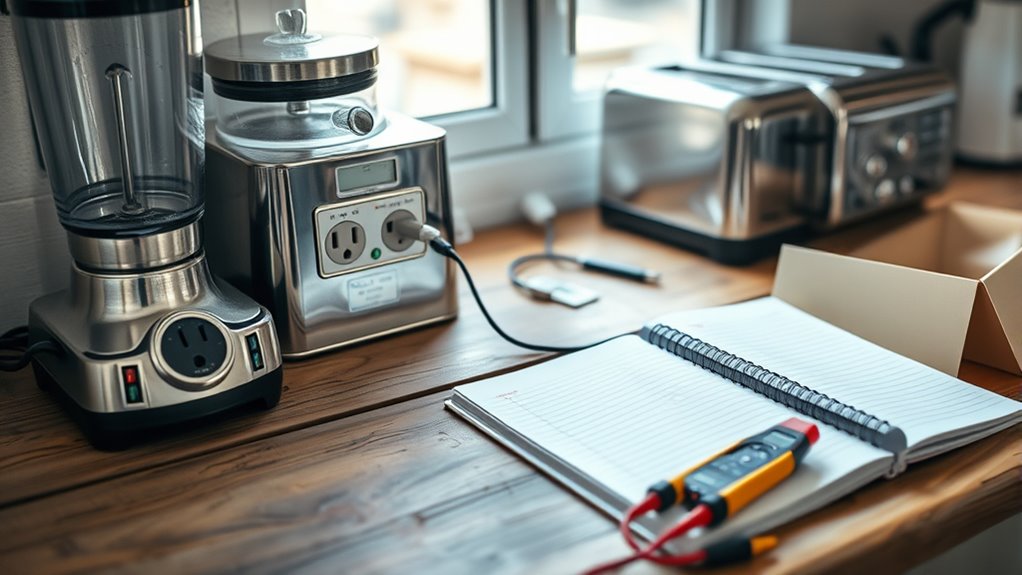
Before connecting your appliances to a smart plug, you need to verify their wattage limits to avoid overloads. Check that the device’s power consumption matches the smart plug’s rated capacity to guarantee safety. Keep an eye on your power usage to prevent overheating and potential hazards during operation. Additionally, understanding your load capacity is essential for maintaining safe operation and avoiding damage to your appliances or smart plugs. Being aware of the piercing care and hygiene practices can also help prevent electrical hazards caused by moisture or improper handling. Properly managing your home theatre projectors can further ensure safe and efficient use of your electronic devices. Moreover, regularly inspecting your setup and ensuring proper filtration and pump protection can help extend the lifespan of connected devices and prevent malfunctions. Being familiar with power management practices can further enhance safety and efficiency in your home electrical system.
Verify Appliance Wattage Limits
To safely use a smart plug with your kitchen appliances, you need to verify that their wattage requirements stay within the plug’s load limits. Check your appliance’s wattage label or user manual to determine its power consumption. Make certain it doesn’t exceed the smart plug’s maximum rated load, usually between 10-15 amps or around 1,800 watts. Overloading can cause overheating or damage. Additionally, understanding the appliance’s power requirements helps prevent potential hazards and ensures longevity of both your appliances and smart devices. Being aware of air purifier maintenance and load limits can help prevent electrical issues and extend device lifespan. Staying within these limits guarantees safe and reliable operation. It is also advisable to consider the electrical load capacity of your home’s wiring to avoid any electrical issues. Being aware of European cloud standards can further ensure that your smart devices operate safely within regional electrical regulations. Properly assessing your appliance’s power consumption and load limits is essential for safe integration of smart technology in your kitchen.
Match Smart Plug Ratings
Matching your smart plug’s ratings to your appliances’ power requirements is essential for safe and reliable operation. First, check the maximum load rating on the smart plug, typically between 10-15 amps. Convert this to watts by multiplying the current rating by voltage (120V in most cases). For example, a 15-amp smart plug supports up to 1,800 watts. Next, review your appliance’s wattage, usually marked on the device or its manual. Ensure the appliance’s power consumption stays below the smart plug’s maximum capacity. Overloading a smart plug can cause overheating, damage, or fire hazards. Avoid connecting high-wattage appliances like electric kettles, irons, or microwave ovens. Matching ratings guarantees your setup remains safe, efficient, and compliant with manufacturer guidelines. Additionally, understanding electrical load limits helps prevent unintended hazards and ensures longevity of your devices. Being aware of local electrical standards can also help you choose the appropriate smart plug for your region. To further enhance safety, consider smart plug features such as overload protection or remote monitoring capabilities. Knowing the power requirements of your appliances ensures optimal performance and safety in your smart home setup. Properly assessing these factors can also prevent electrical accidents, contributing to a safer household environment.
Monitor Power Consumption
Monitoring the power consumption of your kitchen appliances is essential to guarantee safe and effective smart plug use. Knowing each device’s energy draw helps prevent overloads, overheating, and damage. Start by checking the wattage and amperage ratings on your appliances and compare them to your smart plug’s limits. Using a plug-in power meter can give real-time readings, so you know exactly how much power each device consumes. This practice is particularly important for electrical safety and ensuring your setup remains within safe parameters. It also assists in assessing load requirements, helping you prevent circuit overloads and potential fire hazards. Regular monitoring can reveal patterns of energy consumption, allowing you to optimize usage and reduce unnecessary power drain. Keep an eye on continuous usage to prevent overheating. Regular monitoring ensures you stay within safe load limits and prolongs the lifespan of both your appliances and smart plugs.
As an affiliate, we earn on qualifying purchases.
Identifying Appliances Suitable for Smart Plug Conversion

If you want to upgrade your old kitchen appliances with smart features, start by identifying which ones are suitable for smart plug conversion. Appliances that operate on standard 120V AC power and have moderate wattage—typically under 1,800 watts—are ideal candidates. Look for devices like coffee makers without thermal carafes, blenders, food processors, electric kettles under 1,500 watts, and countertop dishwashers. Confirm they don’t require automatic restart after power loss, as this can interfere with smart plug operation. Check their physical plug design; rectangular smart plugs often fit grounded outlets better. Avoid high-power appliances like ovens, stoves, and refrigerators, which aren’t suitable due to safety and functional reasons. Verifying wattage ratings and compatibility labels helps ensure a smooth conversion process. Additionally, considering eco-friendly and energy-saving features can optimize your smart appliance setup in line with sustainable travel practices. Recognizing power consumption limits is crucial for safe and effective smart plug use. Being aware of smart home energy management strategies can further enhance your setup’s efficiency and sustainability.
high load smart plug for kitchen
As an affiliate, we earn on qualifying purchases.
As an affiliate, we earn on qualifying purchases.
Recognizing Appliances That Should Not Be Connected to Smart Plugs

Certain appliances pose safety risks or may malfunction when connected to smart plugs, so you should avoid plugging them in altogether. High-power appliances can overload smart plugs, increasing fire hazards. Devices with motors or compressors, like refrigerators or freezers, shouldn’t be connected, as they can be damaged or cause power surges. Appliances that require automatic restart after power loss might not function correctly, leading to safety issues or malfunction. Additionally, appliances with digital displays or memory functions may reset unexpectedly, losing settings or causing operational errors.
- Refrigerators, freezers, and other large cooling units
- Electric stoves, ovens, and high-wattage microwave ovens
- Devices with motors, compressors, or automatic restart features
Setting Up Smart Plugs for Voice Control and Automation
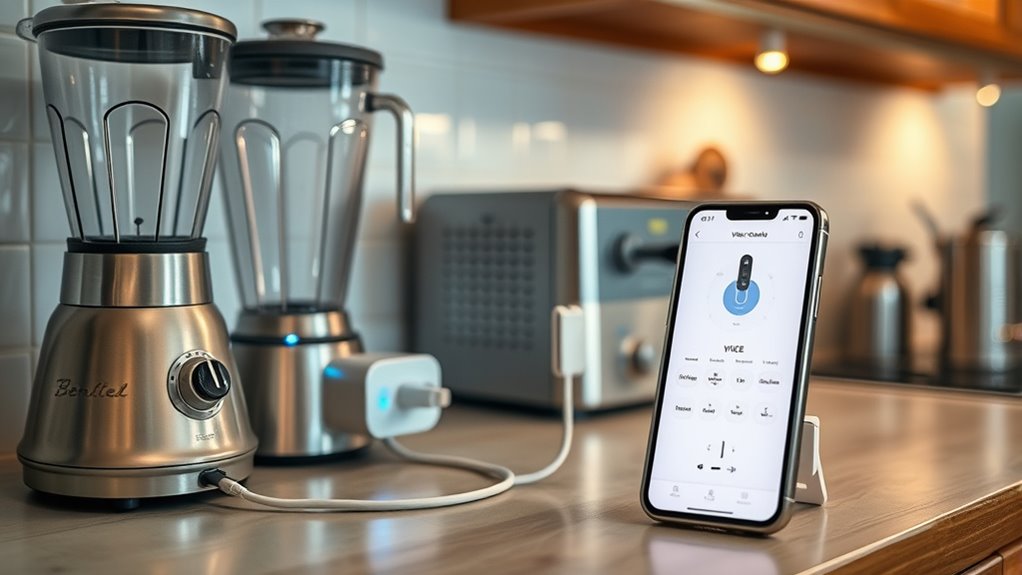
Setting up smart plugs for voice control and automation begins with guaranteeing compatibility between your devices and your chosen smart home ecosystem. Check if your smart plug supports Amazon Alexa, Google Assistant, or Apple Siri, and confirm it works with your ecosystem. Download the relevant app and connect the smart plug to your Wi-Fi network, usually 2.4GHz. Follow the manufacturer’s instructions to add the device to your app, then link it with your voice assistant. Once connected, assign a name to your appliance for easy voice commands. Create routines or schedules within the app to automate turning appliances on or off at specific times. Test voice commands to ensure everything works seamlessly, and adjust settings as needed for smooth control.
Ensuring Ecosystem Compatibility and Connectivity Options
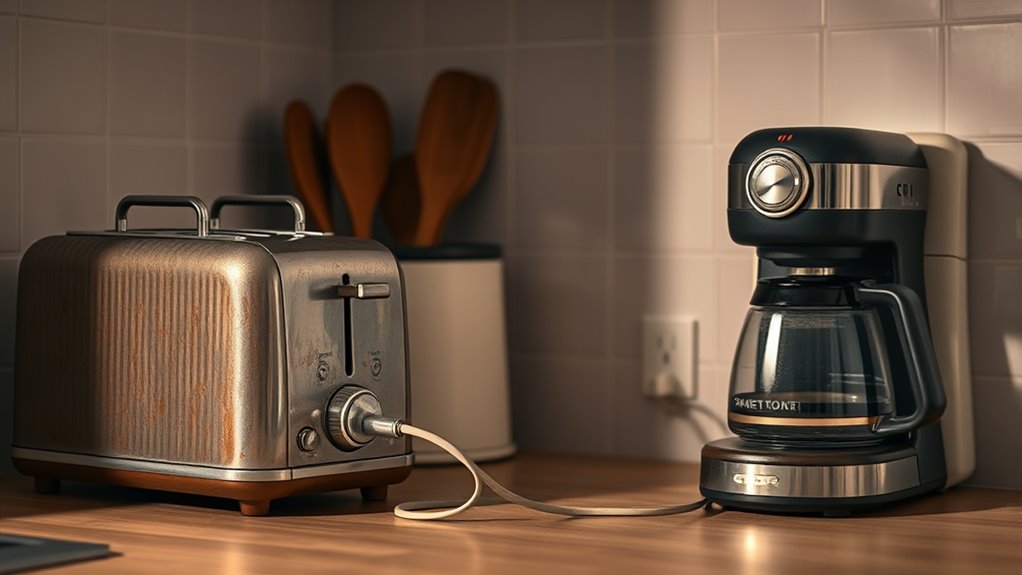
To guarantee your smart plug works seamlessly with your kitchen appliances, you need to verify its compatibility with your existing smart home ecosystem. Confirm the smart plug supports platforms you use, like Alexa, Google Assistant, or Apple Siri. Compatibility labels on packaging can guide you in selecting the right device for your setup. Consider whether the smart plug uses the Matter protocol for easier cross-platform integration. Check if your Wi-Fi network is compatible, typically requiring 2.4GHz networks. Also, confirm if the smart plug connects smoothly with your mobile app for setup and control.
Ensure your smart plug is compatible with your voice assistant, supports Matter, and connects to your 2.4GHz Wi-Fi network for seamless operation.
- Confirm compatibility with your preferred voice assistant (Alexa, Google, Siri)
- Look for Matter support for broad device interoperability
- Ensure your Wi-Fi network matches the smart plug’s requirements
Tips for Safe Installation and Usage in Your Kitchen

Before installing smart plugs, double-check that your appliances are compatible and meet the recommended power limits. Always follow safety precautions, especially with high-wattage devices, to prevent overheating or electrical hazards. Being cautious guarantees your smart setup is both effective and safe for everyday use.
Verify Appliance Compatibility Carefully
Ensuring your appliances are compatible with smart plugs is essential for safe and effective use. Before plugging anything in, check the appliance’s power type, size, and features. Some devices, like refrigerators or high-wattage ovens, shouldn’t connect to smart plugs due to safety risks. Digital displays or memory functions may reset when power cycles, which could cause inconvenience. Also, verify the plug’s compatibility label and ensure it matches your appliance’s needs.
- Confirm the appliance operates on standard 120V AC power
- Avoid devices with automatic restart features or high startup currents
- Check the physical plug design to ensure proper fit and grounding
Taking these steps helps prevent mishaps and keeps your kitchen safe.
Adhere to Power Limits
When installing smart plugs in your kitchen, always pay close attention to the power limits specified by the manufacturer. Most smart plugs support a maximum load of 10-15 amps, which translates to roughly 1,200 to 1,800 watts. Avoid connecting high-wattage appliances like electric kettles, toasters, or irons that exceed these ratings. Overloading can cause the smart plug to overheat, trip, or even pose a fire risk. Check the appliance’s wattage label and make certain it stays below the plug’s maximum capacity. If an appliance’s power draw is close to the limit, consider using a dedicated smart outlet designed for higher loads or keep it plugged directly into the wall. Staying within these limits keeps your setup safe and reliable.
Prioritize Safety Precautions
To keep your kitchen safe when using smart plugs, always follow proper installation and usage practices. Confirm your smart plug is compatible with your appliance’s power requirements and avoid exceeding its maximum load capacity. Never connect high-wattage appliances like refrigerators, stoves, or microwave ovens, as they pose fire risks or can damage the device. Regularly inspect cords and plugs for damage, and avoid overloading outlets. Keep smart plugs away from water or moisture to prevent electrical shorts. Use grounded, rectangular smart plugs for better compatibility with grounded appliances. Always follow manufacturer instructions for setup and use, and be cautious with appliances that reset or have digital displays, as these may lose settings when power cycles. Staying vigilant ensures safe and efficient operation.
Enhancing Kitchen Convenience With Smart Plug Schedules and Routines
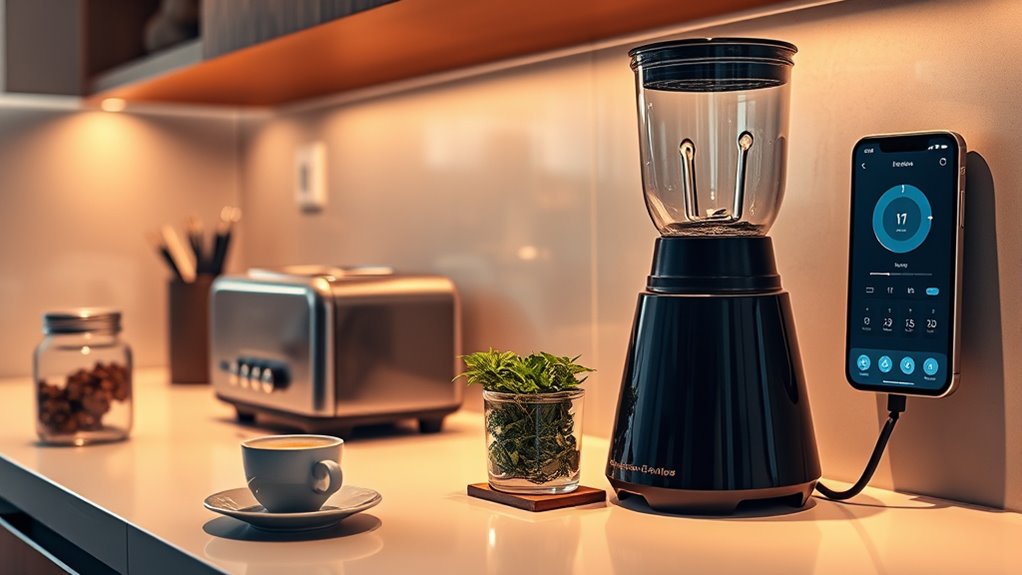
Smart plug schedules and routines can considerably boost your kitchen’s convenience by automating everyday tasks. With a few taps on your smartphone or voice command, you can set appliances to turn on or off at specific times, saving you effort and ensuring things run smoothly. Imagine waking up to freshly brewed coffee or having your slow cooker start dinner just as you arrive home. Routines can also coordinate multiple devices, like turning on the kettle and activating your kitchen lights simultaneously. These automations help you manage your kitchen more efficiently, reduce energy waste, and keep your appliances ready when needed. Setting up schedules is simple, and you can tweak them anytime to fit your lifestyle, making your kitchen smarter and more responsive.
Frequently Asked Questions
Can I Use Smart Plugs With Multi-Outlet Kitchen Appliances?
You can use smart plugs with multi-outlet kitchen appliances if each outlet’s load stays within the smart plug’s capacity and the appliance’s power draw is compatible. However, you should be cautious because some appliances distribute power unevenly across outlets, which can overload the smart plug. Always check the total wattage, ensure the smart plug supports the combined load, and verify that the appliance’s design permits for safe operation through a smart plug.
Do Smart Plugs Work During Power Outages or Outages Recovery?
Smart plugs don’t work during power outages or when power is restored. When the electricity goes out, your smart plug loses power and can’t control your appliance. Once the power comes back, the smart plug reinitializes, but any scheduled routines or settings might reset. You’ll need to manually turn your appliance back on or reconfigure your smart system if needed, as smart plugs rely on a continuous power supply.
Are There Smart Plugs Compatible With High-Wattage Appliances?
You should look for smart plugs rated for higher loads, typically between 15 amps or more, to handle high-wattage appliances. However, most standard smart plugs aren’t designed for devices like electric stoves, ovens, or high-wattage kettles, which often surpass safe limits. Always check the maximum wattage and amperage ratings on the smart plug and your appliance’s specifications to ensure safe, reliable operation.
How Do I Reset Smart Plugs After a Power Cycle?
Almost 60% of smart plug users report needing to reset their devices after power cycles. To do this, you typically unplug the smart plug for about 10 seconds, then plug it back in. Some models require you to press a reset button or follow specific app instructions. Always check your device’s manual for exact steps, as reset procedures can vary between brands and models.
Can I Control Smart Plugs Remotely Without Internet Access?
You can’t control smart plugs remotely without internet access. These devices rely on Wi-Fi connectivity and the associated app or voice assistant to operate. Without an internet connection, you won’t be able to turn them on or off from afar. However, if you set up local control options like a smart home hub or direct app control on your local network, you might manage them without internet, but this depends on your specific setup.
Conclusion
By upgrading your old kitchen appliances with smart plugs, you can boost convenience and save energy effortlessly. Did you know that smart devices can reduce household energy consumption by up to 30%? Just confirm compatibility, follow safety guidelines, and choose suitable appliances. With a little setup, you’ll enjoy seamless automation and voice control, making your kitchen smarter and more efficient. Start transforming your space today and experience the future of home cooking.
Fall Picks
fall essentials
As an affiliate, we earn on qualifying purchases.