High-tech pressure cookers save you time by precisely controlling temperature and pressure with advanced sensors and smart technology. They create a sealed environment where water boils at higher temperatures, cooking food faster and more evenly. Automated adjustments prevent over- or undercooking, while safety features like automatic pressure release enhance convenience. Thanks to real-time monitoring and calibration, they deliver consistent results quickly. If you want to understand how these innovations boost efficiency, there’s more to discover below.
Key Takeaways
- High-tech pressure cookers use precise sensors and automatic adjustments to optimize temperature and pressure, reducing cooking time.
- Advanced safety features like automatic pressure release and real-time monitoring prevent delays caused by manual intervention.
- The sealed environment raises water’s boiling point, speeding up heat transfer and tenderizing food faster than traditional methods.
- Connectivity and smart controls enable remote monitoring and quick adjustments, avoiding overcooking and saving time.
- Regular calibration and maintenance ensure consistent performance, preventing delays caused by malfunctions or inaccuracies.
high-tech pressure cooker with smart controls
As an affiliate, we earn on qualifying purchases.
As an affiliate, we earn on qualifying purchases.
The Principles of Pressure Cooking
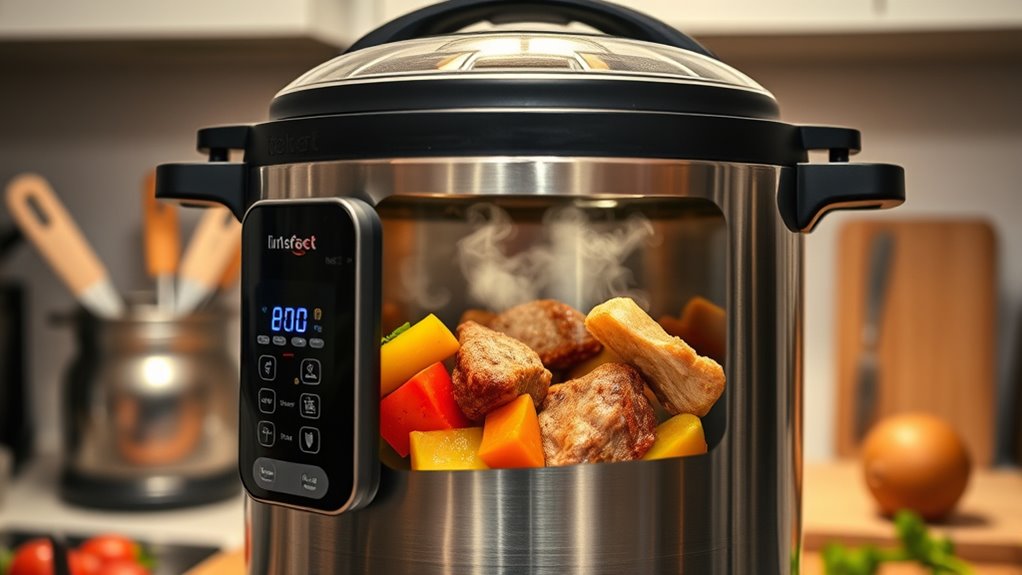
Pressure cooking works by increasing the boiling point of water, which allows food to cook faster and more efficiently. When you seal the cooker, pressure builds inside, raising the temperature above boiling point. This high pressure accelerates cooking times and enhances flavors. Modern pressure cookers are equipped with safety features like pressure release valves, which prevent excess pressure buildup. These valves automatically vent steam if pressure becomes too high, ensuring your safety. Some models also include safety locks that prevent opening the lid until pressure drops to safe levels. Understanding these safety features helps you operate your pressure cooker confidently. Proper pressure release is essential; always follow manufacturer instructions for venting steam after cooking. This combination of principles and safety measures makes pressure cooking both safe and effective. Additionally, clear instructions and safety guidelines are crucial for operating high-tech cookers safely and efficiently. Being familiar with pressure regulation mechanisms can further help prevent accidents and ensure optimal cooking results, especially in advanced models with digital controls.
digital pressure cooker with safety features
As an affiliate, we earn on qualifying purchases.
As an affiliate, we earn on qualifying purchases.
How Modern Pressure Cookers Regulate Temperature and Pressure
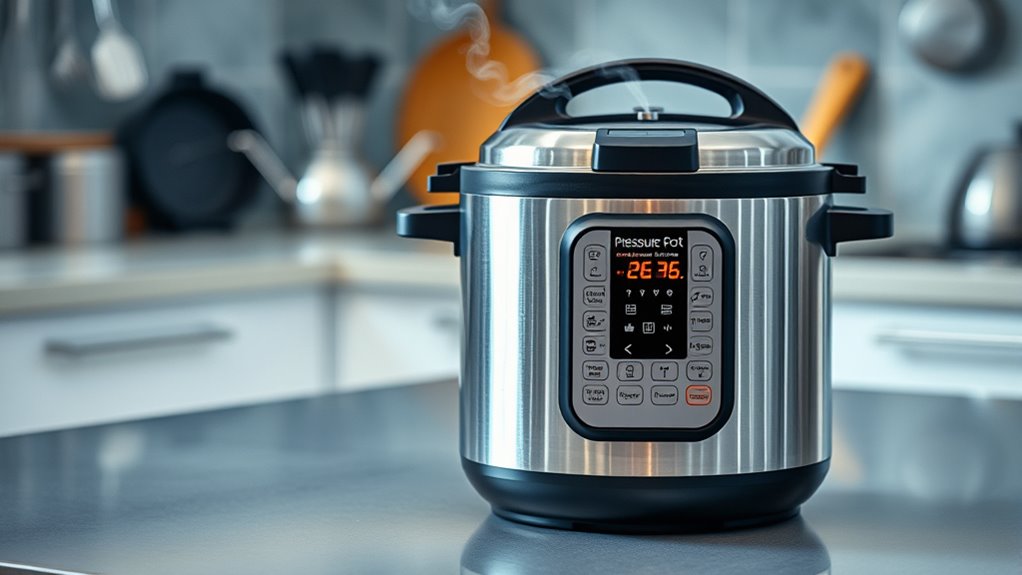
Modern pressure cookers use sophisticated mechanisms to maintain consistent temperature and pressure levels during cooking. They rely on precise pressure sensor calibration to monitor conditions accurately, adjusting heat as needed. They also incorporate advanced control systems that fine-tune the cooking environment in real time. The user interface design simplifies control, allowing you to set and monitor cooking parameters easily. These systems automatically respond to changes, ensuring best results without manual intervention. Additionally, incorporating reliable backup power ensures the cooker operates safely and effectively even during power outages. Incorporating advanced safety features further enhances user confidence and prevents accidents during operation. To optimize performance, many models also include real-time monitoring, which provides continuous feedback on cooking conditions. Moreover, some models integrate smart connectivity, allowing remote control and monitoring via smartphone apps for added convenience.
electric pressure cooker with remote monitoring
As an affiliate, we earn on qualifying purchases.
As an affiliate, we earn on qualifying purchases.
The Role of Sealing Mechanisms in Speeding Up Cooking
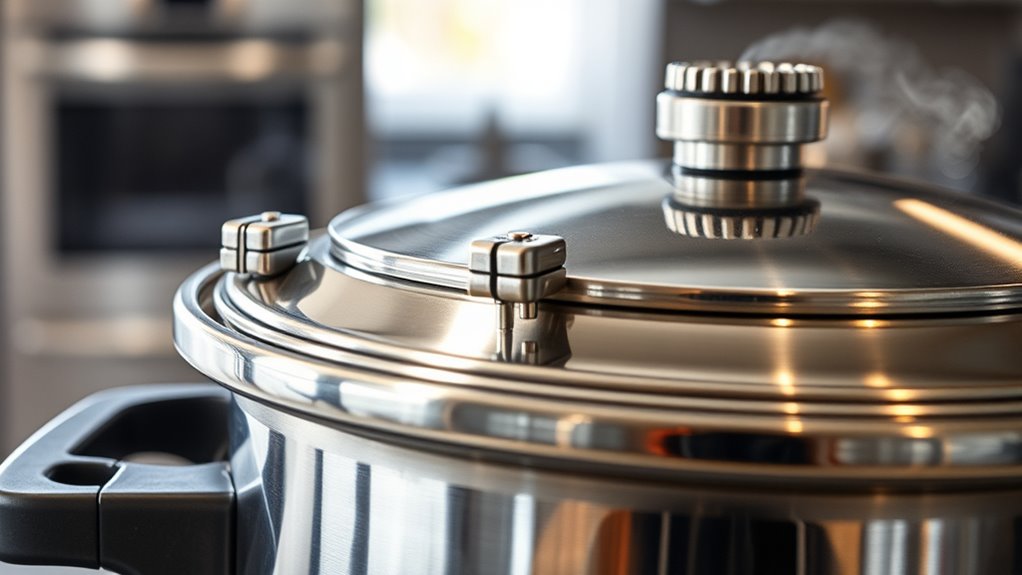
Have you ever wondered how sealing mechanisms in pressure cookers accelerate cooking times? The key lies in creating a tight seal that traps steam inside, building up high pressure quickly. Sealing mechanisms, such as gasket seals, ensure minimal steam escape, allowing the pressure to rise rapidly. Effective sealing is essential for efficient pressure cooking, maximizing the benefits of high-pressure environments. Without effective sealing mechanisms, steam would escape prematurely, extending cooking times and reducing efficiency. Pressure release valves play a crucial role by releasing excess pressure to maintain safety, but they also help regulate the pressure buildup efficiently. When pressure increases swiftly, the boiling point of water rises, cooking food faster. This airtight environment prevents heat loss, ensuring consistent high temperatures. Additionally, sealing mechanisms are designed to withstand high pressures, providing durability and safety during operation. Regular maintenance and inspection of these components can prevent malfunctions and ensure optimal performance. Proper seal maintenance ensures continued performance and safety over time. That’s how these components work together to cut down cooking time and maximize the benefits of pressure cooking.
automatic pressure cooker with sensors
As an affiliate, we earn on qualifying purchases.
As an affiliate, we earn on qualifying purchases.
The Impact of High-Pressure Environments on Cooking Time
When a pressure cooker reaches its ideal sealing, the environment inside becomes considerably different from normal boiling conditions. The pressure dynamics increase, raising the boiling point of water and speeding up cooking. This high-pressure environment accelerates heat transfer, reducing overall cooking time substantially. As a result, you notice food textures change faster; meats become tender quicker, and legumes soften sooner. The table below illustrates how pressure levels influence cooking:
| Pressure Level | Cooking Time Reduction | Effect on Food Texture |
|---|---|---|
| Low | Slightly faster | Slightly softer |
| Medium | Moderate reduction | Noticeably tender |
| High | Significant reduction | Very tender, moist |
| Very High | Maximum speed | Almost melting, delicate |
| Extreme | Rapidest cooking | Very soft, falling apart |
Understanding these pressure dynamics helps you optimize recipes and achieve perfect food texture in less time. Proper sealing ensures the cooker maintains the necessary pressure levels for optimal efficiency. Additionally, being aware of pressure levels allows cooks to tailor cooking times for different ingredients. Knowing the pressure settings and how they influence cooking outcomes can help prevent over- or undercooking. Recognizing the pressure fluctuations during cooking can also assist in troubleshooting issues with the appliance.
Advanced Sensors and Smart Technology in Pressure Cookers
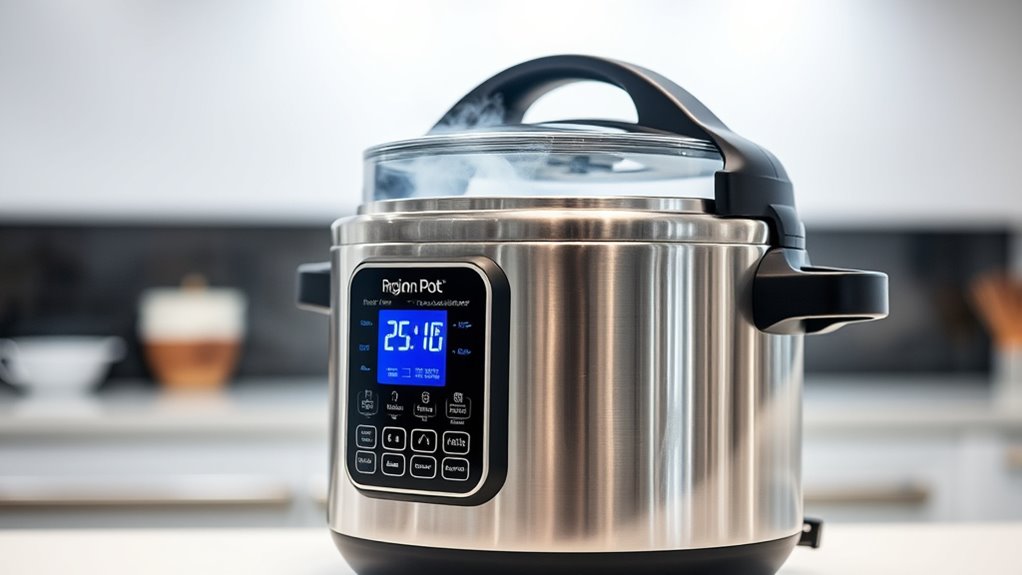
Modern pressure cookers now use advanced sensors that need precise calibration to guarantee ideal cooking results. With intelligent adjustments, these devices can automatically modify settings for different recipes, saving you time and effort. Plus, connectivity features let you control and monitor your cooker remotely through dedicated apps. Additionally, smart appliance integration enables your pressure cooker to work seamlessly with other modern kitchen devices for a more coordinated cooking experience.
Sensor Accuracy and Calibration
Advanced sensors in pressure cookers rely on precise calibration to deliver accurate readings, ensuring consistent cooking results. Proper sensor calibration is essential for maintaining measurement accuracy, preventing under- or overcooking. When calibration is off, you might notice steam escaping prematurely or pressure readings fluctuating unexpectedly. To avoid this, high-tech cookers use self-calibrating sensors that adjust based on real-time data. Imagine:
- A sensor that fine-tunes itself after each use
- Real-time adjustments for changing temperatures
- Sensors that detect minute pressure shifts
- Digital displays updating instantly
These features give you confidence that your cooker’s measurements are reliable, so every meal turns out perfect. Sensor calibration isn’t just technical jargon—it’s the foundation of precise, safe, and efficient pressure cooking. Measurement accuracy is vital for achieving consistent cooking results and ensuring safety in pressure cooking. Additionally, sensor durability ensures these advanced sensors maintain their calibration over many uses, adding to their reliability.
Intelligent Cooking Adjustments
Thanks to smart technology, pressure cookers now automatically adjust cooking parameters in real time, guaranteeing perfect results without constant monitoring. Advanced sensors detect temperature, pressure, and moisture levels, enabling the cooker to fine-tune its settings dynamically. This precision minimizes overcooking or undercooking, saving you time and effort. Modern pressure cookers also incorporate intelligent safety features, such as automatic pressure release systems, which activate if pressure exceeds safe limits. These safety measures prevent accidents and ensure safe operation. By continuously monitoring conditions and making adjustments on the fly, these cookers deliver consistently delicious meals while reducing the need for manual intervention. The integration of smart technology makes pressure cooking safer, more efficient, and remarkably user-friendly.
Connectivity and App Control
Connectivity and app control have transformed pressure cooking by allowing you to operate your appliance remotely and customize settings with ease. With these features, you can monitor your cooking process from anywhere, ensuring perfect results every time. Imagine receiving notifications when your meal reaches the ideal pressure or temperature, so you’re never left guessing. You can adjust cook times or switch recipes on the fly, thanks to seamless recipe customization. Features include:
- Remote monitoring of cooking progress
- Adjusting cooking parameters via smartphone
- Access to a library of customizable recipes
- Real-time alerts for perfect timing
These innovations make pressure cooking more convenient, precise, and user-friendly. Connectivity and app control have also enhanced user confidence by providing real-time feedback and troubleshooting assistance directly through your device. Additionally, advanced sensors ensure that the cooker maintains optimal pressure and temperature levels for consistent cooking results. Moreover, integrating smart technology allows the device to learn from your cooking habits, further refining its performance over time.
Comparing Traditional and High-Tech Pressure Cooking Methods

Traditional pressure cookers have been relied upon for decades, offering straightforward operation and dependable results. They typically require manual pressure release, which can be time-consuming and sometimes risky if not handled carefully. Safety features such as weighted valves or jiggler valves help prevent over-pressurization, but user vigilance remains vital. In contrast, high-tech pressure cookers integrate digital controls, automatic pressure regulation, and smart safety features. These modern devices monitor pressure levels continuously and adjust cooking parameters accordingly, eliminating the need for manual pressure release. They also often include safety mechanisms like lid sensors and automatic shut-offs, reducing user error and enhancing safety. While traditional models focus on simplicity, high-tech cookers provide convenience and precision, saving you time and effort in the kitchen.
Practical Tips for Maximizing Efficiency With Pressure Cookers
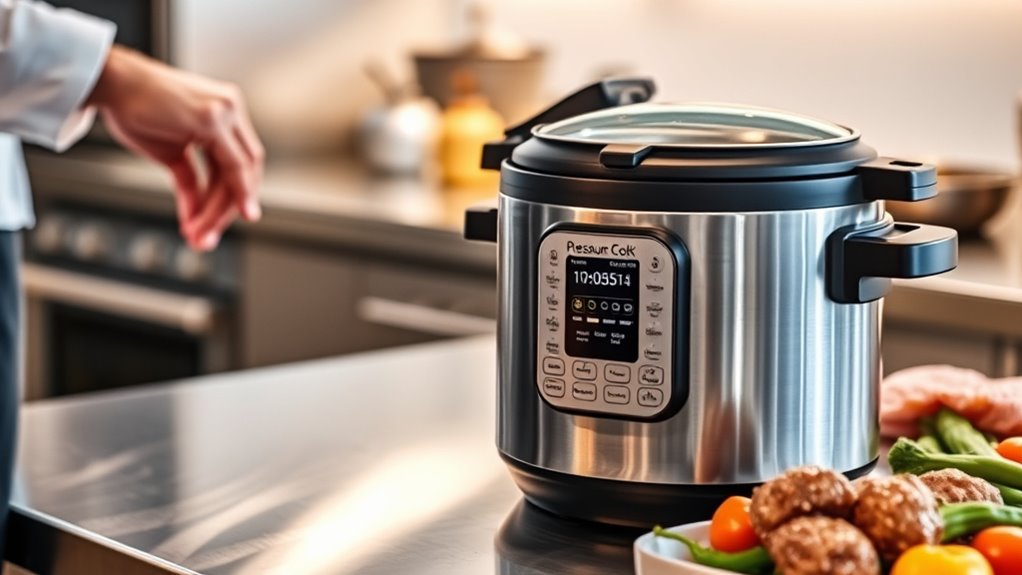
To maximize efficiency with your pressure cooker, start by carefully reading the manufacturer’s instructions to understand its specific features and safety mechanisms. Knowing how to properly manage pressure release is vital—quick pressure release can save time, but always follow safety guidelines to prevent accidents. Use the safety features, like locking lids and pressure indicators, to guarantee safe operation. Visualize these tips:
- Monitor pressure levels regularly for ideal cooking times
- Utilize quick pressure release when appropriate to speed up cooking
- Check safety valves for proper function before each use
- Maintain your cooker by cleaning valves and gaskets to prevent malfunctions
Frequently Asked Questions
How Do Pressure Cookers Prevent Over-Pressurization?
You prevent over-pressurization in a pressure cooker through its safety valve and pressure release mechanism. When pressure rises too high, the safety valve automatically releases excess steam, ensuring safe levels. Additionally, many cookers have a pressure release button or vent that you can manually activate to release built-up pressure. These features work together, giving you peace of mind and keeping your cooking safe and efficient.
What Safety Features Do High-Tech Pressure Cookers Include?
Imagine a futuristic spaceship; high-tech pressure cookers are just as advanced. They include a safety lock that prevents opening under pressure and automatic pressure release systems to vent excess steam. These features guarantee you’re safe from accidents, as the safety lock engages when the cooker is under pressure, and the pressure release activates if pressure gets too high. You can cook confidently, knowing these safety measures keep you protected.
Can Pressure Cookers Be Used for Baking or Other Cooking Methods?
Yes, pressure cookers can be used for baking and other alternative cooking methods. Their versatility allows you to prepare dishes like cheesecakes, bread, and even steamed vegetables or fish. By adjusting settings and using appropriate accessories, you can expand your cooking options beyond traditional pressure cooking. This multi-functionality makes high-tech pressure cookers a valuable tool, saving you time while offering a wide range of delicious, creative meals.
How Does Altitude Affect Pressure Cooking Times?
Altitude effects can cause pressure cooking times to vary, as higher elevations lower atmospheric pressure, making boiling points decrease. You should make cooking adjustments by increasing cooking time or adding more liquid to guarantee food cooks thoroughly. For every 1,000 feet above sea level, consider adding a few extra minutes to recipes. Always check your pressure cooker’s manual for specific instructions on altitude effects to get the best results.
Are There Specific Foods That Benefit Most From Pressure Cooking Technology?
You’ll find that tougher cuts of meat and hearty vegetable varieties benefit most from pressure cooking technology. It breaks down connective tissues in tough cuts, making them tender in less time. Likewise, fibrous vegetables like carrots and potatoes cook quickly and evenly, preserving flavor and nutrients. This method saves you time while enhancing taste and texture, making it ideal for preparing meals efficiently and deliciously with minimal effort.
Conclusion
By embracing high-tech pressure cookers, you open a secret weapon in your kitchen arsenal—turning cooking from a marathon into a sprint. These smart devices are like your personal time machines, whisking you from prep to plate in record time. So, don’t just cook—conquer your meals with the speed and precision of modern science. After all, with the right tools, you’re the master of time itself in your culinary adventures.