
The journey from iceboxes to smart fridges spans over a century of innovation. Early cultures used natural cooling methods like underground storage and ice harvesting. In the 1800s, mechanical refrigeration with vapor compression revolutionized food preservation. The 20th century saw electric refrigerators become common in homes, with modern designs offering advanced features like smart connectivity, energy efficiency, and customizable storage. To discover how these innovations continue evolving, explore the fascinating history of refrigerator technology.
Key Takeaways
- Ancient methods used underground storage, ice harvesting, and evaporative cooling to preserve food before mechanical refrigeration.
- The first practical vapor compression system was developed in 1834, laying the foundation for modern refrigeration technology.
- Electric refrigerators gained popularity in the early 20th century, replacing traditional iceboxes in homes by the 1940s.
- Recent innovations focus on sleek designs, user-friendly features, and integration with smart home systems for enhanced convenience.
- Modern refrigerators emphasize sustainability with eco-friendly refrigerants, energy efficiency, and intelligent monitoring capabilities.
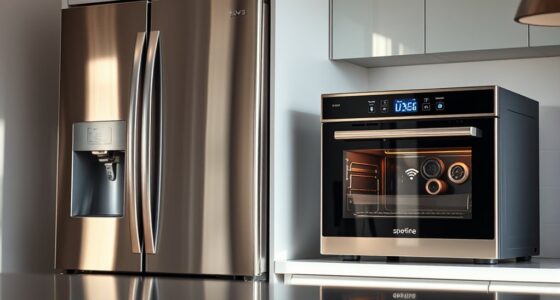
smart refrigerator with energy efficiency
As an affiliate, we earn on qualifying purchases.
As an affiliate, we earn on qualifying purchases.
Early Innovations and Natural Cooling Techniques

Long before modern refrigerators, people relied on natural cooling methods to preserve food. Ancient cultures used underground cellars and shaded storage areas to keep perishables fresh. In hot climates, sprinkling water on the ground was a common technique, creating a cooling effect through evaporation. Harvesting and storing seasonal ice became essential, with icehouses built to hold large blocks of ice during winter for year-round use. These methods took advantage of natural cold environments and the heat of vaporization to slow bacterial growth. People also stored food in cool streams or underground caves. Understanding natural cooling processes demonstrated an understanding of natural processes to extend the shelf life of food without electricity.
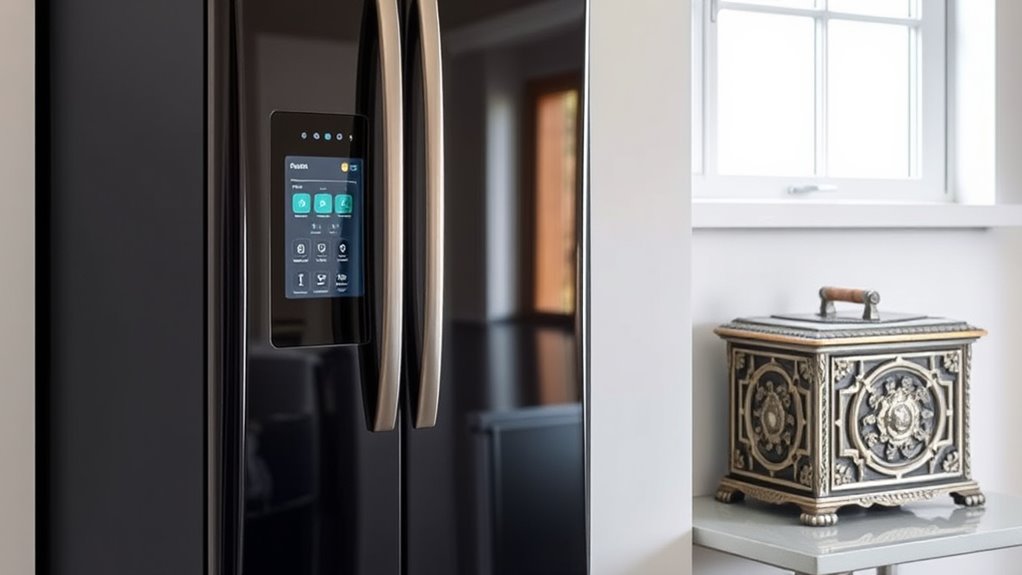
modern refrigerator with smart home connectivity
As an affiliate, we earn on qualifying purchases.
As an affiliate, we earn on qualifying purchases.
Foundations of Mechanical Refrigeration

The development of mechanical refrigeration laid the foundation for modern cooling technology by harnessing the principles of thermodynamics to control temperature reliably. You can thank pioneers like Jacob Perkins, who in 1834 built the first practical vapor compression system using volatile liquids like ether. This system works by compressing a refrigerant, which then releases heat as it condenses, and expanding it to absorb heat, creating a cooling effect. Oliver Evans’s early blueprint in 1805 set the stage, even though he never built it. Later, innovations like John Gorrie’s air-cooling device and Carl von Linde’s gas liquefaction process refined these principles. These advancements transformed refrigeration from experimental ideas into industrial systems, enabling refrigeration’s role in food preservation, medicine, and manufacturing. The refrigeration cycle continues to evolve, incorporating new materials and energy-efficient designs to meet modern demands. Additionally, the integration of digital controls has enhanced precision and operational efficiency in contemporary refrigeration systems, supporting the development of smart refrigerators that optimize energy use and functionality.
eco-friendly refrigerant refrigerator
As an affiliate, we earn on qualifying purchases.
As an affiliate, we earn on qualifying purchases.
The Rise of Electric Refrigeration in Homes

As mechanical refrigeration systems became more reliable and efficient, inventors and companies sought ways to bring refrigeration directly into homes. In 1913, Fred W. Wolf invented the first electric refrigerator with a refrigeration unit mounted on an icebox, making home cooling more practical. By 1918, William C. Durant began mass-producing refrigerators with self-contained compressors, simplifying installation and use. The breakthrough came in 1927 when General Electric introduced the first commercially successful electric refrigerator, costing around $520. This innovation marked the shift from iceboxes to electric models, rapidly transforming household food preservation. As technology improved, refrigerators became more affordable, reliable, and efficient, leading to widespread adoption in American homes by the 1940s. This era set the foundation for modern refrigeration, emphasizing convenience and consistent cooling. Additionally, the development of Free Floating refrigeration systems contributed to more flexible and innovative appliance designs, further advancing home cooling technology. Furthermore, advancements in refrigeration cycle technology allowed for better energy efficiency and longer-lasting performance in household refrigerators. Recent innovations in smart refrigeration have also enhanced user convenience and energy management.
refrigerator with customizable storage
As an affiliate, we earn on qualifying purchases.
As an affiliate, we earn on qualifying purchases.
Advancements in Design and User Features

Have you noticed how modern refrigerators now resemble sleek appliances rather than simple cooling boxes? Today’s models feature streamlined designs with smooth surfaces, integrated handles, and customizable finishes to match your kitchen decor. You can choose from built-in, counter-depth, or free-standing styles, all offering larger capacities and flexible storage options. User features have advanced considerably: adjustable shelves, humidity-controlled crisper drawers, and door-in-door access for quick item retrieval. Many include LED lighting that illuminates interior spaces evenly, reducing energy use. Some models incorporate touchscreens for easy control and scheduling. Enhanced organization systems, like slide-out bins and modular compartments, make access effortless. These design and feature innovations aim to improve your experience by making food storage more convenient, efficient, and visually appealing. Additionally, compact living trends have driven the development of more space-efficient refrigeration solutions that maximize storage within smaller kitchens. This shift toward connected appliances reflects the broader trend of automation and smart home integration in kitchen technology. Moreover, advancements in energy efficiency help reduce operating costs and environmental impact. As technology continues to evolve, refrigerators are increasingly incorporating self-maintenance features that simplify upkeep and prolong appliance lifespan.
The Age of Smart and Sustainable Refrigeration

Smart and sustainable refrigeration technologies are reshaping how your appliances operate, making them more efficient, eco-friendly, and connected. Today’s smart fridges can monitor food inventories, suggest recipes, and send alerts when items run low or expire. They use advanced sensors and Wi-Fi connectivity to optimize energy use, reducing your carbon footprint. Sustainable innovations include low-GWP refrigerants like hydrocarbons and magnetic refrigeration, which eliminate harmful chemicals. Energy-efficient designs and precise climate controls help minimize power consumption without sacrificing performance. Many models now feature adaptive cooling that adjusts based on usage patterns. Implementing energy-saving features and other innovative technologies not only extends your appliance’s lifespan but also contributes to environmental conservation. Understanding refrigeration innovations can help consumers make informed decisions about eco-friendly appliances. Furthermore, eco-friendly refrigerants are becoming more common as the industry shifts toward sustainable solutions. Additionally, these advancements often incorporate smart monitoring systems that provide real-time data to optimize performance and maintenance. Implementing these smart and sustainable features ensures your refrigerator is both energy efficient and environmentally responsible. This era of smart, green refrigeration transforms your kitchen into a connected, eco-conscious space.
Frequently Asked Questions
How Did Ancient Civilizations Preserve Food Before Refrigeration?
You relied on natural methods to preserve food, like storing it in cool, shaded places or underground cellars. Ancient civilizations also sprinkled water on the ground, creating a cooling effect through evaporation. In colder seasons, they harvested and stored ice or snow, which kept food fresh longer. These techniques helped slow spoilage without modern refrigeration, using the environment’s natural cold to your advantage.
What Were the First Refrigerants Used in Early Refrigeration Systems?
Imagine a time when cooling agents were like secret ingredients in a recipe for preservation. You’d find early refrigerants like volatile liquids—ether and ammonia—used in vapor compression systems. These substances acted like invisible hands, pulling heat away from food. As technology advanced, safer and more effective refrigerants replaced these, paving the way for the modern, eco-friendly systems you see today.
When Did Refrigerators Become a Standard Household Appliance in America?
Refrigerators became a standard household appliance in America by the 1940s, with 85% of homes owning one by 1944. You’d notice their widespread adoption starting in the late 1920s, after the first models arrived in households in 1927. As prices decreased and features improved, more families could afford them, making refrigerators essential for food preservation and convenience in everyday life.
How Did Environmental Concerns Influence Refrigerant Development Over Time?
You might worry about refrigerants harming the environment, but it’s impressive how concerns drove innovation. Environmental worries about CFCs, which damage the ozone layer, led to the development of eco-friendlier options like hydrocarbons and HFCs. These newer refrigerants reduce environmental impact, showing that your appliances can evolve responsibly. Your awareness helps push for sustainable solutions, ensuring future generations enjoy effective cooling without harming the planet.
What Future Technologies Could Revolutionize Refrigerator Efficiency and Sustainability?
You can expect future refrigerators to dramatically boost efficiency and sustainability through innovations like magnetic refrigeration, which eliminates harmful refrigerants and reduces energy use. Additionally, LNG cold-energy recovery could harness natural cooling methods, and advanced inverter systems will optimize compressor operation. Smart sensors and AI will enable precise climate control, minimizing waste. These technologies will make your fridge more eco-friendly, cost-effective, and aligned with sustainable living practices.
Conclusion
Imagine walking into your kitchen and seeing your fridge automatically restock itself or suggest recipes based on what’s inside. As you’ve seen, refrigeration technology has come a long way—from natural cooling methods to smart, eco-friendly appliances. Just like a family in a smart home pilot program, you can enjoy convenience, efficiency, and sustainability all in one modern fridge. The future of refrigeration isn’t just cool; it’s intelligent and personalized for your lifestyle.