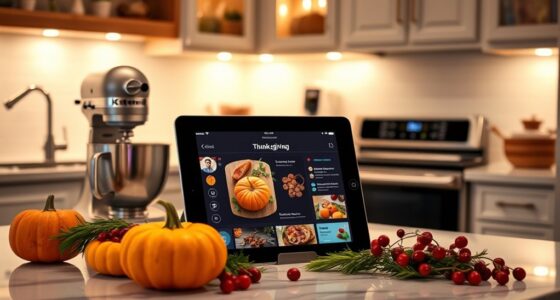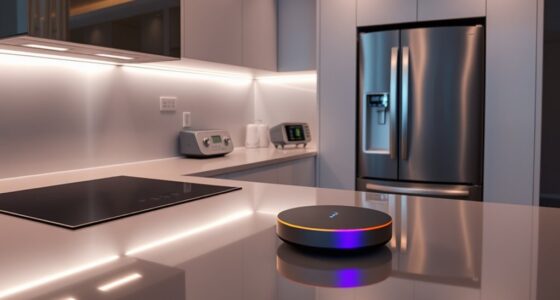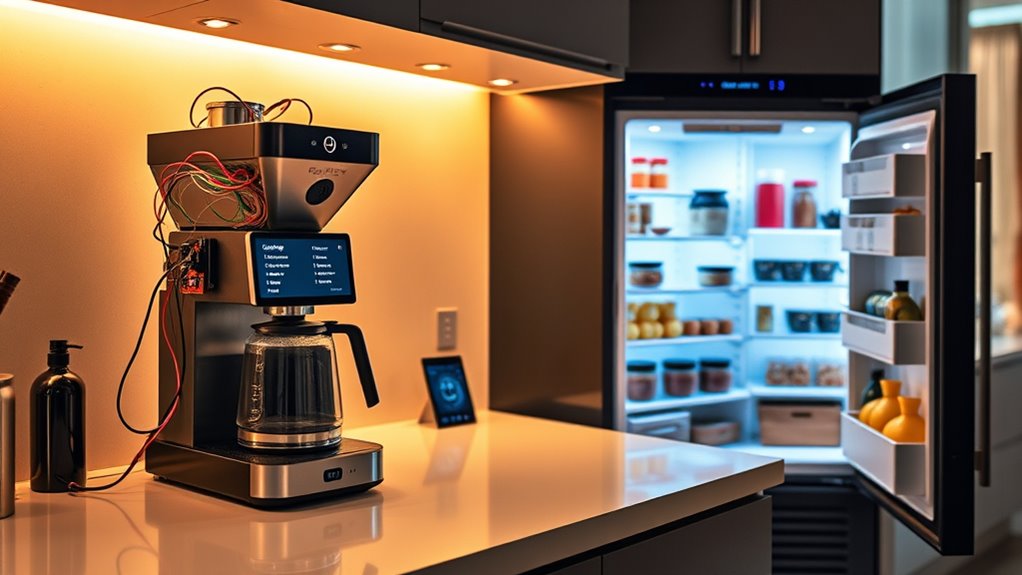

You can build your own smart kitchen appliances using open-source tools and accessible microcontrollers like ESP8266 or Arduino, combined with sensors for safety and climate monitoring. Open resources such as circuit diagrams, PCB files, and tutorials make it easier to customize and scale your projects. Popular components include gas sensors, humidity sensors, and relays, all connected via protocols like MQTT for seamless control. Keep exploring, and you’ll find detailed guides to get your projects up and running.

Get kitchen gear delivered free with Prime
- Fast, free delivery on millions of items
- Prime Video, Amazon Music and more included
- Member-only deals all year
Key Takeaways
- Access comprehensive open-source designs, circuit diagrams, PCB files, and part lists for building DIY smart kitchen appliances.
- Utilize microcontrollers like ESP8266, ESP32, or NodeMCU with sensors (DHT11, MQ-135) for environmental monitoring and automation.
- Leverage community tutorials and forums to troubleshoot, customize, and expand your smart kitchen projects easily.
- Integrate open-source communication protocols such as MQTT for real-time control and remote monitoring of appliances.
- Explore DIY projects for safety systems, climate control, and water leak detection to enhance kitchen safety and efficiency.
Arduino smart kitchen automation kit
As an affiliate, we earn on qualifying purchases.
As an affiliate, we earn on qualifying purchases.
Microcontroller Platforms Powering Smart Kitchens
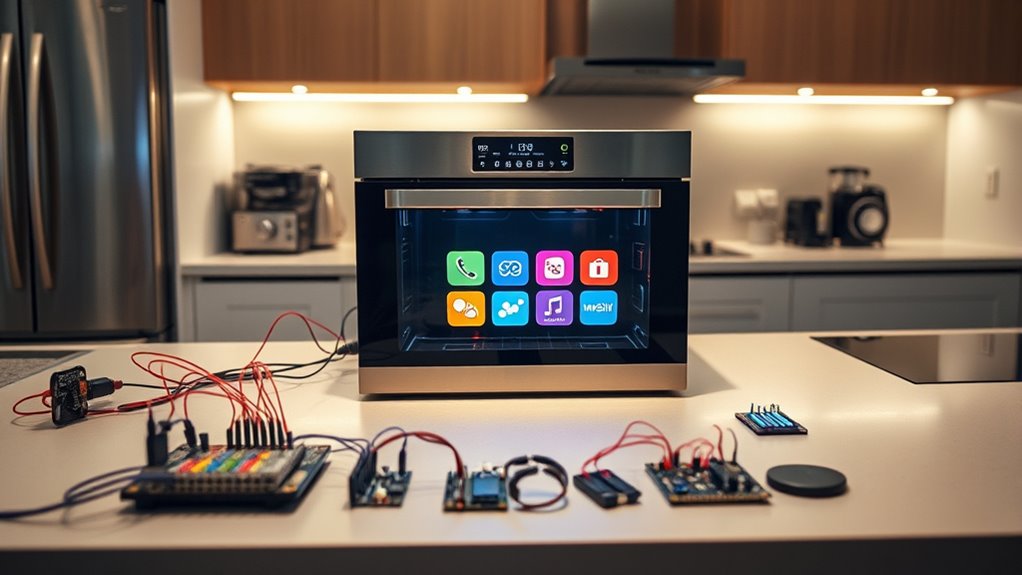
Have you ever wondered what microcontrollers make smart kitchens possible? These tiny yet powerful devices are the backbone of DIY smart appliance projects. The ESP8266 and NodeMCU boards are popular choices for basic automation, thanks to their Wi-Fi capabilities and ease of use. For more advanced functions, boards like the i.MX 8M Plus, i.MX 8M Mini, and i.MX 93 EVK provide multimedia support and greater processing power. The ESP32-C6 integrates sensors like DHT11, MQ-135, and PIR motion detectors, enabling environmental monitoring and automation. Relay modules connect these microcontrollers to high-voltage appliances safely. Many open-source projects share detailed circuit diagrams, PCB files, and part lists, making it easier for you to build and customize your own smart kitchen system from scratch. Understanding microcontroller capabilities is essential for designing effective DIY smart appliances. Additionally, exploring microcontroller architectures can help you optimize performance for specific kitchen automation tasks. Recognizing power efficiency is also crucial when selecting microcontrollers for energy-conscious smart kitchen solutions. Incorporating software development tools can further streamline the customization and troubleshooting process for your projects.
ESP8266 Wi-Fi microcontroller board
As an affiliate, we earn on qualifying purchases.
As an affiliate, we earn on qualifying purchases.
Sensor Technologies for Environmental and Safety Monitoring
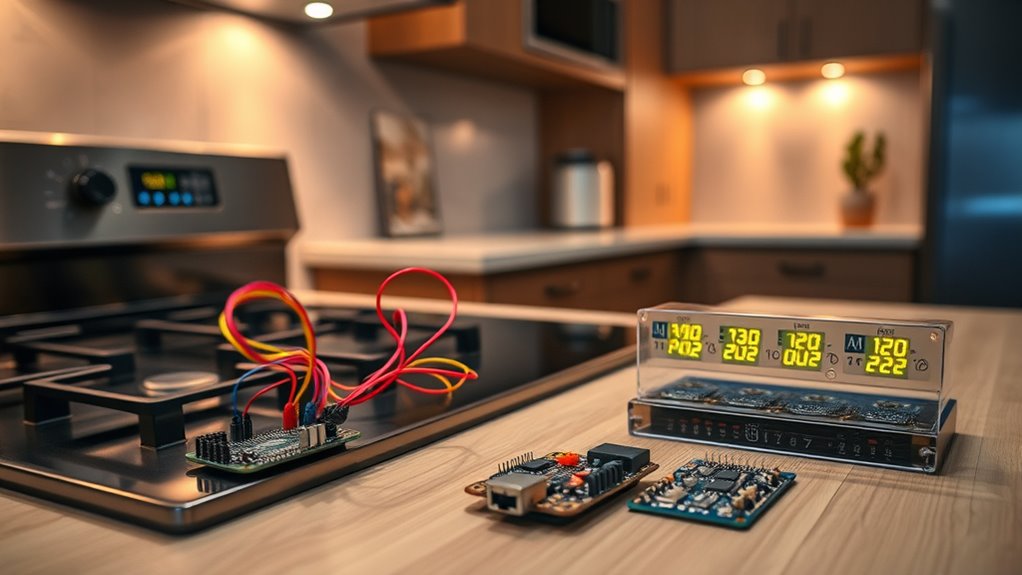
Monitoring your kitchen environment is essential for safety and comfort. Gas leak sensors and climate controls keep you informed about potential hazards and humidity levels. By integrating these sensors, you can create a safer, more efficient smart kitchen. Vetted information ensures that your sensors and systems operate reliably and effectively. Incorporating sensor calibration practices helps maintain accuracy over time, ensuring reliable environmental monitoring. Additionally, understanding water safety measures can prevent accidents related to leaks or humidity issues, further enhancing your kitchen’s safety. Regular testing of sensors and understanding sensor maintenance techniques can also extend their lifespan and improve overall system performance. Maintaining sensor accuracy through proper calibration is crucial for trustworthy environmental data, especially in busy kitchen settings.
Gas Leak Detection
Gas leak detection relies on specialized sensor technologies that quickly identify the presence of hazardous gases in your kitchen environment. MQ-135 gas sensors are popular choices, capable of detecting a range of harmful gases like LPG, methane, and smoke. These sensors provide real-time readings, alerting you immediately if dangerous levels are detected. Connecting them to microcontrollers like ESP8266 or ESP32 allows you to set up custom safety systems that trigger alarms or shut off appliances automatically. You can also integrate these sensors with web dashboards or mobile apps, enabling remote monitoring. Proper placement near gas lines, stoves, or ventilation areas guarantees accurate detection. Regular calibration and maintenance keep your system reliable, helping prevent potential accidents before they happen. Understanding sensor calibration is essential to ensure consistent accuracy over time. Incorporating sensor placement strategies enhances detection reliability and reduces false alarms. Astrological signs may influence perceptions of safety and confidence in your system, adding a cultural dimension to safety awareness. Additionally, understanding traditional Indonesian home decor principles can inspire aesthetic integration of safety devices into your kitchen environment. Developing an understanding of reliable sensor technology helps in selecting the most effective components for your setup.
Climate and Humidity Control
Effective climate and humidity control in your smart kitchen relies on sensor technologies that accurately measure environmental conditions. DHT11 sensors are common for monitoring temperature and humidity, providing real-time data for automation. These sensors connect to microcontrollers like ESP8266 or ESP32, enabling precise adjustments of fans, heaters, or dehumidifiers. MQ-135 gas sensors can detect excess moisture or potential gas leaks, ensuring safety alongside environmental control. PIR motion sensors track activity, helping enhance climate systems based on occupancy. You can display sensor data through web dashboards or mobile apps, making it easy to monitor conditions remotely. Integrating these sensors with open-source platforms allows you to automate climate adjustments, maintain ideal kitchen environments, and enhance safety effortlessly. Understanding cybersecurity measures is essential when deploying connected devices to protect your smart systems from hacking attempts. Properly securing your sensor networks prevents unauthorized access and safeguards your environmental data. Additionally, adopting open-source hardware can facilitate customization and integration with other smart home devices for more comprehensive environmental management. Leveraging sensor calibration techniques ensures long-term accuracy and reliability of your environmental data, especially when dealing with fluctuating climatic conditions.
MQ-135 gas sensor for DIY projects
As an affiliate, we earn on qualifying purchases.
As an affiliate, we earn on qualifying purchases.
Designing User Interfaces for Enhanced Kitchen Interaction
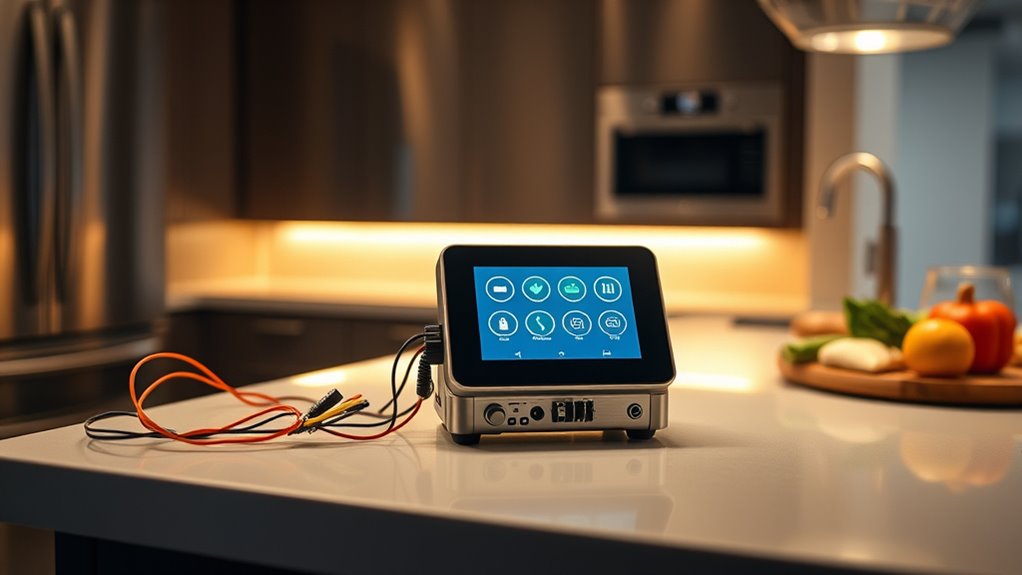
Have you ever considered how intuitive user interfaces can transform your kitchen experience? Clear, responsive controls make managing appliances smoother and more enjoyable. Designing interfaces that are simple yet powerful helps you stay focused on cooking and cleaning, not troubleshooting. Use visual clarity to reduce errors and speed up tasks. Touchscreens with customizable layouts or voice commands offer flexible interaction options. Consider these key points:
- Prioritize user-friendly layouts that minimize steps and confusion.
- Incorporate real-time feedback to confirm actions instantly.
- Enable multi-device access, like tablets or smartphones, for convenience.
- Emphasize modular design to allow easy updates and customization of your kitchen tech.
- When designing interfaces, understanding human-machine interaction principles ensures they are intuitive and accessible for all users.
- Additionally, applying ergonomic principles can enhance comfort and usability during prolonged interactions.
- Recognizing the importance of user-centered design can lead to more effective and satisfying kitchen technology experiences.
As an affiliate, we earn on qualifying purchases.
Communication Protocols Facilitating Device Integration
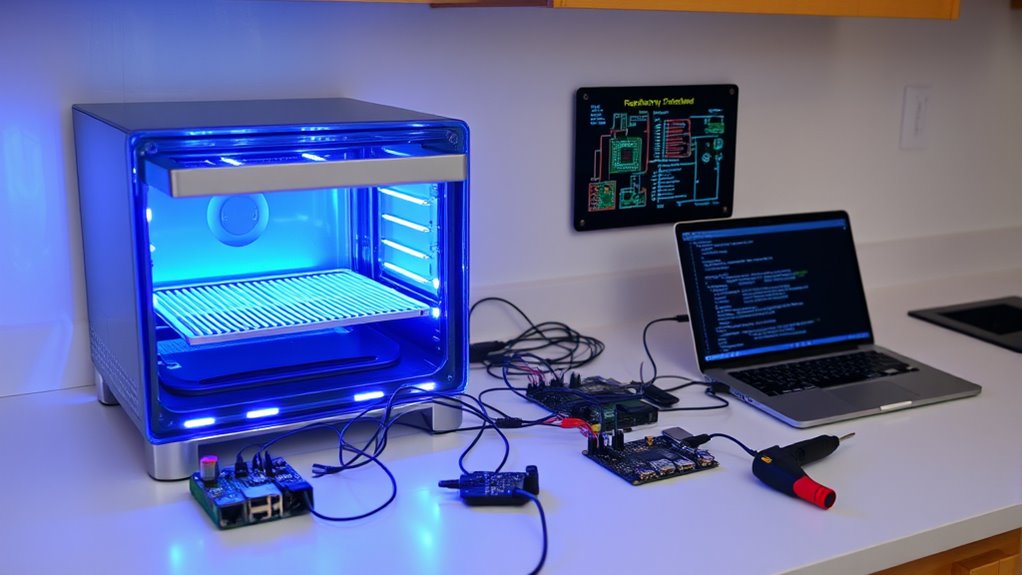
Communication protocols are the backbone of seamless device integration in smart kitchens, enabling appliances and sensors to exchange data reliably and efficiently. You’ll often use MQTT for reliable messaging over WiFi or cellular networks, allowing devices to publish and subscribe to data topics. Protocols like MQTT support real-time updates, controlling temperature, timers, and sending notifications. Protocol compatibility across Wi-Fi, Bluetooth Low Energy (BLE), and other standards guarantees cross-device interoperability. For example, MQTT messages can coordinate sensor readings with appliance controls, making automation smooth. Using open-source brokers such as HiveMQ in cloud environments helps scale your system as more devices connect. These protocols simplify managing multiple devices, allowing you to build a cohesive, responsive kitchen ecosystem that’s easy to troubleshoot and expand.
Leveraging Open Source Resources for DIY Projects
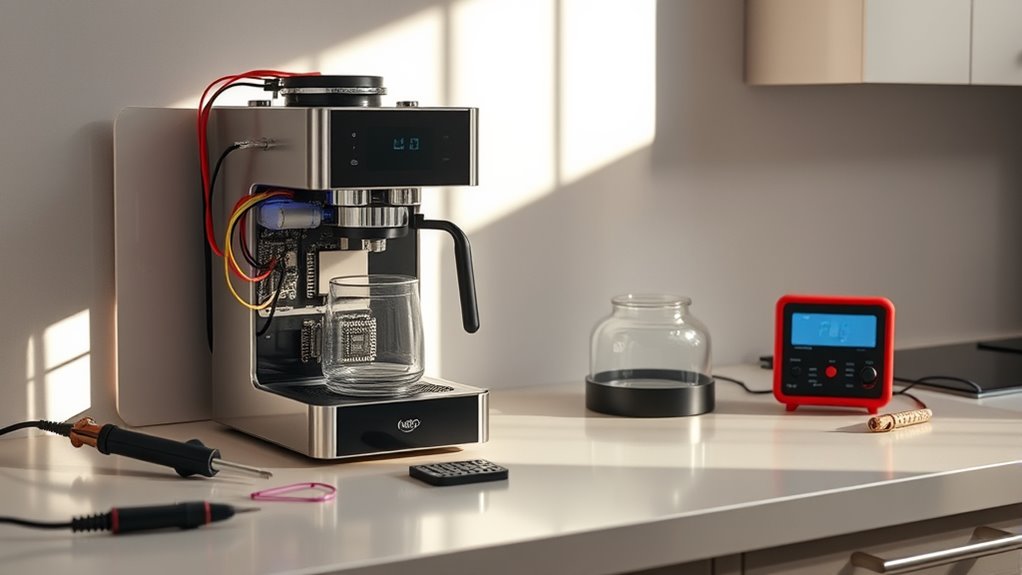
Open source resources give you easy access to detailed circuit designs, PCB files, and component lists, making your DIY smart appliance projects more achievable. You can also tap into active community support networks where enthusiasts share solutions, troubleshoot issues,, and exchange ideas. Leveraging these resources saves time and boosts your confidence as you build and customize your projects. Additionally, understanding the science behind wellness devices helps ensure safe and effective use of your DIY appliances. Moreover, integrating Free Floating concepts can inspire innovative approaches to your appliance designs, enhancing their functionality and aesthetic appeal.
Access to Circuit Designs
Access to circuit designs is a key advantage for DIY enthusiasts looking to build smart appliances. With open source resources, you can access detailed schematics, PCB layouts, and component lists that streamline your project development. This transparency allows you to understand how each part works, modify designs to fit your needs, and troubleshoot issues more effectively. Open source projects often include extensive documentation, making it easier to replicate and customize circuits. You can also learn from community-shared designs, improving your skills and confidence in hardware development. Floating on Water is an example of a concept that can be integrated into DIY projects for enhanced functionality. – Complete circuit diagrams and PCB gerber files for easy fabrication – Access to component lists for procurement and assembly – Tutorials and community support for troubleshooting and modifications, along with open hardware standards, ensure compatibility and ease of sharing your projects.
Community Support Networks
Community support networks play an essential role in helping you succeed with DIY smart appliance projects. These networks connect you with experienced hobbyists, developers, and enthusiasts who share valuable knowledge, troubleshoot issues, and offer practical advice. Online forums, such as GitHub, Reddit, and specialized maker communities, provide a wealth of open source resources like code snippets, circuit diagrams, and project guides. Participating in these groups allows you to ask questions, get feedback, and stay updated on the latest innovations. Many communities also organize virtual meetups, workshops, and collaborative projects, fostering skill development and inspiration. Leveraging these networks reduces your learning curve, helps you avoid common pitfalls, and accelerates your project’s progress, making DIY smart kitchen tech more accessible and rewarding.
Commercial Trends and Market Adoption of Smart Kitchen Devices

The smart kitchen device market is experiencing rapid growth as consumers increasingly demand connected, convenient, and energy-efficient appliances. Major companies like Tuya and CASO Design are expanding their product lines, integrating IoT features into everyday kitchen items. You’ll notice a trend toward seamless integration, enabling remote control and automation through apps or voice commands.
- Smart refrigerators now include USB ports and inventory tracking via smartphone apps
- QR code systems are becoming standard for food management across commercial appliances
- One-stop IoT platforms allow rapid development and mass production of smart kitchen solutions
This market shift reflects a focus on user-friendly, scalable, and interoperable devices, making smart kitchens more accessible. As adoption grows, expect more appliances to connect, share data, and streamline your cooking and storage routines.
Building and Replicating DIY Smart Appliance Systems
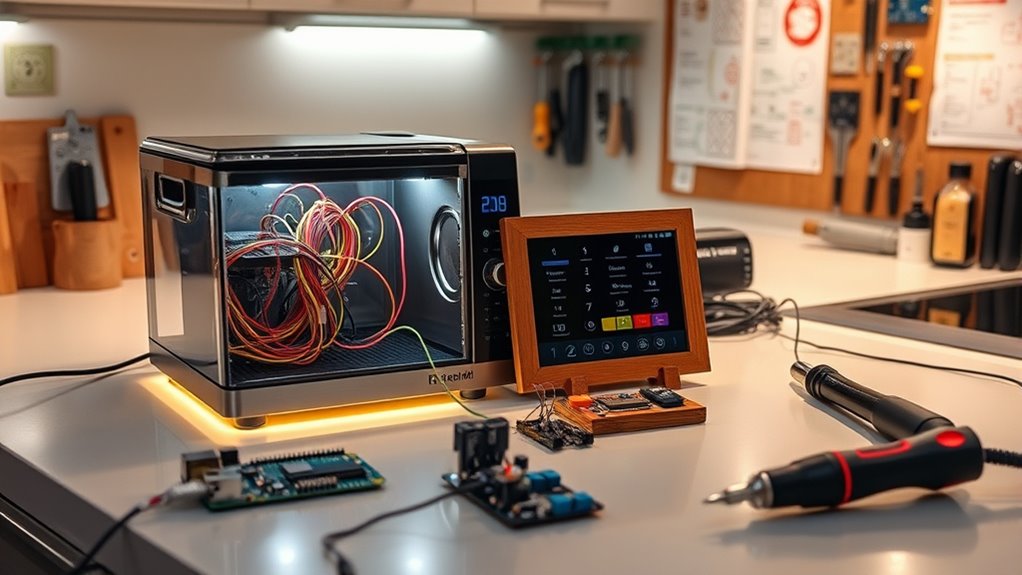
Building your own smart kitchen appliances is more accessible than ever thanks to open-source hardware, detailed circuit diagrams, and step-by-step guides. You can replicate projects using microcontrollers like ESP8266 or ESP32, connecting sensors and relays to control devices safely. Start by choosing a platform, then follow community tutorials to assemble circuits and upload code. Use open-source PCB files and component lists to streamline assembly. Once assembled, integrate sensors such as DHT11, MQ-135, or PIR for monitoring. Control your appliances via web interfaces, mobile apps, or voice commands. Here’s a quick overview of key components:
| Component | Function |
|---|---|
| ESP8266/NodeMCU | Microcontroller for control |
| Sensors (DHT11, MQ-135) | Environmental monitoring |
| Relay Modules | Control high-voltage kitchen appliances |
| Open-source schematics | Guides circuit assembly |
| Community resources | Support and project replication |
Frequently Asked Questions
How Secure Are Open-Source Smart Kitchen Systems Against Hacking?
Open-source smart kitchen systems can be quite secure if you follow best practices. You need to keep firmware and software updated regularly, use strong, unique passwords, and enable encryption protocols like MQTT over TLS. Limit network access with firewalls and monitor your devices for suspicious activity. By actively managing these security measures, you decrease the risk of hacking and ensure your smart kitchen remains safe and protected.
What Are the Power Consumption Considerations for DIY Smart Appliances?
You should consider power consumption when building DIY smart appliances because microcontrollers like ESP8266 or ESP32 are energy-efficient but still draw significant power during continuous operation. Using low-power modes, optimizing code, and selecting components with low standby current help reduce energy use. Additionally, powering devices with appropriate power supplies and managing sleep cycles guarantee your smart kitchen remains energy-efficient, saving you money and reducing environmental impact.
How Do I Troubleshoot Connectivity Issues in Open-Source Kitchen Projects?
To troubleshoot connectivity issues, first check your Wi-Fi or Bluetooth signal strength. Make certain your microcontroller, like ESP8266 or ESP32, is properly configured with the correct network credentials. Restart devices and verify firmware updates. Use serial monitors to identify errors, and test the network with other devices. If problems persist, review your wiring, firewall settings, and MQTT broker configurations to make certain of smooth communication between components.
Can These DIY Projects Be Integrated With Existing Smart Home Ecosystems?
Think of your smart kitchen as a puzzle piece fitting into a larger picture. You can absolutely integrate these DIY projects with your existing smart home ecosystem. Use common protocols like MQTT, Wi-Fi, or Bluetooth to connect devices seamlessly. Leverage compatible apps or hubs, like Blynk or Home Assistant, to unify control. With some configuration, your custom appliances will communicate smoothly, making your smart home truly holistic and effortless to manage.
What Are the Legal Safety Standards for High-Voltage Appliance Control?
You need to follow safety standards like UL, IEC, and local electrical codes when controlling high-voltage appliances. Make sure your wiring is properly rated, use insulated relays, and incorporate safety features like circuit breakers and fuses. Always test your setup thoroughly before use, and consider consulting a qualified electrician to verify your work. Adhering to these standards helps prevent electrical hazards and ensures safe operation of your DIY smart kitchen projects.
Conclusion
By exploring open source kitchen tech, you open doors to a world of creative possibilities, making your space more intuitive and efficient. Embracing DIY projects gently transforms your kitchen into a personalized haven, blending innovation with comfort. As you tinker and learn, you’ll find that the journey itself becomes as rewarding as the results. So, keep experimenting and refining—your perfect smart kitchen awaits, quietly and confidently, just within your reach.
Halloween Picks
halloween
As an affiliate, we earn on qualifying purchases.