Advanced cooking feels more approachable with sensors because they take the guesswork out of the process. You can monitor temperatures and cooking times easily, boosting your confidence in the kitchen. Smart ovens adjust automatically, so you don’t have to worry about overcooking. With precise control and real-time updates, you can experiment with new recipes without fear. This technology makes complex techniques simpler, turning cooking into an enjoyable experience. There’s so much more to explore about this culinary evolution.
Key Takeaways
- Sensors eliminate guesswork by providing precise monitoring of temperatures and cooking times, making advanced techniques easier to master.
- Smart appliances offer remote control and guidance, enhancing user confidence and simplifying complex cooking tasks.
- Access to real-time information and tailored tips empowers cooks of all levels to experiment without the fear of failure.
- Understanding the science behind cooking through sensor technology demystifies the process, making it more accessible and enjoyable.
- The integration of smart technology streamlines cooking, encouraging creativity and energy efficiency in the kitchen.
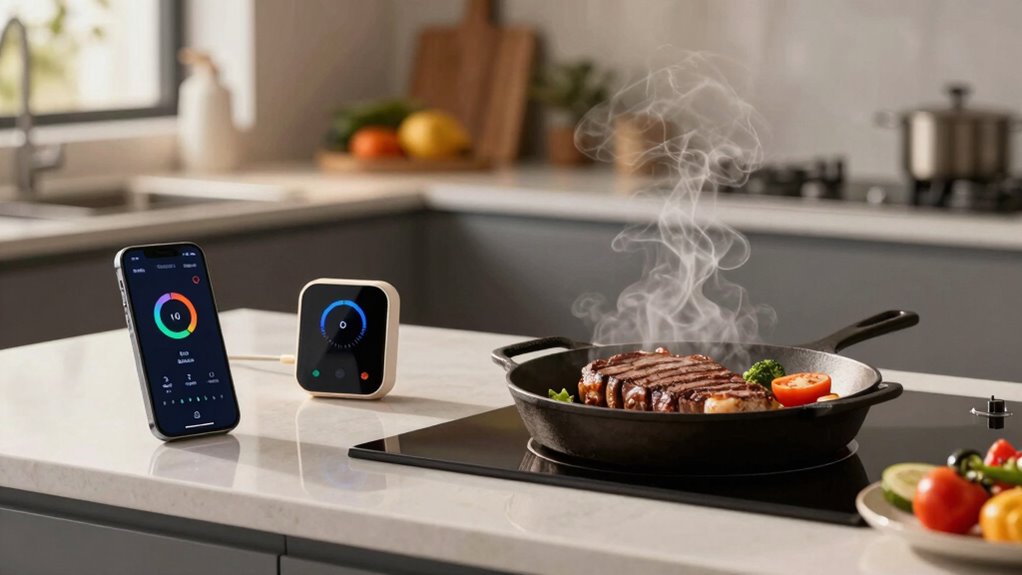
In today’s fast-paced world, you might find that advanced cooking with sensors transforms your culinary experience. Imagine stepping into a smart kitchen where every appliance is designed to assist you in achieving culinary precision. You don’t have to be a professional chef to create mouth-watering meals; you just need the right tools and a bit of guidance.
When you use sensors in your cooking, you’re not just relying on guesswork. These gadgets take the pressure off, helping you monitor temperatures, humidity, and even cooking times. For instance, a smart oven can adjust itself automatically when it detects that the dish is nearly done. This eliminates the anxiety of overcooking or undercooking, allowing you to focus on enjoying the process instead of worrying about the outcome.
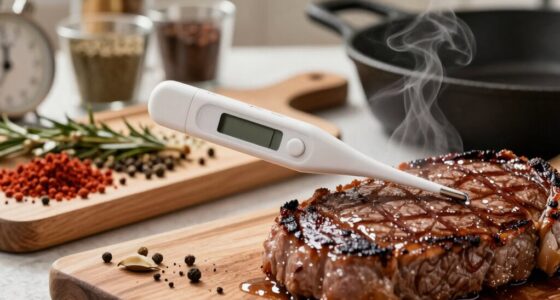
You might be surprised at how intuitive these technologies are. With a simple tap on your smartphone, you can preheat your oven or even check the internal temperature of your roast. This level of control and convenience makes cooking feel less intimidating. The sensors guide you, guaranteeing that you understand what’s happening with your food every step of the way. Understanding home‑care techniques can further enhance your cooking experience and appliance longevity.
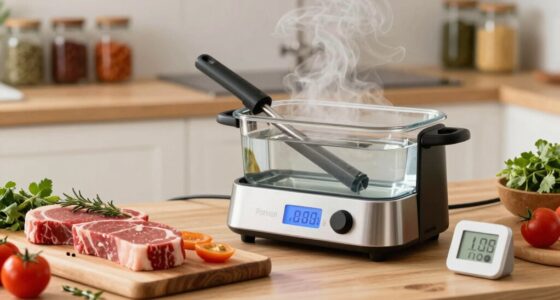
Moreover, advanced sensors can help you experiment more freely in the kitchen. You can try new recipes or techniques without the fear of failing. If you’re curious about sous-vide cooking, for example, a precision cooker can help you achieve that perfect doneness with minimal effort. The built-in sensors guarantee that water temperatures are maintained accurately, turning what once felt like a complicated technique into an approachable endeavor. Additionally, integrating smart technology into your kitchen can streamline your cooking process and improve results. Embracing sensor-enabled appliances can also lead to more energy-efficient cooking, saving both time and resources.
In a smart kitchen, you also gain access to a wealth of information. Many appliances come with apps that provide real-time updates and tips tailored to your cooking style. Whether you’re a novice or an experienced cook, these insights can enhance your culinary skills and inspire creativity. You might find yourself trying new flavors and ingredients, knowing you have a safety net.
Finally, understanding science behind cooking can help you better interpret how sensors work and why they improve your results. Ultimately, advanced cooking with sensors makes the art of cooking feel more accessible. You don’t need to be a culinary expert to whip up impressive dishes. Thanks to smart kitchen technology, culinary precision is within your reach. The next time you step into your kitchen, embrace the tools that empower you. Let sensors guide you, and watch as cooking transforms from a chore into a delightful experience.
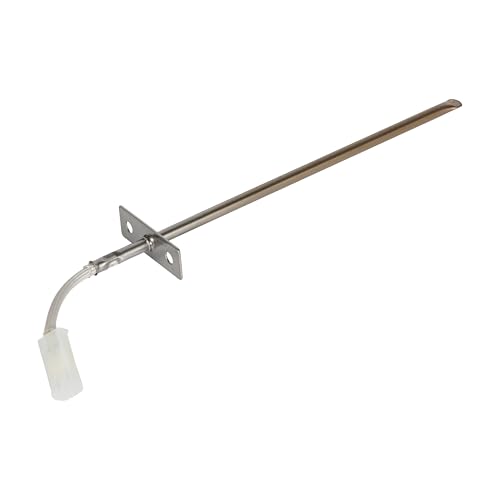
Smart Choice 316490000 Oven Temperature Sensor Probe Replacement for Oven Not Heating or Temperature Inaccurate Compatible with Frigidaire, Kenmore, Electrolux
- Replacement for 316490000: Compatible with various sensor part numbers
- Universal oven compatibility: Fits Frigidaire, Kenmore, Electrolux models
- Temperature regulation solution: Ideal for inconsistent or inaccurate oven temperatures
As an affiliate, we earn on qualifying purchases.
As an affiliate, we earn on qualifying purchases.
Frequently Asked Questions
What Types of Sensors Are Commonly Used in Advanced Cooking?
In advanced cooking, you’ll find various sensors that enhance your experience. Temperature sensors help you achieve precise cooking temperatures, while humidity sensors monitor moisture levels in real-time. Smart cooking devices often incorporate these technologies, allowing for better control over your dishes. Additionally, weight sensors guarantee accurate ingredient measurements. By using sensor technology, you can elevate your culinary skills and simplify complex recipes, making cooking more enjoyable and accessible.
Can Sensors Be Integrated Into Existing Kitchen Appliances?
Yes, you can integrate sensors into existing kitchen appliances with the right upgrades. Many modern appliances offer sensor compatibility, allowing you to enhance their functionality. For instance, adding temperature sensors to your oven can help you achieve perfect cooking results. By focusing on appliance upgrades, you can transform your cooking experience without having to replace everything. It’s an effective way to modernize your kitchen while keeping your favorite appliances.
How Accurate Are Cooking Sensors in Temperature Measurement?
Cooking sensors are surprisingly accurate, often within a degree or two. It’s like having a miniature chef whispering the exact temperature in your ear—if only it could also tell you when to stop overcooking your chicken! With advanced sensor technologies, you can trust your dishes won’t turn into culinary disasters. So, go ahead, embrace the tech; your taste buds will thank you, and your smoke alarm might finally get a break!
Are Cooking Sensors Easy to Clean and Maintain?
Yes, cooking sensors are generally easy to clean and maintain. Most have durable surfaces that resist stains and can be wiped down quickly. For a better user experience, check if the sensor is waterproof or has removable parts for thorough cleaning. Regular maintenance, like calibrating your sensor, guarantees it stays accurate. With a little care, you’ll find these tools enhance your cooking without adding extra hassle.
Do Sensors Require Frequent Calibration for Optimal Performance?
Indeed, sensors don’t require frequent calibration for ideal performance. Typically, you’ll find that once calibrated, they maintain accuracy for a considerable time. However, it’s wise to check them periodically, especially after substantial temperature changes or spills. Think of it as ensuring your trusty gramophone still plays your favorite tunes flawlessly. So, while calibration frequency isn’t high, staying attentive to sensor accuracy will enhance your cooking experience greatly.

Anova Culinary Sous Vide Precision Cooker 3.0 (WiFi), 1100 Watts, Stainless Steel
- Precise Temperature Control: Consistent, edge-to-edge perfect results
- Enhanced Connectivity: Dual band WiFi for reliable connection
- User-Friendly Display: Two-line touch screen for easy viewing
As an affiliate, we earn on qualifying purchases.
As an affiliate, we earn on qualifying purchases.
Conclusion
In the world of advanced cooking, sensors turn the heat up on your culinary game. They make complex techniques feel like a piece of cake, guiding you every step of the way. With precise measurements and real-time feedback, you’re not just following a recipe; you’re mastering your craft. So don’t be afraid to jump in—embrace the tech, and watch your cooking skills soar. With the right tools, you’ll be cooking like a pro in no time!

ThermoMaven Smart Bluetooth Wireless Meat Thermometer, 10X Enhanced Sub-1G Signal and Stability, Standalone Display Base, Certified Accuracy ±0.5°F, WiFi Unlimited Range for BBQ, Oven, Smoker, Grill
- Smart Display with Touch Control: Real-time temperature readings and settings
- Easy One-Click Setup: Connects probe and pairs quickly
- Long-Range Sub-1G Connectivity: Up to 3000 ft unobstructed, 700 ft obstructed
As an affiliate, we earn on qualifying purchases.
As an affiliate, we earn on qualifying purchases.

1195448 Flame Sensor – For Southbend Cooking Equipment Parts – Cooking Equipment Flame Sensor Element Replacement
- Part Number: 1195448 Flame Sensor
- Application: For Southbend Cooking Equipment
- Durable Construction: Premium materials for longevity
As an affiliate, we earn on qualifying purchases.
As an affiliate, we earn on qualifying purchases.