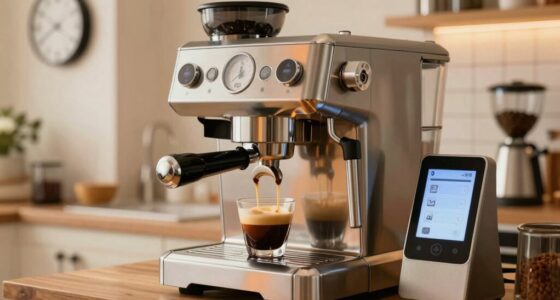
In high-tech coffee shops, milk pitchers and knock boxes still matter because they let you master essential craftsmanship and quality control. Milk pitchers enable precise steaming and latte art, helping you develop skills that automation can’t replace. Knock boxes ensure quick, hygienic disposal of grounds, supporting smooth workflows. These tools connect you to tradition and attention to detail, enriching your coffee experience. Keep exploring to discover how these simple tools make a big difference.
Key Takeaways
- Manual tools like milk pitchers and knock boxes preserve traditional craftsmanship amid advanced coffee technology.
- They enable precise skill development, ensuring consistent quality and beautiful latte art.
- These tools support hygiene and workflow efficiency in busy coffee environments.
- Using manual tools fosters a deeper understanding of coffee’s nuances and barista techniques.
- They reinforce core values of precision, tradition, and attention to detail in high-tech coffee making.
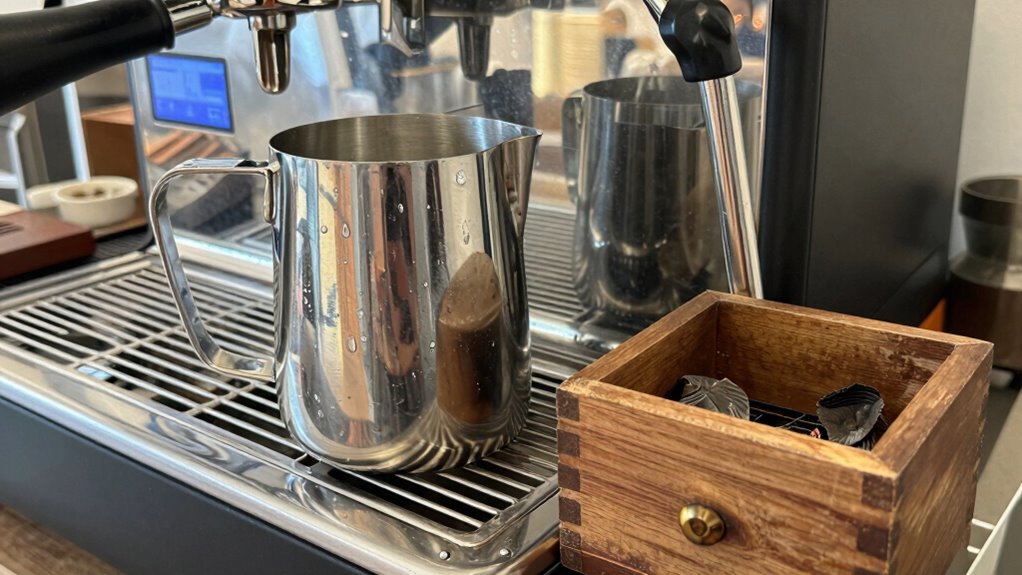
Ever wondered how modern coffee shops achieve those perfect lattes and espresso shots? The secret isn’t just in the fancy machines or high-tech gadgets; it’s also about the tools and techniques that baristas rely on daily. Despite the surge of automation and advanced equipment, milk pitchers and knock boxes remain essential parts of the coffee-making process. They’re deeply rooted in coffee culture and are crucial for honing barista skills. These tools aren’t just about tradition—they serve practical purposes that elevate the quality and consistency of each cup.
Essential tools like milk pitchers and knock boxes keep coffee quality high and skills sharp, blending tradition with practicality.
When you think about coffee culture, it’s clear that the ritual of making coffee plays a significant role in shaping the experience. Milk pitchers allow baristas to craft beautifully textured milk, essential for creating those velvety lattes and artful cappuccinos. The way a barista handles the pitcher, controlling the pour and steam, reflects their skill and understanding of milk’s behavior. It’s a tactile process that requires precision, patience, and finesse—elements that define true barista expertise. Using a well-balanced pitcher, you can master techniques like microfoam and latte art, which heighten the visual appeal and overall experience for customers. Incorporating coffee tools into your routine can also help develop barista skills and improve skills over time.
Meanwhile, knock boxes serve as the unsung heroes of efficiency and cleanliness in a busy coffee shop. After pulling shots of espresso, you need a quick and hygienic way to dispose of used coffee grounds. That’s where a knock box comes in. It’s more than just a receptacle; it’s a tool that streamlines workflow, allowing you to work faster without sacrificing cleanliness. In a high-tech environment, where machines can be programmed and automated, the importance of manual tools like knock boxes remains unchanged. They enable you to maintain quality, stay organized, and keep the workspace tidy—factors that directly influence the final product. Incorporating these essential tools can also help new baristas develop good habits early on, ensuring consistency and efficiency.
Even with all the sleek, automated equipment, the core of good coffee still relies on fundamental skills and tools. Mastering the use of milk pitchers and knock boxes helps you develop a deeper understanding of coffee’s nuances. They encourage hands-on engagement and foster a connection to coffee culture that machines alone can’t replicate. Additionally, knowing the right tools can help you select the best equipment for your needs and improve your overall workflow. Ultimately, these tools help you produce consistent, high-quality drinks while honing your barista skills. They’re a reminder that, despite technological advances, the art of making coffee remains rooted in craftsmanship, tradition, and attention to detail.

Milk Frothing Pitcher, 8.5oz/12oz/20oz/32oz/50oz/66oz Milk Frother Cup Stainless Steel, Espresso Accessories, Milk Steaming Pitchers Coffee Cappuccino Latte Art Barista Milk Jug Cup with Art Pen,12oz
- Multi-functional Milk Frothing Jug: Froth, steam, measure, serve milk
- Includes Latte Art Pen: Create beautiful coffee patterns
- Premium Stainless Steel: Rust-proof, stain-proof, heat-resistant
As an affiliate, we earn on qualifying purchases.
As an affiliate, we earn on qualifying purchases.
Frequently Asked Questions
How Do Traditional Milk Pitchers Compare to Modern, High-Tech Options?
Traditional milk pitchers offer a classic, aesthetic appeal that enhances your coffee presentation, making your drinks more inviting. While modern, high-tech options may feature temperature controls and anti-spill designs, they can be more complex to maintain. You focus on equipment maintenance with traditional pitchers, which are straightforward and durable. Ultimately, both types impact coffee aesthetics and operational efficiency, but your choice depends on your style and ease of care.
Are Knock Boxes Necessary for Small-Scale or Home Coffee Setups?
Yes, knock boxes are still necessary for small-scale or home setups. They simplify cleaning by quickly disposing of used coffee grounds, helping you maintain a minimalist equipment approach. While alternative brewing methods like pour-over or AeroPress don’t require them, if you’re using an espresso machine, a knock box keeps your space tidy and efficient. It’s a small investment that makes your routine smoother, even with limited equipment.
What Materials Are Best for High-Tech Milk Pitchers?
Did you know stainless steel accounts for over 70% of high-tech milk pitchers sold? You should choose materials that combine durability and aesthetic appeal. Stainless steel is ideal because it resists corrosion, maintains temperature, and looks sleek, making it perfect for high-tech setups. Glass offers elegance but less durability, while porcelain may chip easily. Prioritize stainless steel for long-lasting performance and a professional appearance in your coffee routine.
How Do Knock Boxes Improve Workflow Efficiency?
Knock boxes improve your workflow efficiency by providing a quick, clean way to dispose of used coffee grounds, keeping your workspace organized and ready for the next shot. This helps maintain flavor consistency by preventing messes that can affect taste. Plus, their durability guarantees long-term use, saving you money. With a reliable knock box, you can focus more on brewing and less on cleanup, streamlining your entire coffee-making process.
Can High-Tech Coffee Tools Replace Manual Techniques Entirely?
You can’t teach an old dog new tricks, but high-tech coffee tools can only go so far. They can’t fully replace manual techniques, especially when creating intricate coffee art or adjusting milk temperature. These skills require a human touch, intuition, and experience. While machines enhance precision and efficiency, the artistry and finesse behind each cup still depend on your skill. Technology supports, but doesn’t entirely replace, manual craftsmanship in coffee making.
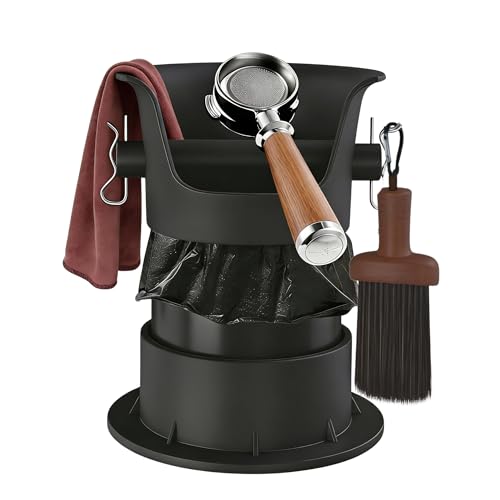
4L Espresso Knock Box, Coffee Grounds Disposal and Recycle Trash Can with Brush, Towel and 100 pcs Collecting Bags, Barista Essential Coffee Accessory for Cafe Shop Home Bars Office Work Breakroom
- Quick Bag Swap Design: Detachable waste bag for easy cleanup
- High-Capacity Container: Holds up to 4L of coffee grounds
- Durable Construction: Made from thickened, high-strength ABS
As an affiliate, we earn on qualifying purchases.
As an affiliate, we earn on qualifying purchases.
Conclusion
Even in a world filled with high-tech gadgets, milk pitchers and knock boxes remain essential, like trusted tools in a craftsman’s hand. They may seem simple, but they keep your coffee experience authentic and efficient. You wouldn’t rely solely on automation for art, so don’t overlook these timeless tools. Keep them close—they’re the steady beat in the symphony of high-tech coffee, ensuring every cup is crafted with care and precision.

Milk Frothing Pitcher, 600ml (20oz) Milk Frother Cup Stainless Steel Jug Steaming Pitcher, Milk Coffee Cappuccino Latte Art Barista Steam Pitchers Milk Jug Cup with Decorating Pen
- Capacity: 600ml (20oz)
As an affiliate, we earn on qualifying purchases.
As an affiliate, we earn on qualifying purchases.
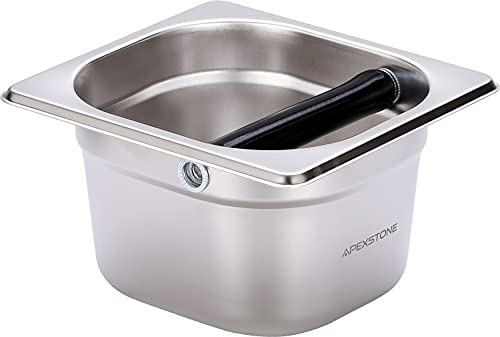
Apexstone Coffee Knock Box Stainless Steel, 6.9 Inch Espresso Knock Box for Espresso Coffee Grounds, Built-In Knock Box with Rubber Knock Bar, 1.5L Large Capacity for Home Barista & Coffee Bar
- Material: Stainless steel with rubber knock bar
- Size: 6.9 x 6.4 x 4 inches
- Capacity: 1.5L large capacity
As an affiliate, we earn on qualifying purchases.
As an affiliate, we earn on qualifying purchases.