To master sous vide eggs, choose reliable equipment with precise temperature controls and regularly maintain it for safety. Select fresh eggs, handle them gently, and seal them properly before cooking. Set the water bath to your desired temperature based on the texture you want, and cook for the right amount of time. Use techniques like ice baths for peeling and experiment with different temps for perfect runny or firm eggs. Keep these tips in mind to elevate your breakfast game—more details inside.
Key Takeaways
- Select reliable immersion circulators with precise temperature controls for consistent doneness.
- Use fresh eggs, properly sealed in high-quality bags or jars, to ensure even cooking and prevent leaks.
- Set water bath temperatures between 63°C and 75°C based on desired yolk firmness and adjust cooking times accordingly.
- Handle eggs gently during peeling by cracking shells all over and using ice baths to ease removal.
- Regularly inspect and maintain equipment to ensure safety, accuracy, and optimal sous vide egg results.
Choosing the Right Sous Vide Equipment for Eggs
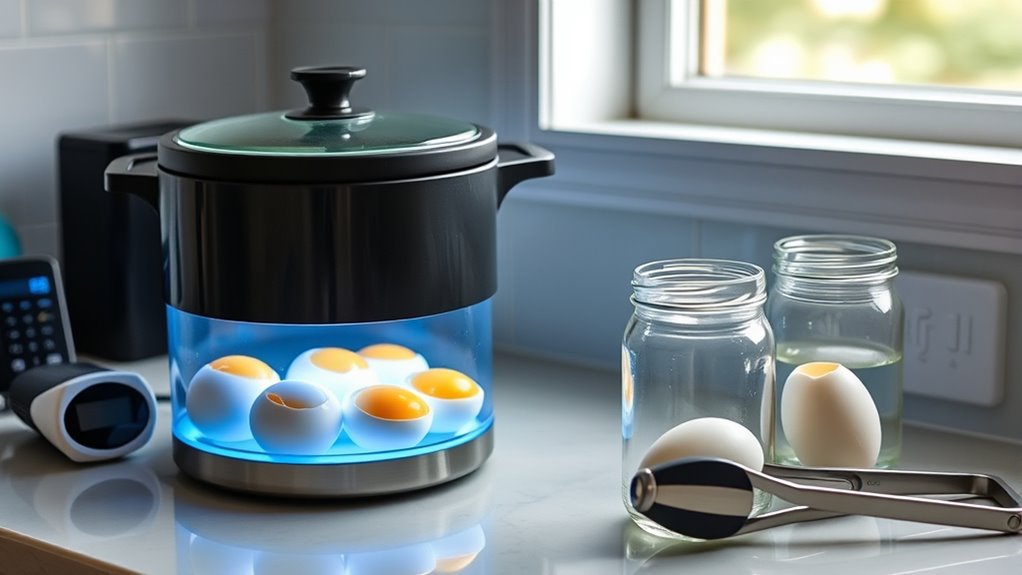
Choosing the right sous vide equipment is essential for achieving perfect eggs every time. You need to take into account equipment compatibility to ensure your device works seamlessly with your container and accessories. For beginners, many brands offer reliable immersion circulators with adjustable temperature controls, precise timers, and user-friendly interfaces. When comparing brands, look for durability, ease of use, and consistent performance. Some popular options include Anova, Joule, and Instant Pot, each with unique features suited for egg cooking. Budget-friendly models might lack advanced features but still deliver good results, while premium brands often provide better temperature stability and app integration. Additionally, understanding the importance of heat transfer efficiency can help you choose equipment that heats evenly and maintains stable temperatures, which is crucial for perfect sous vide eggs. Paying attention to temperature control accuracy can significantly impact your results, ensuring eggs are cooked to the desired doneness. To optimize your cooking process, consider equipment that offers quick heat-up times and reliable temperature maintenance. Furthermore, selecting equipment with advanced temperature sensors can enhance precision and consistency in your cooking. Consulting reviews and performance data can further aid in selecting equipment that offers reliable and precise results. By evaluating these factors, you’ll select equipment that fits your needs and helps you master sous vide eggs effortlessly.
Setting the Perfect Temperature for Your Desired Egg Texture

To achieve your ideal egg texture, setting the precise sous vide temperature is essential. The right temperature influences eggshell preservation and yolk consistency, ensuring your eggs turn out just how you like them. For soft, runny yolks, set your cooker to around 63°C (145°F); for a custard-like texture, aim for 70°C (158°F). Higher temperatures, like 75°C (167°F), produce firm whites and fully set yolks. Keep in mind, lower temperatures help preserve the eggshells better, reducing the risk of cracks. Adjust your temperature based on your preferred yolk consistency and how delicate you want the eggshells to remain. Juice extraction techniques can be used to prepare flavorful beverages that complement your breakfast. Precise temperature control is key to mastering sous vide eggs and consistently achieving breakfast perfection.
Preparing Your Eggs for Sous Vide Cooking

Start by choosing fresh eggs to guarantee the best results. Next, use proper bagging techniques to prevent leaks and contamination. Proper sealing methods are essential to maintain egg integrity during cooking. Additionally, paying attention to temperature and timing is crucial to achieve your desired egg texture. Incorporating even cooking techniques can also help ensure even cooking and optimal texture, especially when considering the pinball machine weight for setting up your home sous vide station. Using the right temperature control methods is vital to consistently achieve perfect results. Moreover, selecting the appropriate vacuum sealing equipment ensures your eggs are sealed properly and safely for sous vide cooking.
Selecting Fresh Eggs
Ensuring your eggs are fresh is essential for achieving perfect sous vide results, as fresher eggs will have a better texture and more vibrant yolks. To select the best eggs, focus on egg freshness and shell integrity. Fresh eggs typically have firmer shells that resist cracking and feel heavier for their size.
Consider these tips:
- Check the shell for cracks or slimy spots—these indicate compromised shell integrity.
- Use eggs with a recent pack date, ensuring higher freshness.
- Gently spin the egg; a fresh one will stay still or spin slowly, while an older egg spins easily due to a declining egg white quality.
- Market trends can be a helpful resource for understanding how to invest in secure, tangible assets, emphasizing the importance of quality—just like selecting fresh eggs.
- Proper storage in a consistent, cool temperature helps maintain egg freshness over time, ensuring optimal results for your sous vide eggs.
- Additionally, understanding the horsepower of electric dirt bikes can be useful if considering alternative energy sources like bike generators for sustainable cooking projects.
Prioritize freshness to ensure your sous vide eggs turn out beautifully every time.
Proper Bagging Techniques
Proper bagging techniques are essential for maintaining the quality and safety of your sous vide eggs. To guarantee optimal results, use a vacuum seal to remove all air from the bag, preventing floating or uneven cooking. When sealing, double-check the bag integrity; any small leaks can introduce water or bacteria, compromising your eggs. Choose high-quality, food-grade bags specifically designed for sous vide cooking, and avoid using regular plastic bags that may not withstand heat. Gently place the eggs into the bag, being careful not to crack the shells, and then vacuum seal tightly. Proper sealing prevents water ingress and maintains consistent temperature contact, ensuring your eggs cook evenly and safely. Additionally, ensure that your bags are compatible with Airtight Packaging standards to prevent contamination. Using food-grade bags is crucial for avoiding potential health risks associated with low-quality plastics. Ensuring the bags are heat-resistant is also important for maintaining durability during cooking. Paying attention to vacuum sealing techniques can help prevent air pockets that might affect cooking outcomes. Incorporating proper storage practices can also extend the freshness of your eggs before cooking, ensuring optimal results. Taking these steps guarantees delicious, perfectly cooked sous vide eggs every time.
Temperature and Timing
Once your eggs are securely sealed, setting the right temperature and timing is key to achieving perfect results. The water bath temperature directly influences the egg’s texture, so choose accordingly. Keep in mind that the egg shell can affect heat transfer, so gentle handling helps prevent cracks. To get it just right:
- Set the water bath between 63°C to 75°C, depending on desired doneness.
- Cook eggs for 45 minutes to 1 hour for soft yolks, or longer for firmer whites.
- Always preheat the water bath to ensure consistent results and avoid temperature fluctuations.
Maintaining a steady temperature guarantees even cooking, and patience assures ideal texture. With proper timing and temperature control, your sous vide eggs will come out perfectly every time.
Timing Is Everything: How Long to Cook Eggs in Sous Vide
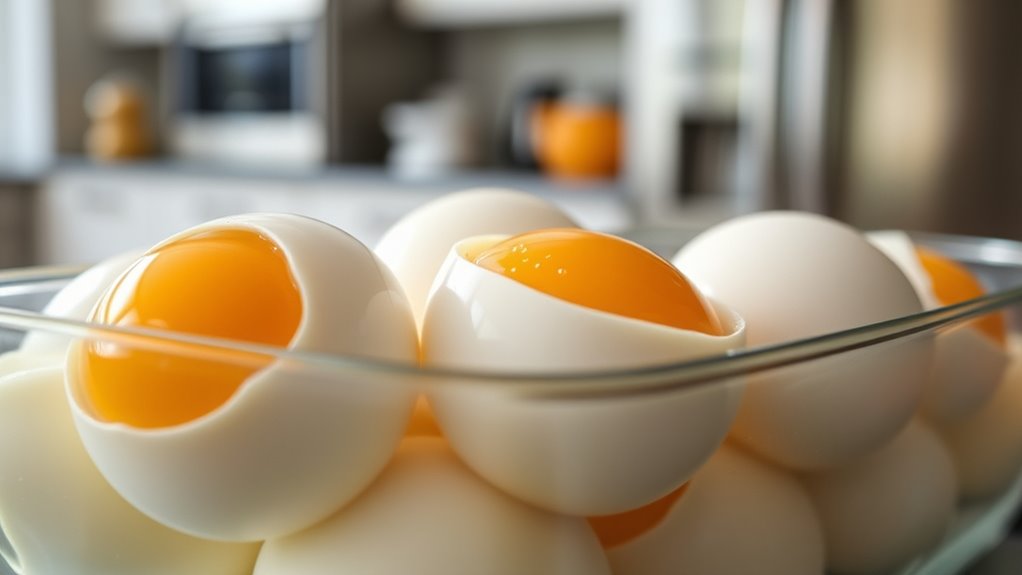
Timing is essential when cooking eggs sous vide because even a few minutes can considerably change their texture. The key is balancing egg freshness with precise timing to achieve your desired result. For softer, runny yolks, cook at 63°C for 45 minutes; for firmer whites and yolks, extend to 75°C for 1 hour. Remember, older eggs are easier to peel but may require slightly longer cooking for uniformity. Precision in timing guarantees consistent results, whether you’re aiming for a delicate poached texture or a fully set egg. Use this table as a guide:
| Desired Texture | Temperature | Time |
|---|---|---|
| Runny yolk | 63°C | 45 minutes |
| Creamy consistency | 64°C | 50 minutes |
| Soft-boiled egg | 65°C | 55 minutes |
| Custard-like | 70°C | 1 hour |
| Fully set whites | 75°C | 1 hour 15 minutes |
Adjust timing based on egg freshness for perfect results. Additionally, integrating smart kitchen appliances can help maintain precise temperature control, ensuring consistent cooking conditions every time. Proper temperature regulation is crucial for achieving the ideal texture, especially when aiming for dishes that require precise doneness. Incorporating accurate timing is crucial for achieving the ideal texture, especially when aiming for dishes that require precise doneness.
Techniques for Achieving Runny, Soft, and Firm Egg Consistencies
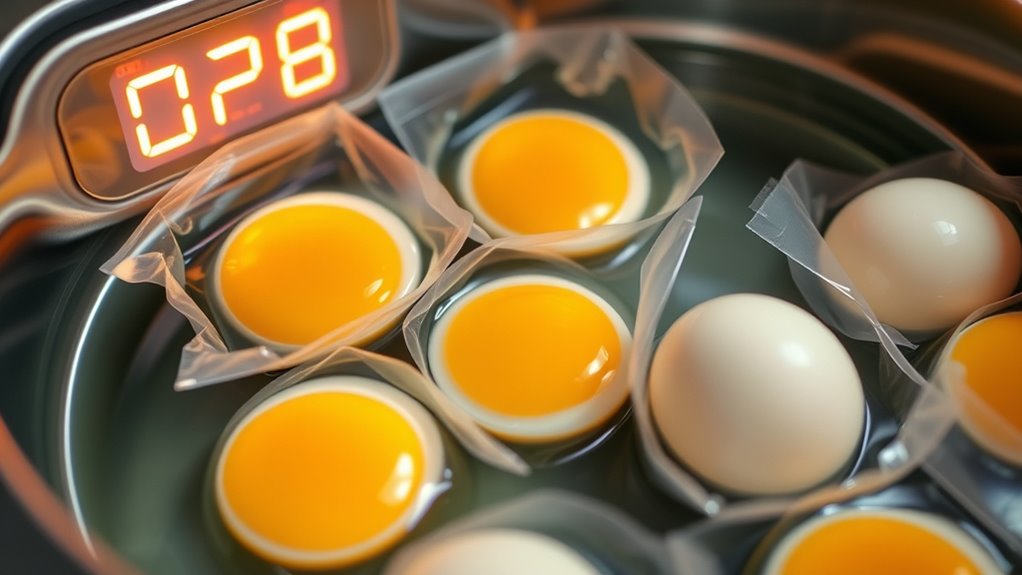
Achieving the perfect egg consistency with sous vide involves fine-tuning both temperature and cooking time. To get a runny, soft, or firm yolk, start by selecting the right temperature: lower for runny yolks, higher for firm. For soft eggs, cook at 63°C (145°F) for about 45 minutes; for runny yolks, 63°C for 45 minutes works well. To guarantee easy eggshell removal, gently crack the shell before cooking or peel immediately after. For ideal yolk consistency, keep the eggs at precise temperatures and avoid overcooking. Remember these key points:
- Use an ice bath for quick cooling and easier eggshell removal.
- Adjust cooking time based on desired firmness.
- Handle eggs carefully to prevent yolk rupture and achieve consistent results.
Using Vacuum Sealing or Mason Jars for Egg Preparation
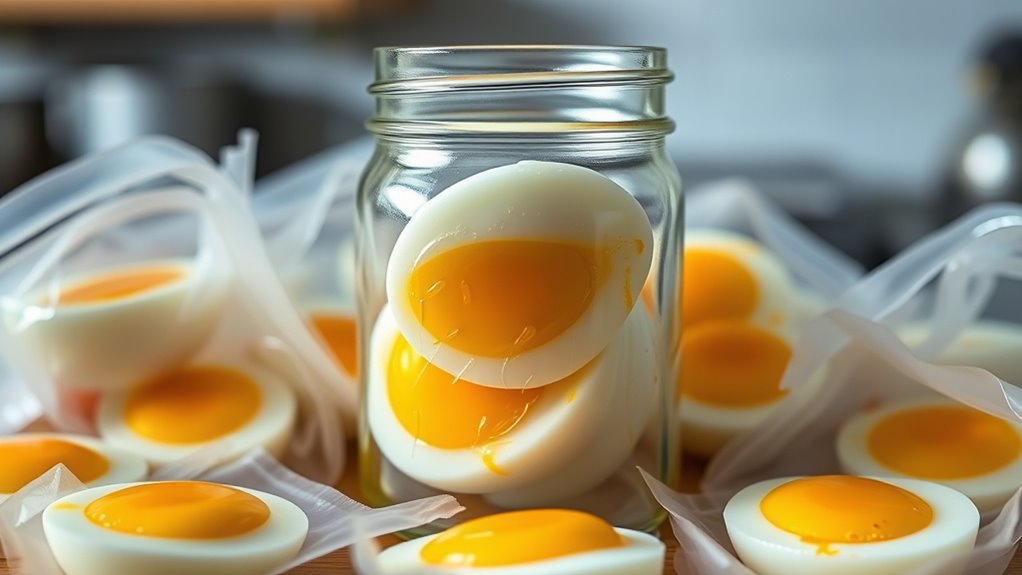
Using vacuum sealing or mason jars offers a practical way to prepare eggs with precision and convenience. Vacuum sealing allows you to package eggs individually, ensuring consistent cooking temperatures and preventing water immersion issues. Simply crack the eggs into a vacuum bag, seal tightly, and cook sous vide. Mason jars provide another excellent option; they are durable, reusable, and easy to handle. You can crack eggs directly into jars, seal with lids, and cook them in your water bath. Both methods help maintain a controlled environment, resulting in evenly cooked eggs with desired textures. Plus, mason jars make portioning simple and allow for easy storage. Whether you choose vacuum sealing or mason jars, these techniques streamline the process and help you achieve breakfast perfection every time.
Tips for Peeling and Serving Sous Vide Eggs Perfectly
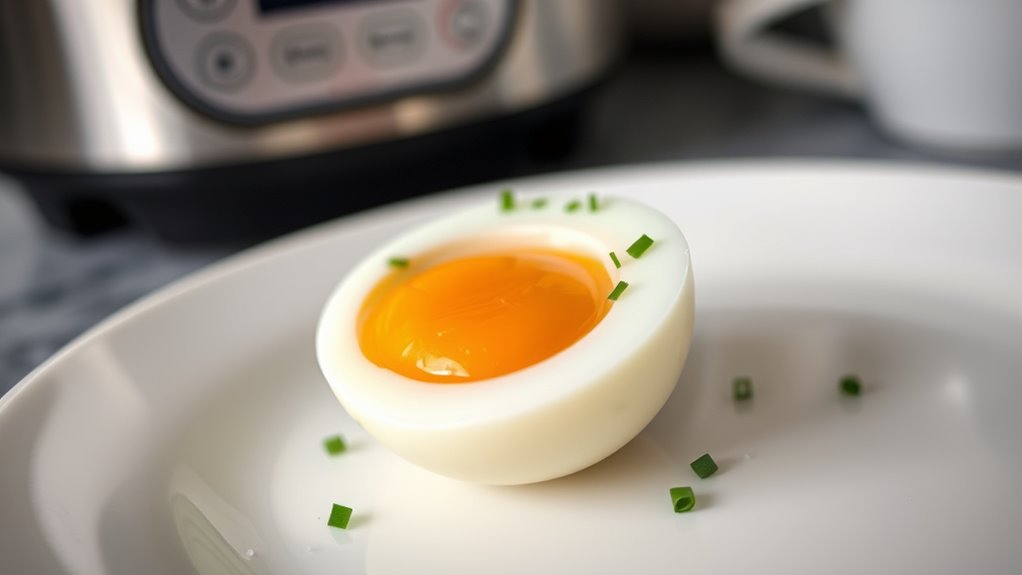
Peeling sous vide eggs can sometimes be tricky, but with the right techniques, you can achieve clean, easy-to-peel shells every time. To improve your peeling techniques, try these tips:
Master the art of peeling sous vide eggs effortlessly with simple, effective tips for perfect presentation.
- Gently crack the shell all over before peeling to loosen the membrane.
- Submerge the egg in ice water for a few minutes; this causes the membrane to contract, making peeling easier.
- Start peeling from the wider end, where the air pocket is, for smoother removal.
For serving suggestions, consider slicing the eggs over salads, placing them atop toast, or halving them for breakfast bowls. Proper peeling not only enhances presentation but also maintains the integrity of your sous vide eggs, making every dish look and taste perfect.
Creative Ways to Incorporate Sous Vide Eggs Into Your Breakfast
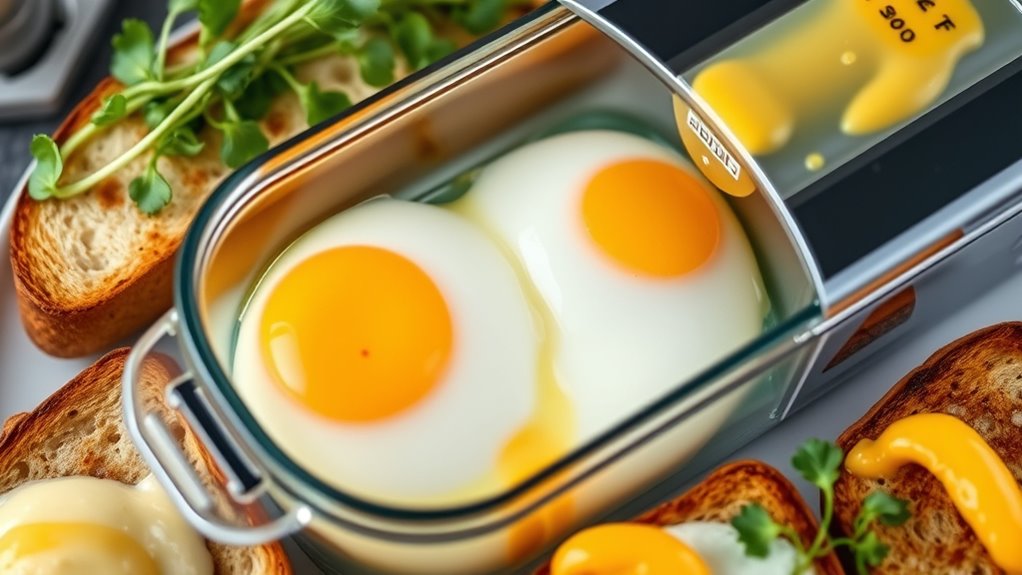
You can elevate your breakfast with elegant egg bites that are both flavorful and visually appealing. Savory breakfast tacos filled with sous vide eggs add a delicious twist to your morning routine. These creative ideas make starting your day both satisfying and impressive.
Elegant Egg Bites
Elegant egg bites are a sophisticated and customizable way to elevate your breakfast table, showcasing the silky texture of perfectly cooked sous vide eggs. To achieve the ideal yolk consistency, start with fresh eggs, carefully removing the eggshells before blending. This ensures smooth, uniform bites without shell fragments. You can enhance flavor by adding herbs, cheese, or cooked vegetables directly into the mixture. When pouring the mixture into molds, keep the yolk slightly runny for a tender bite, or cook longer for a firmer texture. Here are some tips to perfect your egg bites:
- Use a fine sieve to strain the mixture for a smooth, shell-free result
- Adjust cooking time based on your preferred yolk consistency
- Incorporate fillings before sealing the molds for added flavor
Savory Breakfast Tacos
Savory breakfast tacos offer a perfect canvas to showcase the creamy texture of sous vide eggs in a flavorful and portable way. You can achieve ideal egg poaching with sous vide, ensuring consistent yolk texture that remains luxuriously runny or firm, depending on your preference. To do this, set your precision cooker to the desired yolk consistency—around 63°C for a soft, custard-like yolk or higher for a firmer one. Once cooked, carefully slide the gently set eggs into warm tortillas. Top with salsa, avocado, or crispy bacon for added flavor. The sous vide method guarantees perfectly poached eggs that won’t overcook, making your breakfast tacos a delicious, satisfying start to your day. It’s an effortless way to elevate your taco game with flawless eggs every time.
Troubleshooting Common Issues With Sous Vide Egg Cooking
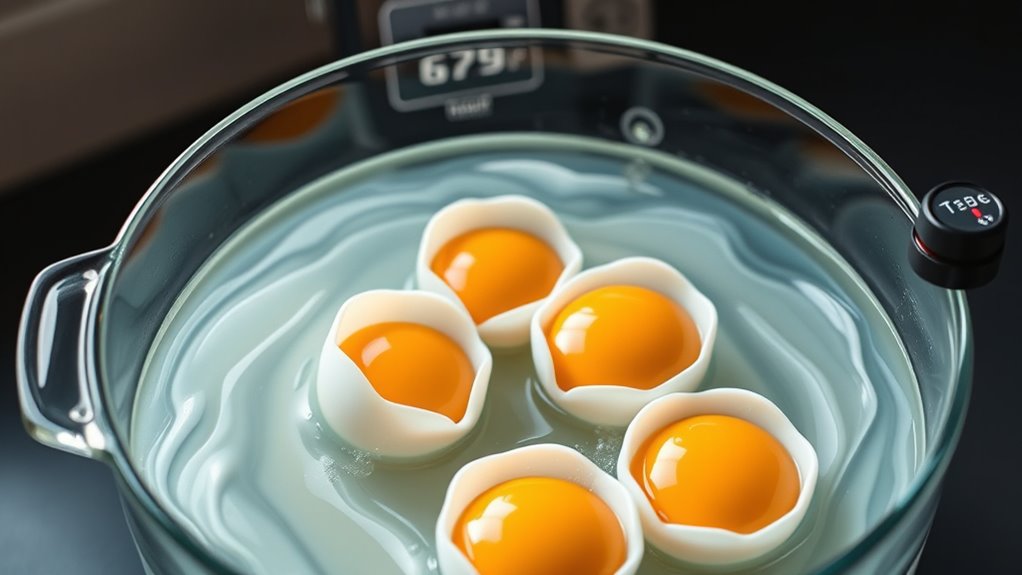
Despite careful temperature control, issues can still arise when cooking eggs sous vide. Common problems include eggs sticking to the shell, uneven yolk consistency, and difficulty in egg shell removal. To fix these:
Even with precise temperature control, eggs may stick or have uneven yolks—small tweaks can fix these common sous vide issues.
- Ensure eggs are at room temperature before cooking to promote easier shell removal.
- Adjust cooking times or temperatures if yolks are too runny or too firm.
- Use a gentle tap and cold water to loosen shells, making removal smoother and preventing damage to the egg.
If your yolk isn’t achieving the desired consistency, tweak the temperature slightly or extend the cook time. Proper handling and small adjustments help you avoid issues and achieve perfectly cooked, easily peelable eggs with ideal yolk texture.
Safety Tips and Best Practices for Sous Vide Egg Cooking
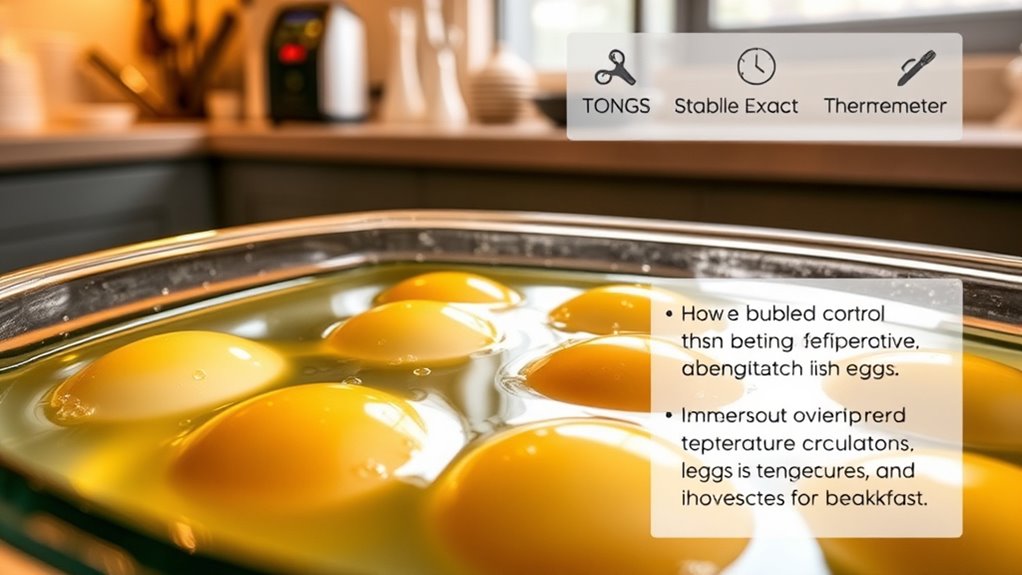
To guarantee safe and successful sous vide egg cooking, you need to follow essential safety tips and best practices. First, always maintain your equipment properly to prevent contamination. Keep your water bath at the correct temperature to ensure food safety and avoid bacterial growth. Use high-quality, food-grade bags to prevent leaks or contamination. Regularly check your equipment for malfunctions and clean it thoroughly after each use. Store eggs properly before cooking to ensure freshness. Here’s a quick guide:
| Tip | Explanation |
|---|---|
| Maintain Equipment | Regularly clean and calibrate your device |
| Use Food-Grade Bags | Prevent contamination and leaks |
| Monitor Temperature | Keep within safe ranges to kill bacteria |
| Proper Storage | Keep eggs refrigerated until use |
| Check for Damage | Inspect equipment regularly |
Frequently Asked Questions
Can I Cook Multiple Eggs at Once Without Affecting Quality?
Yes, you can cook multiple eggs at once without affecting quality by practicing batch cooking. Just make certain your sous vide water bath maintains consistent temperature throughout, which is vital for even cooking. Use a large enough container to prevent overcrowding, and gently place eggs in the water. This way, each egg receives the same gentle heat, resulting in perfectly cooked eggs every time without sacrificing quality.
How Do I Prevent Eggs From Floating During Sous Vide?
A stitch in time saves nine, and preventing egg flotation is no different. To keep eggs submerged during sous vide, guarantee your eggs are at room temperature to maintain proper sous vide density. Use a silicone bag or clip the eggs to the container’s side to prevent them from floating. Sometimes, adding a small weight or using a mesh bag also helps, ensuring even, perfect results every time.
What’s the Best Way to Store Sous Vide Eggs for Later Use?
To store sous vide eggs for later use, keep them in their sealed bags or transfer them to an airtight container. Egg storage in the fridge helps maintain freshness and extends shelf life, typically up to a week. Always label the date you cooked them, and when ready to serve, reheat gently in warm water. Proper egg storage guarantees safe consumption and preserves the quality of your sous vide eggs.
Are There Any Specific Safety Concerns With Sous Vide Eggs?
You should be mindful of egg shell integrity and pasteurization safety when cooking sous vide eggs. Guarantee your eggs are fresh and uncracked to prevent contamination. Maintain the correct temperature and time to safely pasteurize the eggs, reducing the risk of bacteria. Always handle eggs carefully and store them properly, and cook them at recommended settings to maximize safety without compromising quality.
Can Sous Vide Eggs Be Cooked From Frozen?
Think of cooking frozen eggs in sous vide like thawing a delicate flower slowly—it’s possible but needs care. Yes, you can cook frozen eggs, but for safety, you should first defrost using sous vide defrosting techniques at a low temperature, around 40°F. This guarantees frozen egg safety and even cooking. Rushing straight from frozen can lead to uneven results and potential safety issues.
Conclusion
Now that you’ve mastered sous vide eggs, you’ll wonder how you ever survived without perfectly cooked breakfast perfection. No more guesswork, just silky, flawless eggs every time—your new secret weapon against breakfast blunders. Soon, friends will envy your culinary prowess, and you’ll be the hero of brunch. Just remember, with great egg power comes great breakfast responsibility—so handle those sous vide machines wisely, or risk turning your kitchen into a breakfast battlefield.