
A smart grill can be worth it if you value precise control, convenience, and integration with your smart home setup. Its features like app-based temperature control, real-time alerts, and customizable cooking programs help you get consistent results with less effort. While they tend to be more expensive than traditional grills, the added automation can improve your grilling experience. To find out if it’s the right fit for your lifestyle, explore the key benefits and limitations further.
Open a free Amazon Business account
Business pricing, bulk buying and tax-exempt orders.
As an affiliate, we earn on qualifying purchases.
Key Takeaways
- Smart grills offer precise temperature control and real-time monitoring for better cooking results.
- They provide convenience through remote operation, pre-programmed settings, and app integration.
- Enhanced safety features and energy efficiency make smart grills more reliable and cost-effective long-term.
- The higher upfront cost may be offset by improved cooking accuracy and reduced waste.
- Compatibility with smart home systems allows seamless integration into outdoor kitchens and automation setups.
The Growing Market and Consumer Demand for Smart Grills

Have you noticed how smart grills are transforming outdoor cooking? The market’s booming, with over 15 million units expected to ship globally by 2033. Gas smart grills lead the way, surpassing 7 million units in sales, thanks to their convenience and reliability. The portable electric segment already generated $2.3 billion in 2024 and is projected to reach $4 billion by 2034. As demand grows, more consumers seek smarter features like app-based controls, real-time temperature monitoring, and pre-programmed settings. This shift reflects a desire for easier, more precise cooking experiences. Additionally, the growing adoption of home technology is making smart grills a more common feature in outdoor kitchens, with connectivity enabling seamless control and monitoring from smartphones, promising enhanced convenience and innovative cooking possibilities for enthusiasts everywhere. A consumer interest in smart home devices is also driving innovation in outdoor cooking solutions, blending traditional grilling with modern connectivity. Furthermore, the integration of smart technology is expected to improve safety features and energy efficiency, making these grills even more appealing to consumers. This advancement aligns with the broader push toward energy-efficient appliances that support sustainable living and reduce environmental impact.
Key Features Enhancing Cooking Precision and Convenience

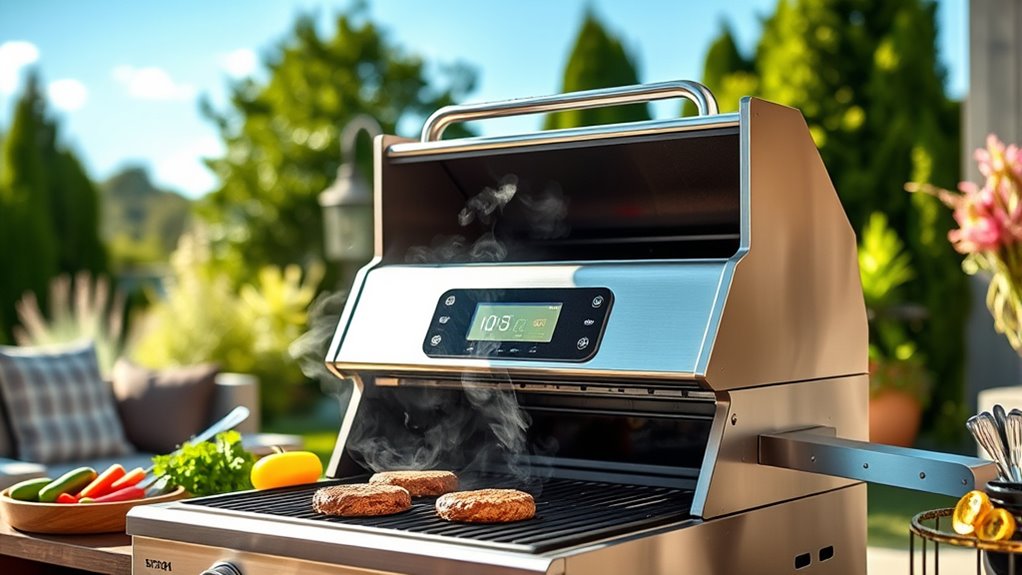
Smart grills incorporate a range of advanced features that markedly improve cooking precision and convenience. You can control temperatures remotely via smartphone apps, ensuring perfect doneness without constant monitoring. Built-in thermometers provide real-time updates, alerting you when your food reaches the ideal temperature. Pre-programmed settings help you prepare different foods effortlessly, while notification systems keep you informed of progress. Some models reach over 700°F, making professional-level searing easy. Onboard screens allow for adjustments without an app, and dual-sided cooking lets you prepare multiple items simultaneously. These features save time, reduce guesswork, and enhance results. With energy-efficient designs and customizable configurations, smart grills make outdoor cooking more precise, convenient, and enjoyable—whether you’re a beginner or a seasoned grilling enthusiast. Integrating local automation capabilities can further streamline your outdoor cooking experience. Additionally, digital connectivity enables seamless integration with other smart home devices, further enhancing control and automation. For example, integrating outdoor lighting can help set the perfect mood during evening cookouts. Incorporating quality assurance practices into the manufacturing process ensures that these advanced features function reliably over time. The integration of smart technology also allows for software updates that improve features and security, ensuring your grill stays current and reliable.
Exploring Different Types and Fuel Options of Smart Grills

You have several smart grill options, including gas, charcoal, and electric models, each with unique advantages. Gas grills heat quickly and offer consistent results, while charcoal and pellet grills deliver rich flavors but require more attention. Smart technology enhances all types with features like app controls, temperature monitoring, and automated adjustments, making each suitable for different cooking styles and preferences. Additionally, understanding at‑home cooking technology can help you select a grill that seamlessly integrates with your existing kitchen setup. Incorporating cybersecurity measures into your smart appliances can protect your connected devices from potential threats, ensuring a safer cooking environment. Considering reliable backup power options can ensure your cooking appliances stay operational even during power outages, adding an extra layer of convenience and safety. Moreover, exploring sauna and cold‑plunge systems can complement your cooking space by promoting relaxation and wellness. Being aware of smart device security best practices can further safeguard your smart appliances and personal data.
Gas, Charcoal, and Electric
Choosing the right type of smart grill depends on your cooking style and priorities, as each fuel option offers distinct advantages. Gas smart grills heat quickly, provide consistent temperatures, and are easy to control remotely, making them ideal for convenience and speed. Charcoal and Kamado grills deliver rich, smoky flavor but demand more attention and prep time, perfect for flavor enthusiasts. Electric smart grills offer automatic features like shutdowns and timers, with app controls that suit apartment or indoor use. Portability and setup vary—gas models are bulkier; electric grills are lightweight; charcoal grills require ash management, influencing where and how you cook. Additionally, connectivity features in smart grills enable remote monitoring and control, enhancing your cooking experience. Understanding fuel efficiency can also help you select a model that saves energy and reduces ongoing costs. Incorporating energy-saving technologies can further optimize your grilling efficiency and sustainability. Your choice hinges on whether you prioritize speed, flavor, convenience, or mobility. Moreover, selecting a grill with smart temperature control can help maintain consistent cooking conditions for better results. Newer models often include AI-powered sensors, which automatically adjust heat and monitor cooking to ensure perfect results with minimal effort.
Fuel Benefits and Drawbacks
Different fuel options for smart grills each come with their own benefits and limitations, influencing how you cook and enjoy your outdoor meals. Gas grills heat quickly and offer consistent temperatures, making them convenient for quick, reliable cooking. Charcoal and pellet grills provide richer flavor, thanks to the smoky taste, but they take longer to heat up and need more attention to maintain temperature. Electric smart grills are easy to use, with precise control and automatic features, but they require a power source, limiting placement options. Gas models tend to be more popular due to their convenience and reliability. However, if flavor is a priority, charcoal or pellet grills might be worth the extra effort. Each fuel type suits different cooking styles, so consider what matters most to you. Understanding different fuel types can help you select the best grill for your specific needs. Additionally, some grills incorporate gelato-inspired features to enhance outdoor entertainment experiences. Exploring fuel efficiency can further assist in choosing a model that balances cost and performance. Recognizing the environmental impact of various fuel options can also guide eco-conscious consumers toward more sustainable choices. Incorporating curiosity about cooking techniques can lead you to discover new ways to elevate your outdoor culinary adventures.
Smart Technology Integration
Smart technology has transformed how you cook outdoors, integrating advanced features into various fuel options to enhance convenience and precision. You can choose from several smart grill types:
- Gas smart grills offer quick heat-up times and consistent results. They often include features like app control and temperature probes to monitor cooking from anywhere.
- Charcoal and Kamado grills deliver richer flavors but need more attention. Some models now incorporate smart vents and temperature sensors for better control.
- Electric smart grills provide automatic shutdown, timers, and connectivity via Bluetooth or Wi-Fi. These grills are ideal for small spaces and apartment balconies, where safety and noise are considerations.
- AI-powered systems monitor cooking variables, suggest settings, and even cook steak in under three minutes with some models. These advanced cooking systems can learn your preferences over time for personalized results.
These features enable remote control, real-time temperature monitoring, and personalized cooking recommendations. Smart technology seamlessly integrates with home ecosystems, making outdoor cooking more precise, efficient, and enjoyable.
How AI and Connectivity Are Transforming Grilling Experiences

AI and connectivity are revolutionizing grilling by making it more precise, convenient, and enjoyable. With app-based controls, you can monitor and adjust temperatures remotely, ensuring perfect results every time. Integrated thermometers send real-time updates and doneness alerts, so you don’t have to guess when your food is ready. Pre-programmed settings simplify preparing different dishes, while notifications keep you informed without hovering. Some smart grills reach ultra-high temperatures for professional searing, all managed seamlessly through Wi-Fi or Bluetooth. AI systems analyze multiple variables like food thickness and fat content, offering personalized cooking recommendations. Plus, smart home integration allows you to control your grill via voice commands with Alexa or Google Home, transforming your grilling experience into a more effortless, precise, and connected activity.
Benefits of Smart Grills for Everyday and Gourmet Cooking

Thanks to advanced connectivity and intuitive controls, smart grills make both everyday meals and gourmet dishes easier to prepare. They help you achieve consistent results and elevate your cooking experience. Here’s how:
- Precision Temperature Control: Remotely set and monitor temperatures for perfectly cooked steaks or delicate fish.
- Pre-Programmed Settings: Select from built-in profiles for burgers, brisket, or veggies, simplifying complex recipes.
- Real-Time Monitoring: Integrated thermometers send alerts when your food reaches desired doneness, reducing guesswork.
- Multi-Item Cooking: Dual zones allow you to cook different foods simultaneously at different temperatures, ideal for gourmet multi-course meals.
Smart grills blend convenience with culinary creativity, making everyday meals better and gourmet dishes achievable at home.
Limitations and Challenges to Consider Before Purchasing

While smart grills offer many innovative features, there are notable limitations to contemplate before making a purchase. First, they rely on electricity and Wi-Fi, which can restrict where you place your grill and cause connectivity issues if your network is unreliable. Setting up these devices often involves entering passwords and steering through app interfaces, which can be frustrating, especially if you’re not tech-savvy. Some models lack built-in thermometers, limiting real-time temperature monitoring. Additionally, many smart features are dependent on stable internet connections and may not work offline. Price is another factor; smart grills tend to be more expensive than traditional models, and ongoing app updates or maintenance might be necessary. These challenges can impact convenience and overall satisfaction with your smart grilling experience.
Comparing Smart Grills to Traditional Models: Is the Investment Justified?
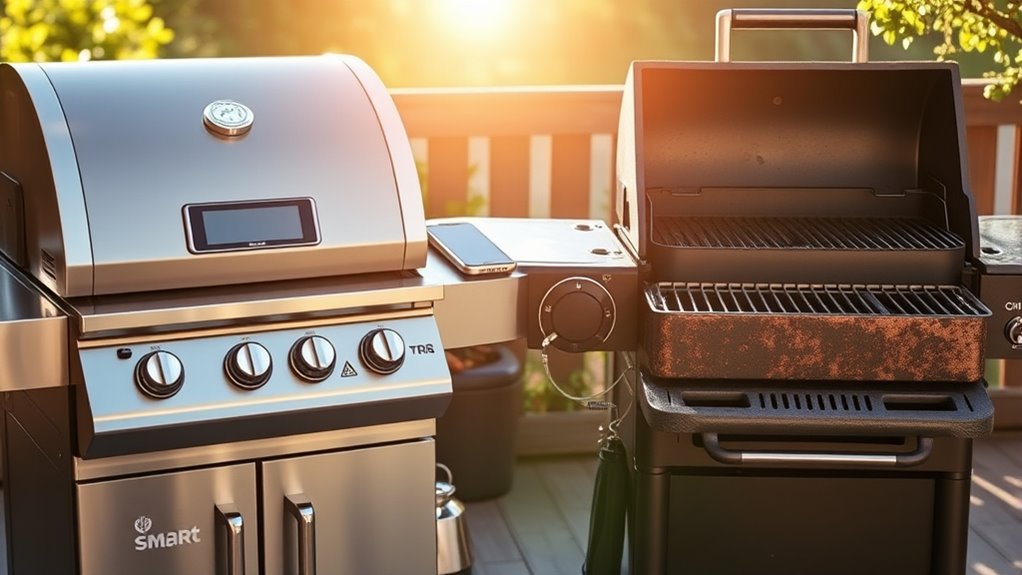
Are smart grills worth the extra investment compared to traditional models? It depends on your priorities. Here’s a quick comparison:
- Convenience: Smart grills offer remote temperature control, alerts, and pre-set programs, saving time and effort.
- Precision: Integrated thermometers and AI features guarantee consistent results and perfect doneness.
- Connectivity: Seamless integration with smart home systems lets you monitor and adjust from anywhere.
- Cost: Smart grills are generally more expensive upfront, but their advanced features can reduce guesswork and waste.
If you value automation, consistency, and tech integration, the investment can justify itself. However, if you prefer simple, reliable cooking without extra bells and whistles, traditional grills may suffice.
Final Thoughts: Are Smart Grills a Worthwhile Addition to Your Kitchen

Smart grills bring a new level of convenience and precision to outdoor cooking, making them a compelling addition for those who value technology and consistency. If you enjoy effortless control and consistent results, a smart grill can elevate your grilling game. Its app-based features allow you to monitor and adjust temperatures remotely, while integrated thermometers provide real-time updates. The ability to set pre-programmed modes and receive notifications simplifies cooking, even when you’re away. However, consider the need for electricity and Wi-Fi, which could limit placement options. If you’re tech-savvy and seek convenience, a smart grill is worth the investment. For traditionalists, it may seem unnecessary, but for most, the enhanced control and modern features make smart grills a valuable, future-proof addition to your outdoor kitchen.
Frequently Asked Questions
How Secure Is Data Sharing Between Smart Grills and Mobile Apps?
Data sharing between your smart grill and mobile app can be fairly secure when manufacturers use encryption and secure protocols. However, vulnerabilities may exist if the app or firmware isn’t regularly updated or if you connect over unsecured networks. To protect your information, make sure you keep your app and device software current, use strong passwords, and avoid public Wi-Fi. Being cautious helps maintain your data privacy while enjoying smart grilling.
Can Smart Grills Be Used Effectively Without Wi-Fi or Internet Access?
Yes, you can use smart grills without Wi-Fi or internet, but with limitations. Basic functions like temperature control, pre-set timers, and manual adjustments work offline. However, features like remote monitoring, app notifications, and AI-driven recommendations rely on internet access. If you prefer simple grilling or frequent outdoor use without connectivity concerns, a smart grill still offers value, but you’ll miss some advanced, connected features.
Are There Any Health Concerns With Smart Grill Materials or Emissions?
You don’t need to worry much about health concerns with smart grill materials or emissions. Most smart grills use food-safe, durable materials like stainless steel and coated surfaces that don’t emit harmful substances when heated. Additionally, emissions are generally similar to traditional grills, mainly smoke and gases from fuel combustion. Just make certain proper ventilation and follow manufacturer guidelines, and you’ll enjoy safe, delicious meals without health worries.
How Energy-Efficient Are Smart Grills Compared to Traditional Grills?
Smart grills are generally more energy-efficient than traditional grills because they feature precise temperature controls and optimized cooking cycles, reducing unnecessary energy use. Their advanced technology adjusts power based on real-time needs, minimizing waste. Additionally, energy-efficient models use eco-friendly materials and designs that conserve power. While they do require electricity, their smart features help you cook more efficiently, saving energy and potentially lowering your overall utility bills.
What Is the Typical Lifespan and Durability of Smart Grill Components?
Your smart grill’s components generally enjoy a good run, often lasting around 5 to 10 years with proper care. Regular cleaning, avoiding extreme weather, and gentle handling help extend its life. High-quality parts tend to withstand daily use better, while electronic sensors and controllers might need occasional updates or replacements. Embracing good maintenance practices guarantees your smart grill remains a reliable companion for many enjoyable cookouts.
Conclusion
Ultimately, investing in a smart grill can elevate your cooking game and make grilling more enjoyable. While they offer precision, convenience, and innovative features, consider your needs and budget first. Remember, a smart grill is only worth it if you’ll use it regularly and appreciate the tech benefits. As the saying goes, “You get what you pay for,” so weigh the features against the cost to decide if it’s a smart move for you.
Fall Picks
fall essentials
As an affiliate, we earn on qualifying purchases.