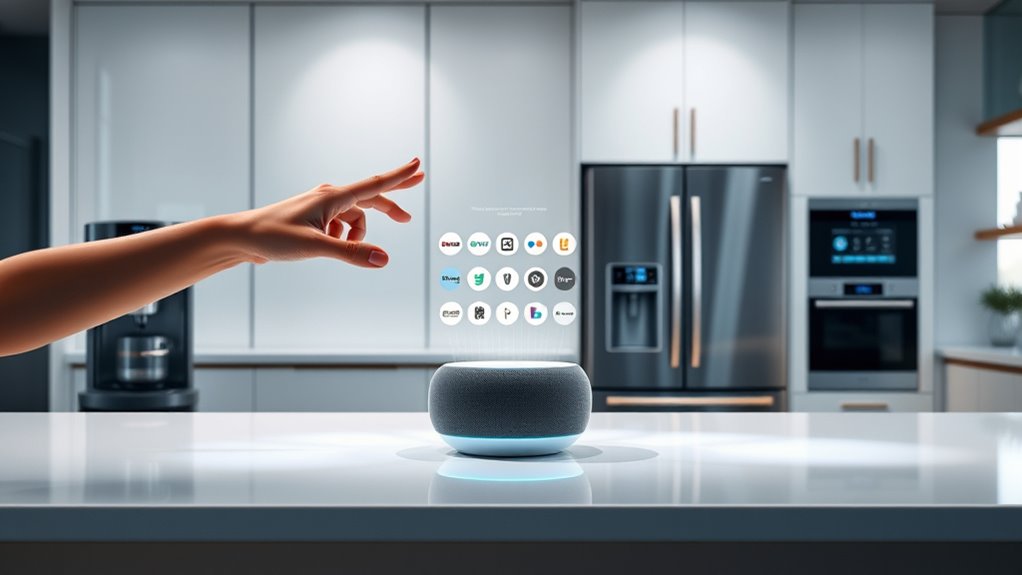

Yes, many smart appliances now support multiple voice assistants like Alexa, Google Assistant, and Siri, allowing you to control them across platforms easily. Look for devices labeled “Works with Alexa” or “HomeKit Certified,” and consider using hubs or apps like IFTTT for seamless integration. This flexibility lets you choose your preferred assistant without compatibility concerns. To discover how to maximize your smart home setup, there’s more to explore here.
Key Takeaways
- Many smart appliances are labeled as “Works with Alexa,” “Google Assistant Ready,” or “HomeKit Certified,” indicating multi-platform compatibility.
- Compatibility depends on device support for multiple voice assistants and integration protocols like Zigbee, Z-Wave, or Wi-Fi.
- Using centralized hubs or platforms like SmartThings or IFTTT can enable communication across different voice ecosystems.
- Devices supporting multiple voice assistants often require separate setup and configuration for each platform.
- Certifications and labels on packaging or manufacturer websites help verify if appliances work with multiple voice assistants.
The Growing Importance of Multi-Platform Compatibility in Smart Homes

As smart homes become more prevalent, the importance of multi-platform compatibility continues to grow. You want your devices to work seamlessly across different voice assistants, making control easier and more flexible. Market research shows that 68% of consumers prefer products compatible with both Amazon Alexa and Google Assistant. This preference influences purchasing decisions, prompting manufacturers to expand their support for multiple platforms. Well-known brands now offer devices that work with both, reflecting consumer demand for interoperability. Having smart appliances compatible with various voice platforms means you aren’t locked into a single ecosystem, giving you more freedom and convenience. As your smart home becomes more integrated, multi-platform compatibility becomes a key factor in creating a truly connected, user-friendly environment. Interoperability ensures that your devices can communicate effectively across different systems, enhancing overall functionality and user experience. Moreover, standardized protocols are increasingly being adopted to facilitate smoother integration and future-proof your smart home setup. This trend underscores the importance of multi-platform support in providing a flexible and resilient smart home ecosystem, especially as advancements in home automation technology continue to evolve. Additionally, cross-platform compatibility benefits from ongoing efforts to develop universal standards, making integration even more seamless over time.
Capabilities and Limitations of Major Voice Assistant Platforms

You’ll find that each major voice assistant platform offers unique strengths and limitations. While Alexa supports a vast array of devices and skills, Google Assistant excels at natural language understanding and integration with Google services. However, platforms like Apple’s Siri prioritize privacy, which can limit their compatibility and functionality within the smart home ecosystem. Additionally, compatibility can be influenced by the styles and features of the smart appliances, affecting how well they integrate across different voice assistants. The compatibility standards used by various smart devices also play a significant role in determining seamless integration and user experience, especially as industry-wide adoption of interoperability protocols continues to grow. As the smart home market evolves, manufacturers increasingly aim for cross-platform compatibility to meet diverse user preferences, which is facilitated by industry standards that promote interoperability.
Platform Compatibility Range
Major voice assistant platforms vary considerably in their capabilities and limitations, shaping how you choose and use smart home devices. Amazon Alexa supports over 100,000 devices, offering broad compatibility and a rich Skills library for added functions. Google Assistant excels at natural language understanding and integrates seamlessly with Google services, with features like multi-user recognition. Apple’s Siri through HomeKit emphasizes privacy but supports fewer brands, limiting compatibility. Some devices are labeled “Works with Alexa,” “Google Assistant Ready,” or “HomeKit Certified,” indicating specific platform support. Using centralized hubs like SmartThings or IFTTT can help bridge different platforms, enabling multi-assistant control. Your choice depends on device compatibility, ecosystem support, and whether you want broad ecosystem flexibility or a focus on privacy. Additionally, advancements in AI detection methods are improving the accuracy of voice recognition and device security across platforms.
Natural Language Processing Skills
Natural language processing (NLP) is a key factor that determines how effectively voice assistants understand and respond to your commands. Major platforms vary in their NLP skills, influencing how well they interpret natural speech. For example, Google Assistant excels at understanding complex, multi-part questions and context, while Alexa may require more precise phrasing. Apple Siri emphasizes privacy but supports fewer commands. Here’s a quick comparison:
| Feature | Google Assistant | Amazon Alexa | Apple Siri |
|---|---|---|---|
| Natural language understanding | Advanced, context-aware | Good, but sometimes literal | Limited, privacy-focused |
| Multi-turn conversations | Strong, retains context | Moderate, needs explicit cues | Basic, single command focus |
| Multi-user recognition | Yes, voice profiles | Yes, voice recognition | Limited, fewer profiles |
These differences impact how smoothly your smart appliances respond across platforms. Additionally, natural language processing capabilities play a crucial role in enabling seamless interactions with your smart kitchen appliances. Understanding the capabilities and limitations of major voice assistant platforms helps optimize your experience with smart appliances across different systems. Moreover, compatibility and communication protocols are essential for effective integration, and these standards can vary significantly between platforms, affecting device interoperability. Recognizing these interoperability challenges can help you select devices that work well together, regardless of the voice assistant you prefer.
Privacy and Security Focus
Privacy and security are increasingly top concerns as voice assistants become more integrated into smart homes. You need to understand each platform’s strengths and limitations to protect your data. Major voice assistants differ in how they handle your information:
- Amazon Alexa records and stores voice commands, raising concerns about data misuse.
- Google Assistant emphasizes encryption but collects extensive user activity data.
- Apple Siri prioritizes user privacy, processing commands locally when possible.
- Third-party skills and apps can introduce vulnerabilities if not properly vetted.
- Multi-platform setups require careful configuration to prevent cross-platform data leaks.
- Implementing security best practices is essential to safeguard your smart home environment.
- Awareness of cookie management can help users control data collection across devices and platforms.
- Regularly updating firmware and software on your devices adds an extra layer of security, reducing potential entry points for attackers.
- Additionally, understanding the limitations of each platform can help set realistic expectations for privacy and security.
While these platforms offer security features like two-factor authentication and activity logs, vulnerabilities remain. You must stay informed and actively manage privacy settings to guarantee your smart home stays safe. Additionally, implementing proper security protocols can further mitigate risks associated with voice assistant integration.
Strategies for Integrating Multiple Voice Assistants With Smart Devices
To effectively integrate multiple voice assistants with your smart devices, you need to establish clear strategies that prevent command conflicts and guarantee seamless control. First, assign unique trigger phrases for each assistant to avoid accidental overlaps. Using centralized hubs like SmartThings or IFTTT helps coordinate commands and streamline automation across platforms. Creating distinct voice profiles for each assistant enhances personalization and reduces confusion. Make sure your devices support multiple platforms by checking manufacturer documentation and labels such as “Works with Alexa” or “Google Assistant Ready.” Additionally, leverage cross-platform solutions like Hubitat or Homey Pro to facilitate communication between assistants. These strategies help you manage multi-assistant environments efficiently, providing a smooth and integrated smart home experience without duplicated controls or command mishaps.
Key Factors to Consider When Choosing Multi-Platform Compatible Appliances

When selecting smart appliances, it’s essential to verify their compatibility labels and certifications to guarantee they work with your preferred voice platforms. You should also consider which voice assistants are supported and how easily you can control and integrate the devices across multiple systems. Making informed choices helps you build a seamless, multi-platform smart home experience without unnecessary complexity. Additionally, understanding device interoperability can ensure your appliances communicate effectively across different ecosystems, enhancing overall functionality. Recognizing ecosystem compatibility can prevent potential issues and improve the reliability of your smart home setup. Being aware of free floating practices in device design can further promote flexibility and ease of integration among various smart technologies. An awareness of standardization efforts in the industry can also facilitate smoother interactions and future-proof your smart home environment, promoting cross-platform compatibility that benefits long-term scalability.
Compatibility Labels and Certifications
Choosing multi-platform compatible appliances starts with paying attention to compatibility labels and certifications. These labels quickly tell you if a device works with your preferred voice assistants. Look for labels such as “Works with Alexa,” “Google Assistant Ready,” or “HomeKit Certified,” which indicate broad compatibility. These certifications ensure the product has been tested to work seamlessly across multiple platforms. Imagine a smart lock labeled “Works with Alexa, Google, and HomeKit”—it’s a clear sign of flexibility. Other indicators include packaging icons, product manuals, and manufacturer websites detailing supported platforms. Checking these labels before buying saves time and prevents frustration. A certified device guarantees you’re investing in a gadget that integrates smoothly into your multi-platform smart home ecosystem.
Supported Voice Platforms
What key factors should you consider when selecting smart appliances that support multiple voice platforms? First, check if the device explicitly states compatibility with your preferred assistants, like Alexa, Google Assistant, or Apple HomeKit. Look for products labeled “Works with Alexa” or “Google Assistant Ready,” as these certifications ensure broad support. Evaluate whether the appliance supports seamless multi-platform control without requiring multiple hubs or complicated setups. Consider the manufacturer’s documentation and user reviews to confirm reliable performance across platforms. Compatibility with popular ecosystems like SmartThings or IFTTT can enhance flexibility, allowing easier integration and automation. Lastly, verify if the appliance allows creating unique voice profiles or routines, ensuring smooth operation and minimizing command conflicts across different voice assistants. Additionally, understanding platform interoperability helps ensure your devices function smoothly together across various ecosystems.
Integration and Control Options
Are you ensuring your smart appliances can be easily controlled across multiple voice platforms? To do this, look for integration and control options that simplify management. Consider these features:
- Compatibility labels like “Works with Alexa” or “Google Assistant Ready” on product packaging
- Central hubs such as SmartThings or IFTTT that connect different voice ecosystems
- Multi-user voice profiles that distinguish household members for personalized control
- Customizable routines that trigger actions across platforms seamlessly
- Support for cross-platform communication devices that enable one assistant to activate another
Solutions and Technologies Enabling Cross-Platform Communication

To enable seamless communication across different voice assistant platforms, manufacturers and developers leverage a variety of solutions and technologies. Central hubs like SmartThings, Hubitat, and Homey Pro support multiple voice assistants, allowing devices to communicate regardless of the platform. Platforms like IFTTT create applets that connect different ecosystems, automating cross-platform actions. Creating distinct voice profiles helps prevent command confusion and enhances personalization. Some devices, such as LG Smart Refrigerators or Philips Hue lights, are designed to work with multiple assistants simultaneously, simplifying control. Manufacturers also provide documentation and labeling—like “Works with Alexa” or “Google Assistant Ready”—to guide compatibility. These technologies and solutions enable you to build flexible, integrated smart environments that work seamlessly across voice assistant platforms.
Practical Examples of Multi-Assistant Smart Appliance Setups

Setting up a smart home that works seamlessly with multiple voice assistants is easier than you might think. You can create environments where different devices respond to various assistants without conflicts. For example, imagine:
- Using Philips Hue lights that respond to Alexa, Google, and Apple commands
- Controlling your Nest thermostat with either Google Assistant or Alexa
- Locking doors with August Smart Lock via multiple voice platforms
- Turning on smart plugs that work smoothly with both Alexa and Google Assistant
- Asking your Google or Alexa device to adjust your smart blinds or fans
Frequently Asked Questions
Can I Control a Single Smart Device With Multiple Voice Assistants Simultaneously?
Yes, you can control a single smart device with multiple voice assistants simultaneously. To do this, you need to make sure the device supports multi-platform compatibility, like Philips Hue or Nest. Set up each voice assistant separately, creating distinct trigger phrases or profiles to prevent command confusion. Using central hubs or platforms like IFTTT can also help synchronize commands across different assistants, giving you seamless control over your smart device through multiple voice platforms.
Are There Any Security Risks Using Multi-Platform Smart Home Devices?
Yes, using multi-platform smart devices can pose security concerns. You could create chaotic vulnerabilities if your devices lack proper protection, exposing your home to hackers and breaches. Weak Wi-Fi safeguards, unencrypted data, or outdated firmware can amplify these risks. To minimize mischief, guarantee robust passwords, enable two-factor authentication, and keep firmware current. Maintaining vigilant vigilance helps safeguard your smart home’s security, preventing potential threats from turning into trouble.
Do All Smart Appliances Support Integration With Both Alexa and Google Assistant?
Most smart appliances now support integration with both Alexa and Google Assistant, but not all. You should check each device’s specifications to verify compatibility, as some brands and models are limited to one platform. Devices labeled “Works with Alexa,” “Google Assistant Ready,” or “HomeKit Certified” indicate multi-platform support. By researching before purchasing, you’ll ensure your appliances work seamlessly with both voice assistants, maximizing your smart home’s flexibility.
How Do I Troubleshoot Conflicts Between Different Voice Assistants Controlling the Same Device?
When conflicts pop up between voice assistants controlling the same device, you need to get your ducks in a row. First, assign unique trigger phrases for each assistant to avoid command confusion. Next, check device and platform settings to make certain of compatibility. You might also consider central hubs like SmartThings or IFTTT to streamline control. Regularly update firmware and app versions, and reset connections if needed to keep everything running smoothly.
Is It Possible to Set Different Routines for Each Voice Assistant in a Multi-Platform Setup?
Yes, you can set different routines for each voice assistant in a multi-platform setup. You’ll need to create specific routines or automation rules for each platform through their respective apps, ensuring they trigger only when the intended assistant responds. Using unique wake words or trigger phrases helps prevent overlap. Central hubs like SmartThings or IFTTT can also coordinate and customize routines across assistants, giving you tailored control over your smart appliances.
Conclusion
As smart appliances become more compatible with multiple voice assistants, you gain greater flexibility and control over your home. Did you know that 83% of smart device users prefer multi-platform setups for seamless integration? Embracing these technologies means you can customize your smart home experience effortlessly. By choosing appliances that support multiple voice assistants, you guarantee future-proofing and convenience, making your smart home truly smarter and more adaptable to your evolving needs.