
Yes, smart dishwashers generally use less water and energy than traditional models. They feature sensors and load-adjustment technology that optimize resource use based on load size and soil level. ENERGY STAR-rated smart models can consume as little as 3-4 gallons of water and less than 270 kWh per year. By using intelligent features and practicing household habits that support efficiency, you’ll save money and conserve resources. Discover more tips to maximize savings with your dishwasher.
Key Takeaways
- Smart dishwashers typically use 3-4 gallons per cycle, less than older models, reducing water consumption.
- ENERGY STAR-rated smart dishwashers operate with less than 270 kWh annually, saving energy compared to traditional models.
- Sensor technology in smart dishwashers optimizes water and energy use based on load size and soil level.
- Smart features like real-time monitoring and load adjustment help further decrease resource consumption.
- Proper household habits, combined with smart settings, maximize water and energy savings in smart dishwashers.
Comparing Water Usage in Smart and Traditional Dishwashers
When comparing water usage between smart and traditional dishwashers, the difference is significant. Smart dishwashers typically use 3-4 gallons per cycle, thanks to advanced sensors and water-efficient designs. In contrast, older traditional models, especially those made before 2004, can consume 10-15 gallons per load. Hand washing dishes can use up to 27 gallons for a full load, making dishwashers a more water-conscious choice. Modern ENERGY STAR-rated models are engineered to maximize efficiency, reducing water use further. By running your dishwasher only when full and choosing a smart model, you can save hundreds of gallons annually. Additionally, some smart dishwashers adjust water flow based on load size, further enhancing their efficiency. The use of water-saving technology is a key factor in how these appliances minimize water consumption. Smart dishwashers also often include automatic cycle selection, which optimizes water and energy use based on the dirtiness and load size. Incorporating smart sensors that detect soil levels and load size enables these appliances to tailor their operation for maximum conservation. Moreover, these sensors can adapt to variable water pressure, ensuring optimal performance across different homes. Overall, smart dishwashers use considerably less water than their traditional counterparts, supporting both conservation efforts and lower utility bills.
Energy Efficiency Standards for Modern Dishwashers
Modern dishwashers must meet strict energy efficiency standards set by regulatory agencies to reduce electricity consumption and environmental impact. These standards have evolved over time, compelling manufacturers to design models that consume less power. For example, models made after 2013 are required to use less than 307 kWh annually, with ENERGY STAR certified dishwashers limiting energy use to 270 kWh or less. These regulations encourage innovation, leading to more efficient motors, better insulation, and advanced control systems. As a result, modern dishwashers are not only more energy-efficient but also more environmentally friendly. SmartCR Additionally, improvements in water-saving technologies have contributed to reducing overall resource use. Incorporating energy-efficient features ensures appliances operate with minimal environmental impact and lower utility costs. Implementing regulatory standards has driven continuous advancements in appliance design, benefiting consumers and the environment alike. By complying with these standards, you benefit from appliances that save you money on utility bills while reducing your household’s carbon footprint. Furthermore, innovations in sensor technology allow dishwashers to optimize water and energy use based on load size and soil level.
How Smart Features Enhance Water and Energy Conservation
Smart features in dishwashers actively contribute to water and energy conservation by allowing you to monitor and adjust usage in real-time. With these tools, you can track how much water and electricity each cycle consumes, helping you identify patterns and optimize your habits. For example, some smart models suggest running full loads or choosing eco-friendly settings, reducing unnecessary waste. Energy consumption monitoring makes it easier to understand and manage your household’s resource use effectively. Incorporating smart home integration with voice assistants like Alexa or Google Home makes it easy to control and schedule washes, ensuring you’re not running the appliance when it’s not needed. Additionally, smart dishwashers can alert you when detergent supplies are low or if maintenance is required, preventing inefficient operation. These smart energy management tools empower you to make smarter choices, ultimately lowering your household utility bills and minimizing environmental impact. Leveraging advanced sensor technology can further optimize cycle performance and resource efficiency. Incorporating energy-efficient appliances further enhances these savings by optimizing overall household resource use.
The Role of ENERGY STAR Certification in Smart Dishwashers
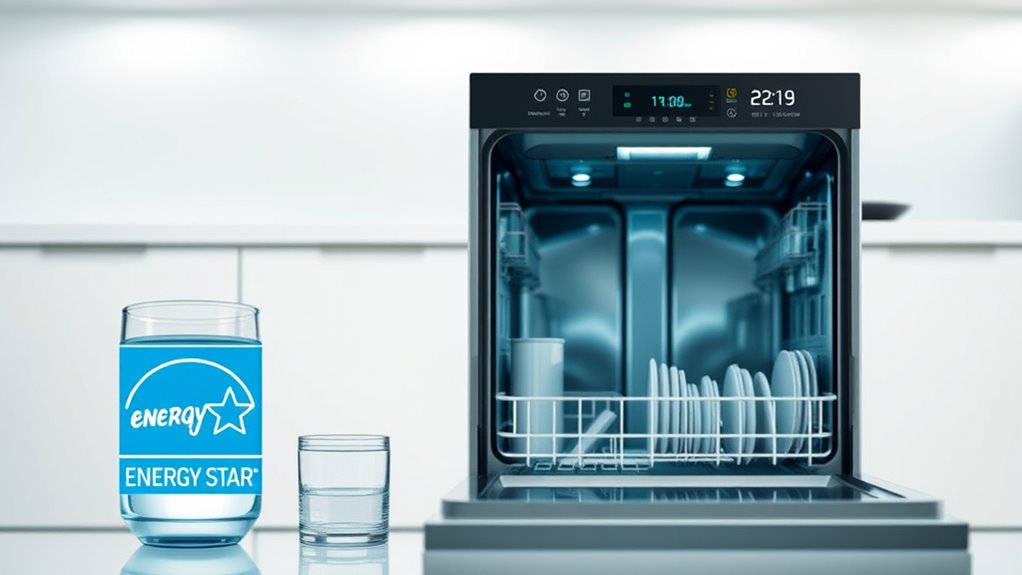
ENERGY STAR certification plays a crucial role in ensuring that smart dishwashers meet high efficiency standards for both water and energy use. When you choose an ENERGY STAR certified model, you’re selecting a dishwasher that uses 270 kWh or less annually, often as little as 80 kWh. These dishwashers also meet strict water-saving standards, typically using only 3-4 gallons per cycle. This certification guarantees that your appliance operates efficiently without sacrificing performance. Additionally, ENERGY STAR models often come with smart features that further optimize water and energy consumption. By upgrading, you not only reduce your household utility bills but also contribute to environmental sustainability. Moreover, efficient appliance operation is essential for creating a healthier home environment and reducing your ecological footprint. Overall, ENERGY STAR certification helps you make smarter, more eco-friendly choices for your dishwasher.
Impact of Household Habits on Water and Energy Consumption
Your household habits, like how often you run the dishwasher and how full you load it, directly impact water and energy use. Pre-rinsing dishes or using extra detergent can increase cycle frequency and waste resources. Being mindful of these habits helps maximize efficiency and reduce utility costs. Additionally, understanding the features of smart dishwashers can further enhance water and energy savings. Incorporating energy-efficient cycles can further optimize performance and resource conservation. Modern smart dishwashers also utilize sensor technology to tailor water and energy use based on load size and soil level, further reducing waste and promoting system efficiency. Recognizing the importance of user behavior is key to fully leveraging these advanced features for maximum savings.
Load Size and Frequency
Household habits regarding load size and wash frequency considerably impact water and energy consumption. Running full loads maximizes efficiency, using less water and electricity per dish. Smaller loads waste resources because the dishwasher still consumes nearly the same amount of energy and water, just for fewer dishes. Washing dishes more frequently, especially if loads are partial, increases overall utility use. To optimize savings, you should wait until the dishwasher is fully loaded before running it. Additionally, selecting eco-friendly or shorter cycle options for smaller or lighter loads can reduce energy and water use further. Smart dishwashers can help you track load patterns and remind you to run full loads, ensuring you use resources efficiently without sacrificing cleanliness. Adjusting habits is a simple way to lower your household’s water and energy bills. Optimizing appliance use is a key factor in reducing overall resource consumption and enhancing household efficiency. Incorporating smart technology can further improve usage patterns by providing real-time feedback and personalized recommendations.
Pre-Rinse and Detergent Use
Pre-rinsing dishes before loading the dishwasher can substantially increase water and energy use, especially if it leads to running cycles more frequently or with partial loads. Many people believe pre-rinsing is necessary, but modern dishwashers, especially ENERGY STAR models, are designed to handle food debris efficiently without this step. Using too much detergent or choosing the wrong type can also waste resources; high-efficiency detergents require less water and work better at lower temperatures. Excessive pre-rinsing or overusing detergent can cause repeat cycles, increasing electricity and water consumption. To maximize efficiency, scrape off large food particles instead of rinsing thoroughly, and follow the manufacturer’s detergent recommendations. This simple change can significantly reduce your household’s water and energy footprint. Additionally, support breakfast by choosing energy-efficient appliances helps reduce overall resource consumption.
Benefits of Monitoring and Managing Utility Use With Smart Technology
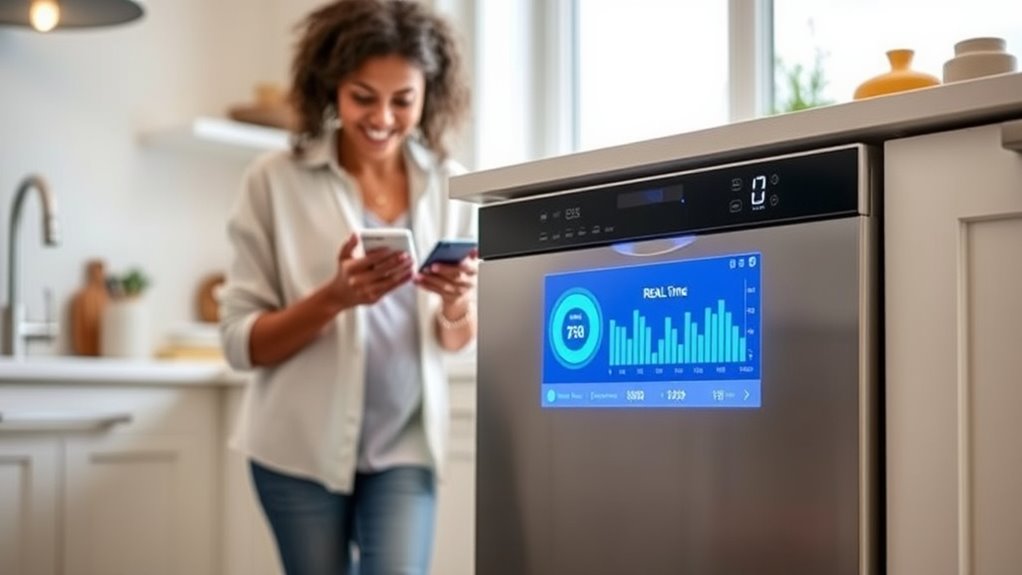
Have you ever considered how smart technology can help you better control your water and energy use? Smart dishwashers allow you to monitor your utility consumption in real-time, making it easier to identify patterns and areas for improvement. With smartphone apps, you can track cycle efficiency, set alerts for high energy or water use, and schedule washes during off-peak hours to save costs. Many models offer energy management features that automatically adjust wash cycles based on load size and dirtiness, reducing waste. These tools empower you to make informed decisions, helping lower your utility bills and minimize your environmental impact. Additionally, understanding the thermal behavior of your dishwasher can help optimize its operation for maximum efficiency, as heat transfer principles influence how effectively it cleans and conserves resources. Recognizing how thermal dynamics affect dishwasher performance can further enhance your ability to manage utility use effectively.
Cost Savings Potential of Upgrading to a Smart Dishwasher
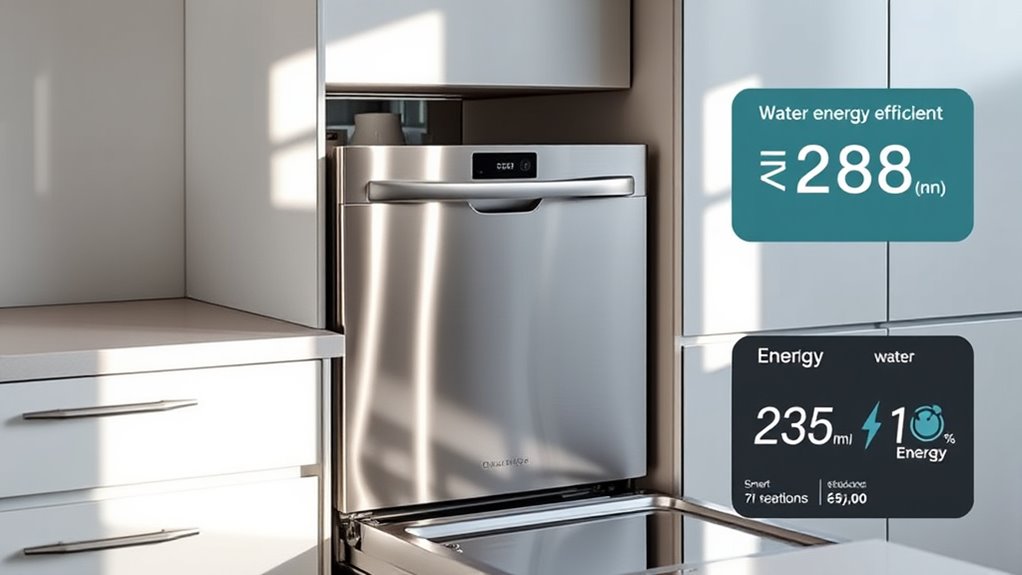
Upgrading to a smart dishwasher can markedly cut your utility costs over time. These models optimize water and energy use, reducing monthly bills. ENERGY STAR certified smart dishwashers use less than 270 kWh annually, saving you about $30–$60 per year compared to older models. Additionally, their water efficiency—around 3-4 gallons per cycle—further cuts costs and conserves resources. Smart features like usage tracking and remote control help you run your dishwasher only when needed, avoiding waste. Here’s a quick comparison:
| Feature | Traditional Dishwasher | Smart Dishwasher |
|---|---|---|
| Annual Energy Use | 400+ kWh | Less than 270 kWh |
| Water per Cycle | 10-15 gallons | 3-4 gallons |
| Cost Savings Annually | ~$0–$30 | $30–$60 |
| Smart Monitoring | No | Yes |
| Remote Control | No | Yes |
Upgrading pays off by lowering your utility bills while boosting efficiency.
Trends and Market Growth of Smart Dishwashers Focused on Efficiency
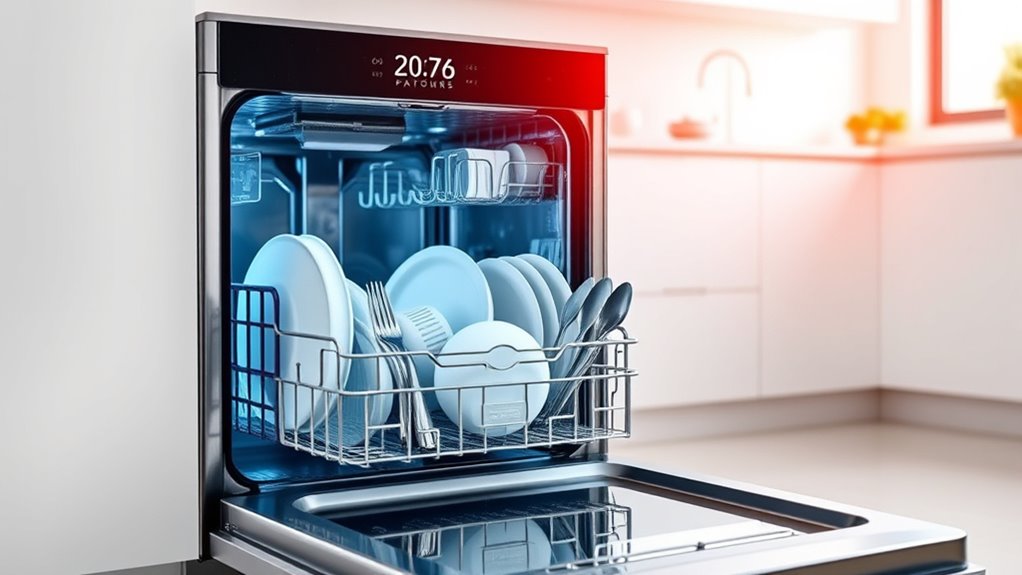
As the demand for energy-efficient home appliances grows, the smart dishwasher market is experiencing rapid expansion driven by technological innovation and consumer awareness. You’ll notice more models integrating advanced sensors and connectivity features designed to optimize water and energy use. Industry projections show the global market reaching USD 5.97 billion by 2030, with built-in smart dishwashers growing at nearly 8% annually. U.S. adoption is accelerating thanks to government incentives and increased environmental consciousness. Manufacturers are focusing on features like real-time energy monitoring, water use tracking, and smart home integration. This trend reflects a clear shift toward appliances that not only deliver excellent cleaning but also promote sustainability, helping you reduce utility bills and water consumption while staying eco-friendly.
Tips for Maximizing Water and Energy Savings With Your Smart Dishwasher
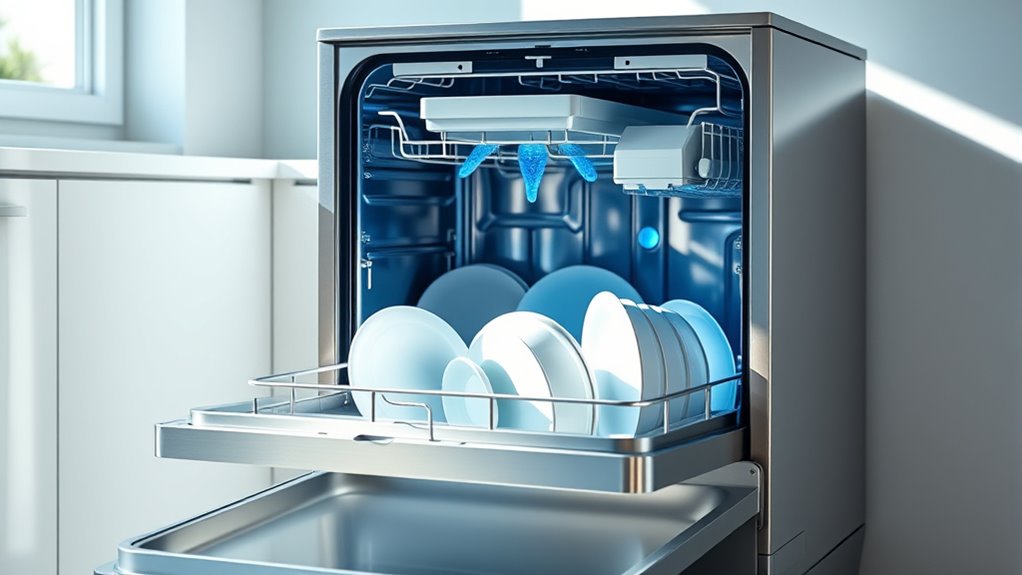
Maximizing water and energy savings with your smart dishwasher starts with using it efficiently. Always run full loads to avoid wasting resources on partial cycles. Use eco or energy-saving modes, which optimize wash cycles for minimal water and electricity use. Pre-rinsing dishes isn’t necessary; modern models clean effectively with minimal water. Keep your filters and spray arms clean to ensure ideal performance, reducing cycle times and energy consumption. Take advantage of smart app features that monitor cycle progress and suggest the best settings for your load, saving energy automatically. If your dishwasher has a delay start option, run it during off-peak hours to lower energy costs. Finally, regularly maintain your appliance to ensure it operates at peak efficiency, maximizing savings over its lifespan.
Frequently Asked Questions
Do Smart Dishwashers Adjust Cycles Based on Load Size Automatically?
Yes, smart dishwashers automatically adjust cycles based on load size. You can rely on their sensors and smart technology to detect how many dishes are inside, optimizing water and energy use accordingly. This means you don’t need to manually select settings, saving resources and reducing utility bills. By adapting to each load, smart dishwashers guarantee efficient cleaning while conserving water and electricity effortlessly.
Can Smart Dishwashers Detect and Reduce Energy Waste During Operation?
Yes, smart dishwashers can detect and reduce energy waste during operation. They monitor cycle duration, load size, and water temperature to optimize performance and efficiency. By adjusting settings in real-time, they prevent unnecessary energy consumption. Plus, smart apps provide insights and notifications, helping you track and manage utility use better. This technology guarantees you use less energy overall, saving you money while supporting sustainability efforts.
Are Smart Dishwashers Compatible With All Smart Home Systems?
Ever imagined controlling your dishwasher with just your voice or a smartphone app? Smart dishwashers are compatible with most popular smart home systems like Alexa, Google Home, and Apple HomeKit. This compatibility allows you to start cycles, monitor progress, and customize settings remotely. With seamless integration, you can optimize your household’s convenience and efficiency. So, yes, most smart dishwashers are designed to work smoothly within your existing smart home ecosystem.
How Do Smart Features Impact the Overall Lifespan of a Dishwasher?
Smart features can extend your dishwasher’s lifespan by providing real-time diagnostics, maintenance alerts, and optimized operation schedules, reducing wear and tear. You’ll catch issues early, preventing costly repairs. Additionally, smart automation ensures gentler cycles and efficient use of resources, which minimizes stress on components. By monitoring performance and maintaining proper operation, you help your dishwasher last longer, saving you money and hassle over time.
Do Smart Dishwashers Require More Maintenance for Efficiency?
Smart dishwashers don’t require more maintenance for efficiency. In fact, their smart features help you monitor and optimize performance, reducing the need for repairs. You can receive alerts for filter cleaning or system issues, making maintenance easier. Regularly updating the software and cleaning filters guarantees they operate at peak efficiency. Overall, smart dishwashers simplify upkeep and help you maintain energy and water savings over time.
Conclusion
Upgrading to a smart dishwasher is like planting a seed for savings—you’ll see it grow over time. With advanced features and ENERGY STAR standards, you can cut your water and energy use appreciably. Imagine running your dishwasher and knowing you’re helping the planet while also saving money—it’s a win-win. Embrace smart technology, and let it be the catalyst that transforms everyday chores into eco-friendly habits for a brighter future.