
Smart kitchen appliances can help you cut energy bills by optimizing usage with features like real-time monitoring, adaptive modes, and smart scheduling. Connecting devices to IoT systems and smart grids allows automatic load balancing, off-peak operation, and better integration with renewable energy sources. Using eco-modes, standby features, and maintaining appliances further reduce waste. Keep exploring how innovative tech and behavioral strategies can maximize your savings and support sustainable living.
Key Takeaways
- Smart appliances reduce energy consumption by 25-40% through real-time monitoring and adaptive modes.
- IoT connectivity enables automatic switching to eco-modes and optimized scheduling to save energy.
- Integration with smart grids allows appliances to operate during off-peak hours and utilize renewable energy sources.
- Features like high-efficiency ovens and induction cooktops cut cooking times and improve energy use.
- Regular use of eco-modes, standby features, and energy data analysis helps lower utility bills effectively.

Govee Smart Plug with Energy Monitoring, WiFi Bluetooth Plug Work with Alexa and Google Assistant, 15A Smart Outlets with Timer & Group Controller, No Hub Required, ETL&FCC Certified for Home, 1 Pack
Real-Time Energy Monitoring: Smart plugs track the real-time power, current, and voltage of your plug-in devices on Govee…
As an affiliate, we earn on qualifying purchases.
As an affiliate, we earn on qualifying purchases.
The Impact of Smart Appliances on Energy Consumption
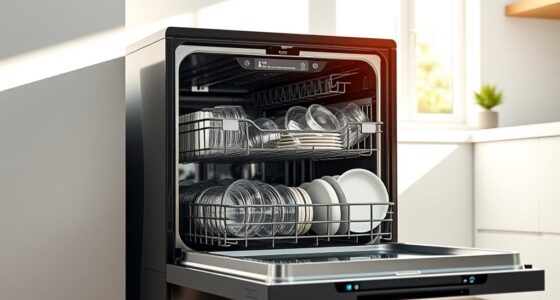
Have you ever wondered how smart appliances are transforming energy consumption in the kitchen? These devices deliver between 25-40% reductions compared to traditional models, making a significant impact on your household bills. They incorporate features like real-time energy monitoring, adaptive modes, and automated load management, which help optimize usage. For example, smart dishwashers adjust water and electricity based on load, and induction cooktops heat more efficiently than electric coils. When you use these appliances, you’re not just saving energy—you’re also contributing to a collective reduction across millions of homes, which can lead to substantial environmental benefits. Additionally, energy-efficient technology in these devices enhances overall savings and sustainability. The integration of connected home systems further amplifies energy optimization by allowing remote management and smarter scheduling. As technology advances, the cost savings associated with smart appliances continue to grow, making them an increasingly attractive investment. Moreover, implementing smart home integration can further streamline energy use and improve overall household efficiency. A key factor in maximizing these benefits is understanding how high efficiency components contribute to reducing energy consumption. With the market expected to grow rapidly, adopting smart kitchen tech is a smart move for lowering energy costs and supporting sustainability efforts.

Equator 20-inch Electric Hybrid Cooktop with 1 Induction & 1 Ceramic Burners Dual Cooking Modes for Flexible, Fast, and Efficient Cooking Sleek Built-in Design
Hybrid Cooking Technology – One induction burner with pan sensor and one ceramic burner, giving you the best…
As an affiliate, we earn on qualifying purchases.
As an affiliate, we earn on qualifying purchases.
Key Features Driving Energy Efficiency in Modern Kitchen Devices

Modern kitchen devices incorporate a range of innovative features that directly enhance energy efficiency. These features help you reduce waste, lower bills, and operate more sustainably. Real-time energy monitoring lets you track consumption instantly, so you can make adjustments and optimize your usage. Real-time energy monitoring enables you to see your energy consumption patterns, helping you identify areas for improvement. Adaptive energy modes automatically modify settings based on how you cook and use appliances, saving power without sacrificing performance. Smart grid connectivity enables appliances to coordinate with the energy grid, reducing peak demand and incorporating renewable sources. Automated load management distributes energy efficiently across multiple devices, preventing overloads. Eco-modes and power-saving settings cut energy use during standby and active cycles, ensuring you’re always using energy wisely. Additionally, integration with local automation systems allows for seamless control and further optimization of energy consumption. Incorporating energy-saving features into your kitchen appliances not only enhances efficiency but also contributes to a more sustainable home environment. For example, smart appliance integration can optimize overall energy use across multiple devices, maximizing savings. Moreover, the integration of advanced control systems can further streamline energy management for your entire kitchen.

BLITZHOME Portable Dishwasher Countertop, WIFI Smart Dishwasher, Compact Dishwashers with 5L Built-in Water Tank, 6 Programs, 360° Dual Spray, High-Temp& Air-Dry Function, Fruit Cleaning
【APP Smart Control】Different from others, our dishwasher has an app connection function. No matter where you are, you…
As an affiliate, we earn on qualifying purchases.
As an affiliate, we earn on qualifying purchases.
How Regulations and Incentives Promote Sustainable Appliance Use

Regulations and incentives play a crucial role in encouraging the adoption of sustainable kitchen appliances by setting clear standards and offering financial benefits. Programs like Energy Star certification recognize appliances that meet energy efficiency benchmarks, motivating consumers to choose greener options. In regions such as New York and Canada, laws require manufacturers to incorporate smart energy controls, ensuring appliances use less power. Europe’s Eco-design directives push for higher minimum efficiency levels, raising industry standards. Utility rebates and government incentives help lower upfront costs, making eco-friendly appliances more accessible. Additionally, the integration of European cloud servers promotes innovative monitoring and management systems for smart appliances, further enhancing energy efficiency. These policies not only promote environmentally responsible choices but also drive manufacturers to innovate. As a result, you benefit from appliances that save energy, reduce bills, and contribute to a more sustainable future.

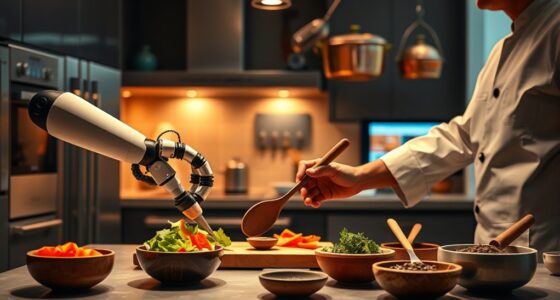
iCookmix All-in-One Smart Kitchen Machine, 12-Functions Automatic Cooking Robot with LCD Display and Guided Recipes, White/Gray
VERSATILE FUNCTIONALITY: 12-in-1 kitchen machine combines cooking, mixing, grinding, steaming, and blending capabilities with smart LCD display interface
As an affiliate, we earn on qualifying purchases.
As an affiliate, we earn on qualifying purchases.
Specific Appliance Innovations That Save Power
Innovations in kitchen appliances are delivering significant power savings by incorporating advanced technologies designed to optimize energy use. These innovations help you reduce waste and lower utility bills without sacrificing performance. For example, induction cooktops heat cookware directly through magnetic fields, achieving up to 84% efficiency. High-efficiency electric ovens use better insulation and convection fans to cut cooking times by 20-30%. Smart dishwashers adapt wash cycles based on load size, reducing water and electricity by 25-30%. Modern electric kettles heat water 30-50% faster with less energy. Ovens equipped with cameras and AI prevent overcooking, saving up to 15% energy by ensuring precise doneness. Incorporating energy-efficient appliances can maximize savings and promote sustainability in your home. Additionally, smart sensors in appliances can monitor usage patterns and further optimize energy consumption for even greater efficiency. Implementing smart home integrations allows for centralized control and scheduling to enhance overall energy savings. Using automated scheduling systems can further ensure appliances run during off-peak hours, increasing savings and reducing strain on the power grid. Moreover, integrating energy management systems can provide real-time feedback on electricity consumption, empowering you to make informed decisions about appliance use.
Behavioral Changes That Maximize Energy Savings

To maximize energy savings with smart kitchen appliances, you need to adopt intentional usage habits and leverage their built-in features. Start by monitoring your energy consumption through real-time insights, adjusting settings to avoid unnecessary power use. Use adaptive energy modes during off-peak hours or when appliances aren’t in heavy use, letting automation optimize performance. Take advantage of eco-modes and power-saving settings, especially during standby periods. Schedule appliances, like dishwashers and ovens, to run during low-demand times, reducing strain on the grid. Keep furniture and cookware well-maintained to guarantee appliances operate efficiently. Additionally, understanding the energy-efficient features of your appliances can help you utilize them to their full potential. Regularly updating your knowledge about smart appliance capabilities can further enhance your energy management strategies. Employing energy monitoring tools can provide detailed insights to refine your usage habits. Incorporating energy-efficient habits into your daily routine can further enhance these savings and promote sustainable energy use. Being aware of the benefits of smart technology can also motivate more conscious and efficient appliance use.
Future Technologies Shaping Energy-Efficient Kitchens
Future technologies are transforming energy-efficient kitchens by seamlessly integrating renewable energy sources, advanced AI, and interconnected appliances. This integration allows for smarter, more sustainable home environments that reduce energy waste and optimize usage. You’ll see appliances that adapt to your habits, manage energy loads, and connect directly with renewable systems for cleaner power. These innovations enable more precise control, automated adjustments, and better coordination among appliances, making your kitchen more eco-friendly and cost-effective. Smart home automation further enhances efficiency by enabling real-time monitoring and adjustments to energy consumption across your appliances. Additionally, innovative energy management systems can forecast usage patterns and optimize energy distribution for maximum savings. Incorporating renewable energy integration ensures that your kitchen appliances work harmoniously with solar or wind power sources, boosting overall sustainability.
The Role of IoT and Connectivity in Reducing Household Energy Use

The integration of IoT and connectivity in smart kitchen appliances plays a pivotal role in lowering household energy use. By linking devices through the internet, you gain real-time insights into your energy consumption, enabling you to identify inefficient patterns. Connectivity allows appliances to automatically adjust their operation—such as switching to eco-modes or reducing standby power—based on your usage habits. Smart appliances can communicate with each other, optimizing energy distribution across multiple devices and preventing overloads. Additionally, integration with smart grids helps you shift energy use to off-peak times and incorporate renewable sources. Incorporating ventilation considerations from your garage guide can further enhance energy efficiency by reducing unnecessary heating or cooling losses. This connected ecosystem not only reduces wasted energy but also empowers you to make smarter decisions, ultimately lowering your utility bills and supporting sustainability efforts. Practical knowledge from your garage guide can help you implement these upgrades confidently at home. Incorporating energy management features into your smart appliances enhances overall efficiency and cost savings.
Practical Tips for Optimizing Your Smart Kitchen for Lower Bills
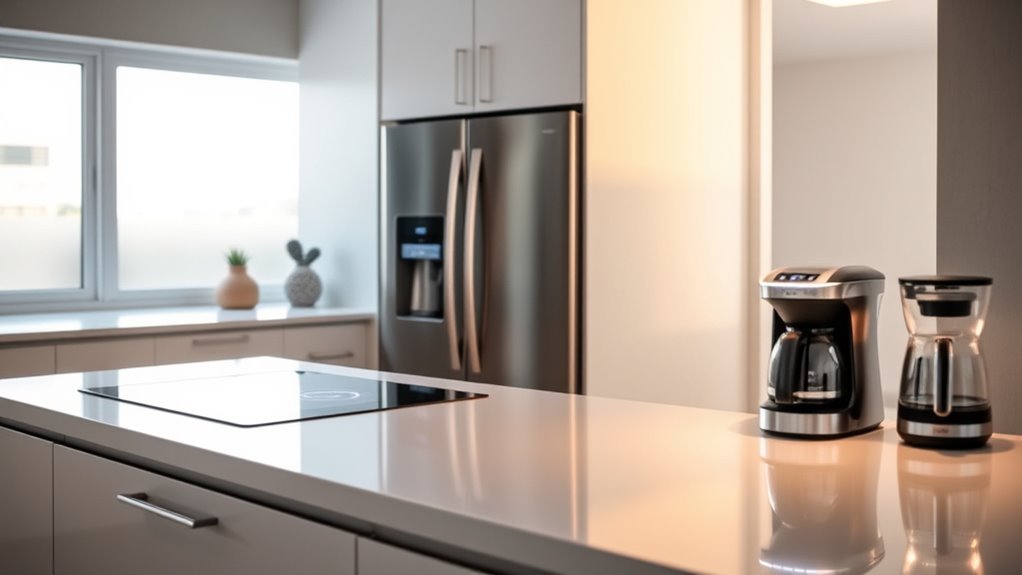
Optimizing your smart kitchen for lower utility bills starts with understanding how to leverage its energy-saving features effectively. First, monitor real-time energy usage to identify high-consumption appliances. Use adaptive modes and eco-settings during off-peak hours or when appliances aren’t in use. Connect appliances to smart grids to optimize peak demand and renewable energy integration. Automate load management to distribute power efficiently across devices. Finally, take advantage of government rebates and incentives for energy-efficient appliances.
Leverage energy-saving features and connect smart appliances to grids to cut utility bills effectively.
To maximize savings, consider these tips:
- Regularly review energy consumption data on your devices
- Use eco-modes during cooking and standby
- Schedule appliances to run during off-peak hours
- Enable smart grid connectivity for demand response
- Keep appliances maintained for ideal performance
Frequently Asked Questions
How Do Smart Appliances Communicate to Optimize Energy Use?
Smart appliances communicate through IoT protocols, like Wi-Fi or Zigbee, to share data and coordinate operations. You’ll see them exchanging real-time information about energy use, cooking tasks, and status updates. This connection allows them to automatically adjust settings, optimize load management, and synchronize with each other. As a result, your appliances work together seamlessly, reducing energy waste and making your kitchen more efficient without you having to lift a finger.
Are There Any Hidden Costs Associated With Upgrading to Smart Kitchen Devices?
Yes, upgrading to smart kitchen devices can involve hidden costs that seem to multiply like rabbits. You might face higher initial prices, ongoing maintenance fees, or subscription charges for premium features. Plus, if your Wi-Fi isn’t up to speed, you could need upgrades, and security concerns might require extra investments. These hidden costs can add up fast, turning what seems like a simple upgrade into a surprising financial surprise.
Can Smart Appliances Operate Efficiently During Power Outages or Grid Instability?
Smart appliances typically can’t operate efficiently during power outages or grid instability because they rely on a steady power supply. However, some models feature backup batteries or uninterruptible power supplies (UPS) that keep essential functions running temporarily. You should check if your appliances have these features. If not, you might experience interruptions, and your smart devices may lose connectivity or stop working until power is restored.
What Maintenance Is Required to Keep Smart Kitchen Appliances Energy-Efficient?
You should regularly clean filters and vents, check for software updates, and calibrate sensors to keep your smart appliances running efficiently. Imagine your appliances as a well-oiled machine, each part working smoothly to save energy. When you perform these simple maintenance tasks, you guarantee peak performance, prevent energy waste, and extend their lifespan. Consistent upkeep makes sure your appliances stay eco-friendly and cost-effective, delivering maximum savings over time.
How Do Smart Appliances Adapt to Changing Household Occupancy Patterns?
Smart appliances adapt to changing household occupancy patterns by using real-time energy usage monitoring and AI-driven algorithms. They automatically adjust operation modes, like reducing power during low occupancy or increasing efficiency when more people are around. Connectivity with smart home systems also helps them coordinate with other devices, optimizing energy consumption based on your routines and occupancy levels. This guarantees you’re saving energy without sacrificing convenience or performance.
Conclusion
So, go ahead, splash out on those fancy smart appliances, and watch your energy bills shrink faster than your patience during a power outage. Who knew that a fridge with Wi-Fi and a smart oven could turn you into a luxury eco-warrior? Just remember, all it takes is a little behavioral tweak and a dash of connectivity magic to turn your kitchen into a power-saving paradise—because saving energy has never looked this stylishly effortless.